
US Travel Shock 2026 as Fed Rate Hike, $100 Oil and AI Crash Threaten to Make American Holidays Unaffordable
US Travel Shock 2026 as Fed Rate Hike, $100 Oil and AI Crash Threaten to Make American Holidays Unaffordable

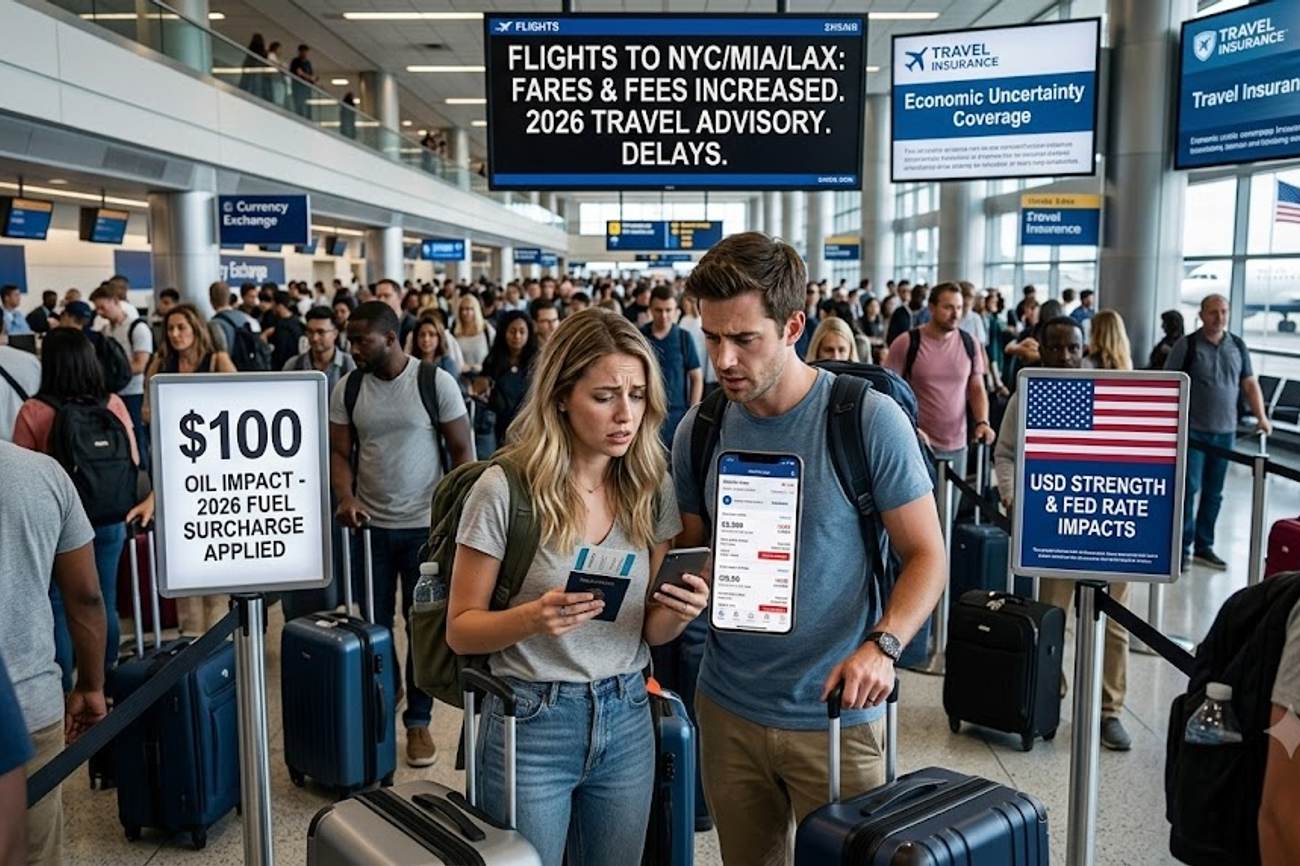
Image generated by AI
title: US Travel Alert 2026: Economic Shocks and Rising Fuel Costs date: 2026-09-14 category: Travel Advisory tags: [US-DOT, FOMC-2026, Fuel-Surcharge, Consumer-Price-Index, Business-Travel-Shock]
Imagine a family of four preparing for a cross-country road trip from New York to California, only to find that their estimated fuel budget has jumped from $400 to over $540 in a single year. Simultaneously, a corporate consultant in San Francisco receives a memo cancelling their quarterly trip to London as their AI-driven firm slashes travel budgets following a Nasdaq selloff. These are the immediate realities for millions of travelers as a perfect storm of geopolitical tension, inflation, and monetary policy converges in September 2026.
The 2026 Economic Convergence: A Triple Threat to Travel
The travel industry is currently navigating a volatile intersection of three distinct economic shocks. First, the Federal Reserve is convening on September 14, 2026, under the leadership of Chairman Kevin Warsh. Market analysts have placed an 85% to 90% probability on a 25-basis-point interest rate hike. This move, intended to combat stubborn inflation, increases the cost of consumer credit, making it more expensive for households to finance vacations via credit cards or personal loans.
Second, energy markets are in turmoil. Brent crude has surged past $100 per barrel. This spike is the direct result of Saudi Arabia closing its East-West Pipeline and ongoing attacks on shipping lanes in the Gulf, exacerbated by the conflict with Iran. For the average American, this translates to gasoline prices hitting $4.31 per gallon—a massive leap from $3.19 a year prior—while diesel has climbed above $6 per gallon.
Third, a sudden correction in the artificial intelligence sector has sent shockwaves through the corporate world. With leaders like Sam Altman (OpenAI) and Dario Amodei (Anthropic) calling for a developmental slowdown to address safety risks, tech stocks have plummeted. This has led to an immediate tightening of corporate travel budgets, particularly for the high-spending Silicon Valley sector that fuels international business tourism.
Impacted Travel Sectors and Costs
The disruptions are not limited to a single mode of transport but are cascading across the entire tourism ecosystem:
- International Aviation: Airlines are facing soaring operational costs due to the $100+ barrel price of oil. This is triggering a wave of new or increased fuel surcharges on long-haul tickets.
- Domestic Road Travel: The jump to $4.31 per gallon for gasoline is making long-distance multi-state journeys prohibitively expensive for middle-income families.
- Corporate Tourism: Tech-sector conferences, consulting trips, and investment-related travel are being scaled back or cancelled entirely.
- Hospitality: With the University of Michigan’s consumer sentiment index dropping by 7.5%, hotels and resorts are seeing a shift toward "defensive travel," where guests opt for shorter stays and lower-cost accommodations.
- International Inbound: While a stronger U.S. dollar may help Americans abroad, it is reducing the purchasing power of foreign tourists visiting the U.S., potentially lowering occupancy rates in major American cities.
Your Rights as a Passenger
In this environment of rising surcharges and potential cancellations, it is vital to know your legal standing. Whether you are dealing with a price hike or a cancelled flight, specific regulations protect you.
US DOT Refund Rules Under the guidelines provided by the U.S. Department of Transportation, passengers are entitled to a full refund if the airline cancels a flight, regardless of the reason. This includes cancellations caused by "economic necessity" or aircraft repositioning due to fuel costs. If your flight is cancelled and you choose not to travel on the alternative offered, you are legally entitled to your money back, not just a travel voucher.
Fuel Surcharges and Transparency While airlines are generally permitted to add fuel surcharges to tickets, they must be disclosed clearly at the time of purchase. If a surcharge is added to a ticket after the purchase is completed, you may have grounds to contest the charge or request a refund for the difference if the terms of your fare class prohibit post-purchase price increases.
EU261/2004 and UK CAA Protections For those traveling from EU or UK airports, or flying into these regions on an EU/UK-based carrier, the protections are even more stringent. Under EU261/2004 and UK CAA guidelines, if a flight is cancelled with less than 14 days' notice, you may be eligible for compensation up to €600 (or £520) depending on the flight distance. Note that "extraordinary circumstances" can waive this compensation, but economic inflation or general fuel price hikes typically do not qualify as extraordinary circumstances—they are considered inherent operational risks.
Rebooking Strategy and Alternatives
As the cost of travel rises, the strategy must shift from "revenge travel" to "defensive travel." If you are currently facing high costs or disruptions, consider the following tactical pivots:
1. The "Hub-and-Spoke" Road Trip Instead of a linear cross-country journey, choose a single regional hub and explore within a 200-mile radius. This minimizes fuel consumption while maintaining the experience of a getaway.
2. Alternative Carrier Analysis With fuel surcharges varying by airline, use tools like FlightRadar24 or FlightAware to track which airlines are maintaining their schedules and which are cutting frequencies. Often, budget carriers may pass fuel costs on more aggressively, while legacy carriers might absorb some costs to maintain market share.
3. Currency Arbitrage If you are an American traveler, leverage the strong U.S. dollar by pivoting your destination toward countries where the local currency has weakened against the USD. This can offset the higher cost of the flight itself.
4. Refund vs. Rebooking If your corporate or leisure flight is cancelled, evaluate the current market price before accepting a rebooking. If the airline offers a flight that is significantly less convenient, you are often better off taking a full refund via US DOT rules and booking a competitor or a different route entirely.
FAQ: Economic Travel Disruption 2026
Am I entitled to a refund if my airline adds a fuel surcharge after I bought my ticket? Generally, no, unless the fare rules specifically guarantee a fixed price. However, if the airline cancels the flight and offers a rebooking with a higher cost, you are entitled to a full refund of the original ticket.
Will the Fed rate hike affect my existing hotel bookings? Existing bookings are usually locked in. However, if you used a "book now, pay later" option tied to a variable credit line, your financing costs may increase. Always check if your hotel allows free cancellation to pivot to a cheaper option.
Can I claim EU261 compensation if my flight was cancelled due to high fuel costs? Yes. High fuel prices are considered a normal part of running an airline and do not constitute "extraordinary circumstances." If the cancellation happened within 14 days of departure, you should file a claim.
What is the best alternative to long-distance driving right now? Consider regional rail (Amtrak) or shorter "staycations" within your own state. With gasoline at $4.31 per gallon, reducing mileage is the only way to significantly lower the cost of domestic leisure travel.
Stay vigilant with your bookings and always document every communication with your carrier to ensure your legal rights are preserved.
Related Travel Guides
- Rome Aligns Berlin and More Introducing New AI-Driven Technology in Hotels to Boom Tourism Across Europe in 2026
- Thailand Pairs Up With Singapore And More Asian Countries As UAE Multiple Entry Tourist Visa Unlocks New Travel Opportunities
- Travellers Could Save Up to 33% on eSIMs by Choosing a Plan That Actually Matches Their Trip
Disclaimer
This article is for informational and educational purposes only. It does not constitute legal, financial, or professional advice. While we strive to provide accurate and up-to-date information, travel policies, regulations, and conditions change rapidly. Always verify information with official sources before making travel decisions. Nomad Lawyer makes no representations about the accuracy, reliability, completeness, or suitability of the information provided. Readers should consult qualified professionals for advice specific to their circumstances. The views expressed in this article are those of the author and do not necessarily reflect the views of Nomad Lawyer.
Preeti Gunjan
Contributor & Community Manager
A passionate traveller and community builder. Preeti helps grow the Nomad Lawyer community, fostering engagement and bringing the reader experience to life.
Learn more about our team →