Jazeera Airways Restores Daily Kuwait–Riyadh Flights: Gulf Travel Guide and At-Turaif Heritage 2026

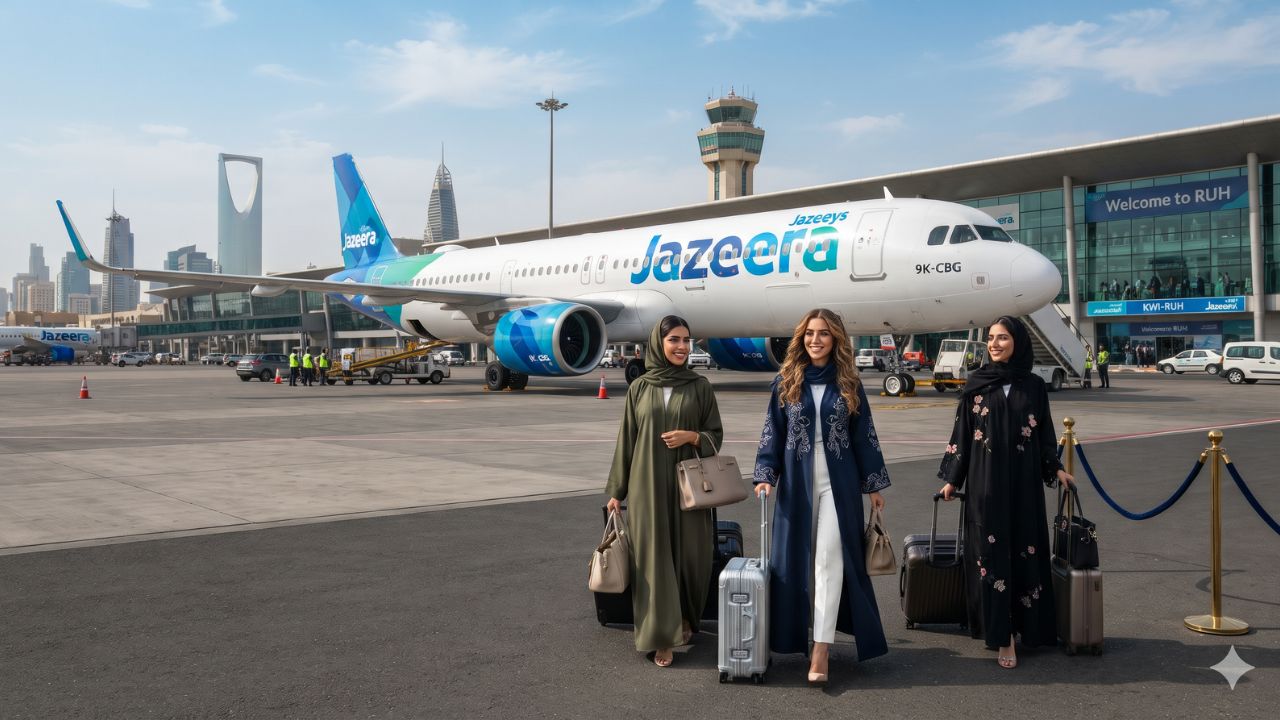
While Saudi Arabia's airports handled an impressive 140.9 million passengers across 979,800 flight movements in 2025 and Riyadh’s King Khalid International Airport processed 40.8 million travelers, a three-week operational interruption during October 2026 severed budget air links across the Kuwaiti frontier. That regional air corridor reopened on 1 November 2026, as Kuwaiti low-cost carrier Jazeera Airways officially resumed daily scheduled flights connecting Kuwait International Airport (KWI) with King Khalid International Airport (RUH) in Riyadh. Announced on 31 October following extensive technical coordination with Saudi civil aviation authorities and rigorous safety reviews, the return of seven weekly round trips re-establishes a dependable link for commercial travelers, cross-border family visits, and cultural tourists heading to explore the historic mud-brick citadel of Diriyah.
Jazeera Airways Restores Daily Kuwait–Riyadh Service Following October Disruptions
The reinstatement of service resolves several weeks of flight cancellations stemming from security events at Saudi Arabia’s primary capital gateway. On 7 October 2026, the Saudi General Authority of Civil Aviation (GACA) reported that infrastructure at King Khalid International Airport in Riyadh and Abha International Airport had sustained impacts, prompting emergency safety protocols. Subsequent incidents on 8 October damaged facilities and a Saudia aircraft, resulting in casualties. On 11 October, Jazeera Airways issued a formal travel alert suspending its Riyadh flights, coinciding with an incident where an unidentified projectile struck Terminal 4, causing a localized fire. On 12 October, GACA extended the suspension of flight operations at King Khalid International Airport to perform structural inspections and verify airfield safety.
Following comprehensive verification that operational facilities met all safety standards, Jazeera Airways confirmed that daily services between Kuwait and Riyadh would resume on 1 November 2026. The route operates under flight identifier JZR226 on the return leg, with published flight timetables at Kuwait International Airport showing scheduled arrivals at 11:00 AM daily through 27 March 2027. The restoration provides 14 one-way flight sectors per week using the carrier’s fleet of Airbus A320-family aircraft.
| Chronological Date | Confirmed Incident / Operational Milestone | Aviation Impact & Industry Action |
|---|---|---|
| 6–7 October 2026 | Infrastructure impact reported at King Khalid and Abha airports | Saudi civil aviation emergency response protocols initiated. |
| 8–9 October 2026 | Subsequent incidents reported affecting Riyadh facilities and Saudia aircraft | Damage assessment and security reviews ordered by GACA. |
| 11 October 2026 | Projectile impact reported at Terminal 4; localized fire extinguished | Jazeera Airways issues travel alert suspending all Riyadh flights. |
| 12 October 2026 | GACA officially extends operational suspension at King Khalid Airport | In-depth engineering inspections and readiness verifications conducted. |
| 31 October 2026 | Jazeera Airways announces resumption of daily flights | Safety assessments cleared in coordination with aviation regulators. |
| 1 November 2026 | Daily commercial flights between Kuwait and Riyadh officially resume | Restores seven weekly round trips on the cross-border Gulf corridor. |
| Through 27 March 2027 | Published airport operational schedule validity for flight JZR226 | Regular daily morning arrival at 11:00 AM into Kuwait Terminal 5. |
Operating from its dedicated Terminal 5 (T5) at Kuwait International Airport, Jazeera Airways provides streamlined departures with dedicated security screening, self-service kiosks, and Park & Fly early check-in options accessible 6 to 36 hours prior to departure. The airline reminds travelers that checked baggage rules vary by fare category, ranging from hand-luggage-only Basic tickets to 40-kilogram allowances on Flex Plus fares, with Business Class travelers entitled to 60 kilograms across three pieces.
| Fare Tier / Class | Checked Baggage Allowance | Cabin Baggage Allowance | Key Booking Conditions |
|---|---|---|---|
| Economy Basic | No checked baggage included | 7 kg carry-on piece | Ideal for short day-trips and light business meetings. |
| Economy Comfort | 20 kg (single piece) | 7 kg carry-on piece | Standard regional travel package for personal visits. |
| Economy Flex | 30 kg (up to two pieces) | 7 kg carry-on piece | Includes itinerary change flexibility and extra weight. |
| Economy Flex Plus | 40 kg (up to two pieces) | 7 kg carry-on piece | Maximum economy baggage allowance for extended stays. |
| Business Class | 60 kg (up to three pieces; max 32 kg each) | 14 kg (two carry-on items) | Priority check-in, lounge access, and generous luggage. |
The return of low-cost flights reconnects two of the Arabian Peninsula's most interconnected travel markets. In 2025, total air passenger traffic across Saudi Arabia reached 140.9 million travelers, expanding by 9.6% year-on-year according to official data released by the Saudi General Authority for Statistics on 18 May 2026. King Khalid International Airport represented the Kingdom’s second-busiest facility, handling 40.8 million passengers, while King Abdulaziz International Airport in Jeddah welcomed 53.5 million and King Fahd International Airport in Dammam recorded 13.7 million.
| Saudi Aviation Benchmark | Calendar Year 2025 Actual | Year-on-Year Growth Rate | National Aviation Context |
|---|---|---|---|
| Total Nationwide Air Passengers | 140.9 million passengers | +9.6% annual increase | Record air traffic across domestic and global routes. |
| International Passenger Volume | 75.8 million movements | +9.4% annual increase | Expanding international business and tourism travel. |
| Domestic Passenger Volume | 65.1 million movements | +9.8% annual increase | Strong internal transit between provincial hubs. |
| Total Commercial Aircraft Movements | 979,800 operations | Substantial network expansion | Robust carrier capacity across the Arabian Gulf. |
| King Abdulaziz Airport (Jeddah) | 53.5 million passengers | Kingdom's primary gateway | Busiest facility serving commercial and pilgrimage travel. |
| King Khalid Airport (Riyadh) | 40.8 million passengers | Capital aviation anchor | Restored daily Jazeera service supports regional traffic. |
| King Fahd Airport (Dammam) | 13.7 million passengers | Eastern Province hub | Critical business link to Arabian Gulf petroleum hubs. |
What Makes Riyadh and the Kuwaiti Corridor Culturally and Experientially Unique
Traveling between Kuwait City and Riyadh traces an ancient overland trade corridor that shaped the political and cultural geography of the Arabian Peninsula. While both capitals share Bedouin hospitality traditions, conservative social etiquette, and a profound love of coffee culture, their architectural textures offer compelling contrasts. Kuwait City unfurls gracefully along the Arabian Gulf coastline, where the iconic dhow-inspired concrete needles of the Kuwait Towers overlook coastal promenades, bustling fish harbors, and the shaded alleys of Souq Al-Mubarakiya.
Riyadh, by contrast, rises dramatically from the arid desert plateau of the Nejd, surrounded by rocky limestone escarpments and sweeping wadis. At the northwestern edge of the metropolis lies historic Diriyah, the ancestral cradle of the House of Saud. The centerpiece of Diriyah is the UNESCO World Heritage At-Turaif District, an exceptional citadel of 18th-century Najdi mud-brick architecture featuring crenellated fortress walls, defensive towers, and the sprawling Salwa Palace, constructed entirely from local sun-dried mud, straw, and tamarisk wood beams.
In the adjacent Bujairi Heritage District, modern pedestrian walkways meander beside the restored date palm groves of Wadi Hanifa, where upscale restaurants and open-air cafes serve refined regional fare overlooking the illuminated mud-brick monuments. In central Riyadh, the National Museum of Saudi Arabia in the Al-Murabba complex houses eight comprehensive galleries spanning the prehistoric geology of the Rub' al Khali to the founding of modern Saudi statehood. Nearby, the ancient alleys of Souq Al-Zal in the Dirah quarter come alive in the late afternoon, when the scent of smoldering agarwood (oud) fills the air as auctioneers display handcrafted silver daggers (khanjars), wool rugs, and formal ceremonial cloaks (bishts).
Najdi cuisine provides an unforgettable sensory journey. Unlike coastal Gulf dishes centered on spiced fish and dried limes, authentic Riyadh dining features hearty, slow-simmered dishes designed for desert evenings. Travelers should savor jareesh (coarsely ground wheat cooked slowly with yogurt, clarified butter, and tender lamb, topped with caramelized black onions) and matazeez (thin whole-wheat pasta dumplings stewed in a fragrant tomato-lamb broth seasoned with black pepper and cardamom). Meals invariably conclude with piping-hot cups of golden gahwa (Arabic coffee infused with green cardamom, saffron, and cloves), served with sweet Sukkari dates from the Qassim oasis.
Visitor Insider Tips: Terminal 5 Logistics, At-Turaif Evenings, and Souq Al-Zal Bargaining
- Arrive Four Hours Early at Kuwait Terminal 5: Jazeera Airways strictly closes check-in 60 minutes before departure. Arrive at Terminal 5 at least four hours prior to take advantage of self-bag drop kiosks. If departing on a morning flight, use the Park & Fly facility opposite the terminal to complete check-in and drop bags up to 36 hours before departure.
- Visit At-Turaif at Twilight for Spectacular Illuminations: Avoid the scorching desert heat by reserving evening entry passes to Diriyah and At-Turaif through the official Visit Saudi portal. Arrive around 5:30 PM as the sun dips behind the limestone cliffs, illuminating the earthen walls of Salwa Palace in warm golden light, followed by an evening stroll through Bujairi Terrace.
- Rely on the Riyadh Metro to Beat Capital Traffic: Riyadh traffic can be intense during weekday morning and evening rush hours. Utilize the newly opened Riyadh Metro network. Automated driverless trains connect King Khalid International Airport directly to the King Abdullah Financial District (KAFD) and central Olaya, bypassing highway delays along King Fahd Road.
- Experience the 4:00 PM Antique Auction at Souq Al-Zal: If seeking authentic cultural souvenirs, visit Souq Al-Zal in Dirah around 4:00 PM on a Friday or Saturday. Traditional auctioneers parade down the narrow carpeted passages showcasing vintage brass dallah coffee pots, hand-woven Bedouin saddlebags, and antique camel sticks. Polite bargaining in cash is expected and respected.
- Respect Local Etiquette and Dress Codes: While Saudi Arabia’s tourism dress guidelines have modernized significantly under Vision 2030, modest attire remains essential. Both men and women should wear loose-fitting clothing covering shoulders and knees when visiting historic sites, public souqs, and religious areas in Riyadh and Kuwait.
- Check GCC Residence Visa Rules Before Departure: Expatriates residing in Kuwait must verify their Saudi visa requirements prior to ticket purchase. While citizens of GCC nations travel freely using national identity cards, expatriate residents must secure a valid Saudi tourist e-visa or work permit in advance, as Kuwaiti residency alone does not grant automatic border entry.
Cultural and Environmental Context: Heritage Tourism, Cross-Border Kinship, and Aviation Security
The resumption of daily Kuwait–Riyadh air links demonstrates the deep familial, cultural, and economic kinship linking the northern Gulf monarchies. Tens of thousands of families maintain branches in both Kuwait and central Saudi Arabia, sharing ancestral tribal ties that predate modern national boundaries. During unexpected aviation closures, these cross-border communities face grueling eight-hour desert road journeys across the Salmi-Raqi border crossing. Restoring regular, affordable flights ensures that family gatherings, wedding celebrations, and religious visits proceed without logistical hardship.
Concurrently, Saudi Arabia’s ambitious Vision 2030 economic transformation relies on aviation security and infrastructure resilience. With Riyadh positioning itself as a premier global hub for international business, cultural events, and mega-projects like New Murabba and Diriyah Gate, maintaining continuous air connectivity is vital for investor confidence. Swift structural repairs and comprehensive safety certifications following October’s security incidents underscore the rigorous standards enforced by regional aviation regulators.
On the environmental front, the expansion of regional tourism in arid desert climates demands sustainable water and resource management. In Riyadh, the monumental greening of Wadi Hanifa has transformed an ephemeral desert watercourse into a lush 120-kilometer ecological corridor fed by recycled wastewater. In Kuwait, solar-powered infrastructure initiatives at Kuwait International Airport align with national carbon-reduction goals. By connecting regional capitals through fuel-efficient narrowbody air fleets rather than long-distance single-occupancy vehicle convoys, carriers like Jazeera Airways help reduce per-capita emissions across the desert corridors of the Arabian Peninsula.
FAQ: Jazeera Airways Kuwait to Riyadh Flights 2026
When did Jazeera Airways resume daily flights to Riyadh?
Jazeera Airways officially restarted daily commercial services between Kuwait International Airport and Riyadh's King Khalid International Airport on 1 November 2026.
Why were flights between Kuwait and Riyadh suspended during October 2026?
Flights were temporarily suspended due to security incidents that impacted airport facilities at King Khalid International Airport, requiring technical safety assessments by Saudi aviation authorities.
How many weekly flights operate on the restored route?
The airline operates seven weekly round trips (14 one-way sectors), offering daily departures from Kuwait Terminal 5 and daily return flights under flight identifier JZR226.
Do Kuwaiti expatriate residents require a visa to enter Saudi Arabia?
Yes. Non-GCC nationals residing in Kuwait must apply for an official Saudi tourist e-visa, visa on arrival, or commercial visa before traveling, as residency alone does not grant visa exemption.
[As evening shadows lengthen across the mud-brick bastions of At-Turaif and desert breezes cool the avenues of Riyadh, the renewed hum of jet engines overhead heralds an enduring era of Gulf connection and cultural discovery.]
Related Travel Guides
LATAM Launches Geneva to São Paulo Nonstop Flights in April 2027: Swiss–Brazilian Travel Guide
The Insider Guide to Riyadh Diriyah Heritage, Souq Al-Zal Antiquities, and Kuwait Terminal 5 Hacks, According To Reddit (Coming Soon)
This article is for informational purposes. Flight routes, passenger regulations, visa rules, and transit advisories are subject to change by airlines and aviation authorities. Readers are advised to verify schedules and travel documentation with relevant carriers and border agencies before departure.
Related Stories
Riyadh Air Shifts Operations to Al-Qassim International Airport Following Security Threats in 2026
Jazeera Airways Fleet Expansion 2026: Logistics Guide to the 100-Destination Target