
TranzAlpine Expands Scenic Plus Premium Rail Service Between Christchurch and Greymouth in 2026
TranzAlpine has shifted to a seven-day weekly schedule as of July 14, 2026, integrating the high-yield Scenic Plus dining experience across all departures to drive premium tourism revenue.

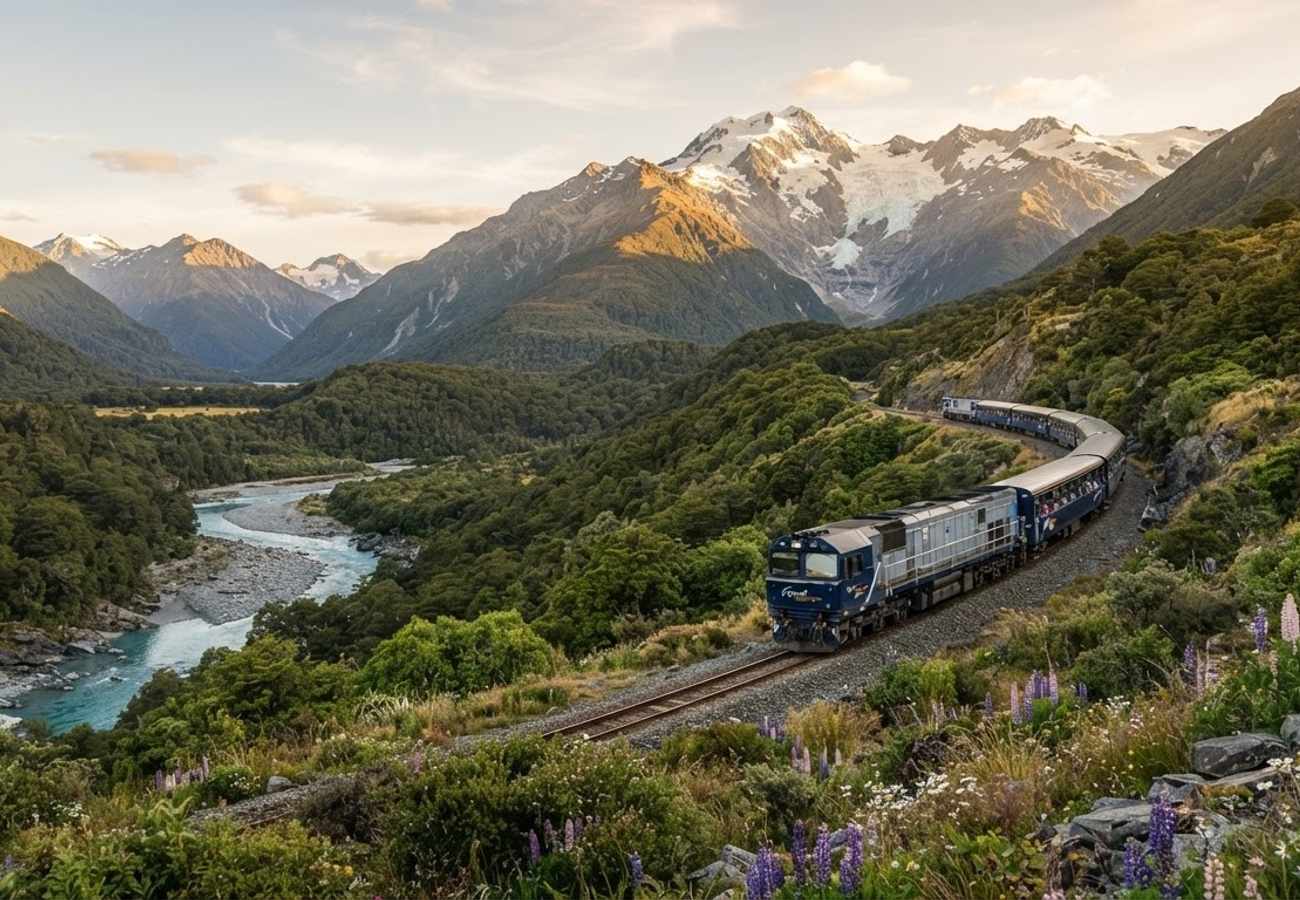
Image generated by AI
TranzAlpine has transitioned from a four-day winter schedule to a full seven-day service effective 14 July 2026. This operational shift ensures the premium Scenic Plus dining experience is available on every departure, increasing weekly premium-service inventory by 75 per cent.
The move signals a strategic pivot by Great Journeys New Zealand to prioritize yield over simple passenger volume. By expanding the availability of its highest-tier product, the operator is transforming a transit corridor into a high-value hospitality experience.
Operational Shift and Premium Pricing
The TranzAlpine now operates daily between Christchurch and Greymouth, excluding Christmas Day. Because the service is seating-only, advance bookings are mandatory to secure placement.
The commercial strategy is rooted in the price gap between standard and premium offerings. While standard Scenic travel starts at NZ$249, the Scenic Plus experience starts at NZ$499. This represents a 100.4% increase in the entry-level fare for the premium product.
Commercial Performance and Yield Analysis
Financial data from KiwiRail supports this move toward "premiumisation." In its half-year report for the period ending 31 December 2025, KiwiRail reported that Great Journeys New Zealand revenue grew by NZ$2.4 million, specifically attributed to higher yield.
While the NZ$2.4 million increase is not solely the result of the TranzAlpine or Scenic Plus, it confirms that higher-spending passengers are driving the current economic model. This aligns with the KiwiRail Statement of Corporate Intent 2026–2028, which mandates that scenic rail must remain financially viable as a standalone tourism activity.
Route Specifications and Service Comparison
| Indicator | Earlier 2026 Position | Position on 11 August 2026 | Commercial Significance |
|---|---|---|---|
| Weekly operating days | 4 from 11 May | 7 from 14 July | 75% more operating-day inventory |
| Scenic Plus availability | Available on select services | Available on every service | Premium product available weekly |
| Scenic starting fare | N/A | NZ$249 | Entry-level scenic rail proposition |
| Scenic Plus starting fare | N/A | NZ$499 | Premium dining-led proposition |
| Starting-fare difference | N/A | NZ$250 | Scenic Plus starts ~100.4% above Scenic |
| Route distance | Unchanged | 223 km each way | Connects Christchurch with Greymouth |
| Journey duration | Broadly unchanged | Just under five hours | Supports onboard hospitality |
| Principal endpoints | Unchanged | Christchurch and Greymouth | Links Canterbury with the West Coast |
Regional Economic Impact
The TranzAlpine serves as a critical conduit for moving tourist expenditure from the primary gateway of Christchurch into the smaller regional economy of the West Coast.
According to Ministry of Business, Innovation and Employment (MBIE) data released 31 July 2026, there is a notable divergence in spending trends between the two endpoints:
Visitor Spending Around TranzAlpine Gateways (Year Ended June 2026)
| Area | International Spend | NZ Visitor Spend | Total Visitor Spend | Change from June 2025 |
|---|---|---|---|---|
| Christchurch City | NZ$472.3m | NZ$764.6m | NZ$1.237bn | -6.6% |
| Grey District | NZ$20.7m | NZ$73.2m | NZ$93.9m | +6.7% |
| Canterbury Region | NZ$805.1m | NZ$1.513bn | NZ$2.319bn | -1.2% |
| West Coast Region | NZ$212.8m | NZ$233.2m | NZ$446.0m | +7.8% |
Why This Matters: The Shift to Experience Monetization
From a logistical perspective, the TranzAlpine is no longer functioning as a traditional inter-city rail link. It has evolved into a mobile hospitality venue. By utilizing a custom-built kitchen carriage and seasonal regional menus, Great Journeys New Zealand is monetizing the five-hour journey time rather than just the 223-kilometre distance.
For the travel industry, this reflects a broader trend in New Zealand's Tourism Growth Roadmap. The government aims to double tourism export value from NZ$9.9 billion in 2023 to NZ$19.8 billion by 2034. The TranzAlpine model proves that increasing the "per-passenger" spend through premium services is a more sustainable growth lever than simply increasing visitor numbers.
Forward Outlook
The strategic value of the TranzAlpine now depends on the "endpoint economy." While a same-day return journey generates rail revenue, the real growth lies in multi-day packages. By integrating rail with West Coast accommodation and charters, KiwiRail is attempting to ensure that the 6.7% growth in Grey District spending continues to climb. Expect further integration of rail tickets with regional West Coast tourism operators to discourage immediate returns to Christchurch.
Premium rail is shifting from a mode of transport to a destination in its own right.
Related Travel Guides
Disclaimer
This article is for informational and educational purposes only. It does not constitute legal, financial, or professional advice. While we strive to provide accurate and up-to-date information, travel policies, regulations, and conditions change rapidly. Always verify information with official sources before making travel decisions. Nomad Lawyer makes no representations about the accuracy, reliability, completeness, or suitability of the information provided. Readers should consult qualified professionals for advice specific to their circumstances. The views expressed in this article are those of the author and do not necessarily reflect the views of Nomad Lawyer.
Raushan Kumar
Founder & Lead Developer
Full-stack developer with 11+ years of experience and a passionate traveller. Raushan built Nomad Lawyer from the ground up with a vision to create the best travel and law experience on the web.
Learn more about our team →