UK Launches Everitt Transport Review as European Rail Governance Exposes Cross-Border Friction

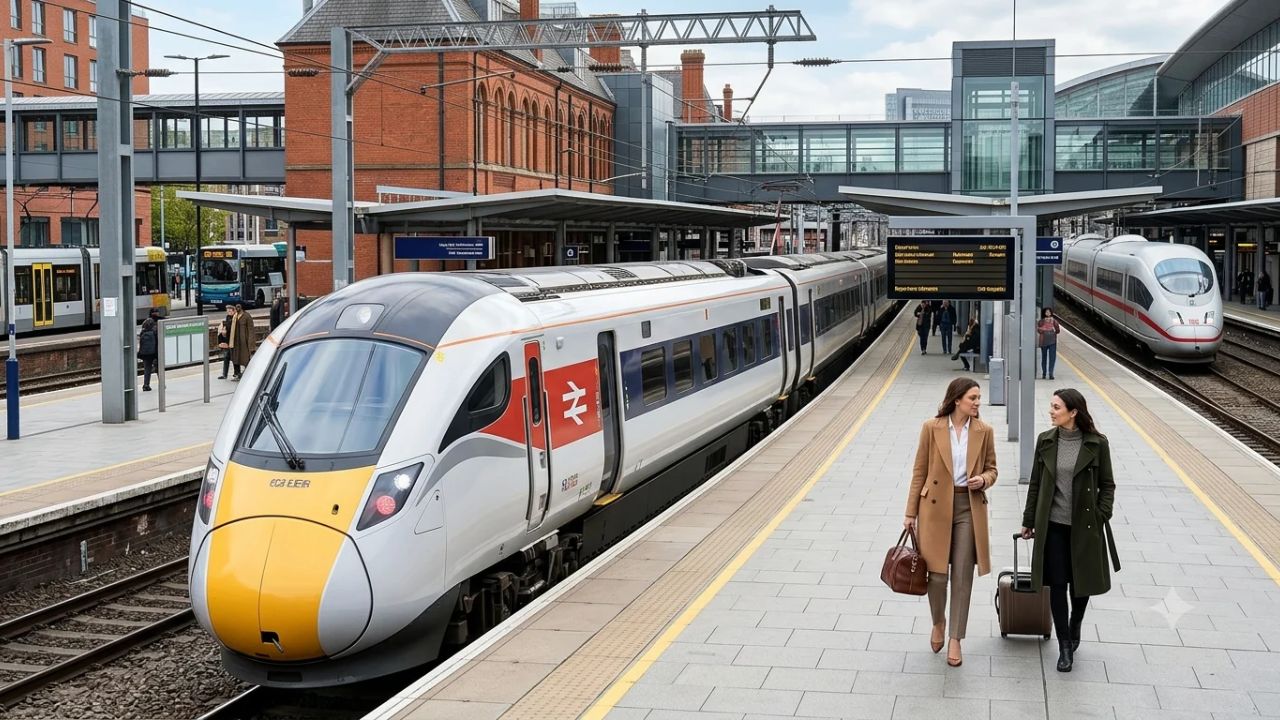
The UK has initiated the Everitt Review on regional transport capacity, examining integration challenges faced by railway networks in Germany, France, the Netherlands, and Switzerland.
LONDON, November 3, 2026 — The United Kingdom Department for Transport has formally published the terms of reference for an independent governance review led by Greater Manchester Transport Commissioner Vernon Everitt, evaluating how English mayoral and regional strategic authorities can build the institutional capacity to plan, finance, and deliver integrated local transport systems. The initiative coincides with mounting operational friction across Western Europe's railway networks, where established multi-tiered governance models in Germany, France, the Netherlands, and Switzerland demonstrate the complex institutional challenges of aligning centralized national infrastructure planning with devolved regional timetables, municipal feeder transit, and passenger ticketing protections.
[!NOTE] Key Governance Context for Transport Planners and Travelers: The Everitt Review focuses on institutional capability, organizational design, and delivery capacity rather than authorizing new rail routes or construction funding. Phase one evaluates established mayoral strategic authorities in England over a three-to-four-month window, establishing a flexible blueprint for local transport execution alongside the emerging Railways Bill, which introduces Great British Railways as a national guiding mind. This capability exercise parallels complex rail integration programs across the continent, including Germany's Deutschlandtakt, France's 29 Services Express Régionaux Métropolitains clusters, the Dutch dual-concession structure, and Switzerland's joint federal-cantonal commissioning framework.
EUROPEAN RAILWAY GOVERNANCE INTERACTION TOPOLOGY
| Column 1 |
|---|
| [ NATIONAL STRATEGIC LEVEL ] |
| * Infrastructure Masterplanning: Long-range track capacity, high-speed lines, power traction |
| v [ DEVOLUTION / REGIONAL COMMISSIONING ] |
| [ REGIONAL & METROPOLITAN AUTHORITIES ] |
| * UK: Mayoral Combined Authorities (Transport for Greater Manchester, West Midlands, etc.) |
| * Germany: 16 Federal Länder commissioning regional passenger rail (SPNV) |
| * France: Regional Councils & Urban Communities leading 29 SERM metropolitan express networks |
| * Netherlands: Provincial administrations managing regional rail concessions |
| * Switzerland: 26 Cantons co-commissioning 1,550 regional lines with the Federal Office of Trans. |
| v [ MULTIMODAL INTEGRATION INTERFACES ] |
| [ THE PASSENGER JOURNEY COLLISION ] |
| * Physical Interchange: Station forecourts, light rail, bus feeder links, accessible transfers |
| * Commercial Integration: Integrated smart ticketing, through-ticketing, delay compensation |
| * Timetable Synchronization: Aligning regional suburban branches with national intercity trunks |
The Everitt Review: Institutional Delivery Capacity vs. Centralized Railway Bureaucracy
The publication of the terms of reference for the Everitt Review on November 3, 2026, marks an important conceptual evolution in British transport policy. For decades, transport debates in the United Kingdom focused almost exclusively on infrastructure capital expenditure and privatized franchise arrangements. The commissioning of Greater Manchester Transport Commissioner Vernon Everitt shifts attention toward a neglected operational bottleneck: institutional capacity and technical competence within regional governance bodies.
The review is structured across two sequential phases. Phase one concentrates on established mayoral strategic authorities across England, including Greater Manchester, the West Midlands, West Yorkshire, South Yorkshire, and the Liverpool City Region. These regions have already established varying degrees of bus franchising, tram operations, and active travel corridors under local transport powers. Over an initial three-to-four-month period, the review team will examine organizational staffing, engineering capability, project management structures, financial governance, and collaboration mechanisms with national transport agencies. A second phase, governed by separate terms of reference, will extend the assessment to emerging mayoral and foundation strategic authorities across other English counties and rural regions.
Importantly, the Everitt Review does not possess statutory authority to approve new rail construction, reallocate national budgets, or unilaterally devolve passenger rail contracts. Its mandate is diagnostic and advisory. It evaluates whether regional authorities possess the specialized commercial acumen and operational capacity to exercise existing responsibilities effectively, while preparing to absorb potential new powers. In the absence of qualified transit planners, contract managers, and technical engineers at the local level, devolving authority from Whitehall risks administrative gridlock and fragmented passenger services.
The Railways Bill and Great British Railways: Devolution Realities and Mayoral Partnerships
The operational relevance of the Everitt Review is amplified by parallel legislative reforms moving through the UK Parliament under the Railways Bill. The legislation establishes Great British Railways as an integrated, public-sector body designed to end thirty years of operational fragmentation between track infrastructure owner Network Rail and private train operating companies.
The Railways Bill establishes Great British Railways as the national coordinating mind responsible for track maintenance, network capacity planning, ticket pricing structures, and passenger service contracts. However, creating a powerful central rail body introduces structural tension with regional devolution agendas. Mayors of major metropolitan areas have argued that centralized rail management in London cannot properly address urban commuting dynamics, station redevelopment priorities, or seamless bus-rail interchange.
To reconcile national oversight with local accountability, the proposed legislative framework requires Great British Railways to formally consult regional leaders and align national operating plans with statutory local transport plans. The bill provides statutory mechanisms for tailored partnership agreements between GBR and mayoral authorities, establishing potential pathways for further English rail devolution. This statutory interface was previously framed by the UK Department for Transport's April 2026 local transport guidance, which directed local authorities to treat passenger rail, bus transit, tramways, cycling infrastructure, and station accessibility as a single integrated network. The Everitt Review assesses whether regional bodies have the internal capability to negotiate these partnership contracts with national railway leadership on equal footing.
Comparative Railway Governance Across Five European Nations
The organizational challenges confronting the United Kingdom are shared by major European railway networks. Across Germany, France, the Netherlands, and Switzerland, railway governance is characterized by differing divisions of responsibility between national infrastructure managers and regional transport authorities.
| Country | National Infrastructure & Strategy Body | Regional Passenger Rail Commissioners | Core Integration Mechanism | Dominant Operational Planning Challenge |
|---|---|---|---|---|
| United Kingdom | Network Rail / Great British Railways (Proposed) | Mayoral Combined Authorities & Regional Bodies | Proposed GBR partnership agreements & Local Transport Plans | Connecting national intercity lines and station access with local urban transit networks. |
| Germany | DB InfraGO / Federal Ministry of Transport | 16 Federal Federal States (Länder) and regional associations | Deutschlandtakt synchronized national clock-face timetable | Aligning regional train frequencies with commercial, open-access long-distance operators. |
| France | SNCF Réseau & Société des grands projets | Regional Councils (Régions) & Metropolitan Authorities | Services Express Régionaux Métropolitains (SERM) | Securing sustained multi-billion-euro funding to transform regional lines into high-frequency express rail. |
| Netherlands | ProRail (Infrastructure Concession through 2029) | 12 Provinces & Metropolitan Transport Authorities | National Main Railway Concession (NS Concession 2025–2033) | Maintaining seamless cross-platform transfers between national concession lines and regional contracts. |
| Switzerland | Swiss Federal Railways (SBB Infrastruktur) & BAV | Joint commissioning: Federal Government + 26 Cantons | Integrated Taktfahrplan synchronized at national hub stations | Coordinating local bus feeder links and regional paths within saturated alpine main lines. |
Germany's Deutschlandtakt: The Clock-Face Timetable vs. Regional Länder Jurisdiction
In Germany, the challenge of railway coordination is addressed through Deutschlandtakt, an ambitious, federally coordinated master plan designed to synchronize all passenger and freight rail services nationwide. Rather than designing infrastructure in isolation and subsequently drafting timetables, Deutschlandtakt reverses the engineering paradigm: planners construct a comprehensive, synchronized national target timetable based on regular 30-minute and 60-minute clock-face departures, and then identify the specific track, signal, and station expansions required to realize those connections.
The ambition of Deutschlandtakt is to ensure that regional feeder trains, intercity ICE expresses, and freight corridors arrive at primary junction stations—such as Hannover, Frankfurt, and Nuremberg—simultaneously, allowing passengers to execute cross-platform transfers within five to ten minutes without waiting on cold platforms.
However, executing this synchronized vision is complicated by Germany's federal governance structure. While the federal government owns holding company Deutsche Bahn and finances national infrastructure through DB InfraGO, responsibility for regional passenger rail (Schienenpersonennahverkehr) was devolved to the 16 federal states (Länder) in 1996. The Länder commission regional passenger services through competitive tenders, determining frequencies, rolling stock specifications, and station stops. Long-distance intercity passenger services, in contrast, operate as commercial, deregulated offerings funded through farebox revenues.
This split jurisdiction creates significant scheduling conflicts. When intercity ICE trains suffer severe en-route delays or require unscheduled track diversions, dispatchers at DB InfraGO often prioritize long-distance expresses over regional commuter trains, disrupting local timetables and breaking regional bus connections. Germany's Federal Statistical Office documented the immense volume of this system, recording 1.4 billion regional rail passengers in the first half of 2026, representing a one percent expansion year over year. In response to mounting delays, the German Federal Ministry of Transport convened a dedicated railway reliability taskforce, releasing 22 specific operational recommendations in March 2026 focused on coordinating engineering work, standardizing maintenance closures, and improving real-time dispatching.
The friction between commercial priority and commuter access also influences timetable slot allocation during peak travel periods. Under current German railway network regulations, freight operators and open-access commercial carriers compete for the same saturated corridor paths as regional transport authorities. When track capacity constraints emerge on primary north-south arteries such as the Rhine Valley corridor or the Hannover-Würzburg high-speed route, regional transport planners frequently discover that local commuter services must be re-timed or truncated to permit late-running long-distance trains to pass. This structural tension demonstrates why high-level scheduling frameworks require constant day-to-day administrative mediation between state transport executives and federal dispatch controllers.
France's SERM Strategy: Connecting Metropolitan Centers Across Twenty-Nine Labelled Regions
In France, the historical concentration of high-speed TGV corridors radiating from Paris generated an exceptional intercity network while leaving suburban and regional commuters around provincial cities reliant on private automobiles. To rectify this territorial imbalance, the French government enacted legislation establishing the Services Express Régionaux Métropolitains (SERM) program.
The SERM initiative aims to construct comprehensive metropolitan express rail networks around major provincial agglomerations, including Lyon, Lille, Bordeaux, Strasbourg, Marseille, and Toulouse. Modeled after the successful RER network in the Île-de-France region surrounding Paris, SERM projects combine high-frequency commuter rail operating on ten-to-fifteen-minute headways with dedicated bus rapid transit corridors, park-and-ride facilities, and continuous cycling networks.
The governance of SERM projects relies on joint sponsorship between regional councils (Régions), which hold statutory authority over regional passenger rail (TER), and metropolitan agglomeration authorities, which manage municipal buses and trams. An official update published by the French Ministry for Ecological Transition on July 29, 2026, confirmed that 29 distinct regional territories had received formal SERM status. These projects are supported by national technical agencies, including infrastructure manager SNCF Réseau and the Société des grands projets, which contributes engineering expertise developed during the construction of the Grand Paris Express.
The primary hurdle confronting the SERM vision is long-term capital financing. In June 2026, the French transport ministry released a draft multi-year performance contract for SNCF Réseau, proposing an annual network modernization and renewal investment of €4.5 billion beginning in 2028. However, regional council leaders emphasize that regional transit budgets cannot shoulder local operating subsidies without sustained multi-annual funding commitments from the central state. Despite these fiscal hurdles, rail usage remains strong: official statistics published by the French transport ministry recorded 113.3 billion passenger-kilometers traveled across the domestic railway network in 2024.
The Dutch Concession Model: Balancing National Rail Lines with Provincial Transit Networks
The Netherlands operates one of the most intensively utilized passenger railway systems in the world, managing high train frequencies across a compact, densely populated territory. Dutch railway governance is defined by an explicit legal division of network concessions administered by the Ministry of Infrastructure and Water Management.
Under this legal architecture, the state awards two overarching concessions. Nederlandse Spoorwegen (NS) holds the primary passenger rail concession (Hoofdrailnet) covering national intercity and inter-regional corridors, active for the 2025–2033 operating cycle. Concurrently, state-owned agency ProRail holds the national infrastructure management concession running through 2029, responsible for track maintenance, signaling, and dispatching. Meanwhile, regional passenger rail lines that branch away from the main-line trunk—such as regional services in Friesland, Groningen, Gelderland, and Limburg—are decoupled from the main-line concession and managed by regional provincial authorities, who tender these routes to alternative commercial operators including Arriva, Keolis, and Qbuzz.
This dual-concession architecture requires intense inter-agency coordination. When a passenger journeys from a rural village in Overijssel to Amsterdam Schiphol Airport, they transit between regional provincial concessions and the national NS network. Station interchanges, electronic ticketing via the national OV-chipkaart and contactless payment systems, and disruption communications must align across independent corporate platforms. Data published by Statistics Netherlands on September 30, 2026, reveals the scale of this integrated demand: the Dutch railway network accommodated 388.0 million passenger journeys in 2025, including 11.7 million international transits. During the second quarter of 2026 alone, Dutch rail travelers completed 100.4 million domestic and cross-border journeys.
The Swiss Integration Benchmark: Joint Federal-Cantonal Commissioning and Rail 2050 Capital
Switzerland is widely recognized as the gold standard of integrated passenger transport planning, achieving an exceptional level of timetable synchronization and modal integration across complex alpine geography. The foundation of Swiss railway efficiency is its co-commissioning framework administered by the Federal Office of Transport (BAV).
Under Swiss legislation, regional passenger transport is not dictated by central directives in Bern, nor is it left to uncoordinated cantonal decisions. Instead, the Swiss Confederation and the 26 cantons jointly commission regional passenger transport services. The BAV and cantonal transport departments jointly contract approximately 1,550 eligible regional passenger transport lines from 108 licensed transport companies, encompassing heavy rail, narrow-gauge mountain railways, postbuses, urban trams, and lake steamers. The federal government contributes approximately CHF 1.1 billion annually to subsidize regional operating costs, matched by proportionate cantonal funding.
This collaborative operational model is reinforced by long-range capital planning under the federal government's Rail 2050 infrastructure strategy. Rather than allocating capital piecemeal, the Swiss Federal Parliament approves binding multi-billion-franc expansion packages. The 2035 expansion stage, supported by approximately CHF 16 billion in parliamentary-approved funding, is engineering targeted capacity improvements—including the second tube of the Lötschberg Base Tunnel and expanded access tracks around Geneva and Zurich—specifically designed to eliminate bottlenecks that constrain clock-face timetables.
The operational results of this governance model are reflected in performance metrics published by Swiss Federal Railways (SBB). SBB reported carrying an average of 1.45 million passenger journeys daily during the first half of 2026, representing a 4.0 percent increase compared to the first six months of 2025. Demonstrating exceptional operational discipline across an intensely saturated mixed-traffic network, SBB achieved an overall train punctuality rating of 94.1 percent during the same period. For the full 2025 calendar year, Swiss rail passengers accumulated 23.7 billion passenger-kilometers across federal and private networks.
European Passenger Volume Analytics: Documenting Post-Pandemic Passenger Rail Resurgence
The intense focus on transport governance across the United Kingdom and continental Europe is driven by record-setting passenger demand. Across all major European economies, rail travel has rebounded strongly, placing unprecedented pressure on track infrastructure, station interchanges, and operational management.
| Jurisdiction & Market Segment | Reporting Period | Official Verified Metric | Authoritative Reporting Source |
|---|---|---|---|
| Great Britain (All passenger journeys) | April to June 2026 (Q1) | 461 million passenger journeys (Up 2.0% YoY) | Office of Rail and Road (ORR) |
| Germany (Regional passenger rail / SPNV) | January to June 2026 (H1) | 1.4 billion regional rail passengers (Up 1.0% YoY) | Federal Statistical Office (Destatis) |
| France (National passenger network) | Full Calendar Year 2024 | 113.3 billion passenger-kilometres | Ministry for Ecological Transition Statistics |
| Netherlands (Comprehensive rail journeys) | Calendar 2025 / Q2 2026 | 388.0M journeys (2025) / 100.4M journeys (Q2 2026) | Statistics Netherlands (CBS) |
| Switzerland (National passenger volume) | H1 2026 / Calendar 2025 | 1.45M daily passengers (H1) / 23.7B passenger-km | Swiss Federal Railways (SBB) / BAV |
These metrics confirm that railway travel is expanding across domestic business, commuter, and international tourism segments. However, because each national administration measures passenger volumes across distinct reporting intervals, geographical definitions, and units of measurement, these figures reflect regional volume trends rather than a direct competitive performance league table.
The Four Institutional Friction Points: Where Passenger Journeys Break Down Between Authorities
The fundamental insight highlighted by the Everitt Review and European comparative analysis is that passenger journeys rarely fail during mid-route transit on open tracks; they break down at the institutional boundaries between governing organizations. Transport planners identify four critical friction points where organizational fragmentation impacts the traveler:
THE FOUR INSTITUTIONAL RAILWAY FRICTION POINTS
| Column 1 |
|---|
| [ 1. INFRASTRUCTURE ALLOCATION vs. REGIONAL TIMETABLES ] |
| * National infrastructure owners prioritize heavy freight corridors and high-speed expresses. |
| * Conflict: Regional authorities are squeezed off prime tracks, degrading commuter frequency. |
| [ 2. INTERCITY STATIONS vs. MUNICIPAL FEEDER TRANSIT ] |
| * Rail terminals are managed by national railway operators or infrastructure agencies. |
| * Conflict: Local municipal bus networks, light rail platforms, and taxi ranks are excluded from |
| station concourses, forcing passengers to navigate confusing, pedestrian barriers. |
| [ 3. FINANCIAL SPONSORS vs. OPERATIONAL DELIVERY AGENTS ] |
| * Regional taxpayers fund local transport improvements and rolling stock purchases. |
| * Conflict: The national railway operator controls dispatching, staffing, and day-to-day delivery, |
| leaving local elected officials with zero leverage when service quality collapses. |
| [ 4. REAL-TIME DATA DISPERSAL DURING UNEXPECTED DISRUPTIONS ] |
| * National and regional transport operators maintain separate digital passenger information hubs. |
| * Conflict: When an intercity express is delayed, connecting regional buses depart empty because |
| real-time arrival data is not shared across corporate communications firewalls. |
Addressing these four friction points requires organizational capability rather than physical concrete. Local transport authorities must possess the legal, analytical, and digital skills to negotiate data-sharing protocols, synchronized dispatching agreements, and integrated station management contracts with national railway monopolies.
Cross-Border European Integration: EU Capacity Regulations and the 2030 Coordinated Timetable
The governance challenge extends beyond domestic borders. Across the European continent, international rail journeys frequently encounter operational hurdles caused by incompatible national signaling protocols, uncoordinated track maintenance closures, and conflicting ticketing platforms.
To overcome these structural barriers, the European Union adopted the Rail Infrastructure Capacity Regulation in 2026. The regulation establishes a binding legal framework requiring national railway infrastructure managers across all EU member states to coordinate multiannual track capacity allocation and engineering works. Under the directive, infrastructure managers must align national maintenance closures well in advance to prevent simultaneous closures of parallel international freight and passenger corridors. The European Commission projects that the first pan-European master timetable formulated under this coordinated architecture will take effect in December 2030.
Concurrently, the European Commission unveiled its comprehensive Passenger Mobility Package in May 2026, advancing the legislative vision of 'One Journey, One Ticket.' The proposed regulations aim to require railway operators and digital ticket aggregators to offer protected, multi-operator through-tickets. Under the proposals, if a passenger misses a connecting train operated by a different railway company due to an initial delay, the passenger would retain statutory rights to rerouting and compensation. While these proposals represent developing legislative initiatives rather than active consumer rights, they highlight an international effort to harmonize fragmented transport systems for cross-border travelers.
For international travelers and leisure passengers moving across cross-border railway corridors, this organizational coordination is particularly vital. Unlike aviation networks governed by standardized international agreements, cross-border train journeys frequently terminate at border stations or require physical locomotive changes due to differing electrical overhead voltages and legacy track signaling systems. When track maintenance closures occur without cross-border notification, passengers connecting between national operators such as DB, SNCF, and SBB face unexpected cancellations without integrated customer assistance. Establishing a binding pan-European track capacity mechanism ensures that maintenance corridors are staged sequentially, protecting vital passenger transit routes connecting major cultural capitals.
Practical Travel Industry Advisory: Managing MICE Delegations, Multi-Operator Bookings, and Connections
For corporate travel managers, event organizers orchestrating MICE (Meetings, Incentives, Conferences, and Exhibitions) gatherings, and independent business travelers, navigating Europe's multi-tiered railway networks requires strategic operational planning:
- Separate Transport Policy from Operational Reality: Do not plan corporate travel itineraries or delegate transfers based on announced transport reviews or proposed railway bills. The Everitt Review and European governance initiatives represent multi-year administrative and legislative processes that create zero new train routes or timetables in the immediate operating horizon.
- Audit Inter-Operator Connection Windows: When assembling itineraries that transit between national intercity trains (such as LNER, Avanti West Coast, DB ICE, or SNCF TGV) and regional branch lines, incorporate generous transfer buffers. Standard booking engines frequently quote unrealistic minimum connection times (such as five to seven minutes) that fail to account for multi-platform navigation with luggage. Allow a minimum of fifteen to twenty minutes for major junction transfers.
- Scrutinize Multi-Operator Ticket Protections: When purchasing rail journeys involving different train operating companies, verify whether the ticket is issued as a single, through-ticket protected under the National Rail Conditions of Travel (in the UK) or the European Rail Passenger Rights Regulation. Avoid booking separate 'split tickets' across different operators unless clients accept financial liability for missed connections.
- Incorporate Urban Feeder Logistics for Major Conventions: When managing delegate travel for conferences in secondary metropolitan hubs (such as Manchester, Birmingham, Lyon, or Leipzig), do not assume that mainline rail arrival completes the journey. Pre-plan local transit connections—such as light rail, suburban metro lines, or private shuttle transfers—to bridge the final transit corridor between intercity terminals and conference venues.
- Monitor Regional Maintenance Notifications: Continental railway infrastructure managers (DB InfraGO, SNCF Réseau, ProRail, Network Rail) frequently execute major track renewal programs over holiday weekends and autumn periods. Consult official infrastructure engineering bulletins four to six weeks prior to departure to anticipate rail replacement bus diversions.
Frequently Asked Questions About the UK Everitt Review and European Rail Governance
What is the UK Everitt Transport Review and what are its objectives?
The Everitt Review is an independent governance review commissioned by the UK Department for Transport, led by Greater Manchester Transport Commissioner Vernon Everitt. Published on November 3, 2026, its terms of reference instruct the review to examine how English mayoral combined authorities and regional strategic bodies can develop the internal staffing, technical expertise, and organizational capacity required to plan, finance, and deliver integrated local transport networks.
Does the Everitt Review announce new train lines or immediate funding?
No. The Everitt Review is an organizational capability study, not an infrastructure funding announcement or route approval exercise. It assesses institutional readiness and delivery frameworks, with phase one focusing on established mayoral authorities over an initial three-to-four-month period.
How does the review connect with the UK Railways Bill and Great British Railways?
The review operates alongside the UK Railways Bill, which establishes Great British Railways as a single, public-sector coordinating body for Britain's railways. The Railways Bill requires Great British Railways to consult mayoral transport leaders and establishes statutory pathways for localized rail partnerships, making the Everitt Review essential for ensuring local bodies have the capacity to manage these partnerships.
How does Germany coordinate national rail infrastructure with regional trains?
Germany utilizes the Deutschlandtakt framework, a national target timetable that synchronizes regional and long-distance trains at major interchange stations based on regular clock-face departure intervals. However, because the 16 federal states (Länder) commission regional trains while long-distance expresses operate commercially, coordinating track capacity and maintaining punctuality across 1.4 billion semi-annual regional passengers requires continuous inter-governmental alignment.
What is France's SERM program and how many regions are involved?
The Services Express Régionaux Métropolitains (SERM) program is a French national initiative designed to develop high-frequency commuter rail networks around provincial metropolitan centers, modeled after the RER network in Paris. As of late 2026, 29 regional territories have received official SERM labels, led jointly by regional councils and urban agglomerations with engineering support from SNCF Réseau and the Société des grands projets.
Related Travel Guides
- BYRBO Expands Owner-Direct Yacht Rental Marketplace Across Mexico, US, and Mediterranean
- Hapag-Lloyd Cruises Announces Major 2027 Europa 2 Suite Renovation in Singapore
- Viking Takes Delivery of Viking Haki: 190-Guest Longship Expands Rhine, Main, and Danube Fleet
- Royal Caribbean Extends Labadee Haiti Cruise Suspension Through April 2028: Caribbean Itineraries Diverted
- Century Cruises Launches Century Star: Concordia Damen Hybrid Ship Debuts Luxury Yangtze-European Fusion
This article is for informational purposes. Flight routes, passenger regulations, visa rules, and transit advisories are subject to change by airlines and aviation authorities. Readers are advised to verify schedules and travel documentation with relevant carriers and border agencies before departure.
Related Stories
Japan Announces Major Narita Express Service Changes for November 6–8 as Tokyo Tunnel Repairs Sever Direct Lines
Hastings Line Reopens: Grove Hill Tunnel Repairs Complete Major Kent and East Sussex Rail Upgrades