
London's £20 Million Rail Shutdown: Charing Cross and Waterloo East Close 22 Days This Summer
Network Rail shuts down Charing Cross and Waterloo East for 22 consecutive days starting July 26 for a £20 million infrastructure overhaul, including Hungerford Bridge repairs and track renewal.

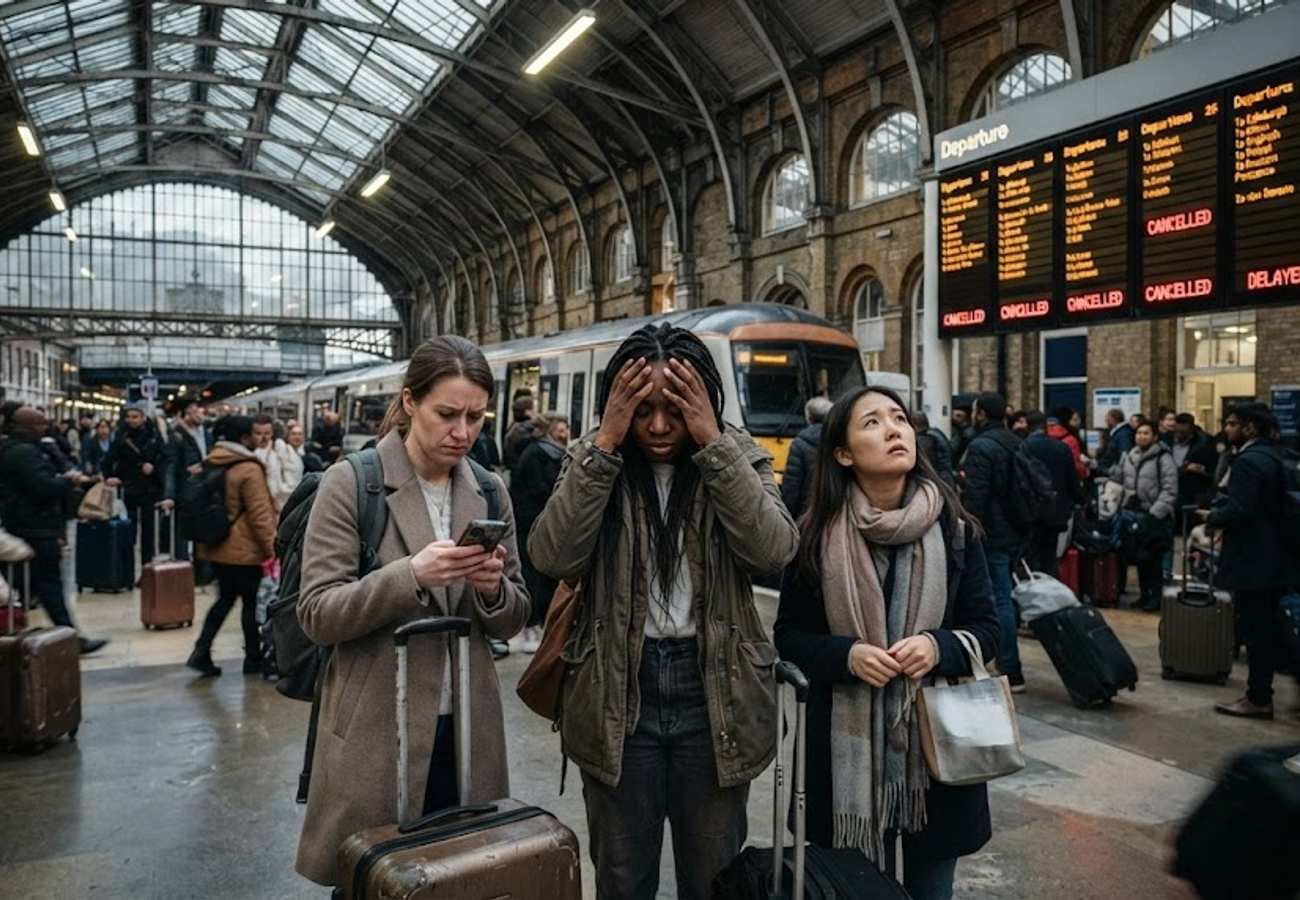
Image generated by AI
London's summer travel season is about to hit a major speed bump. Two of the capital's most critical railway stations—Charing Cross and Waterloo East—will go completely dark for 22 consecutive days starting July 26, as Network Rail launches one of the largest infrastructure projects scheduled for 2026.
The £20 million modernization blitz runs through August 16 and will affect thousands of commuters, business travelers, and tourists during peak holiday season. But here's the strategy: rail authorities deliberately chose this window because summer passenger numbers drop roughly 20 percent compared to other periods. Better a single brutal blow than 60 fragmented weekend closures scattered throughout the year.
The Scale of the Engineering Challenge
This isn't a routine maintenance job. Network Rail is undertaking work that touches the very arteries of southeast England's busiest rail corridor:
Track renewal targeting infrastructure installed in the 1990s. Platform reconstruction with new foundations and reinforced surfaces. And the crown jewel: structural repairs to the 175-year-old Hungerford Bridge, which has carried railway traffic across the River Thames since it opened in the mid-1800s.
The bridge also functions as a pedestrian walkway connecting Waterloo East to London Waterloo—meaning its deterioration affects daily journeys for tens of thousands of users. Strengthening this Victorian-era structure could extend its operational lifespan by decades while ensuring safety for both rail passengers and foot traffic.
Reddit: "If they're shutting down two stations for nearly four weeks, the infrastructure must be genuinely critical. I'm actually glad they're doing this in summer rather than spreading chaos across the whole year." — r/londontransport
Why the Timing Makes Sense (Sort Of)
Network Rail didn't pick July 26 randomly. School holidays mean weekday commuter volumes plummet. Summer holiday-makers traveling by rail drop significantly. Lower passenger density equals contractors getting uninterrupted access to complex engineering work.
Completing a concentrated 22-day closure beats the alternative: approximately 60 separate weekend engineering blocks spread across the calendar. That approach would mean recurring frustration, repeated journey planning headaches, and extended uncertainty for passengers trying to navigate London's transport network.
The trade-off is brutal but strategic—short-term acute pain for long-term chronic relief.
Infrastructure Failures Drive the Urgency
The numbers tell the story. Recent breakdowns across this rail corridor have contributed to more than 21,000 minutes of accumulated train delays for passengers. That's not a rounding error—that's infrastructure crying out for attention.
Aging track components have increasingly triggered operational faults. Platforms designed for Victorian-era passenger volumes strain under modern demand. The cumulative effect: unreliable service that frustrates both daily commuters and visitors expecting smooth London transport experiences.
The £20 million investment targets long-term reliability improvements. Replace the aging infrastructure. Strengthen critical structures. Reduce equipment failures. Improve punctuality. These aren't cosmetic upgrades—they're essential maintenance work that's been deferred too long.
Where Passengers Actually Go During the Closure
Charing Cross and Waterloo East aren't disappearing permanently. They're just pausing. Network Rail has arranged alternative routing:
London Victoria will absorb diverted Charing Cross services. Cannon Street and Blackfriars offer additional alternatives. Some services will terminate at London Bridge instead. Passengers can also use London Underground connections and eligible bus routes at no additional charge where ticket acceptance terms apply.
It's not seamless, but it works. Regional connectivity survives. Journey times extend. And passengers adapt.
Summer Visitors Face Real Navigation Challenges
If you're planning a London visit between July 26 and August 16, plan carefully. Tourists heading to Trafalgar Square, Covent Garden, South Bank, Westminster, or West End attractions now face rerouted rail access.
Check journey planners before you leave your accommodation. Build extra travel time into your itineraries. Confirm services before boarding. The London transport system is designed for redundancy, but infrastructure work still creates friction.
Additional Disruptions Continue Through Autumn
The summer closure isn't the endpoint. Network Rail has already scheduled additional weekend engineering blocks for August 22–23 and October 10–11 to complete work associated with the wider infrastructure programme.
Autumn travelers should monitor Network Rail's official updates before planning journeys during those windows.
The Larger Strategic Picture
This isn't just about fixing tracks. It's about modernizing one of London's busiest rail corridors while preserving historic infrastructure that remains central to the capital's transport identity.
The Hungerford Bridge dates to the 1850s. The track network has been layered with improvements and patches for decades. Passenger demand has grown exponentially since these systems were designed. At some point, you have to rebuild rather than perpetually repair.
The £20 million represents that pivot moment.
London's summer will be messy, but its railways will emerge stronger.
Related Travel Guides
Disclaimer
This article is for informational and educational purposes only. It does not constitute legal, financial, or professional advice. While we strive to provide accurate and up-to-date information, travel policies, regulations, and conditions change rapidly. Always verify information with official sources before making travel decisions. Nomad Lawyer makes no representations about the accuracy, reliability, completeness, or suitability of the information provided. Readers should consult qualified professionals for advice specific to their circumstances. The views expressed in this article are those of the author and do not necessarily reflect the views of Nomad Lawyer.
Preeti Gunjan
Contributor & Community Manager
A passionate traveller and community builder. Preeti helps grow the Nomad Lawyer community, fostering engagement and bringing the reader experience to life.
Learn more about our team →