
EVA Air Debuts Innovative Premium Economy Seat That Reclines 8 Inches Without Encroaching On Rear Passengers
Breaking airline news and aviation industry updates for 2026.

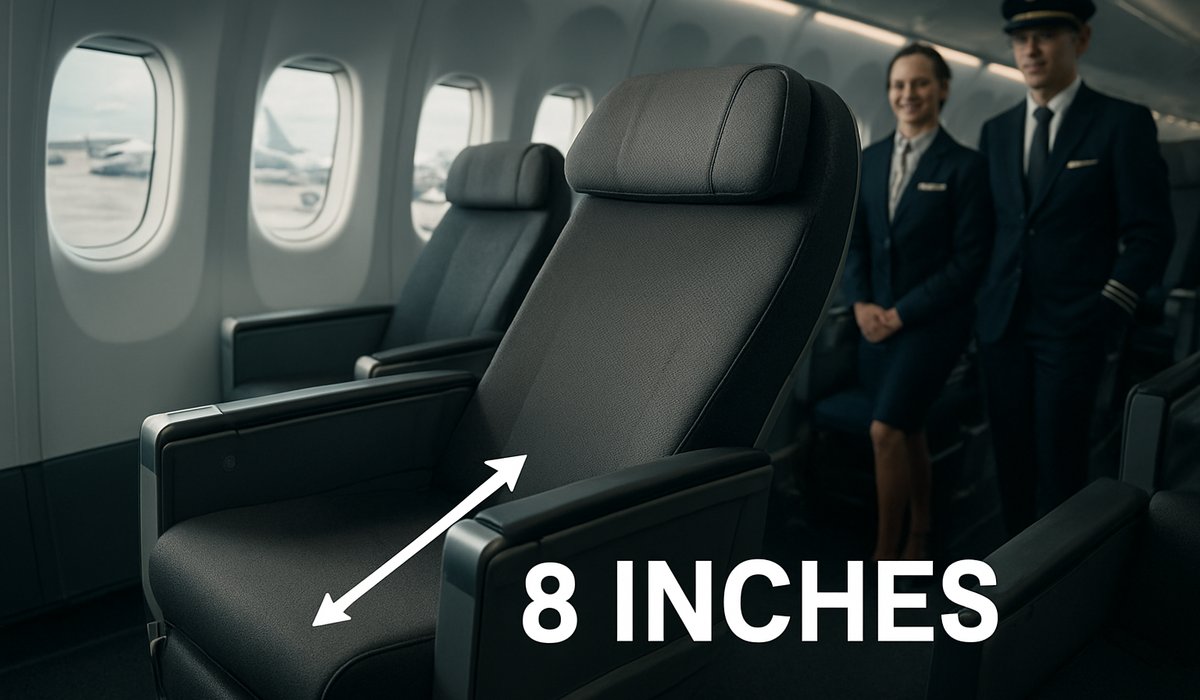
Image generated by AI
EVA Air Debuts Innovative Premium Economy Seat That Reclines 8 Inches Without Encroaching On Rear Passengers
Taiwan-based carrier introduces fourth-generation seating technology designed to balance passenger comfort with cabin efficiency
Revolutionary Seat Design Addresses Long-Standing Airline Cabin Challenge
EVA Air has unveiled a breakthrough premium economy seat configuration this month that promises to resolve one of the aviation industry's most persistent passenger grievances: the clash between recline comfort and personal space protection. The Taiwanese carrier's newly introduced fourth-generation premium economy seat permits an eight-inch recline without physically intruding into the legroom of passengers seated directly behind—a significant engineering achievement in an era of increasingly cramped commercial aircraft cabins.
The innovation represents a strategic response to mounting pressure from both travelers and airlines seeking to maximize comfort without sacrificing cabin density or triggering the interpersonal conflicts that frequently erupt when premium passengers recline into economy seating.
Addressing a Persistent Aviation Industry Problem
For decades, aircraft recline mechanisms have created friction points throughout commercial aviation, with rear-seat passengers often finding their personal space compromised when forward-seated travelers recline their seats. This mechanical tension has become so prevalent that some airlines have restricted or eliminated recline functionality entirely on certain routes, while others have implemented limited recline angles to mitigate complaints.
EVA Air's engineering solution targets this friction point directly. By developing a seat mechanism that allows meaningful recline depth without forward encroachment, the carrier positions itself as a leader in passenger-centric cabin design—an increasingly important differentiator in the competitive premium economy segment.
Premium Economy: A Pivotal Revenue Driver
Premium economy cabins have become critical revenue generators for international carriers, occupying a strategic middle ground between economy and business class fares. Airlines recognize that investing in enhanced comfort features at this tier drives customer loyalty while maintaining favorable capacity economics compared to traditional business class offerings.
The introduction of advanced seat technology aligns with broader industry trends emphasizing product differentiation. As fuel costs remain volatile and operating margins face pressure, carriers are investing in cabin innovations that justify premium pricing tiers and reduce customer churn to competitors offering superior comfort experiences.
Industry Implications
EVA Air's advancement signals how Taiwanese and Asian carriers continue pushing technological boundaries to capture high-value international passenger segments. The move may prompt competitors operating similar routes—particularly across the Asia-Pacific and transatlantic markets—to evaluate their own premium economy offerings.
The seat design also highlights ongoing evolution in aircraft interior engineering, where manufacturers and airlines collaborate to solve longstanding operational challenges while optimizing revenue per available seat kilometer (RASM).
Frequently Asked Questions
What is the difference between premium economy and business class? Premium economy offers enhanced comfort, wider seats, improved amenities, and priority services at substantially lower fares than business class, targeting budget-conscious business travelers and leisure passengers willing to pay for added comfort.
How much does premium economy recline typically cost airlines? Premium economy seats represent significant capital investment, with advanced recline mechanisms adding $3,000-$8,000 per seat depending on the aircraft type and manufacturer specifications.
Which airlines are investing most heavily in premium economy cabins? Major carriers including Singapore Airlines, Cathay Pacific, Japan Airlines, and ANA have prioritized premium economy expansion, recognizing it as a high-margin product category in competitive long-haul markets.
How do jet fuel prices impact airline seat investments? Rising fuel costs often reduce capital expenditures on cabin upgrades, but premium cabin enhancements that justify higher fares remain strategic priorities even during fuel price spikes.
What technical innovations are transforming airline seating? Modern developments include memory foam customization, advanced recline mechanisms, integrated connectivity, dynamic lighting systems, and space-efficient designs that maximize comfort within existing fuselage dimensions.
Related Travel Guides
Flight Delay Compensation Guide 2026
Understanding Airline Route Changes
Airport Security Process Updated (2026)
External Resources
Disclaimer
This article is for informational and educational purposes only. It does not constitute legal, financial, or professional advice. While we strive to provide accurate and up-to-date information, travel policies, regulations, and conditions change rapidly. Always verify information with official sources before making travel decisions. Nomad Lawyer makes no representations about the accuracy, reliability, completeness, or suitability of the information provided. Readers should consult qualified professionals for advice specific to their circumstances. The views expressed in this article are those of the author and do not necessarily reflect the views of Nomad Lawyer.
Preeti Gunjan
Contributor & Community Manager
A passionate traveller and community builder. Preeti helps grow the Nomad Lawyer community, fostering engagement and bringing the reader experience to life.
Learn more about our team →