Roots-IN 2026 in Matera Unites Global Diaspora Buyers and Italian Regions to Expand Ancestry Tourism Across Rural Italy

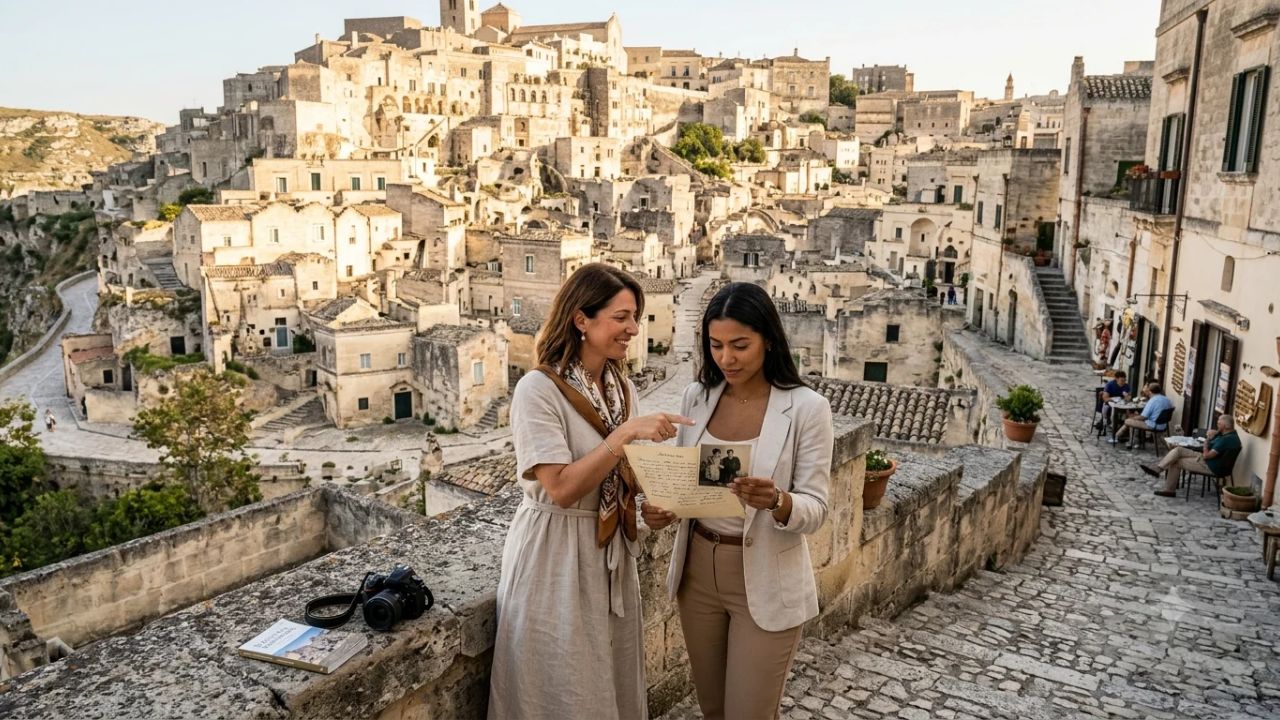
MATERA, Italy — International tourism buyers, professional genealogists, and regional tourism boards are gathering at the UNA Hotels MH Matera Congress Centre for Roots-IN 2026, the premier global trade exchange dedicated to ancestry and roots tourism (turismo delle radici).
Scheduled for November 10 and 11, 2026, the fifth edition of the Borsa Internazionale del Turismo delle Origini convenes more than 55 specialized outbound tour operators and travel buyers from five primary diaspora markets—Brazil, the United States, Argentina, Canada, and Australia—alongside delegations from Mexico.
Organized by the Basilicata Region through its Territorial Promotion Agency (APT Basilicata) in collaboration with the Italian National Tourist Board (ENIT), and staged under the official patronage of Italy's Ministry of Foreign Affairs and International Cooperation (MAECI), the summit pairs international commercial buyers with over 120 Italian travel suppliers.
The gathering marks an essential evolution in Italian destination management. As urban centers like Venice, Florence, and Rome battle overtourism, acute housing shortages, and daily visitor caps, Italy's vast interior—composed of depopulating mountain villages, historic hamlets (borghi), and agrarian towns—is positioning genealogy and ancestry travel as a primary engine for sustainable economic renewal. By transforming family history research into high-value, experiential journeys, Roots-IN 2026 addresses a global demographic network estimated at 80 million people of Italian descent worldwide.
+----------------------------------------------------------------------------------------------------+ | ROOTS-IN 2026: STRATEGIC EVENT & DIASPORA TOURISM SCORECARD | +----------------------------------------------------------------------------------------------------+ | Official Dates | November 10–11, 2026 (Fam Tour: November 7–12, 2026) | | Host Venue | UNA Hotels MH Matera Congress Centre, Matera, Basilicata, Italy | | Organizing Entity | APT Basilicata (Territorial Promotion Agency) & ENIT | | Government Patronage | Ministry of Foreign Affairs and International Cooperation (MAECI) | | Core Theme | "Dialogue" (Aligned with Matera: Mediterranean Capital of Culture) | | Commercial Scale | 55 Outbound Buyers, 120+ Italian Sellers, 15-Minute Matchmaking B2B | | Primary Diaspora Markets | Brazil, United States, Argentina, Canada, Australia, Mexico | | Featured Regional Delegations| Basilicata, Calabria, Tuscany, Liguria, and 5 Additional Regions | | Specialized Entities | Storie di Famiglia, Gens Italia Brasile, Raiz Italiana, Destinazione | | Target Global Audience | Estimated 80 Million Italian-Descended Citizens (Italodiscendenti)| +----------------------------------------------------------------------------------------------------+
The 80-Million Global Diaspora: Untapping Italy's Transatlantic Emigrant Footprint
Ancestry tourism—frequently described across Italy as turismo delle origini or turismo genealogico—represents a profound departure from traditional sightseeing. Rather than following standard itineraries focused on iconic monuments, museums, and coastal resorts, roots travelers are motivated by personal identity, familial memory, and emotional reclamation. They journey to find the birth home of a great-grandparent, decipher centuries-old baptismal records in mountain parish churches, and walk the exact cobblestone alleys their ancestors left behind during the great migration waves of the late 19th and early 20th centuries.
THE ITALIAN DIASPORA: PRIMARY GLOBAL POPULATION BASINS
=============================================================================================
Country       Estimated Diaspora Population    Primary Historical Origins in Italy
---------------------------------------------------------------------------------------------
Brazil        32 to 35 Million                 Veneto, Trentino, Friuli, Campania, Basilicata
Argentina     25 to 28 Million                 Calabria, Piedmont, Lombardy, Sicily, Marche
United States 16 to 18 Million                 Sicily, Campania, Calabria, Abruzzo, Molise
Canada        1.5 to 1.8 Million               Abruzzo, Molise, Lazio, Calabria, Sicily
Australia     1.0 to 1.2 Million               Sicily, Calabria, Veneto, Campania, Friuli
=============================================================================================
Total Addressable Heritage Market: ~80 Million Global Descendants (Italodiscendenti)
Between 1876 and 1976, an estimated 26 million Italians emigrated abroad, escaping rural poverty, agrarian crises, disease, and the devastation of two world wars. This prolonged exodus established vast demographic enclaves across the Americas and Oceania:
- Brazil's Dominant Italian Heritage: Brazil hosts the largest population of Italian descendants in the world outside Italy, numbering upwards of 32 million people. Concentrated heavily across the states of São Paulo, Rio Grande do Sul, Santa Catarina, and Paraná, early Italian migrants provided the primary labor force for coffee plantations (fazendas) before establishing industrial hubs and wine-producing colonies in the Serra Gaúcha. The participation of Brazilian buyers at Roots-IN 2026 highlights a rapidly maturing demand for high-end, customized genealogical itineraries connecting modern South Americans with ancestral villages in northern and southern Italy alike.
- The Argentine Connection: In Argentina, over 60 percent of the national population claims documented Italian lineage. From the port neighborhoods of Buenos Aires to the agricultural plains of Santa Fe and Córdoba, Italian culture deeply permeates Argentine language, cuisine, and civil life, making travel back to Italy a deeply ingrained cultural milestone.
- The North American Corridor: In the United States and Canada, third- and fourth-generation descendants of southern Italian migrants—originating from Basilicata, Calabria, Sicily, and Campania—possess substantial disposable income and increasingly seek deep experiential connections with their ancestral heritage before familial oral histories fade completely.
- The Australian Community: Established largely through post-World War II assisted migration schemes, Australia's one-million-strong Italian community maintains active hometown associations (circoli lucani, calabresi nel mondo) that provide ready-made distribution channels for heritage travel programs.
At Roots-IN 2026, the focus is squarely on equipping travel agencies with the commercial tools, local ground partnerships, and historical expertise needed to translate this immense emotional sentiment into structured, high-value travel packages.
Countering Overtourism: How Roots Travel Revitalizes Italy's Depopulating Inner Areas
The strategic timing of Roots-IN 2026 comes amid intense structural reassessment within the Italian tourism economy. Italy welcomed record international arrivals in 2024 and 2025, but the overwhelming concentration of visitors in a handful of "art cities" (città d'arte) has triggered severe negative externalities:
- Urban Saturation: Venice's pilot access fee for day-trippers, Florence's restrictions on short-term holiday rental keyboxes, and Rome's overcrowding during the 2025 Jubilee have highlighted the urgent need to redistribute tourist footfall across wider territories.
- The Depopulation Crisis of Aree Interne: Conversely, Italy's inland territories (aree interne)—mountain and hillside municipalities located far from high-speed rail lines and coastal motorways—face an acute demographic winter. Hundreds of villages across Basilicata, Calabria, Molise, and inland Sicily have suffered severe population decline, leaving historic stone houses empty, primary schools shuttered, and local artisan shops abandoned.
THE STRUCTURAL ECONOMIC DIVERGENCE IN ITALIAN TOURISM
=============================================================================================
MASS OVERTOURISM (VENICE / ROME / FLORENCE)     ROOTS TOURISM (BASILICATA / CALABRIA)
* Extreme Density & Footfall Congestion         * Dispersed, Low-Impact Human Scale
* Short 1.8-Night Average Stays                 * Extended 12- to 21-Night Immersive Stays
* Leakage to Multinational Hotel Chains         * Direct Spending in Family Trattorias & B&Bs
* Housing Displacement of Local Residents       * Preserves and Restores Historic Borghi
* Superficial "Bucket-List" Monument Visits     * Deep Emotional, Cultural & Archival Engagement
=============================================================================================
Roots tourism acts as a direct economic antidote to this geographical imbalance. Unlike the average international tourist who spends fewer than two nights in an art city before boarding a tour bus to the next monument, ancestry travelers behave entirely differently:
- Extended Length of Stay: Industry data collected by ENIT and MAECI indicates that roots travelers stay an average of 14 to 21 days in Italy, often spending a full week or more residing in a single village where their ancestors lived.
- Direct Wealth Redistribution: Roots travelers spend money directly within small-scale local economies. Their expenditures support family-run trattorias, independent bed-and-breakfasts, local car rental operators, artisanal bakeries, and village guides, ensuring that tourism revenue circulates locally rather than leaking to multinational hospitality conglomerates.
- Year-Round Seasonality: Because family heritage travel is dictated by archival appointments, personal milestones, and extended family visits rather than beach weather, roots travelers visit during autumn, winter, and spring, smoothing out the disruptive peaks and troughs of traditional Mediterranean tourism seasonality.
By positioning Matera as the gateway to the hidden villages of Basilicata and the wider Mezzogiorno, Roots-IN 2026 provides a replicable blueprint for sustainable destination management across rural Europe.
The Matera Setting: Mediterranean Capital of Culture and Dialogue 2026
The selection of Matera as the host city for Roots-IN 2026 carries deep symbolic and historical resonance. Renowned globally for the Sassi—ancient cave dwellings carved directly into the calcarenite ravines of the Gravina valley—Matera represents one of the most astonishing urban regenerations in modern European history.
In 1952, Italian Prime Minister Alcide De Gasperi declared the Sassi a "national shame" due to extreme poverty, malaria, and unsanitary conditions, prompting the forced relocation of more than 15,000 residents to newly constructed modern quarters. For decades, the Sassi stood largely abandoned.
However, through visionary civic conservation, Matera was designated a UNESCO World Heritage site in 1993 and later served as European Capital of Culture in 2019. In 2026, Matera holds the distinction of being designated the Mediterranean Capital of Culture and Dialogue, providing an ideal stage for examining the historical dialogue between emigrated communities and their native soil.
APT BASILICATA INTERNATIONAL FAMILIARIZATION TOUR CIRCUIT
=============================================================================================
BARILE & THE VULTURE REGION                MELFI & CASTLE OF LAGOPESOLE
* Arbëreshë (Italo-Albanian) Heritage       * Norman Architectural Legacy & Walls
* Volcanic Cave Cellars (Cantine)           * Frederick II Swabian Fortress History
* Aglianico del Vulture Wine Heritage       * Medieval Military & Administrative Archives
                  \                                       /
                   \                                     /
                    v                                   v
             +-------------------------------------------------+
             |        MATERA: THE HEART OF ROOTS-IN 2026       |
             | - Sassi Cave Dwellings & Rock-Hewn Churches     |
             | - Mediterranean Dialogue & Cultural Synthesis   |
             | - B2B Commercial Matchmaking at UNA Hotels MH   |
             +-------------------------------------------------+
                    /                                   \
                   /                                     \
                  v                                       v
POMARICO & THE BRADANO VALLEY              MIGLIONICO & THE MALCONSIGLIO
* Agricultural Hilltop Settlement           * 15th-Century Castle of the Malconsiglio
* Municipal Civil Registry Archives         * Historic Franciscan Convent & Polyptych
* Emigration Memorials to the Americas      * Community Welcome Hospitality Models
=============================================================================================
To demonstrate how cultural heritage converts into viable travel itineraries, APT Basilicata organized an intensive familiarization tour from November 7 to 12 for visiting international buyers and specialized travel journalists. The circuit weaves through key historical centers of the province:
- Melfi and Lagopesole: Delegates explore the imposing Norman Castle of Melfi—where Norman King Roger II promulgated the Constitutions of Melfi in 1231—and the haunting hilltop fortress of Lagopesole, the beloved hunting retreat of Holy Roman Emperor Frederick II.
- Barile and the Arbëreshë Heritage: Visiting Barile introduces buyers to Basilicata's unique 15th-century Italo-Albanian community. Delegates tour the Cantine, a labyrinth of centuries-old cellars carved directly into the volcanic tufa rock of Monte Vulture, where world-class Aglianico del Vulture red wine is aged.
- Pomarico and Miglionico: These hilltop agricultural communities illustrate the authentic roots experience. In Miglionico, delegates visit the 15th-century Castle of the Malconsiglio and historic Franciscan cloisters, engaging directly with municipal archivists and local community leaders who welcome returning descendants.
These immersive site visits allow international travel buyers from the Americas and Australia to evaluate the infrastructure, transport logistics, and community readiness of rural Basilicata firsthand before selling packages to their overseas clients.
Regional Showcases: Basilicata, Calabria, Tuscany, and Liguria's Tailored Strategies
While Basilicata serves as the host region, Roots-IN 2026 features dedicated exhibition spaces and presentations from nine Italian regions, with Calabria, Tuscany, and Liguria playing leading roles in conference discussions. Each region brings a distinct emigrant history and tailored commercial strategy:
REGIONAL STRATEGIC FOCUS AT ROOTS-IN 2026
=============================================================================================
Region       Historical Migration Flow         Core Ancestry Tourism Asset & Strategy
---------------------------------------------------------------------------------------------
Basilicata   Late 19th-century peasant         "Turismo delle Radici" packages linking Sassi
             exodus to US, Brazil, Argentina   heritage with rural hill borghi and local food.
Calabria     Massive transatlantic flow to     Digitized municipal civil registries, guided
             North America, Argentina, Aus     ancestry tracing, and rural farm stays (agriturismi).
Tuscany      Agrarian sharecropper migration   High-end cultural genealogy, Medici archival
             to South America & Northern Europe research, and historic villa heritage trails.
Liguria      Maritime & commercial migration   Genoa emigration museum (MEI), coastal village
             to Argentina, Chile, & California records, and transatlantic family history links.
=============================================================================================
Calabria: Genealogical Research as Regional Development
Calabria presents ancestry tourism not merely as a marketing segment, but as an essential regional development policy. With an estimated diaspora exceeding five million people globally, Calabria's regional government is actively investing in the digitization of municipal registry archives (stato civile) and historic notary records dating back to the 16th century.
At Roots-IN, Calabrian delegates are showcasing specialized "ancestry concierge" services. These programs pair visiting descendants with bilingual local genealogists who assist them in navigating bureaucratic parish archives, visiting family cemeteries, and locating ancestral homesteads in remote Aspromonte and Pollino mountain villages.
Tuscany and Liguria: Beyond the Classical Northern Itinerary
Tuscany and Liguria are demonstrating that roots travel is not exclusive to the southern Mezzogiorno.
Liguria highlights Genoa's historic role as the primary Mediterranean port of embarkation for millions of emigrants boarding steamships for Buenos Aires, Santos, and New York between 1880 and 1930. The region is promoting travel itineraries centered around the National Museum of Italian Emigration (MEI) housed within the historic Commenda di San Giovanni di Pré in Genoa, connecting maritime history with visits to remote mountain hamlets in the Ligurian Apennines.
Tuscany is focusing on the descendants of agricultural sharecroppers (mezzadri) who left the Garfagnana, Lunigiana, and Pistoia mountains for the Americas. Tuscany's offerings blend archival discovery in provincial capitals with high-end culinary, wine, and craft workshops, demonstrating how ancestry tourism can attract affluent international travelers seeking refined authenticity away from crowded Renaissance hotspots.
Genealogical Infrastructure and Archival Modernization: Overcoming Record Barriers
The foundational core of any credible ancestry travel itinerary is verifiable historical documentation. Unlike a standard vacation, a roots trip can be ruined if a traveler journeys thousands of miles only to find that their ancestral town was recorded incorrectly or that the local parish archives are locked and inaccessible.
At Roots-IN 2026, specialized genealogical firms and cultural associations are taking center stage to bridge the gap between archival science and commercial tourism:
THE GENEALOGICAL DISCOVERY PATHWAY FOR ROOTS TOURISM
=============================================================================================
PHASE 1: PRE-TRIP OVERSEAS RESEARCH
[Immigration Ship Manifests / Passenger Lists (Castle Garden / Ellis Island / Hospedaria de Imigrantes)]
                                       |
                                       v
[National Census Records / Naturalization Petitions in Brazil, US, Argentina, Australia]
                                       |
                                       v
PHASE 2: ITALIAN ARCHIVAL TRACING
[Archivio di Stato (State Archives): Military Conscription (Leva) & Matrimonial Records]
                                       |
                                       v
[Ufficio dello Stato Civile (Municipal Civil Registry): Birth, Marriage, Death Records post-1809/1865]
                                       |
                                       v
[Archivi Parrocchiali (Parish Registers): Catholic Baptismal, Confirmation & Marriage Records (1500s-1800s)]
                                       |
                                       v
PHASE 3: ON-SITE COMMEMORATIVE EXPERIENCE
[Bilingual Genealogist Accompaniment ---> Emotional Family Home Visit ---> Village Reception]
=============================================================================================
Specialized Cultural Associations and Genealogists
The conference highlights the vital work of specialized organizations operating across the diaspora:
- Storie di Famiglia: A professional network of certified Italian archivists and paleographers who specialize in transcribing archaic scripts, Latin ecclesiastical registers, and Napoleonic civil records, ensuring that family trees are rigorously verified before travel itineraries are booked.
- Gens Turismo Genealogico Italia Brasile: A specialized bi-national consultancy focusing exclusively on the deep genealogical corridors connecting São Paulo, Paraná, and Rio Grande do Sul with northern and southern Italy. Gens assists Brazilian travelers in navigating both travel logistics and the evidentiary documentation required for Italian citizenship applications.
- Raiz Italiana APS: A prominent non-profit association that works directly with Italy's Ministry of Foreign Affairs to train local "Roots Tourism Ambassadors" across hundreds of Italian municipalities, ensuring that returning emigrant descendants receive a formal welcome from local mayors and community elders.
The Interplay with Citizenship Recognition (Iure Sanguinis)
A significant catalyst driving the surge in roots tourism is the legal principle of iure sanguinis (citizenship by bloodline), which allows individuals of Italian descent to claim Italian—and by extension European Union—citizenship if they can prove an unbroken line of descent from an Italian ancestor who did not naturalize as a foreign citizen prior to their child's birth.
While Roots-IN focuses strictly on leisure and cultural tourism rather than legal services, the search for official, certified birth certificates (estratto per riassunto dell'atto di nascita) often serves as the initial trigger that sparks a traveler's desire to visit their ancestral town. By collaborating with professional genealogists, Italian tour operators can structure travel itineraries that combine administrative visits to town halls (municipi) with deeply rewarding cultural and culinary explorations.
Digital Storytelling, AI Archival Indexing, and the Technology Dimension
The professional conference sessions at the UNA Hotels MH Matera Congress Centre are examining how digital technology and artificial intelligence are revolutionizing ancestry travel design.
Historically, tracing family histories in Italy required months of manual archival searches, often complicated by handwritten scripts, damaged parish registers, and phonetic spelling errors made by overseas immigration clerks. Today, digital innovations are transforming this landscape:
DIGITAL ARCHIVAL TECHNOLOGIES TRANSFORMING ROOTS TOURISM
| Column 1 |
|---|
| 1. AI-POWERED HANDWRITTEN TEXT RECOGNITION (HTR) |
| - Computer vision algorithms automatically transcribe 18th-century cursive Italian |
| and ecclesiastical Latin documents, indexing millions of municipal records in minutes. |
| 2. CLOUD-BASED DIASPORA MAPPING & FAMILY TREE INTEGRATION |
| - Collaborative platforms link global family databases (e.g., Portale Antenati, Family- |
| Search) with interactive geospatial maps of Italian municipalities. |
| 3. AUGMENTED REALITY (AR) ARCHITECTURAL TIME TRAVEL |
| - Mobile AR applications allow roots travelers to point smartphones at ruined stone |
| homesteads to visualize how their ancestors lived, worked, and farmed a century ago. |
| 4. DIGITAL STORYTELLING & ORAL HISTORY ARCHIVES |
| - Curated multimedia repositories capture video interviews with elderly village residents, |
| preserving local dialects and folk songs before they vanish from living memory. |
During dedicated panel sessions, technology providers are demonstrating how Artificial Intelligence can analyze vast databases like Italy's national Portale Antenati (Ancestors Portal), instantly matching overseas family trees with digitized civil records from provincial State Archives.
In addition, digital storytelling platforms allow tour operators to build customized multimedia dossiers for travelers prior to departure. A roots traveler from Sydney or Toronto can receive an interactive digital map detailing their grandfather's daily walking route to school, the historic bakery where the family purchased bread, and the church where their great-grandparents were wed. This digital preparation elevates the subsequent physical journey from a routine holiday into a deeply emotional pilgrimage.
Primary Diaspora Source Markets, Historical Destinations, and Travel Profiles
The commercial dynamics of roots tourism vary substantially depending on the country of origin. The following matrix illustrates the distinct demographic profiles, travel habits, and economic impacts of the primary diaspora markets represented at Roots-IN 2026:
| Source Market | Primary Destination Regions in Italy | Average Length of Stay | Primary Travel Motivations | Preferred Accommodation & Travel Style |
|---|---|---|---|---|
| Brazil | Veneto, Trentino, Campania, Basilicata, Friuli | 15 to 22 Days | Family tree discovery, cultural reconnection, citizenship documentation, wine tourism | Boutique agriturismi, restored stone residences (alberghi diffusi), private chauffeured tours |
| United States | Sicily, Campania, Calabria, Basilicata, Abruzzo | 12 to 18 Days | Visiting ancestral birthplaces, emotional closure, high-end gastronomic and cultural experiences | 4- and 5-star historic hotels, private guided ancestry tours, customized family reunions |
| Argentina | Calabria, Piedmont, Sicily, Marche, Lombardy | 18 to 28 Days | Deep familial reconnection, visiting living cousins, linguistic immersion, historical memory | Extended village rentals, family homestays, self-drive regional explorations |
| Canada | Abruzzo, Molise, Lazio, Calabria, Sicily | 14 to 20 Days | Multigenerational family journeys, parish record exploration, rural culinary traditions | Country villas, charming bed-and-breakfasts, small-group heritage tours |
| Australia | Sicily, Calabria, Campania, Veneto, Friuli | 21 to 35 Days | Long-haul heritage voyages, combined European travel, comprehensive ancestral tracing | Extended apartment stays, self-drive countryside exploration, specialized village guides |
| Mexico | Veneto, Lombardy, Trentino, Emilia-Romagna | 12 to 16 Days | Historical curiosity, agricultural heritage links (e.g., Chipilo community), culinary roots | Historic boutique hotels, guided regional food and wine itineraries |
The Hospitality Model: Albergo Diffuso and Community Living
A critical theme examined throughout Roots-IN 2026 is the question of hospitality infrastructure. Depopulating rural villages cannot—and should not—accommodate large, modern concrete hotel towers that would scar the historic architectural landscape.
Instead, the summit champions the uniquely Italian hospitality concept of the Albergo Diffuso (scattered hotel).
THE ALBERGO DIFFUSO (SCATTERED HOTEL) REGENERATION MODEL
=============================================================================================
CENTRAL RECEPTION & SERVICES                   DISPERSED HISTORIC LIVING QUARTERS
+------------------------------------+         +------------------------------------+
|  Town Hall Square (Piazza)         |         |  Restored 18th-Century Stone House |
|  - Check-in Desk & Concierge       | <-----> |  - Authentic Period Furnishings    |
|  - Central Breakfast Dining Room   |         |  - Modern Energy Efficiency & Wi-Fi|
|  - Community Information & Guides  |         |  - Located in Historic Village Alley|
+------------------------------------+         +------------------------------------+
                  ^                                              ^
                  |                                              |
                  +------------- LIVING LIKE A TEMPORARY CITIZEN -+
                  |  - Morning Espresso at the Local Village Bar |
                  |  - Fresh Produce from Local Greengrocers     |
                  |  - Daily Interactions with Elderly Residents |
Pioneered in northeastern Italy following the 1976 Friuli earthquake and perfected across southern villages, the Albergo Diffuso model restores abandoned stone cottages and medieval houses scattered throughout a village's historic center, linking them to a central reception desk, communal dining room, and concierge service located in the town square.
For roots travelers, staying in an Albergo Diffuso offers profound advantages:
- Authentic Residential Immersion: Rather than feeling like isolated tourists, visitors live as "temporary citizens" (cittadini temporanei). They open their front door directly onto narrow village streets, greet local neighbors, and buy morning bread at the corner bakery.
- Architectural Preservation: The model generates capital to structurally restore crumbling historic buildings without altering the village's historic urban footprint.
- Community-Based Tourism (Destinazione Umana): Organizations like Destinazione Umana are presenting frameworks that actively integrate the resident community into the visitor experience. Local retired artisans, bakers, and storytellers are engaged as cultural hosts, sharing oral histories, traditional weaving techniques, and regional recipes directly with visiting descendants.
Actionable Strategic Roadmap: Developing High-Value Ancestry Tourism Products
For international tour operators, travel advisors, and destination marketing organizations aiming to capture market share in this expanding sector, Roots-IN 2026 establishes a clear operational blueprint. Developing successful, repeatable roots tourism products requires moving beyond generic leisure marketing and adhering to a rigorous three-phase execution framework:
ACTIONABLE ROADMAP: DEVELOPING PROFESSIONAL ROOTS TOURISM
| Column 1 |
|---|
| PHASE 1: PRE-BOOKING HISTORICAL AUDIT & VERIFICATION |
| - Never market a roots package without documented archival verification of the village |
| - Partner with certified Italian paleographers and genealogists (e.g., Storie di Famiglia) |
| - Confirm the exact location and physical accessibility of ancestral civil/church records |
| PHASE 2: THE IMMERSIVE FIELDWORK EXPERIENCE |
| - Contract bilingual local guides trained in community heritage and oral history |
| - Arrange pre-scheduled appointments with municipal registry officials and parish priests |
| - Coordinate a formal civic welcome with the village Mayor or cultural councilor |
| - Anchor accommodation in authentic regional Alberghi Diffusi or licensed agriturismi |
| PHASE 3: POST-TRIP COMMEMORATION & DIASPORA RETENTION |
| - Provide clients with a bound, archival-grade Family Heritage Dossier with certified |
| record transcriptions and professional photographic documentation of their visit. |
| - Connect clients with local sister-city initiatives and regional cultural associations. |
| - Foster repeat visits through multigenerational family reunion travel packages. |
Essential Operational Guidelines for Travel Advisors
- Manage Client Expectations with Precision: Historical realities must be communicated clearly. In many southern Italian villages, ancestral homes may have collapsed during earthquakes, been heavily renovated, or passed into the hands of distant cousins who may be cautious of overseas visitors. Professional operators prepare clients emotionally, emphasizing that the intangible cultural connection—the landscape, the aromas, the food, and the community—is as meaningful as physical bricks and mortar.
- Build Deep Local Ground Coalitions: Outbound agencies in New York, São Paulo, or Sydney cannot effectively manage a roots itinerary from across an ocean. They must establish formal commercial relationships with incoming Italian Destination Management Companies (DMCs) and local tourism consortia that maintain direct personal relationships with village mayors, parish priests, and municipal archivists.
- Design for Multigenerational Cohorts: Ancestry travel frequently involves three generations traveling together: elderly grandparents who hold the last living memories of the emigrant generation, adult children who finance the journey, and tech-savvy grandchildren interested in cultural identity and sustainable living. Itineraries must balance gentle pacing and accessible walking routes for seniors with active, hands-on culinary, cycling, or outdoor experiences for younger travelers.
As Roots-IN 2026 opens its business meetings in Matera, it establishes a powerful truth for the global travel economy: the future of tourism lies not merely in discovering new places, but in rediscovering who we are and where we came from. By opening their doors to the global diaspora, Italy's historic villages are turning memory into an enduring bridge of cultural dialogue, economic vitality, and human connection.
Related Travel Guides
- Navigating Italy’s Historic Borghi: A Practical Guide to Hidden Villages and Rural Heritage
- Albergo Diffuso Masterclass: Sustainable Hospitality and Village Living Across Italy
- Matera and Basilicata Travel Guide: Exploring the Sassi, Rock Churches, and the Melfese
- Italian Citizenship by Descent (Iure Sanguinis): Navigating Municipal Records and Archival Tracing
This article is for informational purposes. Flight routes, passenger regulations, visa rules, and transit advisories are subject to change by airlines and aviation authorities. Readers are advised to verify schedules and travel documentation with relevant carriers and border agencies before departure.
Related Stories
TTR Baltic 2026 Roadshow Connects Global Airlines, DMCs, and Tech Wholesalers Across Lithuania, Latvia, and Estonia

Philippines Travel Spotlight: Discover the Visayas Campaign Pairs Cebu Gateway with Bohol and Siquijor Fast-Ferry Connections