Brisbane Hosts MRO Australasia 2026 as Global Airlines, UAE Aerospace Giants, and Pacific Carriers Address Aircraft Maintenance Bottlenecks and Fleet Expansion

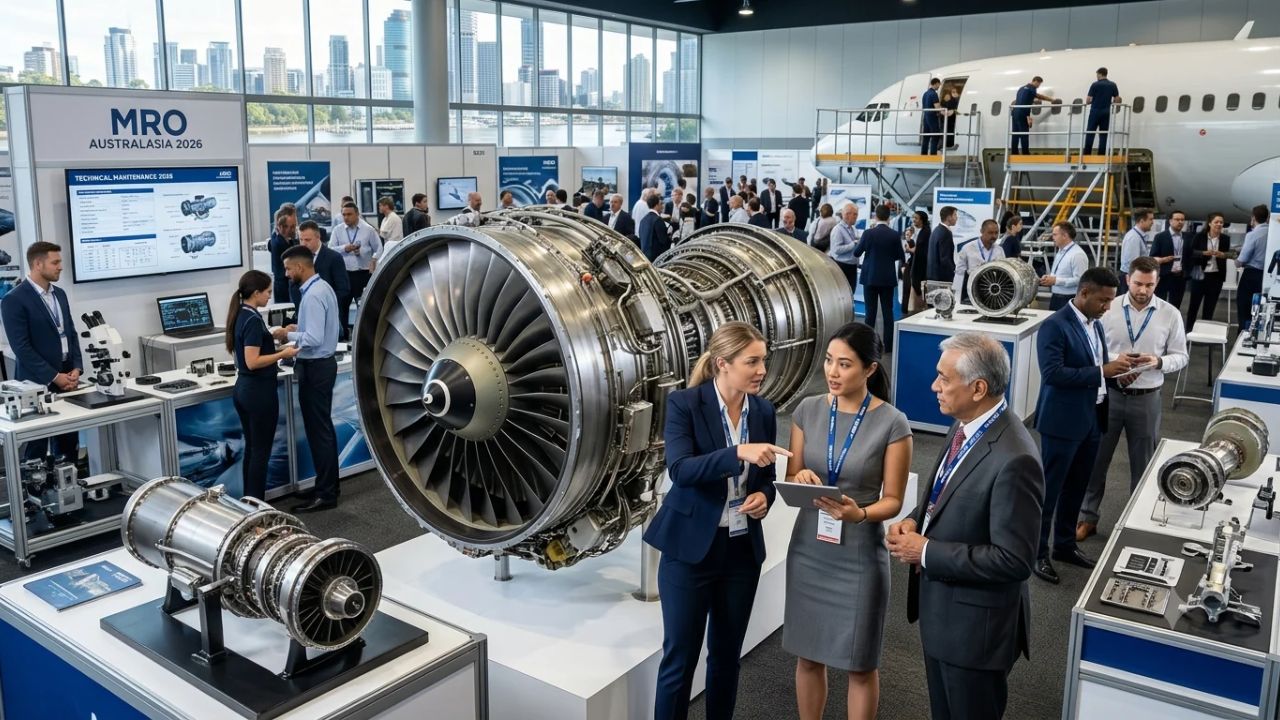
BRISBANE, Australia — International airline executives, aerospace original equipment manufacturers, and maintenance, repair, and overhaul (MRO) specialists are converging on the Brisbane Convention Centre for MRO Australasia 2026, addressing critical engine overhaul backlogs, component supply chain snarls, and cross-border regulatory alignment.
Organized by the Aviation Week Network and supported by the Queensland Government as host sponsor, the two-day aerospace summit taking place on November 10 and 11, 2026, convenes more than 400 senior delegates, 40 specialized showcase exhibitors, and procurement buyers from over 70 commercial airlines across Oceania, Asia, the Middle East, Europe, and North America.
The gathering marks a decisive turning point for commercial aviation across the Southern Hemisphere. As post-pandemic passenger traffic surpasses historic benchmarks across Asia-Pacific and Trans-Tasman corridors, the global maintenance ecosystem supporting these fleets faces unprecedented operational friction. Extended shop visit turn-around times (TAT) for modern geared turbofan and high-bypass engines, persistent raw material shortages, and acute deficits of licensed aircraft maintenance engineers (LAMEs) threaten airline schedule stability and regional economic connectivity.
By shifting its 2026 venue to the Brisbane Convention Centre, the event places Queensland at the geographic and industrial nexus of Australasia's commercial fleet renewal programs, while expanding technical cooperation with fast-growing aerospace powerhouses, notably the United Arab Emirates.
+----------------------------------------------------------------------------------------------------+ | MRO AUSTRALASIA 2026: STRATEGIC EVENT & INDUSTRY SCORECARD | +----------------------------------------------------------------------------------------------------+ | Official Dates | November 10–11, 2026 | | Host Venue | Brisbane Convention Centre, Brisbane, Queensland, Australia | | Host Sponsor | Queensland Government (Department of State Development & Aerospace) | | Organizer | Aviation Week Network | | Industry Footprint | 400+ Executive Delegates, 40+ Exhibitors, 78+ Airline Buyers | | Major Domestic Operators | Qantas, QantasLink, Virgin Australia, Jetstar, Alliance, Sharp | | Pacific Island Carriers | Air Niugini, Air Vanuatu, Aircalin, Air Calédonie, Solomon Airlines | | Middle East & Global Titans | Emirates, Etihad Engineering, flydubai, Qatar Airways, Gulf Air | | Aerospace OEMs & Providers | Boeing, GE Aerospace, Lufthansa Technik, HAECO, MTU, StandardAero | | Core Industry Themes | Turbofan Turnaround Delays, Parts Pooling, Pacific Lifelines, LAMEs | +----------------------------------------------------------------------------------------------------+
The Post-Pandemic Fleet Stress Test: Engine Turnaround Times and Component Deficits
The primary backdrop dominating boardroom discussions in Brisbane is the intense operational strain exerted on modern commercial aircraft fleets. While airline passenger demand recovered rapidly through 2024 and 2025, commercial aviation's underlying maintenance infrastructure remains severely constrained by supply chain disruptions and technical service bulletins affecting next-generation narrowbody powerplants.
In particular, the global airline industry continues to grapple with unprecedented maintenance backlogs surrounding advanced high-bypass turbofans, including the Pratt & Whitney PW1100G-JM Geared Turbofan (GTF) family and CFM International's LEAP-1A and LEAP-1B engines. Microscopic powdered-metal contamination issues in high-pressure turbine and compressor disks have necessitated accelerated off-wing inspections and comprehensive teardowns across hundreds of Airbus A320neo and A220 aircraft worldwide.
GLOBAL AIRFRAME & ENGINE MAINTENANCE DISRUPTION TIMELINE
=============================================================================================
2023 - 2024: DISCOVERY & ESCALATION
[Powdered-Metal Contamination Identified] ---> [Airworthiness Directives Issued (FAA/EASA)]
                                        ---> [GTF / LEAP Engine Inspections Mandated]
                                        ---> [Aircraft on Ground (AOG) Surges Globally]

2025: SUPPLY CHAIN GRIDLOCK
[Engine MRO Shop Visits Surge 45%]    ---> [Specialized Forging & Casting Shortages]
                                        ---> [Shop Turnaround Times Expand: 90 to 220+ Days]
                                        ---> [Legacy Aircraft Fleets Kept Flying Past Retirement]

2026: THE BRISBANE MRO REALIGNMENT
[MRO Australasia 2026 Convenes]         ---> [Airlines Seek Component Pooling & PMA Parts]
                                        ---> [Bilateral UAE & Asian Heavy Maintenance Deals]
                                        ---> [Predictive Health Telemetry & Digital Twins Deployed]
=============================================================================================
These mandatory engineering directives have collided directly with systemic shortages of critical nickel-based superalloys, specialized aerospace castings, and forged turbine blades. As a consequence, standard engine shop visit turn-around times that historically averaged 60 to 90 days have stretched to between 150 and 240 days at certified overhaul facilities worldwide.
For Australasian carriers, the impact has been pronounced:
- Aircraft on Ground (AOG) Rates: Multiple regional and mainline operators have been compelled to temporarily park airworthy airframes simply because replacement engines remain queued in overseas overhaul shops.
- Extended Life Cycles for Legacy Fleets: Airlines have been forced to defer the scheduled retirement of older, less fuel-efficient airframes, including Boeing 737 Next Generation and Airbus A320ceo aircraft, driving up secondary demand for legacy CFM56-7B and IAE V2500 engine overhauls.
- Component Cannibalization and Inventories: Operators have faced depleted inventories of Line Replaceable Units (LRUs), auxiliary power units (APUs), avionics processors, and landing gear assemblies, necessitating complex rotable pooling agreements to maintain dispatch reliability.
At MRO Australasia 2026, airline technical directors and procurement managers are seeking immediate commercial remedies, turning to authorized alternative maintenance providers, FAA-approved Parts Manufacturer Approval (PMA) components, and structured rotable lease pools to buffer their operational schedules against prolonged OEM delays.
The UAE Aerospace Pivot: How Etihad Engineering and Emirates Reshape Trans-Oceanic Heavy Maintenance
A significant dynamic shaping the Brisbane conference is the expanding commercial and technological alignment between the United Arab Emirates and Australasian aviation markets. The published registration roster highlights senior technical delegations from the Arabian Gulf, including Emirates, Etihad Engineering, flydubai, Qatar Airways, and Gulf Air.
The United Arab Emirates has systematically cultivated one of the world's most advanced aerospace maintenance ecosystems. Anchored by Etihad Engineering's sprawling 500,000-square-meter facility adjacent to Abu Dhabi International Airport and Emirates Engineering's state-of-the-art maintenance center at Dubai International, the UAE has emerged as a premier global destination for heavy airframe overhauls, comprehensive passenger-to-freighter (P2F) conversions, and cabin interior retrofits.
THE UAE–AUSTRALASIA STRATEGIC AEROSPACE CORRIDOR
=============================================================================================
+-----------------------------------+               +-----------------------------------+
|      UAE AEROSPACE ECOSYSTEM      |               |     AUSTRALASIAN AIRLINE FLEETS   |
|  - Etihad Engineering (Abu Dhabi) |               |  - Qantas & Jetstar Group         |
|  - Emirates Engineering (Dubai)   | <-----------> |  - Virgin Australia               |
|  - Sanad Component Solutions      |  HEAVY C & D  |  - Regional Express & Alliance    |
|  - Dedicated Composite Hangars    |  AIRFRAME     |  - Pacific Island Flag Carriers   |
|  - High-Volume Cabin Retrofitting |  OVERHAULS    |  - Rapidly Expanding Trans-Tasman |
+-----------------------------------+               +-----------------------------------+
                 ^                                                    ^
                 |                                                    |
                 +----------------- BILATERAL ROTABLE POOLS ----------+
                 |  - Engine Lease Interchanges & Spare Turbine Pylons|
                 |  - Structural Composite Repair & Testing Tech      |
                 |  - Mutual Recognition: CASA Australia & GCAA UAE   |
Several market factors drive this deepening cross-hemispheric cooperation:
- Capacity Deficits in Oceania: Australia and New Zealand possess highly proficient base maintenance facilities, but domestic heavy maintenance hangar capacity remains constrained, often committed months in advance to defense sustainment contracts and domestic flag-carrier requirements. When commercial fleets require scheduled heavy C-checks or intensive 12-year D-checks, sending aircraft to the Gulf presents an economically efficient, high-yield solution.
- Comprehensive Cabin Transformation Programs: As Australasian carriers upgrade passenger cabins to integrate next-generation business class suites, high-speed satellite Wi-Fi radomes, and premium economy seating, UAE maintenance facilities offer specialized turnkey engineering design, EASA/FAA Part 21J design organization approvals, and high-velocity modification bays.
- Engine and Structural Component Pooling: Leading UAE entities, including Sanad (a Mubadala company specializing in aerospace component financing and engine MRO), provide access to dedicated engine lease pools, enabling carriers in Australia and the Pacific to source replacement powerplants during unscheduled maintenance events without tying up vast capital reserves.
In Brisbane, discussions between Gulf technical delegations and Australasian operators center on formalizing long-term rotable maintenance agreements, standardizing component logistics routes, and exploring regulatory alignment between Australia's Civil Aviation Safety Authority (CASA) and the UAE General Civil Aviation Authority (GCAA).
Australasia’s Airline Roster: Domestic Fleet Modernization Meets Operational Fragility
Australia's domestic aviation sector is undergoing its most sweeping fleet transformation in over two decades, heightening the urgency of the technical exchanges at the Brisbane Convention Centre. The attendance of engineering leadership from Qantas, QantasLink, Virgin Australia, Jetstar Airways, Alliance Airlines, Regional Express (Rex), and Sharp Airlines underscores how fleet renewal intersects directly with maintenance capabilities.
AUSTRALASIAN FLEET MODERNIZATION & MAINTENANCE PROFILE
=============================================================================================
Operator          Primary Fleet Focus             Key Maintenance Challenge / Priority
---------------------------------------------------------------------------------------------
Qantas Mainline   A321XLR, A350-1000, 787-9       Project Sunrise ultra-long-haul readiness;
                                                  Transition from 737-800 to Airbus A321neo.
QantasLink        Airbus A220-300, Dash 8-400     Project Winton rollout; PW1500G engine shop
                                                  visits; Phasing out legacy Boeing 717s.
Virgin Australia  Boeing 737 MAX 8, 737-800       CFM LEAP-1B reliability; Transitioning cabin
                                                  interiors; Optimizing base maintenance.
Jetstar Airways   Airbus A321neo LR, 787-8        High-utilization low-cost operations; Trans-
                                                  continental and Asian leisure route uptime.
Alliance Airlines Embraer E190, Fokker 70/100     Supporting wet-lease operations for Qantas;
                                                  Sourcing heavy spares for mature airframes.
Regional Express  Saab 340, Boeing 737-800        Turboprop sustainment in remote conditions;
                                                  Restructuring domestic jet maintenance lines.
Sharp Airlines    Fairchild Metro 23, Cessna      Essential regional air links; Remote line
                                                  maintenance and ruggedized component support.
=============================================================================================
Mainline Carrier Evolution: Qantas and Virgin Australia
For Qantas Group, the multi-billion-dollar "Project Winton" fleet renewal program is actively replacing aging Boeing 717s and 737-800s with state-of-the-art Airbus A220-300 and A321XLR aircraft. While these aircraft offer up to 25 percent lower fuel burn per seat, their induction requires the complete retraining of ground engineers, the acquisition of novel composite airframe tooling, and reliance on new engine types like the Pratt & Whitney PW1500G. Concurrently, preparations for "Project Sunrise" non-stop flights from Sydney and Melbourne to London and New York demand unprecedented dispatch reliability for incoming ultra-long-range Airbus A350-1000s.
Virgin Australia's engineering team is equally focused on the ongoing induction of its Boeing 737 MAX 8 and MAX 10 fleet, powered by CFM LEAP-1B engines. Ensuring line maintenance readiness across key Australian ports while managing the scheduled return-off-lease maintenance checks of older Boeing 737-800 airframes requires rigorous coordination with third-party MRO suppliers and spare parts distributors.
Regional Carriers and Specialized Wet-Lease Fleets
The challenges are distinctly different for regional operators. Alliance Airlines, which operates the world's largest fleet of Fokker 70 and 100 regional jets alongside an expanding fleet of Embraer E190s, has established a formidable engineering presence in Queensland. Alliance relies heavily on sophisticated global parts-sourcing networks to keep mature regional jets flying reliably on charter and wet-lease operations across mining hubs and regional communities.
For regional carriers like Sharp Airlines and Regional Express, maintaining aging regional turboprops like the Saab 340 and Fairchild Metro requires steady access to specialized avionics components, propeller overhauls, and structural corrosion inspections in coastal environments. The MRO Australasia gathering serves as an essential marketplace for these smaller carriers to meet directly with independent parts traders and component overhaul shops that can supply certified, hard-to-find structural spares.
The Pacific Island Lifeline: Maintenance Isolation and Remote Island Air Service Fragility
Among the most vital contingents at MRO Australasia 2026 is the delegation representing Pacific Island national flag carriers. The participation of Air Niugini (Papua New Guinea), Air Chathams (New Zealand), Air Vanuatu, Aircalin (New Caledonia), Air Calédonie, and Solomon Airlines highlights the severe geographic and logistical challenges confronting aviation in the South Pacific.
THE PACIFIC REGIONAL AVIATION SUSTAINMENT DILEMMA
=============================================================================================
EXTREME OPERATING CONDITIONS                    LOGISTICAL & REGULATORY CONSTRAINTS
* High Atmospheric Salinity & Humidity          * Extreme Distance from Primary MRO Centers
* Short, Unpaved, or Coral Runways              * Protracted Air Freight Shipping Times
* High Thermal Cycling on Short Hops            * Regulatory Variations Across Island Nations
* Accelerated Airframe Corrosion                * Limited On-Island Hangar & Tooling Capacity
                     \                                         /
                      \                                       /
                       v                                     v
            +-------------------------------------------------------+
            |      BRISBANE AS THE PRIMARY REGIONAL MRO HUB         |
            | - Certified Heavy Structural Airframe Inspection      |
            | - Specialized Non-Destructive Testing (NDT)          |
            | - Rapid Airfreight Dispatch of Line Replaceable Units |
            | - CASA/FAA Certified Component Overhaul Workshops     |
            +-------------------------------------------------------+
For Pacific island nations, commercial aviation is not a luxury or merely a driver of tourism; it represents essential national infrastructure. Island communities rely on regular scheduled flights for medical evacuations, fresh food supplies, disaster relief, and essential government connectivity.
However, Pacific carriers face severe structural impediments to aircraft maintenance:
- Corrosive Maritime Environments: Constant exposure to salt spray, extreme humidity, and volcanic dust significantly accelerates airframe corrosion and degrades turbine blade coatings. Aircraft operating in the South Pacific require significantly higher inspection frequencies for wing spar assemblies, landing gear joints, and flight control cables than aircraft operating in temperate continental climates.
- Geographic Isolation and Logistics Latency: When an aircraft suffers an AOG event on an outlying island such as Espiritu Santo in Vanuatu or Gizo in the Solomon Islands, flying in a replacement hydraulic pump or starter generator from North America or Europe can take up to ten days due to multi-leg cargo routings. Brisbane functions as the natural geographic logistics gateway, where pre-positioned spare parts can be dispatched via daily passenger flights within hours.
- Small Fleet Economics: Operating tiny fleets of two to six aircraft prevents island airlines from achieving economies of scale. They cannot justify building multi-million-dollar testing facilities or maintaining in-house engine test cells.
At MRO Australasia 2026, Pacific airline leaders are exploring cooperative regional parts pooling initiatives and unified maintenance contracting. By negotiating jointly with Australian maintenance providers, island operators can secure prioritized turn-around slots, access pooled rotable inventories, and establish mobile rapid-response engineering teams based in Queensland capable of deploying across the Pacific during critical unscheduled outages.
Global Aerospace Giants in Brisbane: OEM Strategies and Aftermarket Competition
The presence of global aerospace titans on the registration and exhibitor rosters reflects the strategic importance of the Australasian commercial aftermarket. Industry powerhouses registered for the conference include:
- Aircraft & Engine Manufacturers: Boeing, GE Aerospace, MTU Maintenance
- Independent Maintenance Providers: Lufthansa Technik, HAECO (Hong Kong), StandardAero, Fokker Services Group, Revima
- Component Specialists & Parts Distributors: AAR Corp, GA Telesis, HEICO
AEROSPACE AFTERMARKET COMPETITIVE DYNAMICS
=============================================================================================
OEM POWER-BY-THE-HOUR (PBH) CONTRACTS        INDEPENDENT AFTERMARKET (IAM) SOLUTIONS
[Boeing / GE Aerospace / Pratt & Whitney]   [Lufthansa Technik / StandardAero / HAECO]
* Proprietary Engine Manuals & Limits       * Flexible Workscopes Tailored to Aircraft Age
* Guaranteed Flight-Hour Pricing            * Lower Shop Visit Costs via PMA & DER Repairs
* Closed Intellectual Property Ecosystem    * Access to Global Used Serviceable Material (USM)
* Prioritized Factory Delivery Slots        * Customized Rotable & Engine Leasing Structures
                      \                                  /
                       \                                /
                        v                              v
             +----------------------------------------------------+
             |       AIRLINE PROCUREMENT DECISION MATRIX          |
             | Mainline Carriers (Qantas, Virgin): Hybrid PBH/IAM |
             | Mid-Tier & Regional Fleets: Heavy IAM Reliance    |
             | Mature Aircraft Fleets: Pure USM & PMA Focus       |
             +----------------------------------------------------+
The Battle for Aftermarket Control: OEM vs. Independent Providers
The aerospace maintenance sector is characterized by an escalating struggle between original equipment manufacturers (OEMs) and independent aftermarket (IAM) suppliers. Over the past decade, OEMs such as Boeing, Airbus, CFM, and GE Aerospace have aggressively expanded their proprietary "Power-by-the-Hour" (PBH) flight-hour service contracts. Under these long-term agreements, airlines pay a fixed fee per flight hour, and the OEM assumes responsibility for engine and component maintenance.
However, extended turnaround times and escalating material costs have led many airlines to reconsider total reliance on OEM PBH contracts. Independent MRO powerhouses like Lufthansa Technik, HAECO, and StandardAero offer airlines customized maintenance workscopes that incorporate Used Serviceable Material (USM)—certified second-hand aircraft components salvaged from retired airframes—as well as FAA-approved Designated Engineering Representative (DER) repairs.
These independent alternatives can reduce heavy maintenance shop visit expenses by 20 to 35 percent compared to standard OEM factory list prices. In Brisbane, aftermarket suppliers like GA Telesis and AAR Corp are showcasing extensive inventories of certified airframe and engine spares, offering airlines immediate off-the-shelf delivery to bypass factory manufacturing queues.
Specialized Niche Capabilities
The exhibition showcase highlights critical niche maintenance capabilities required across Australasia:
- APU and Landing Gear Overhauls: Specialists like Revima and StandardAero provide dedicated repair lines for auxiliary power units and multi-wheel heavy landing gear assemblies, which must withstand high-cycle operations on short-haul domestic sectors.
- Component Electronics and Avionics: HEICO and Fokker Services Group focus on component-level electronics repairs, offering certified component-level circuit board restorations that eliminate the need to scrap entire modular flight control computers.
Workforce Shortages and Technical Skills Development in Queensland
Beyond hardware, engines, and digital algorithms, the most formidable constraint facing the aviation maintenance industry across Australia and the wider Asia-Pacific region is human capital. MRO Australasia 2026 takes place amid an acute shortage of Licensed Aircraft Maintenance Engineers (LAMEs), non-destructive testing (NDT) technicians, and structural sheet-metal artisans.
THE AIRCRAFT MAINTENANCE WORKFORCE DEFICIT
=============================================================================================
MACROECONOMIC PRESSURES                           STRUCTURAL INDUSTRY ROADBLOCKS
* Mining & Resources Sector Wage Competition      * Lengthy 4- to 5-Year Apprenticeships
* High Retirement Rates Among Baby Boomers        * Complex CASA Part 66 Licensing Barriers
* Exponential Expansion of Commercial Fleets      * Rapid Pace of New Composite & Avionics Tech
                     \                                         /
                      \                                       /
                       v                                     v
            +-------------------------------------------------------+
            |      QUEENSLAND AEROSPACE WORKFORCE INITIATIVES       |
            | - Aviation Australia Training Academy (Brisbane & CS) |
            | - State Subsidies for Aerospace Engineering Trainees  |
            | - Accelerated Recognition of Overseas Engineering Exp  |
            | - Industry-University Research Partnerships           |
            +-------------------------------------------------------+
The Australian LAME Shortage
According to workforce projections from the Australian Aviation Associations Forum and CASA, nearly one-third of Australia's licensed aircraft maintenance workforce is aged 55 or older, with retirements outpacing new apprentice graduations. The training pathway for a CASA Part 66 aircraft engineer requires an intensive four-year apprenticeship combined with rigorous modular theoretical examinations and extensive documented logbook experience.
Compounding this challenge is the fierce competition for skilled labor within Australia's domestic economy. High-paying mining, rail, and heavy manufacturing sectors in Queensland and Western Australia actively recruit aviation technicians, offering compensation packages that commercial aviation maintenance workshops struggle to match.
Queensland's Aerospace Hub Ambitions
The Queensland Government's role as host sponsor of MRO Australasia 2026 aligns with its strategic blueprint to establish the state as the premier aerospace, defense sustainment, and uncrewed systems manufacturing hub of the Asia-Pacific.
Brisbane is uniquely positioned to address the regional skills crisis:
- Aviation Australia Academy: Located adjacent to Brisbane Airport, Aviation Australia is one of the Southern Hemisphere's largest dedicated aerospace training facilities, providing CASA, EASA, and FAA-accredited engineering diploma programs for both domestic apprentices and international students from across the Pacific and Southeast Asia.
- Defense-Commercial Synergy: Queensland hosts substantial Australian Defence Force aerospace maintenance operations, including Boeing Defence Australia and Raytheon facilities supporting F/A-18F Super Hornets, EA-18G Growlers, and P-8A Poseidons. Fostering cross-skilling between defense and civil commercial hangars provides a flexible labor pool during civilian peak demand periods.
- Targeted Skilled Migration Pathways: Industry leaders in Brisbane are actively lobbying state and federal authorities to streamline skilled visa pathways, enabling Australian MRO facilities to recruit certified international engineers from established markets in the United Kingdom, Europe, the Philippines, and India.
Digital Maintenance, Predictive Analytics, and AI in Aircraft Overhaul
As airlines seek to extract maximum efficiency from every available airframe, technology-driven predictive maintenance has transitioned from an experimental concept to a core operational necessity. At MRO Australasia 2026, technology suppliers and engineering specialists are demonstrating advanced digital platforms that leverage machine learning, computer vision, and real-time aircraft telemetry.
PREDICTIVE DIGITAL MAINTENANCE ECOSYSTEM
=============================================================================================
ON-WING TELEMETRY & SENSORS             CLOUD-BASED ANALYTICS ENGINE
[Engine Vibration / Exhaust Gas Temp]   [Digital Twin Modeling & AI Alerts]
[Hydraulic Pressure / Flight Controls] ---> [Anomalous Wear Signatures Flagged]
[Avionics Fault Code Transmissions]      [Predictive Component Replacement Scheduled]
                   |                                           |
                   v                                           v
+-------------------------------------------------------------------------------------------+
|                          ACTIONABLE MAINTENANCE WORKFLOW                                  |
| 1. Real-Time Alert Received while Aircraft is in Cruise                                   |
| 2. Automated Inventory Check at Destination Airport (Brisbane / Sydney)                  |
| 3. Line Replaceable Unit (LRU) Pre-Positioned at Gate Prior to Touchdown                  |
| 4. Line Engineer Completes Replacement in 30-Minute Turn Window                           |
| 5. Zero Schedule Disruption; Catastrophic In-Flight Failure Prevented                     |
+-------------------------------------------------------------------------------------------+
The Transition from Reactive to Prescriptive Maintenance
Historically, aircraft maintenance operated under scheduled calendar intervals (A, B, C, and D checks) supplemented by reactive repairs when a component failed. Today, modern aircraft like the Airbus A350, Boeing 787 Dreamliner, and Airbus A220 generate multiple gigabytes of telemetry data during every flight hour.
Key digital breakthroughs on display in Brisbane include:
- Engine Health Monitoring (EHM): High-frequency sensor data monitoring exhaust gas temperature (EGT) margins, core vibration levels, and oil debris detection allows engineers to identify microscopic turbine blade degradation weeks before an unscheduled in-flight engine shutdown could occur.
- Drone-Assisted Automated Fuselage Inspection: Automated autonomous drones equipped with high-resolution optical cameras and LiDAR scan aircraft fuselages in hangar environments within 45 minutes—a process that manually requires up to eight hours of scaffolding assembly and visual inspection. The digital inspection system automatically maps lightning strikes, hail dents, and paint peeling against 3D CAD engineering models.
- Digital Twin Fleet Tracking: HAECO, Lufthansa Technik (via its AVIATAR platform), and Boeing Global Services are presenting digital twin architectures that simulate the cumulative structural stress on individual airframes, taking into account environmental factors like tropical humidity, flight altitude cycles, and gross landing weights.
These digital tools are vital for regional operators across Australia and the Pacific, allowing remote engineering teams in Brisbane to monitor the health of aircraft flying thousands of kilometers away and plan component replacements during scheduled overnight layovers rather than suffering costly remote AOG delays.
Participating Carrier Profiles, Fleet Sizes, and Maintenance Priorities
The breadth of airline attendance at MRO Australasia 2026 reflects the interconnected nature of regional and global aviation. The following comparative matrix outlines key registered airlines, their operating fleets, primary maintenance priorities, and strategic objectives for the Brisbane conference:
| Airline Operator | Headquarters | Primary Fleet Types | Key Maintenance Focus Areas | Strategic Objective at MRO 2026 |
|---|---|---|---|---|
| Qantas Mainline | Sydney, Australia | A321XLR, A330, A350-1000, 787-9 | Project Sunrise entry-into-service; A321XLR fleet induction; GEnx & Trent engine support | Secure tier-one long-term component agreements for ultra-long-haul widebody fleets |
| Virgin Australia | Brisbane, Australia | Boeing 737-800, 737 MAX 8, 737 MAX 10 | CFM LEAP-1B turnaround optimization; Cabin interior refurbishments; Heavy checks | Optimize local Brisbane base maintenance and expand regional engine rotable access |
| Jetstar Airways | Melbourne, Australia | Airbus A320ceo, A321neo LR, Boeing 787-8 | High-utilization narrowbody turnaround; IAE V2500 life extensions; Quick-turn line MRO | Expand access to low-cost spare parts pooling across Australasia and Southeast Asia |
| Air Niugini | Port Moresby, PNG | Boeing 737, 767, Dash 8, A220 (on order) | Preparing for Airbus A220 induction; Corrosion prevention; Heavy airframe overhaul | Establish dedicated Queensland-based line maintenance and logistics support links |
| Emirates | Dubai, UAE | Airbus A380, Boeing 777-300ER, 777-9, A350 | Transcontinental widebody support; Landing gear overhauls; High-density cabin upkeep | Showcase UAE heavy maintenance capabilities and explore Australian component hubs |
| Etihad Engineering | Abu Dhabi, UAE | Third-Party MRO Specialist | Heavy C/D checks; P2F freight conversions; Advanced composite structural repairs | Contract with Australasian and Pacific carriers for scheduled heavy maintenance slots |
| Singapore Airlines | Singapore | A350-900, 787-10, 777-300ER, 737 MAX 8 | High-frequency long-haul operations; Trent 1000/XWB maintenance planning | Align regional line maintenance networks and component interchange programs |
| Air Vanuatu | Port Vila, Vanuatu | ATR 72, Boeing 737-800 | Fleet stabilization; Wet-lease maintenance oversight; Island line station logistics | Secure emergency rotable pools and rapid mobile maintenance response agreements |
| Alliance Airlines | Brisbane, Australia | Embraer E190, Fokker 70, Fokker 100 | Sourcing hard-to-find Fokker components; E190 fleet expansion for wet-lease ops | Solidify international supplier relationships for mature airframe spare parts |
| Solomon Airlines | Honiara, Solomon Islands | Airbus A320, DHC-6 Twin Otter | Remote unpaved runway landing gear wear; Coastal engine wash and turbine protection | Form regional maintenance partnerships with Queensland-based engineering shops |
Passenger Implications: How Aircraft Maintenance Impacts Schedules and Fares
While aircraft maintenance takes place out of sight behind hangar security gates, the efficiency of the MRO ecosystem directly dictates the daily travel experience of millions of airline passengers across Australia, New Zealand, and international travel routes.
When aircraft maintenance supply chains break down, the ripple effects spread quickly through the travel market:
Schedule Fragility and Flight Cancellations
When an airline lacks spare engines or critical rotables, minor technical faults that could normally be resolved overnight turn into multi-day AOG grounding events. In tightly integrated hub-and-spoke networks, a single grounded aircraft can trigger dozen of rolling cancellations across domestic routes. Regional passengers in Australia and the Pacific Islands feel this impact most severely, as thin routes served by only one or two flights per day can be suspended for days if an aircraft is taken out of service.
THE MRO SUPPLY CHAIN IMPACT ON CONSUMER TRAVEL
=============================================================================================
UPSTREAM MRO BOTTLENECKS                        DOWNSTREAM PASSENGER DISRUPTIONS
[Extended Engine Shop Visits (180+ Days)]       [Airlines Ground 5-10% of Available Fleets]
                   |                                           |
                   v                                           v
[Spare Airframe Buffers Eliminated]             [Zero Schedule Resilience During Storms/Faults]
                   |                                           |
                   v                                           v
[Depleted Line Replaceable Unit Stocks]         [Spike in Last-Minute Flight Cancellations]
                   |                                           |
                   v                                           v
[Airlines Wet-Lease Secondary Capacity]         [Higher Operating Costs Pushed to Airfares]
=============================================================================================
The Cost of Spare Capacity and Wet-Leasing
To safeguard their flight schedules against persistent maintenance bottlenecks, commercial airlines must maintain larger operational buffers. Mainline carriers are forced to keep extra aircraft and spare flight crews on hot standby at major hubs like Sydney, Melbourne, and Brisbane, representing substantial idle capital.
Alternatively, airlines must wet-lease supplemental aircraft from charter providers like Alliance Airlines or international wet-lease operators. The substantial costs of chartering replacement aircraft, expediting air cargo shipments for urgent spare parts, and paying overtime to maintenance technicians are inevitably passed on to consumers in the form of higher base airfares and elevated peak-season surcharges.
Consequently, the commercial negotiations taking place at MRO Australasia 2026—establishing faster component turnarounds, sharing parts inventories, and securing cost-effective heavy maintenance slots—are essential to stabilizing regional airfares and restoring dependability to airline timetables.
Actionable Strategic Roadmap: Airline Fleet Managers and Procurement Directors
For airline technical directors, supply chain managers, and maintenance procurement executives attending MRO Australasia 2026, navigating today's complex aftermarket requires an active, multi-pronged strategy. The following operational roadmap provides a framework for maximizing maintenance efficiency and securing fleet resilience:
STRATEGIC MRO PROCUREMENT & OPERATIONAL RESILIENCE ROADMAP
| Column 1 |
|---|
| PHASE 1: DIVERSIFY ENGINE & COMPONENT SUPPLY CHAINS |
| - Audit existing OEM flight-hour contracts against independent aftermarket alternatives |
| - Establish qualified relationships with certified Used Serviceable Material (USM) traders |
| - Incorporate approved Parts Manufacturer Approval (PMA) components for non-critical systems |
| PHASE 2: BUILD CROSS-BORDER ROTABLE POOLING CONSORTIA |
| - Join regional rotable inventory pools across Australia, New Zealand, and Southeast Asia |
| - Negotiate reciprocal component exchange agreements with Middle Eastern maintenance hubs |
| - Pre-position fast-moving Line Replaceable Units at key regional transit points |
| PHASE 3: INVEST IN PREDICTIVE HEALTH TELEMETRY |
| - Equip fleet with real-time continuous sensor monitoring systems (EHM & Avionics) |
| - Integrate digital twin platforms to forecast structural wear in harsh marine climates |
| - Transition from reactive AOG repairs to pre-planned gate turnarounds |
| PHASE 4: WORKFORCE PIPELINE & TECHNICAL RETENTION |
| - Partner with regional technical colleges (Aviation Australia) for apprentice pipelines |
| - Implement competitive retention incentives and specialized type-rating career tracks |
| - Sponsor accelerated international licensing conversions for experienced foreign LAMEs |
Navigating Contractual Negotiations in Brisbane
- Leverage Independent Shop Capabilities: Mainline and regional operators should utilize the presence of independent heavyweights like StandardAero, Lufthansa Technik, and HAECO to negotiate competitive alternatives to standard OEM price escalation clauses. Establishing hybrid contracts—where basic airframe work is performed locally while complex component overhauls are outsourced to specialized global facilities—optimizes both cost and turnaround speed.
- Prioritize Pacific Island Partnerships: Australian and New Zealand aerospace businesses should actively cultivate support contracts with Pacific Island carriers. Establishing Brisbane as the primary technical logistics hub for the South Pacific creates long-term recurring revenue for Queensland engineering firms while providing island nations with dependable operational support.
- Formalize UAE Maintenance Alliances: Australasian operators operating widebody and high-density narrowbody fleets should explore formal heavy-maintenance slots with UAE specialists such as Etihad Engineering. Contracting block overhaul capacity in Abu Dhabi or Dubai guarantees scheduled winter hangar slots, insulating Australian carriers from local capacity squeezes during peak holiday flying seasons.
As MRO Australasia 2026 opens its exhibition halls in Brisbane, the global aviation maintenance sector stands at a vital crossroads. By bridging geographic distances, embracing digital diagnostics, and fostering cross-border alliances between Australasia, the Pacific, and the Middle East, the industry is building the technical foundation required to keep global commercial aviation flying safely, reliably, and sustainably.
Related Travel Guides
- Navigating Trans-Tasman and Pacific Aviation: Routes, Airlines, and Island Transit Guides
- Airline Passenger Rights for Flight Delays and Groundings Across Australia and Oceania
- Project Sunrise and Beyond: Ultra-Long-Haul Aviation Technologies and Fleet Modernization
- Middle East Aviation Mega-Hubs: Navigating Stopovers and Transit Across Dubai and Abu Dhabi
This article is for informational purposes. Flight routes, passenger regulations, visa rules, and transit advisories are subject to change by airlines and aviation authorities. Readers are advised to verify schedules and travel documentation with relevant carriers and border agencies before departure.
Related Stories


Star Air Cuts Winter Flights by 20% as Surging Jet Fuel Prices Strain India's Regional Aviation Network