
Boeing 787 Dreamliner Reshapes US Long-Haul Aviation: Direct Routes to Asia and Australia Now Standard
Breaking airline news and aviation industry updates for 2026.

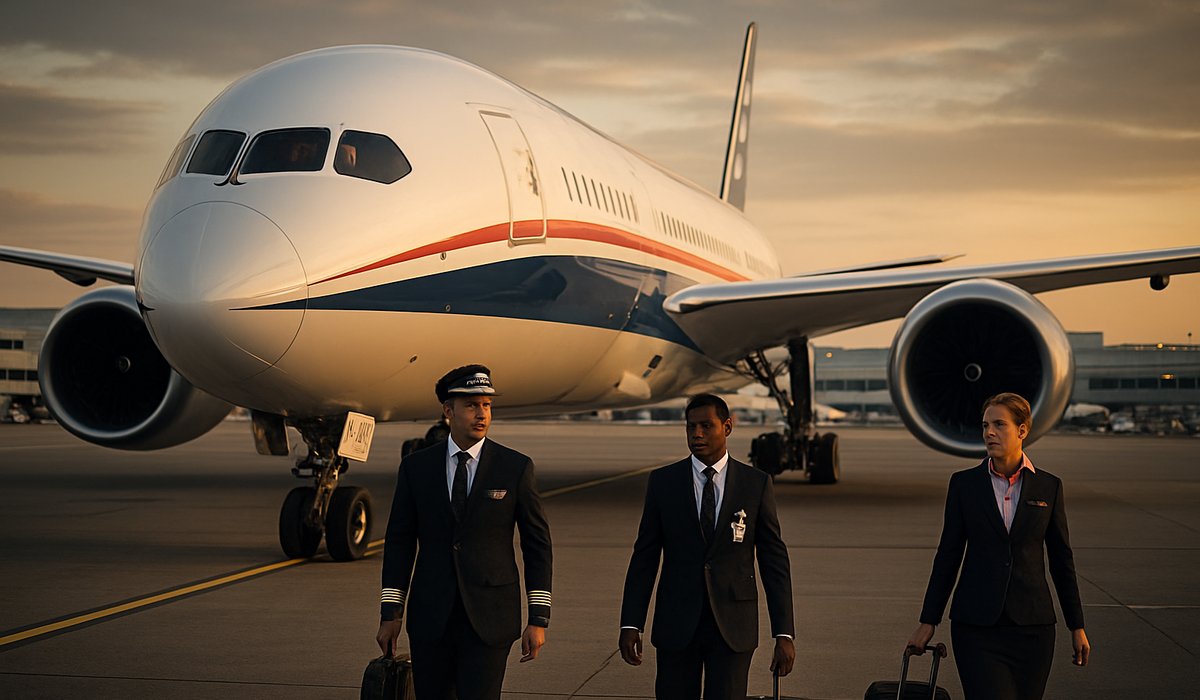
Image generated by AI
Boeing 787 Dreamliner Reshapes US Long-Haul Aviation: Direct Routes to Asia and Australia Now Standard
Ultra-long-distance nonstop flights transform passenger expectations and airline network strategies
Extended Range Technology Enables Unprecedented Direct Routes
The aviation landscape across North America has undergone a fundamental shift with the widespread deployment of the Boeing 787 Dreamliner, enabling US carriers to operate some of the world's longest commercial routes without intermediate stops. Flights connecting Houston to Sydney and San Francisco to Singapore—journeys spanning 8,500 to 9,000 miles—have transitioned from exceptional achievements to routine scheduling on major American carriers, fundamentally altering how travelers access distant markets.
This operational transformation reflects the Dreamliner's revolutionary fuel efficiency and extended-range capabilities, which have redefined the economics of ultra-long-haul aviation. The aircraft's advanced engineering allows carriers to maintain profitability on routes previously requiring costly layovers, while simultaneously reducing total travel time for passengers.
Major Carriers Capitalize on Extended Network Possibilities
United Airlines and American Airlines have emerged as primary operators leveraging the 787's capabilities, establishing direct service to Asia-Pacific destinations that were previously accessible only through hub connections. These carriers have strategically deployed the aircraft to connect secondary and primary US cities directly to international markets including Australia, Singapore, and emerging African hubs.
The routes represent a significant departure from traditional airline network structures, where long-haul international travel typically funneled through major hub airports. Now, passengers departing from cities like Houston can board direct flights to one of the world's furthest destinations, eliminating connection hassles and reducing cumulative travel duration by six to eight hours on typical itineraries.
Industry Impact and Passenger Experience Evolution
The accessibility of these extended routes has compressed global distances from a passenger perspective, making previously inconvenient journeys manageable for business and leisure travelers. Airlines have responded by investing in premium cabin configurations optimized for 15-18 hour flights, including enhanced seating, improved air quality systems, and expanded in-flight amenities—features that justify premium pricing on these high-demand routes.
From an operational standpoint, the Dreamliner's fuel efficiency directly impacts airline profitability on these demanding routes. The aircraft consumes approximately 20-25% less fuel than comparable wide-body predecessors, a crucial advantage when operating at maximum capacity across the Pacific and Indian Oceans.
Looking Forward
As the global 787 fleet continues expanding, additional US carriers are expected to deploy the aircraft on ultra-long-haul services. Industry analysts project that by 2026, direct service between secondary US cities and previously unreachable international destinations will become increasingly common, fundamentally reshaping long-haul travel expectations and competitiveness in the aviation market.
FAQ: Boeing 787 Dreamliner and Ultra-Long-Haul Aviation
What is the longest flight route currently operated by US airlines with the Boeing 787? Routes between San Francisco-Singapore and Houston-Sydney represent among the longest nonstop services, spanning approximately 8,500-9,000 miles and requiring 16-18 hours of flight time.
How does the Boeing 787 enable these extended routes economically? The Dreamliner's advanced fuel efficiency reduces operating costs by 20-25% compared to earlier wide-body aircraft, making ultra-long routes profitable while maintaining competitive pricing.
Which US airlines operate the most Boeing 787 Dreamliners? United Airlines and American Airlines maintain the largest 787 fleets among US carriers, with both airlines prioritizing deployment on premium long-haul international routes.
Why did airlines previously avoid direct flights on these ultra-long routes? Earlier aircraft lacked sufficient fuel capacity and efficiency to profitably operate these distances while maintaining economic viability, necessitating costly intermediate stops that extended total journey time.
What can travelers expect on these 16-18 hour flights? Airlines operating extended 787 routes offer premium cabin configurations with enhanced seating, improved cabin air systems, expanded dining options, and entertainment services tailored for ultra-long-haul comfort.
Related Travel Guides
Flight Delay Compensation Guide 2026
Understanding Airline Route Changes
Airport Security Process Updated (2026)
External Resources
Disclaimer
This article is for informational and educational purposes only. It does not constitute legal, financial, or professional advice. While we strive to provide accurate and up-to-date information, travel policies, regulations, and conditions change rapidly. Always verify information with official sources before making travel decisions. Nomad Lawyer makes no representations about the accuracy, reliability, completeness, or suitability of the information provided. Readers should consult qualified professionals for advice specific to their circumstances. The views expressed in this article are those of the author and do not necessarily reflect the views of Nomad Lawyer.
Kunal K Choudhary
Co-Founder & Contributor
A passionate traveller and tech enthusiast. Kunal contributes to the vision and growth of Nomad Lawyer, bringing fresh perspectives and driving the community forward.
Learn more about our team →