
Inside the Hidden Selection Process: What Airlines Really Look For When Hiring Flight Attendants
Breaking airline news and aviation industry updates for 2026.

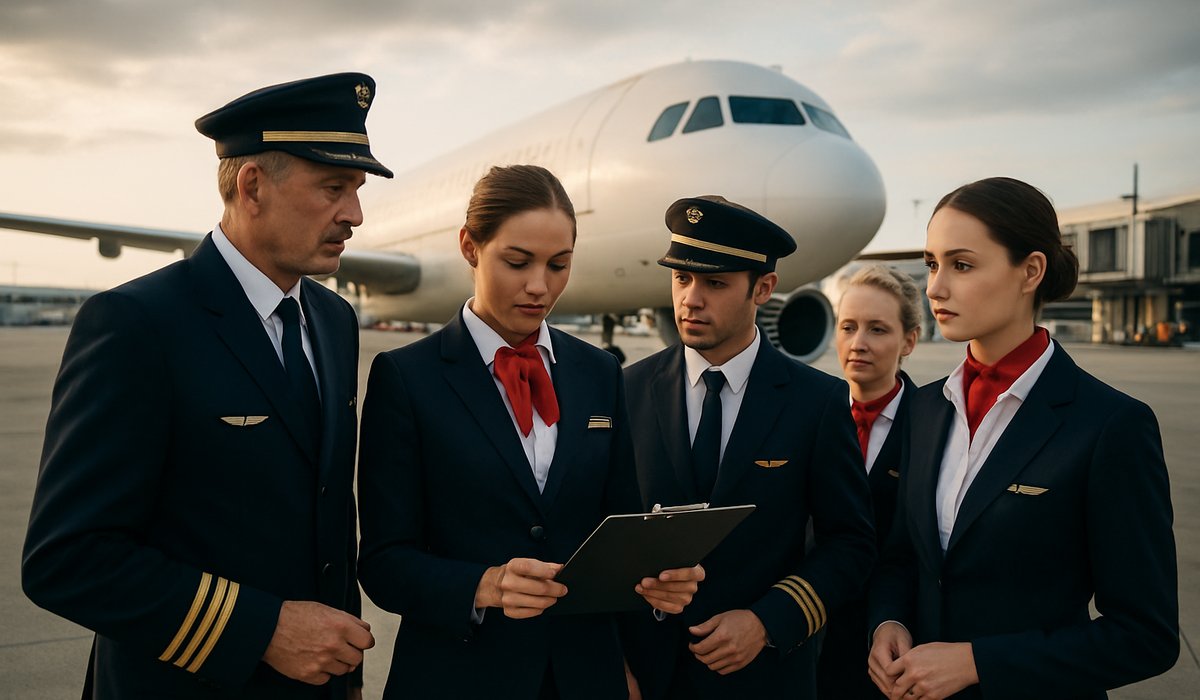
Image generated by AI
Inside the Hidden Selection Process: What Airlines Really Look For When Hiring Flight Attendants
Major carriers reveal strict criteria beyond the resume—physical requirements, personality assessments, and background checks determine who makes the cut
The Dream vs. The Reality
For thousands of aviation hopefuls annually, the flight attendant position represents more than just employment—it symbolizes global mobility, professional prestige, and access to an exclusive career in the skies. Yet behind the polished uniforms and glamorous recruitment imagery lies a rigorous, multi-layered screening process that extends far beyond standard job applications.
Major international carriers including American Airlines, British Airways, Lufthansa, and Emirates employ comprehensive evaluation systems designed to identify candidates who meet not only visible professional standards but also stringent operational and behavioral requirements invisible to public view.
The Official Checklist: Beyond the Job Description
Airlines maintain detailed qualification matrices that candidates rarely see in full. These frameworks assess height and reach specifications—many carriers require the ability to reach overhead compartments and emergency equipment without assistance. Physical agility tests evaluate candidates' capacity to operate emergency slides, perform evacuation procedures, and manage turbulent conditions.
Personality profiling has become increasingly sophisticated. Major carriers now deploy behavioral assessment tools measuring conflict resolution aptitude, stress resilience, and teamwork capacity. Background investigations screen for criminal history, financial responsibility, and international travel document validity—factors critical for crew members operating across multiple jurisdictions.
Language proficiency testing remains mandatory for international routes, with carriers like Lufthansa requiring fluency in English plus additional European languages for their cabin crew operations.
The Hidden Selection Criteria
Beyond formal qualifications, airline hiring committees evaluate presentation standards, including grooming alignment with brand guidelines and what industry insiders term "customer interface compatibility." Some carriers assess whether candidates' personal values align with corporate safety cultures and customer service philosophies.
Drug screening and medical evaluations confirm candidates can sustain the physiological demands of altitude exposure, irregular sleep schedules, and extended duty periods. Psychological evaluations measure emotional stability and decision-making capability under emergency scenarios.
Career Duration and Commitment Variations
Staffing models vary dramatically across carriers. While regional operators often cycle seasonal crew members through busy summer periods, legacy carriers like American Airlines and British Airways maintain substantial permanent cabin crew rosters. Industry data suggests retention rates vary between 40-70% depending on regional economic conditions and airline-specific compensation structures.
The aviation employment sector continues evolving as carriers balance operational demands with workforce sustainability amid post-pandemic recovery and competitive labor markets.
FAQ: Flight Attendant Hiring Requirements
What physical requirements do airlines mandate for flight attendants? Major carriers require candidates to reach overhead compartments without assistance and pass physical agility assessments for emergency operations. Specific height requirements vary by airline but typically range between 5'2" and 6'3".
How extensive are airline background checks for cabin crew positions? Background investigations include criminal history screening, financial record reviews, and international documentation verification. Some carriers conduct multilevel security clearances for international operations.
Do all airlines require language proficiency testing? Yes. International carriers mandate English proficiency, while European airlines typically require multiple language capabilities. Regional carriers may have less stringent language requirements.
What personality traits do airlines prioritize in flight attendant selection? Conflict resolution, stress management, teamwork capacity, and customer service orientation rank among primary behavioral competencies assessed during interviews.
How long do typical flight attendants remain in the position? Career duration varies significantly. Seasonal positions last 3-6 months, while career-track positions average 5-15 years, depending on airline, compensation, and personal circumstances.
Related Travel Guides
Flight Delay Compensation Guide 2026
Understanding Airline Route Changes
Airport Security Process Updated (2026)
External Resources
Disclaimer
This article is for informational and educational purposes only. It does not constitute legal, financial, or professional advice. While we strive to provide accurate and up-to-date information, travel policies, regulations, and conditions change rapidly. Always verify information with official sources before making travel decisions. Nomad Lawyer makes no representations about the accuracy, reliability, completeness, or suitability of the information provided. Readers should consult qualified professionals for advice specific to their circumstances. The views expressed in this article are those of the author and do not necessarily reflect the views of Nomad Lawyer.
Preeti Gunjan
Contributor & Community Manager
A passionate traveller and community builder. Preeti helps grow the Nomad Lawyer community, fostering engagement and bringing the reader experience to life.
Learn more about our team →