
Thailand Promotes Naga Eye Geological Wonder at Phu Langka
Thailand's Department of National Parks promotes the Naga Eye sandstone crater at Phu Langka, utilizing local guides and strict conservation rules.

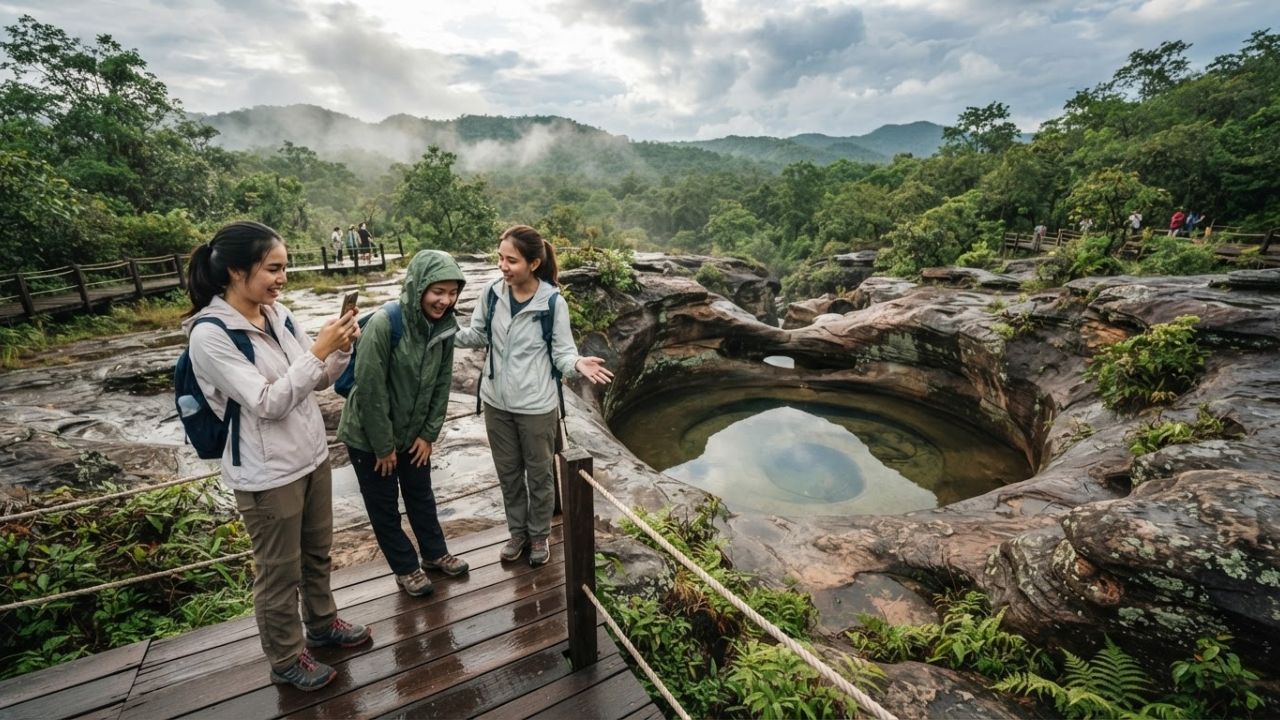
Image generated by AI
The Department of National Parks, Wildlife and Plant Conservation is implementing responsible tourism frameworks at Phu Langka National Park as seasonal rains revive the unique serpent-eye reflection inside the Naga Eye sandstone crater.
Geological Origins: Sandstone Erosion Over Thousands of Years
Located in the Bueng Khong Long district of Bueng Kan province, the Naga Eye is a natural sandstone crater formed over hundreds of thousands of years. Constant wind and water erosion have shaped the soft stone, creating a distinct, circular depression that resembles a large eye.
The formation is named after the mythical Naga serpent, a sacred creature in Isan (Northeastern Thai) folklore and Mekong River traditions. During the monsoon season, rainwater collects inside this stone basin, reflecting the sky and forest canopy to produce the visual effect of a giant reptile's eye.
Seasonal Hydration: May to October Tourism Peak
The most vivid visual reflections occur during the annual rainy season, which runs from May to October. The increased precipitation fills the sandstone crater, while the surrounding forest environment becomes lush and green, creating ideal conditions for photography and nature observation.
Although the basin contains water during other parts of the year, the high humidity and direct sunlight of the wet season maximize the mirror-like properties of the pool. Travelers are advised to plan excursions during early mornings when the angle of the sun optimizes the light reflection.
Ecotourism Regulations and Environmental Protection
Phu Langka National Park is a protected area containing sensitive forest ecosystems and rare geological formations. To prevent structural damage to the sandstone walls, park rangers enforce strict code-of-conduct guidelines.
Visitors must remain on designated boardwalks and pathways, and touching the stone surfaces is strictly prohibited to prevent oil-induced decay. The Bueng Kan Provincial Office is promoting these conservation rules to ensure that increased tourism does not degrade the natural heritage of the region.
Community-Based Tourism and Regional Economics
The rise in visitation supports the local economy of Bueng Kan province, an emerging destination for travelers seeking alternatives to Thailand's crowded coastal resorts. The national park requires all hiking groups to hire local community guides at the entrance, ensuring that tourism directly creates employment for resident families.
Visitors can further support the community by staying in locally owned homestays in Bueng Khong Long and dining at family-run eateries. Choosing regional operators helps distribute economic benefits directly to the host population, supporting rural infrastructure and sustainable development.
Local Insider Travel Strategies
- Optimal Visit Windows: Visit on weekdays between June and September to experience the best water levels inside the crater while avoiding the heavy weekend crowds of local pilgrims.
- Cultural Etiquette: The Naga serpent is highly revered in northeastern Thai spiritual traditions. Behave respectfully, keep voices low, and never throw coins or trash into the water pools.
- Culinary Specialties: Seek out local roadside stalls to sample som tum pla ra (papaya salad with fermented fish sauce) paired with grilled Mekong River fish (pla pao) and sticky rice.
- Hidden Gems: Combine your hike with a visit to the nearby Three Whales Rock (Hin Sam Wan), where three massive sandstone boulders resemble a family of whales swimming through the forest canopy.
Long-Term Outlook for Bueng Kan Tourism
The development of Phu Langka as a key eco-tourism destination reflects a broader shift toward nature-based and experiential travel in Thailand. By coordinating safety regulations, local guide requirements, and environmental monitoring, transport and park authorities aim to build a sustainable model that preserves unique geological monuments while supporting the regional economy.
Related Travel Guides
Disclaimer
This article is for informational and educational purposes only. It does not constitute legal, financial, or professional advice. While we strive to provide accurate and up-to-date information, travel policies, regulations, and conditions change rapidly. Always verify information with official sources before making travel decisions. Nomad Lawyer makes no representations about the accuracy, reliability, completeness, or suitability of the information provided. Readers should consult qualified professionals for advice specific to their circumstances. The views expressed in this article are those of the author and do not necessarily reflect the views of Nomad Lawyer.
Raushan Kumar
Founder & Lead Developer
Full-stack developer with 11+ years of experience and a passionate traveller. Raushan built Nomad Lawyer from the ground up with a vision to create the best travel and law experience on the web.
Learn more about our team →