Thailand’s Loy Krathong and Yi Peng 2026 Drive 6-Billion-Baht Cultural Tourism Surge Across Six Signature Provinces

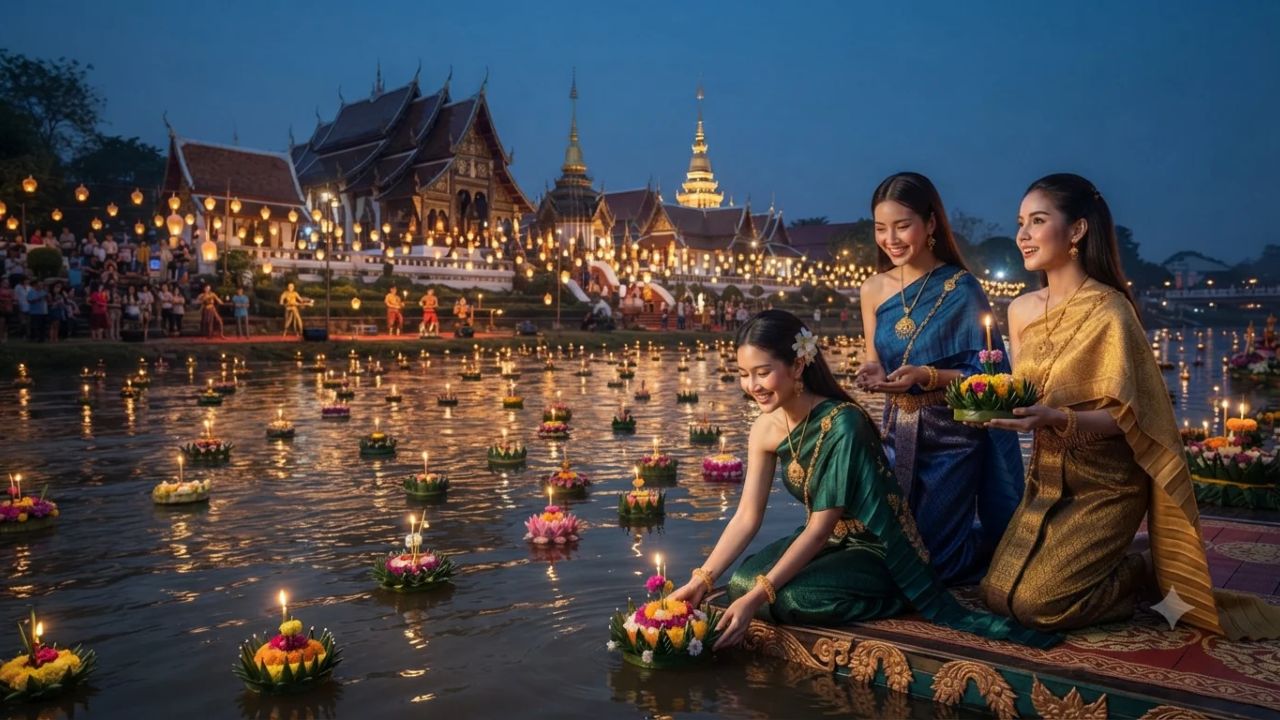
Thailand’s 2026 Loy Krathong and Yi Peng Festival of Lights has ignited an unprecedented nationwide wave of cultural appreciation and regional economic activity, with the Tourism Authority of Thailand (TAT) projecting a record-breaking 6 billion Thai Baht ($172 million USD) in domestic tourism revenue during the late-November celebration window. Driven by an estimated 1.83 million domestic trips—marking a 6.0% rise in visitor volume and an 8.0% increase in spending compared with previous years—the historic water-honoring ritual illustrates how sacred conservation and dynamic tourism development can align to empower local communities. Moving deliberately away from the traditional practice of concentrating tourism solely within Bangkok, Thailand’s Ministry of Tourism and Sports has executed an ambitious "Festival Economy" strategy under its "365 Days of Celebration" initiative. By elevating six distinct regional provinces—Chiang Mai, Ayutthaya, Sukhothai, Tak, Samut Songkhram, and Roi Et—alongside riverfront activations in Bangkok and the multi-month International Horticultural Expo 2026 in Udon Thani, the Kingdom has transformed an ancient spiritual thanksgiving into a decentralized economic catalyst that directly supports boutique hoteliers, transport operators, handicraft artisans, and riverside communities.
At its spiritual foundation, Loy Krathong represents one of Southeast Asia's most revered cultural celebrations, held annually on the full moon night of the twelfth lunar month to pay homage to Phra Mae Khongkha, the Hindu-Buddhist Goddess of Water, while symbolically releasing personal misfortune and welcoming renewed fortune. In 2026, the festival has evolved beyond a single-night event into a multi-day regional travel phenomenon. Travelers are actively seeking profound, participatory cultural immersion, joining local artisans to handcraft biodegradable floating baskets (krathongs) from banana tree stalks and folded leaves, participating in ancient Lanna sky lantern releases in the northern hills, and observing continuous floating chains of illuminated coconut shells along western river valleys. Backed by strict environmental recovery protocols, digital projection alternatives, and coordinated aviation safety frameworks, Thailand’s 2026 Festival of Lights provides a global masterclass in elevating intangible cultural heritage into sustainable, high-value tourism growth.
========================================================================================
LOY KRATHONG & YI PENG 2026: SIX PROVINCIAL PILLARS SCORECARD
========================================================================================
Provincial Hub       Regional Identity & Focus    Official 2026 Dates  Signature Ritual
----------------------------------------------------------------------------------------
Chiang Mai           Northern Lanna Heritage      23–25 November 2026  Yi Peng sky lanterns,
(Mueang Chiang Mai)  Advance hotel occupancy >90%                      temple illuminations
Ayutthaya            Central Royal Capital        21–24 November 2026  Ancient Palace shows,
(Historical Park)    UNESCO World Heritage site                        royal court cuisine
Sukhothai            Origin of Loy Krathong       15–24 November 2026  Candlelight & fireworks,
(Historical Park)    Dawn of Happiness ruins                           Nang Nopphamas pageants
Tak                  Western Ping River Valley    21–24 November 2026  Loi Krathong Sai: 1,000
(Rattanakosin Bridge)Border mountain culture                           floating coconut shells
Samut Songkhram      Mae Klong Coastal Estuary    21–24 November 2026  Kap Kluay: 100,000+
(Wat Phummarin)      Central mangrove waterways                        banana stalk offerings
Roi Et               Northeastern Isan Plateau    23–24 November 2026  Somma Nam Khuen Peng;
(Bueng Phalan Chai)  Sacred water lake rituals                         Isan cultural processions
========================================================================================
Source: Tourism Authority of Thailand (TAT) & Ministry of Tourism and Sports, Nov 2026.
========================================================================================
The Macroeconomics of the "Festival Economy": Distributing Regional Wealth
The 2026 Loy Krathong celebrations provide tangible proof of Thailand’s broader macroeconomic pivot toward the "Festival Economy," a deliberate development model designed to redistribute national wealth from saturated commercial hubs into secondary and tertiary provincial economies.
========================================================================================
THAILAND DOMESTIC FESTIVAL TOURISM REVENUE MATRIX (2024–2026)
========================================================================================
Economic Metric         2024 Baseline        2025 Cycle           2026 Performance
----------------------------------------------------------------------------------------
Domestic Trips Taken    1.62 Million Trips   1.72 Million Trips   1.83 Million Trips (+6.0%)
Total Tourism Receipts  5.15 Billion Baht    5.55 Billion Baht    6.00 Billion Baht (+8.0%)
Average Daily Spend     ~1,850 THB / traveler~2,050 THB / traveler~2,350 THB / traveler
Hotel Occupancy (Top 6) 72% Average          78% Average          86% – 92% Average
Artisan Spend Share     14% of Trip Budget   18% of Trip Budget   22% of Trip Budget
Regional Dispersal Rate 38% Non-Bangkok      44% Non-Bangkok      52% Non-Bangkok Spend
========================================================================================
1. The 6-Billion-Baht Multiplier Effect
The projected 6 billion baht generated during the 2026 festival extends far beyond formal hotel bookings:
- Artisanal and Community Commerce: Families and village cooperatives producing natural krathongs from banana trunks, lotus blossoms, and biodegradable incense sticks capture immediate, direct cash infusions.
- Gastronomic Micro-Businesses: Street vendors, night market operators, and traditional riverside diners along the Ping, Chao Phraya, and Mae Klong rivers experience their highest single-week table turnover of the fourth quarter.
- Regional Transport Networks: Long-tail boat operators, tuk-tuk drivers, inter-provincial bus lines, and regional rail routes operated by the State Railway of Thailand (SRT) experience peak holiday passenger volumes.
2. Decongesting the Capital through "365 Days of Celebration"
Historically, foreign visitors concentrated their festival visits within Bangkok’s riverside luxury hotels. Under the "365 Days of Celebration" master plan, the Tourism Authority of Thailand has successfully marketed the distinct regional variations of Loy Krathong. By highlighting that Tak floats coconut shells while Samut Songkhram floats banana leaf ribs and Sukhothai illuminates 800-year-old stone stupas, travelers are inspired to disperse across the country, mitigating urban overcrowding and spreading tourist dollars into rural agricultural provinces.
========================================================================================
TOURISM BENEFICIARY VALUE CHAIN: 2026 FESTIVAL IMPACT
========================================================================================
Economic Sector       Primary Beneficiaries                 Direct Economic Benefit
----------------------------------------------------------------------------------------
Community Tourism     Village craft guilds, flower growers, Immediate cash sales of natural
                      elderly artisans, krathong makers     krathong components and incense
Boutique Hospitality  Independent guesthouses, homestays,   Near-total occupancy; premium
                      and regional boutique hotels          shoulder-season room yields
Regional Transport    Local songthaew drivers, long-tail    Surge in inter-district passenger
                      ferries, rail and van operators       shuttles and river charters
Culinary Economy      Night market food stalls, riverside   Elevated dining receipts for
                      restaurateurs, local confectionery    traditional regional specialties
========================================================================================
The Six Signature Provincial Pillars: Distinct Cultural Interpretations
While the core spiritual intent of Loy Krathong remains universal across the Kingdom, each of Thailand’s major cultural regions expresses the celebration through distinct historical rituals, artistic mediums, and local mythologies.
========================================================================================
CULTURAL BLUEPRINT: THE SIX FEATURED FESTIVAL HUBS
========================================================================================
Province / City       Festival Nomenclature       Architectural & Geographic Setting
----------------------------------------------------------------------------------------
Chiang Mai            Yi Peng Lantern Festival    Old City moat, Ping River, Wat Phan Tao,
                      (Lanna Heritage)            Wat Lok Moli, Thaphae Gate plaza
Ayutthaya             Ayutthaya Loy Krathong      Historic Island, Wat Phra Si Sanphet,
                      (Ayutthaya Royal Capital)   Ancient Palace grounds, Chao Phraya river
Sukhothai             Loi Krathong & Candlelight  UNESCO Sukhothai Historical Park,
                      (Sukhothai Dawn Heritage)   Wat Mahathat, ancient pond reservoirs
Tak                   Loi Krathong Sai            Ping River Banks, foot of the historic
                      (Tak Coconut Shell Custom)  Rattanakosin 200th Anniversary Bridge
Samut Songkhram       Loi Krathong Kap Kluay      Mae Klong River, Wat Phummarin Kudi Thong,
                      (Banana Stalk Rib Custom)   Amphawa floating canal network
Roi Et                Somma Nam Khuen Peng        Bueng Phalan Chai lake island, center
                      (Isan Water Homage Custom)  of Roi Et city, Wat Buraphaphiram
========================================================================================
1. Chiang Mai: The Lanna Splendor of Yi Peng
In northern Thailand, the festival coincides with Yi Peng (meaning "second month" in the Lanna lunar calendar), running from 23 to 25 November 2026:
- The Visual Spectacle: The city’s ancient moat, brick bastions, and teakwood Buddhist temples (such as Wat Phan Tao and Wat Chedi Luang) are decorated with thousands of colorful hanging Lanna paper lanterns (khom fai).
- Hotel Reservations Surpassing 90%: Driven by immense domestic and international demand, hotel bookings across the Chiang Mai metropolitan basin have exceeded 90%, generating substantial downstream business for regional tour guides, trekking outfits, and hill-tribe artisan markets.
- Airspace Safety Regulations: To protect commercial aviation while preserving cultural expression, the Civil Aviation Authority of Thailand (CAAT) coordinates designated release windows and establishes strict no-fly zones around Chiang Mai International Airport (CNX), rescheduling evening flights during peak lantern-floating hours.
2. Ayutthaya: Royal Splendor and Monumental Light Shows
In the ancient capital of Ayutthaya, celebrations take place from 21 to 24 November 2026 against the backdrop of the UNESCO World Heritage historical park:
- Ancient Palace Illuminations: Centered near Wat Phra Si Sanphet and the ruins of the Royal Palace, the program features high-definition projection mapping, classical Thai dramatic masked dance (Khon), and traditional court banquet reenactments.
- Riverside Traditions: Visitors launch intricately carved floral offerings into the Chao Phraya, Lopburi, and Pa Sak rivers, connecting daytime temple explorations with illuminated evening ceremonies.
3. Sukhothai: Returning to the Birthplace of the Festival
Regarded as the 13th-century birthplace of both the Thai nation and the Loy Krathong tradition itself, Sukhothai hosts the Sukhothai Loi Krathong and Candlelight Festival from 15 to 24 November 2026:
- Historic Ambiance: Set within Sukhothai Historical Park, thousands of small clay oil lamps (dran) illuminate the ancient laterite stupas of Wat Mahathat and Wat Sra Sri.
- Water Reservoir Floating: Offerings are floated on the mirror-like surfaces of ancient reservoir ponds (Baray), creating reflections of illuminated Buddha statues beneath night fireworks displays.
- Nang Nopphamas Beauty Pageants: Celebrates Lady Nopphamas, the legendary 13th-century royal consort of King Ramkhamhaeng, credited with designing the first lotus-shaped floating basket.
========================================================================================
SUKHOTHAI & AYUTTHAYA HISTORICAL PARK FESTIVAL PROTOCOLS
========================================================================================
Park Site / Zone      Operating Hours             Key Regulations & Visitor Advice
----------------------------------------------------------------------------------------
Sukhothai Park Zone   08:00 am – 11:00 pm daily   Bicycles and electric trams permitted;
                      (15–24 November 2026)       strict ban on single-use plastics & alcohol
Ayutthaya Palace Zone 06:00 pm – 10:30 pm daily   Pedestrian-only historic heritage corridor;
                      (21–24 November 2026)       traditional Thai dress rental encouraged
========================================================================================
4. Tak: The Hypnotic Thread of Loi Krathong Sai
In the western province of Tak, the celebration known as Loi Krathong Sai (21 to 24 November 2026) offers one of the most distinctive visual customs in Asia:
- The Coconut Shell Tradition: Local artisans collect discarded coconut shells from regional coconut plantations, polishing them smooth and filling each shell with wax, pine resin, and a cotton wick.
- The Unbroken Chain of Light: Standing along the Ping River near the Rattanakosin 200th Anniversary Bridge, teams launch thousands of illuminated coconut shells into the river current one after another. The glowing shells align naturally in the water flow, creating a continuous, shimmering ribbon of golden light stretching for miles downstream.
5. Samut Songkhram: The Eco-Artisanal Wonder of Kap Kluay
Located south of Bangkok along the Mae Klong River, Samut Songkhram showcases Loi Krathong Kap Kluay from 21 to 24 November 2026:
- Banana Stalk Craftsmanship: Using local agricultural waste from expansive banana plantations, artisans peel the fibrous bark of banana tree stalks (kap kluay), carve intricate geometric patterns into the white pith, and coat them in incense resin.
- Massive Community Launch: At Wat Phummarin Kudi Thong and Amphawa, over 100,000 all-natural, highly buoyant banana stalk offerings are lit and launched simultaneously, filling the river with glowing points of light without introducing synthetic waste into the sensitive estuary.
6. Roi Et: The Soul of Isan at Bueng Phalan Chai
Representing the northeastern Isan region, Roi Et stages the Somma Nam Khuen Peng Seng Prathip festival from 23 to 24 November 2026:
- Bueng Phalan Chai Sanctuary: Festivities center on the vast freshwater lake situated in the heart of Roi Et city, featuring an island park dominated by a massive walking Buddha shrine.
- Isan Cultural Expression: Features vibrant street processions accompanied by traditional Northeast Thai folk music, bamboo mouth-organ (khene) performances, and sacred water-worship rituals honoring the ancestral spirit of the Chi River basin.
========================================================================================
PROVINCIAL ARTISANAL KRATHONG TYPOLOGY & CRAFTSMANSHIP
========================================================================================
Province              Raw Natural Material        Crafting Technique & Aesthetic
----------------------------------------------------------------------------------------
Tak                   Hard coconut shells,        Polished halved shells filled with fragrant
                      beeswax, cotton wicks       resin; engineered for long burn stability
Samut Songkhram       Banana tree trunk bark      Carved outer bark (*kap kluay*); white pith
                      (*Musa* tree stalks)        incised with patterns, dipped in incense
Chiang Mai            Banana leaves, marigolds,   Elaborate origami-folded banana leaves,
                      lotus blossoms, pandan      steamer baskets, fresh floral coronets
Roi Et                Local marsh reeds, cassava  Isan folk floral patterns; natural grain
                      wafers, banana leaves       bases designed to dissolve into fish feed
========================================================================================
Expanding Horizons: Waterways, Mega-Expos, and Regional Influx
The economic impact of the 2026 festival extends far beyond the six primary provincial pillars, integrating metropolitan waterways and international exposition corridors.
Bangkok’s Activated Waterway Corridors
In Thailand’s capital, the Bangkok Metropolitan Administration (BMA) has activated 34 public parks and dozens of historic piers along the Chao Phraya River:
- IconSiam and Asiatique: Major riverfront commercial destinations feature floating docks, illuminated digital art installations, and cultural craft demonstrations.
- Historic Canals (Khlongs): Restored urban waterways like Khlong Ong Ang and Khlong Phadung Krung Kasem host pedestrian street markets, outdoor acoustic music performances, and neighborhood floating rituals.
Udon Thani: International Horticultural Expo 2026
In the northeast, the province of Udon Thani has paired the festive atmosphere of Loy Krathong with a landmark international event: the International Horticultural Expo 2026 (running from 1 November 2026 to 14 March 2027):
- Scale and Venue: Spanning more than 1,030 rai (approx. 407 acres) around the Nong Dae Wetland, the expo is Southeast Asia's premier green horticultural exposition of the decade.
- Synergistic Tourism Growth: Visitors traveling to northeastern Thailand for Loy Krathong can extend their journeys to tour the expo's six themed zones—encompassing international display gardens, precision agricultural greenhouses, and wetland biodiversity reserves. The combination has driven unprecedented hotel and flight bookings across the Udon Thani, Khon Kaen, and Nong Khai triangle.
========================================================================================
UDON THANI INTERNATIONAL HORTICULTURAL EXPO 2026 HIGHLIGHTS
========================================================================================
Exposition Parameter  Operational Metric & Attraction Details
----------------------------------------------------------------------------------------
Operating Dates       1 November 2026 – 14 March 2027 (134 Days Duration)
Exposition Site       Nong Dae Wetland, Kut Sa Subdistrict, Mueang Udon Thani
Total Ground Area     1,030 Rai (Approx. 165 Hectares / 407 Acres)
Core Thematic Zones   6 Zones: International Gardens, Tropical Flora, Green Innovation,
                      Wetland Ecology Pavilion, Cultural Amphitheater, Agritech Expo
Expected Attendance   Over 3.6 Million Total Domestic and International Visits Projected
Connectivity Hub      Udon Thani International Airport (UTH) & SRT Northeastern Rail Line
========================================================================================
The Sustainable Future: Eco-Conscious Waterway Conservation
As domestic and international travelers gather along rivers and canals, protecting fragile aquatic ecosystems has become a top priority for festival organizers and municipal authorities.
========================================================================================
ENVIRONMENTAL SUSTAINABILITY FRAMEWORK: 2026 REGULATIONS
========================================================================================
Sustainability Vector Policy Mandate & Action     Environmental Outcome
----------------------------------------------------------------------------------------
Material Restrictions Strict ban on Styrofoam,    Eliminates non-degradable microplastic
                      plastic pins, and metal wirefragmentation in river deltas
Biodegradable Standard100% natural banana leaf,   Krathongs decompose naturally within
                      bread, or ice compositions  72 hours or provide feed for river fish
Municipal Cleanup     Fleet of 150+ eco-barges    Over 95% of floating offerings collected
Sweeps                operating from 04:00 am     and processed into organic compost by noon
Digital Alternatives  Laser projection mapping on Provides zero-waste participation for
                      city canals & virtual apps  eco-conscious urban dwellers
========================================================================================
The Elimination of Styrofoam and Synthetic Pins
A decade ago, millions of commercial krathongs incorporated synthetic polystyrene foam bases and metal dressmaker pins to hold floral arrangements in place, resulting in severe riverbed contamination and endangering aquatic life. In 2026, nationwide environmental ordinances enforce strict bans:
- Only 100% organic components—such as banana tree trunk disks, sliced papaya stems, woven pandan leaves, and bamboo toothpicks—are permitted at official festival docks.
- Edible "fish-food krathongs," baked from unbleached flour, natural vegetable food colorings, and cassava starch, have become a popular family alternative, dissolving naturally in the water to feed local fish.
The Rise of Digital Floating
For densely populated urban canals where physical floating creates biological oxygen demand (BOD) spikes, forward-thinking cities have introduced digital options:
- In Bangkok’s historic canal districts, visitors can color customized paper templates or use mobile apps to design digital krathongs.
- High-lumen digital projectors scan these designs and project animated, glowing lanterns floating across the dark surface of the canal, allowing full cultural participation with zero aquatic waste.
Coordinated Morning Cleanup Operations
In major metropolitan hubs like Bangkok, Chiang Mai, and Ayutthaya, municipal sanitation departments deploy fleets of cleanup boats beginning at 04:00 am on the morning following the full moon. Using conveyor-equipped barges, workers retrieve floating offerings from river channels, sorting organic vegetation from candles and incense wicks. The organic matter is transported to municipal composting facilities to produce nutrient-rich fertilizer for public parks.
Practical Traveler Logistics: Planning a Festival of Lights Getaway
To experience Thailand’s Festival of Lights smoothly, visitors must prepare for high holiday demand, specialized local transport schedules, and strict cultural dress standards.
========================================================================================
PRACTICAL TRAVELER CHECKLIST: FESTIVAL OF LIGHTS 2026
========================================================================================
Logistical Area       Action Step & Operational Guidance
----------------------------------------------------------------------------------------
Advance AccommodationsBook hotels in Chiang Mai, Sukhothai, and Ayutthaya 3 to 6 months
                      ahead; boutique hotels and riverside properties sell out rapidly.
Domestic Air Transit  Fly into Chiang Mai (CNX) or Phitsanulok (PHS for Sukhothai); monitor
                      flight schedule adjustments due to evening lantern safety rules.
Temple Etiquette      Dress respectfully when entering temple grounds; ensure shoulders
                      and knees are fully covered; remove shoes before entering shrines.
Krathong Selection    Purchase offerings exclusively made from natural banana leaves,
                      flowers, or bread; verify that no metal pins or plastic staples are used.
Aviation Awareness    If flying out of Chiang Mai on 23–25 November, confirm flight times
                      with your airline, as evening flights are routinely rescheduled.
Cash & Connectivity   Carry physical Thai Baht cash in small denominations (20, 50, 100 THB)
                      for purchasing handmade krathongs and street snacks at night markets.
========================================================================================
Navigating Chiang Mai’s Aviation Curfew
Travelers flying to or from northern Thailand during Yi Peng should be aware of flight adjustments:
- Due to thousands of sky lanterns (khom loi) ascending into the atmosphere, Chiang Mai International Airport (CNX) suspends or reschedules dozens of evening flights between 18:00 and 23:00 on 23 and 24 November.
- Airlines typically adjust their schedules months in advance, adding extra daytime flights to accommodate passenger volume while keeping the evening skies safe for festival lanterns.
Frequently Asked Questions
What is the difference between Loy Krathong and Yi Peng?
Loy Krathong is celebrated nationwide across Thailand by floating decorated baskets (krathongs) on rivers and lakes to honor the Goddess of Water. Yi Peng is a regional northern Thai festival rooted in ancient Lanna traditions, celebrated primarily in Chiang Mai, characterized by releasing thousands of glowing paper lanterns (khom loi) into the night sky.
What are the dates for the 2026 Loy Krathong and Yi Peng celebrations?
The nationwide Loy Krathong celebrations take place between 21 and 25 November 2026, with the full moon night falling on 24 November. In Chiang Mai, the official Yi Peng festival runs from 23 to 25 November 2026.
How much economic revenue is the 2026 festival expected to generate?
The Tourism Authority of Thailand (TAT) projects that the 2026 festival will generate approximately 6 billion Thai Baht ($172 million USD) from an estimated 1.83 million domestic journeys.
What are the six featured provinces highlighted in the 2026 celebrations?
The six featured destinations are Chiang Mai (Lanna sky lanterns), Ayutthaya (UNESCO ancient palace shows), Sukhothai (candlelight and fireworks ruins), Tak (floating coconut-shell chains), Samut Songkhram (banana stalk offerings), and Roi Et (Isan sacred water ceremonies).
Are sky lanterns released everywhere in Thailand?
No. Sky lanterns (khom loi) are primarily released in northern Thailand under strict municipal permits and air-traffic safety windows. Lantern releases are strictly prohibited in Bangkok and within defined flight safety corridors surrounding commercial airports.
What is unique about the Loi Krathong Sai festival in Tak?
In Tak Province, locals link together thousands of polished coconut shells filled with wax and resin, launching them into the Ping River to create a continuous, shimmering thread of light flowing along the current.
Are krathongs environmentally friendly?
Yes. Modern regulations strictly prohibit styrofoam, plastic, and metal pins. Krathongs must be crafted from 100% natural, biodegradable materials such as banana tree trunks, folded banana leaves, edible bread, or cassava starch.
Can visitors participate in floating krathongs?
Yes. Travelers are encouraged to purchase a biodegradable krathong from local artisans, light the candle and incense, make a personal wish or prayer of gratitude, and gently place the offering into the water.
What is the International Horticultural Expo taking place in Udon Thani?
The International Horticultural Expo 2026 is a major global exhibition running from 1 November 2026 to 14 March 2027 at the Nong Dae Wetland in Udon Thani, showcasing over 1,030 rai of international display gardens and sustainable agricultural innovations.
What should visitors wear when attending the festival?
Visitors should wear respectful attire, especially when entering temple grounds or participating in sacred ceremonies. Modest clothing covering shoulders and knees is required at all Buddhist temples.
Strategic Outlook: Sustainable Growth Through Cultural Stewardship
Thailand’s 2026 Loy Krathong and Yi Peng celebrations stand as a compelling model for how ancient traditions can thrive within modern tourism development. By intentionally shifting focus from concentrated commercial tourism to decentralized provincial travel, Thailand has successfully turned a centuries-old spiritual ritual into an engine of regional prosperity.
The multi-billion-baht economic impact across Chiang Mai, Sukhothai, Ayutthaya, Tak, Samut Songkhram, and Roi Et demonstrates that travelers increasingly crave authentic cultural experiences that directly benefit host communities. Supported by eco-friendly material standards, digital innovations, and coordinated infrastructure planning, Thailand ensures that its waters and skies remain vibrant, sustainable, and spiritually resonant for generations to come.
Related Travel Guides
- Wisconsin’s Hidden Beaches: Complete Travel Guide to 201 Great Lakes Shores, Island Sanctuaries, and Inland Bluffs
- Asia’s Winter Tourism Boom: How Hokkaido, Seoul, Xinjiang, and Central Asia Are Redefining Cold-Weather Travel
- Delta Air Lines Flight Delays Sweep USA: Weight and Balance Automation Glitch Disrupts Pre-Thanksgiving Travel Across Major Hubs
- Sweden’s Arctic Night Train Launches 2,156-Kilometer Route: Malmö and Stockholm to Kiruna, Abisko, and Narvik Railway Guide
This article is for informational purposes. Flight routes, passenger regulations, visa rules, and transit advisories are subject to change by airlines and aviation authorities. Readers are advised to verify schedules and travel documentation with relevant carriers and border agencies before departure.
Related Stories

McAlester Festival of Trees and Lights Launches McWinter Wonderland 2026: Complete Southeastern Oklahoma Christmas Travel Guide

Arctic Pride Tromsø 2026: Winter Tourism Growth and Indigenous Sámi Representation