Arctic Pride Tromsø 2026: Winter Tourism Growth and Indigenous Sámi Representation

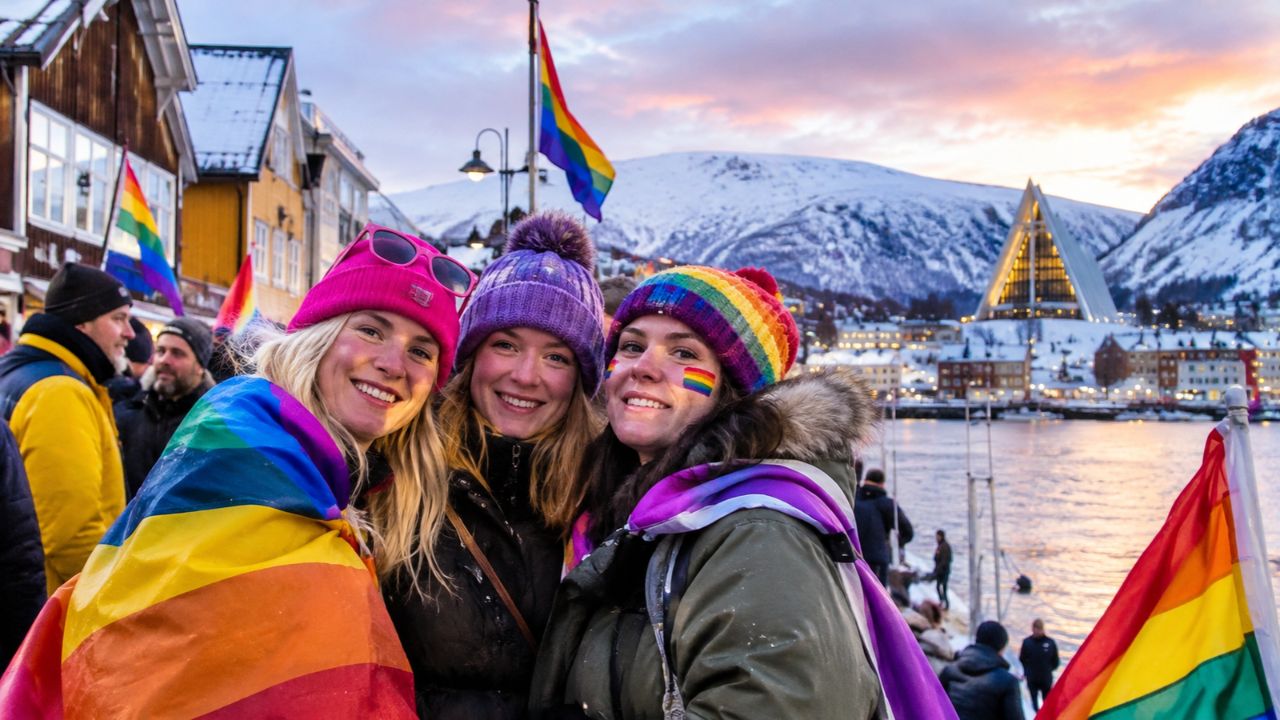
Arctic Pride in Tromsø transforms the sub-polar November night into a global cultural celebration uniting indigenous Sámi advocacy, human rights, and aurora tourism.
TROMSØ, November 2, 2026 — Northern Norway is converting the onset of the polar night into an international cultural draw as Arctic Pride 2026 convenes in Tromsø, transforming Europe's northernmost urban archipelago into a vibrant epicenter of human rights advocacy, indigenous Sámi representation, and high-yield winter tourism. Held annually in mid-November at 69 degrees north latitude, the festival has evolved from a grassroots gathering into an influential seasonal spectacle, attracting over 5,000 participants and generating record off-peak revenues for regional airlines, boutique hotels, and wilderness expedition operators across Troms county.
[!NOTE] Official hospitality telemetry from Statistics Norway (Statistisk sentralbyrå – SSB) demonstrates that Arctic Pride has systematically eliminated the historical November shoulder trough in Tromsø. International commercial guest nights in northern counties have expanded by more than 30% year-on-year, driven by affluent travelers pairing equality symposiums with aurora borealis expeditions and fjord wildlife excursions.
ARCTIC PRIDE: FIVE-YEAR ATTENDANCE TRAJECTORY (2021 - 2025)
| Column 1 |
|---|
| Year Turnout Core Operational & Socio-Cultural Milestones |
| 2021 ~1,800 Phased post-pandemic restart; domestic & regional Nordic base |
| 2022 ~2,500 Unrestricted street marches return; youth cultural programs |
| 2023 ~3,400 Institutional recognition of Garmeres (Queer Sámi Network) |
| 2024 ~4,200 European direct flight additions into Tromsø Airport (TOS) |
| 2025 ~5,000 Record overseas bookings; commercial winter package bundling |
| Economic Shift: Low November Occupancy --> Peak-Season Average Daily Rates (ADR) |
Transforming Polar Darkness: The Evolution of Arctic Pride in Tromsø
The sub-Arctic island municipality of Tromsø occupies an extraordinary geographical setting. Framed by steep glaciated peaks, deep fjords, and coastal waterways, the city experiences the onset of the mørketid—the polar night during which the sun remains beneath the horizon from late November through mid-January. Historically, this mid-autumn shoulder window represented a severe operational vulnerability for the regional tourism sector. While summer brought continuous midnight sun travelers and late winter drew ski tourers and northern lights hunters, November was marked by shuttered excursion desks, reduced flight frequencies, and depressed hotel occupancy rates.
Arctic Pride has fundamentally altered this seasonal pattern. By establishing a world-class cultural festival during the dark transition into winter, festival organizers have turned what was once considered an environmental disadvantage into the event's most compelling aesthetic asset. Rainbow banners and vibrant light installations contrast vividly against snow-dusted streets and dark Arctic skies, while spontaneous displays of the aurora borealis frequently illuminate open-air marches through the city center.
The festival has emerged as a premier case study in innovative destination management. Rather than replicating the commercialized street parades of temperate global capitals, Arctic Pride incorporates the distinct cultural and geopolitical realities of the high north. The event serves as an inclusive platform where human rights jurists, indigenous reindeer herders, university scholars, and international winter enthusiasts congregate to discuss social equity against the backdrop of Arctic environmental change.
Central to the visitor appeal during mid-November is the unique natural phenomenon known as the blue hour (blåtimen). Even when the sun technically remains beneath the horizon, sub-polar twilight casts an ethereal, deep-indigo glow across the snow-covered peaks of Kvaløya and the reflective fjord waters for several hours around midday. Local hospitality venues embrace this atmosphere by leaning into the Nordic cultural concept of koselig—a uniquely Scandinavian sense of warmth, coziness, and communal hospitality. Waterfront restaurants, historic timber bars, and communal floating saunas along Tromsø harbor illuminate outdoor fire pits and beeswax candles, creating a welcoming social environment where international attendees and residents mingle before evening events.
Indigenous Sámi Advocacy and the Garmeres Network: Decolonizing Northern Equality
At the very core of Arctic Pride's international identity is its deep commitment to indigenous visibility and cultural restitution. Tromsø lies within Sápmi, the ancestral cultural homeland of the Sámi people that spans northern regions of Norway, Sweden, Finland, and Russia's Kola Peninsula. Historically, LGBTQIA+ indigenous individuals encountered complex societal pressures, navigating intersectional marginalization stemming from national assimilation policies and traditional community expectations.
The emergence of Garmeres—the organized queer Sámi network—has revolutionized northern indigenous representation. Integrated directly into the official Arctic Pride program, Garmeres conducts specialized seminars addressing the decolonization of gender and sexuality across indigenous circumpolar societies. These discussions bridge traditional indigenous ecological knowledge with modern human rights frameworks, examining how ancestral Sámi languages historically expressed diverse interpersonal relationships.
Cultural workshops form a vital pillar of this indigenous engagement. Festival attendees have the unique opportunity to participate in duodji masterclasses, learning the intricate craft traditions of Sámi bone, antler, wood, and textile carving guided by master indigenous artisans. In addition, the festival hosts traditional joik musical performances—the vocal folk art of the Sámi—reinterpreted by contemporary queer indigenous performers who weave electronic soundscapes with ancient oral storytelling. By centering Sámi autonomy, Arctic Pride ensures that northern tourism development respects and elevates indigenous cultural ownership rather than treating it as an ornamental commodity. In addition, the initiative benefits from structured dialogue with the Sámi Parliamentary Council (Sámiit Davviriikkalaš Ráđđi), which unites elected indigenous representatives across Norway, Sweden, and Finland. This pan-Nordic indigenous governance framework provides institutional backing for youth leadership programs and indigenous rights resolutions presented at Arctic Pride, ensuring that advocacy formulated during festival forums translates into tangible policy recommendations presented to Nordic national ministries.
| Pillar of Representation | Organizational Anchor | Primary Cultural & Legal Focus | Public Audience Engagement |
|---|---|---|---|
| Indigenous Queer Network | Garmeres (Sámi Pride) | Decolonization of gender, traditional Sámi worldview, legal equality | Keynote panel debates, bilingual indigenous language workshops |
| Traditional Material Arts | Sámi Crafts Guilds | Authentic duodji carving, textile weaving, sustainable leatherwork | Hands-on masterclasses, indigenous artisan exhibitions |
| Oral Performance & Music | Independent Sámi Artists | Contemporary joik vocalization, electronic experimental folk | Evening concert stages at Hålogaland Teater, acoustic performances |
| Circumpolar Human Rights | Amnesty International North | Cross-border Arctic legal protections, youth mental health support | Academic symposiums at UiT The Arctic University of Norway |
Civic Geography and Venues: From Tromsø Rådhus to Stortorget
The physical footprint of Arctic Pride encompasses Tromsø's premier civic, academic, and cultural institutions, demonstrating comprehensive municipal backing for the event. Festivities commence officially at Tromsø City Hall (Tromsø Rådhus), where the municipal governing council presides over the ceremonial raising of the Pride flag alongside the official flag of the Sámi people. This dual civic symbolism signals the city's constitutional dedication to pluralism and human rights.
From City Hall, programming radiates across the urban center. The Tvibit Youth Culture House serves as the central creative hive for younger participants, hosting multimedia exhibitions, zine-making workshops, and open-mic poetry sessions that provide safe, affirming spaces for regional youth. Nearby, UiT The Arctic University of Norway—the world's northernmost university campus—hosts intensive academic symposia. Leading jurists, anthropologists, and climate researchers convene to present working-life equality audits, health accessibility studies for sub-polar communities, and legal analyses of cross-border Nordic civil unions.
The festival reaches its dramatic climax during the Saturday Pride Parade. Marshaling outside the modernist glass-and-timber structure of Hålogaland Teater, thousands of marchers wind through snow-covered downtown avenues, flanked by historic wooden architecture dating from the 18th and 19th centuries. The parade culminates at Stortorget, the main harborfront square overlooking the Tromsøysundet strait and the iconic Arctic Cathedral (Ishavskatedralen), where international drag troupes, local choirs, and civic leaders address the assembled crowd beneath the Arctic night.
The historical architecture lining the march route adds profound symbolic weight to the procession. Tromsø holds one of Scandinavia's largest concentrations of historic wooden domestic architecture, with neoclassical and empire-style timber facades dating back to the early 1800s that survived the ravages of wartime destruction. Passing landmarks including the Polar Museum (Polarmuseet)—which commemorates the daring polar expeditions of explorers Roald Amundsen and Fridtjof Nansen—and the historic Mack Brewery quarters, the modern rainbow parade creates a striking visual and philosophical juxtaposition between Tromsø's rugged maritime sealing heritage and its contemporary role as a progressive beacon of social equality in the circumpolar north.
TROMSØ ARCTIC PRIDE CIVIC VENUE ARCHITECTURE
| Category / Entity | Details / Impact |
|---|---|
| Tromsø Rådhus (City Hall) | Official flag raising, civic opening declarations |
| Tvibit Youth Culture House | Youth workshops, creative arts, safe community spaces |
| UiT The Arctic University | Academic human rights panels, legal equality forums |
| Hålogaland Teater | Performing arts stages, parade marshaling grounds |
| Stortorget (Harbor Square) | Grand parade finale, open-air concerts, public rallies |
Five-Year Turnout Telemetry: Tracking Growth from 1,800 to 5,000 Participants
The quantitative expansion of Arctic Pride over the past five years illustrates a steady transition from a localized community gathering into an internationally recognized fixture of the global festival circuit.
In 2021, when international borders were only beginning to reopen following pandemic travel restrictions, the festival drew approximately 1,800 participants. The audience was composed almost entirely of resident Tromsø citizens and regional attendees traveling from neighboring northern municipalities. Despite strict public health protocols, this benchmark year confirmed an enduring domestic appetite for winter cultural gatherings.
By 2022, turnout climbed to approximately 2,500 participants as unrestricted street processions resumed and expanded youth cultural programs gained traction. The 2023 edition marked a pivotal tipping point, registering roughly 3,400 attendees. This surge was catalyzed by the formal integration of the Garmeres network, which attracted substantial coverage from Nordic national broadcasters and international cultural journalists.
The momentum accelerated dramatically in 2024, reaching an estimated 4,200 participants. This growth coincided with the inauguration of several direct air routes linking Tromsø Airport (Langnes) with primary Western European aviation hubs, making the destination accessible for short weekend city breaks. By 2025, official headcounts crossed the 5,000-participant milestone, setting an all-time record fueled by overseas travelers who booked bundled winter holiday packages combining festival events with Arctic wilderness expeditions.
| Edition Year | Estimated Turnout | Core Growth Dynamics | Dominant Feeder Demographics |
|---|---|---|---|
| 2021 | ~1,800 | Phased reopening, domestic focus, strict assembly limits | Resident Tromsø population, Troms and Finnmark county locals |
| 2022 | ~2,500 | Unrestricted public marches, youth cultural development | Regional Nordic visitors, domestic travelers from Oslo and Bergen |
| 2023 | ~3,400 | Formal Garmeres Sámi integration, international press | Expanded Scandinavian cohort, northern Finnish and Swedish delegates |
| 2024 | ~4,200 | Expansion of direct European commercial airline routes | Germany, United Kingdom, Netherlands, and French short-break travelers |
| 2025 | ~5,000 | Record international visitor bookings, winter tour packages | Transatlantic travelers, East Asian aurora seekers, pan-European attendees |
Global Cold-Climate Counterparts: Comparing High-Latitude and Alpine Pride Gatherings
While the vast majority of international Pride events occur during the warm summer months of June and July, an elite network of cold-climate and alpine destinations has successfully established high-latitude winter celebrations. Comparing Arctic Pride with these global peers illustrates how distinct geographic features can be leveraged to create high-value seasonal tourism.
Within the Nordic region, Sápmi Pride operates as a dynamic cross-border counterpart. Unlike Arctic Pride, which remains anchored in Tromsø's urban infrastructure, Sápmi Pride rotates annually among small indigenous settlements across northern Sweden and Finland, including Kiruna and Inari. This roving format prioritizes de-centralized rural empowerment, contrasting with Tromsø's large-scale municipal festival model.
In Iceland, Reykjavik Pride and the Rainbow Reykjavik Winter Pride combine geothermal leisure with human rights symposiums. Operating in an island setting with extensive transatlantic air connections, Reykjavik leverages its natural hot springs and volcanic landscapes to attract North American stopover travelers. In North America, the sub-Arctic communities of Yellowknife in the Northwest Territories and Dawson City in the Yukon stage specialized winter celebrations that highlight First Nations inclusion, dog-sledding traditions, and northern community solidarity.
Meanwhile, in continental Europe, alpine destinations in Switzerland and France have mastered the winter sports pride concept. Events such as European Snow Pride in Tignes, France, and Arosa Gay Ski Week in Switzerland integrate high-altitude alpine skiing, luxury wellness chalets, and mountain clubbing. While these alpine events cater primarily to ski and snowboard enthusiasts, Tromsø distinguishes itself through its profound integration of indigenous culture, northern lights science, and maritime wilderness exploration.
| Festival & Location | Operating Latitude / Altitude | Signature Seasonal Draw | Primary Socio-Cultural Focus |
|---|---|---|---|
| Arctic Pride (Tromsø, Norway) | 69° North (Sub-Arctic Coastal) | Polar night, Aurora Borealis, fjord tours | Indigenous Sámi advocacy, civic inclusion, human rights |
| Sápmi Pride (Sweden / Finland) | Circumpolar Sápmi (Rotational) | Tundra landscapes, winter reindeer trails | Cross-border Sámi language rights, rural decolonization |
| Rainbow Reykjavik (Iceland) | 64° North (Volcanic Island) | Geothermal lagoons, glacier excursions | Transatlantic stopover tourism, Nordic equality policy |
| Yellowknife Pride (Canada, NWT) | 62° North (Sub-Arctic Continental) | Great Slave Lake ice roads, dark-sky viewing | First Nations representation, northern community solidarity |
| European Snow Pride (Tignes, France) | 2,100 Meters (Alpine Ski Resort) | Ski-in/ski-out chalet hospitality, clubbing | Alpine winter sports, European commercial leisure networking |
Inbound Demographic Profiling: European Feeders and Transatlantic Adventurers
The demographic profile of visitors traveling to Tromsø for Arctic Pride reflects a sophisticated, high-spending international cohort. Comprehensive hospitality surveys compiled by Statistics Norway (SSB) and regional tourism monitoring bodies reveal a distinct multi-tiered feeder hierarchy.
Domestically, travelers from southern Norway—particularly the metropolitan corridors of Oslo, Bergen, and Trondheim—form the foundational domestic travel base. These visitors take advantage of frequent daily flights operated by Scandinavian Airlines (SAS) and Norwegian Air Shuttle, using the long weekend to experience the unique social atmosphere of Arctic Norway. They are joined by cross-border Nordic travelers driving or utilizing regional coach services from northern Sweden and Swedish Lapland.
Internationally, Central and Western European nations supply the largest proportion of foreign hotel guests. Germany, the United Kingdom, the Netherlands, and France represent the four leading foreign origin markets. European visitors are predominantly drawn by direct flight access, utilizing non-stop connections from Frankfurt, London Gatwick, and Amsterdam Schiphol to avoid circuitous domestic transfers through Oslo Gardermoen.
Beyond Europe, long-haul travelers from the United States, Canada, and East Asia (particularly Japan and South Korea) represent a rapidly expanding luxury demographic. These visitors demonstrate significantly longer average lengths of stay, often extending their visits to seven or eight nights. They view Arctic Pride not merely as an isolated weekend festival, but as the cultural centerpiece of a comprehensive Arctic winter expedition.
Overcoming the November Shoulder Trough: Economic Impact on Northern Norway
From an economic and destination management perspective, Arctic Pride's greatest achievement lies in its stabilization of Northern Norway's seasonal commercial cycles. In earlier decades, regional tourism suffered from severe revenue volatility, creating operational instability for local hospitality workers and transport providers.
Data published by Statistics Norway confirms that commercial accommodation metrics across Troms county have experienced sustained double-digit percentage gains throughout November. During the official festival week, hotel occupancy across Tromsø's premier waterfront properties regularly exceeds 88%, with average daily room rates (ADR) matching or exceeding peak February aurora season pricing. This revenue surge provides essential liquidity to hoteliers, allowing properties to maintain full-time culinary, housekeeping, and front-desk staffing year-round rather than relying on precarious seasonal layoffs.
ECONOMIC TRANSMISSION TO TROMSØ MUNICIPALITY
| Category / Entity | Details / Impact |
|---|---|
| Hospitality Yield | Hotels achieve peak ADR; commercial bed-nights up >30% YoY |
| Culinary Revenue | Local seafood bistros and dining halls operate at capacity |
| Retail Stimulation | Boutiques report surging sales of woolens, duodji, and crafts |
| Excursion Multiplier | Wilderness operators book high-yield dog sled and aurora tours |
| Municipal Fiscal Base | Elevated VAT and business receipts fund local social services |
The economic benefits extend far beyond the hotel sector. Tromsø's thriving culinary scene—celebrating Arctic seafood such as Atlantic cod, king crab, and locally sourced game—experiences substantial revenue gains as festival delegates pack waterfront restaurants along the historic harbor. Retail establishments report elevated demand for high-end Norwegian wool knitwear, outdoor cold-weather apparel, and certified Sámi handicraft items. In addition, the influx of travelers generates vital municipal tax revenues through value-added tax (VAT) distributions, directly bolstering municipal public transit systems and public services.
Dual-Activity Tourism Mechanics: Bundling Aurora Expeditions with Cultural Advocacy
The commercial viability of Arctic Pride is heavily reinforced by the unique spending behavior of the LGBTQIA+ travel segment. Global tourism research consistently demonstrates that LGBTQIA+ travelers possess higher-than-average discretionary income and display a marked willingness to invest in premium experiential travel.
In Tromsø, this economic profile manifests through the widespread practice of dual-activity travel bundling. International visitors rarely confine their spending to festival lectures and nightlife events; instead, they integrate civic participation with high-end commercial outdoor excursions. Independent wilderness guiding companies report that festival attendees exhibit the highest per-capita booking rates for guided Arctic adventures:
- Mobile Aurora Chasing: Booking private, small-group minibus tours equipped with thermal suits, professional photography gear, and hot camp meals, traversing coastal microclimates to find clear skies.
- Marine Fjord Safaris: Boarding silent hybrid-electric catamarans to glide through the icy waters of the Kvaløya fjords, observing migratory pods of humpback whales and orcas following herring shoals.
- Husky Sledding and Reindeer Camps: Venturing into the snowy valleys of Breivikeidet or the Lyngen Alps to drive dog teams across frozen tundra or feed reindeer herds while listening to ancestral Sámi stories inside traditional lavvu tents.
By channeling festival visitors into small-scale, locally owned excursion businesses, Arctic Pride ensures that traveler expenditures disperse across rural communities outside Tromsø's urban core, supporting ecological guiding jobs and preserving regional heritage livelihoods.
| Adventure Modality | Typical Excursion Structure | Environmental Stewardship Standard | Economic Beneficiary Profile |
|---|---|---|---|
| Aurora Mobile Tracking | Small-group vans seeking microclimate clearings | Zero-trace wilderness protocols, designated campfire rings | Independent local photographer-guides, rural transport firms |
| Silent Fjord Whale Cruises | Hybrid-electric catamarans navigating coastal fjords | Strict acoustic and distance rules for cetacean protection | Maritime eco-tour operators, marine conservation researchers |
| Dog Sledding Expeditions | Self-drive husky teams through alpine valleys | High animal welfare certifications, ethical kennel operations | Family-run husky kennels, rural wilderness lodge operators |
| Traditional Lavvu Camps | Indigenous reindeer feeding and cultural immersion | Authentic community-led tourism, non-exploitative engagement | Reindeer-herding Sámi families, local artisanal food suppliers |
Aviation Infrastructure: Expanding Direct Airlift into Tromsø Airport Langnes
The remarkable expansion of Arctic Pride has been facilitated by rapid modernizations in regional aviation connectivity. Situated just five kilometers from the city center on the western shore of Tromsøya island, Tromsø Airport (Langnes - TOS) has transformed from a regional commuter airstrip into one of Scandinavia's fastest-growing international gateways.
State-owned airport operator Avinor has directed significant capital expenditure toward modernizing Langnes, constructing expanded international terminal gates, advanced automated baggage handling systems, and specialized aircraft de-icing facilities engineered to maintain uninterrupted flight schedules during intense Arctic blizzards. These infrastructure improvements have enabled European flag carriers and low-cost operators to establish direct seasonal routes.
Airlines including Lufthansa, British Airways, KLM, Air France, and easyJet now operate non-stop scheduled services connecting Tromsø directly with major European hub airports, including Frankfurt (FRA), London Gatwick (LGW), Amsterdam (AMS), and Paris Charles de Gaulle (CDG). These point-to-point connections bypass the traditional transfer pinch-point at Oslo Gardermoen, reducing total transit times from Western Europe to under four hours. For international travelers planning a quick four-day weekend around Arctic Pride, this streamlined air bridge makes attending the festival both logistically feasible and commercially attractive.
Complementing direct aviation routes is a sophisticated intermodal transportation network linking Tromsø with the wider Nordic wilderness. For maritime enthusiasts, iconic Norwegian coastal vessels operated by Hurtigruten and Havila Voyages dock at Tromsø's central passenger quay daily, offering travelers a picturesque marine transit option navigating narrow fjords between Bergen, the Lofoten archipelago, and Kirkenes near the Russian frontier. On land, the specialized Arctic Route seasonal coach system provides comfortable, long-distance bus connections equipped with panoramic viewing windows and satellite Wi-Fi, linking Tromsø with regional hubs including Narvik, Kilpisjärvi in Finland, and Rovaniemi, effectively positioning Arctic Pride as an accessible gateway to broader cross-border Scandinavian winter adventures.
Sustainable Destination Governance: Balancing Local Housing with Arctic Visitor Surges
While Arctic Pride's rapid commercial success has delivered substantial economic dividends to Tromsø, it has concurrently highlighted pressing destination governance challenges that require vigilant municipal stewardship. As international visitor volumes climb, the city must balance tourism growth against resident community well-being and environmental carrying capacity.
The most acute pressure point is residential housing. The surging demand for visitor lodging during festival week has driven an expansion of short-term vacation rentals through peer-to-peer platforms. In popular residential districts such as Prestvannet and southern Tromsøya, the conversion of long-term rental apartments into short-term tourist accommodations has constricted housing inventory for local university students, healthcare workers, and seasonal hospitality employees, driving up residential rental rates.
In response, Tromsø Municipality (Tromsø kommune) has begun exploring regulatory frameworks designed to cap short-term rental days in designated residential zones while incentivizing the development of eco-certified hotel properties. In addition, municipal planners are collaborating with festival organizers to mandate public transit utilization, distribute event venues across wider geographic sectors, and enforce strict waste-reduction mandates across all festival sites.
By pairing progressive social advocacy with proactive municipal governance, Tromsø ensures that Arctic Pride remains a sustainable community celebration rather than an extractive commercial commodity. In an increasingly fragmented global landscape, the festival stands as an inspiring beacon of how human warmth, cultural inclusivity, and indigenous heritage can illuminate the deepest polar darkness, creating an enduring travel experience that honors both the land and its people.
Related Travel Guides
This article is for informational purposes. Flight routes, passenger regulations, visa rules, and transit advisories are subject to change by airlines and aviation authorities. Readers are advised to verify schedules and travel documentation with relevant carriers and border agencies before departure.
Related Stories

Toronto Danforth Music Hall Lineup Anchors Late 2026 Cultural Tourism with 31 Rock, Pop, and Indie Dates
Guatemala City Celebrates 250 Years: 29th Festival del Centro Histórico Unveils 150 Free Cultural Events in Zone 1