
Thailand and Malaysia Keep Pace With Leading Asian Destinations As New Data Reveals The True First Asian Holiday Cost
Thailand and Malaysia Keep Pace With Leading Asian Destinations As New Data Reveals The True First Asian Holiday Cost

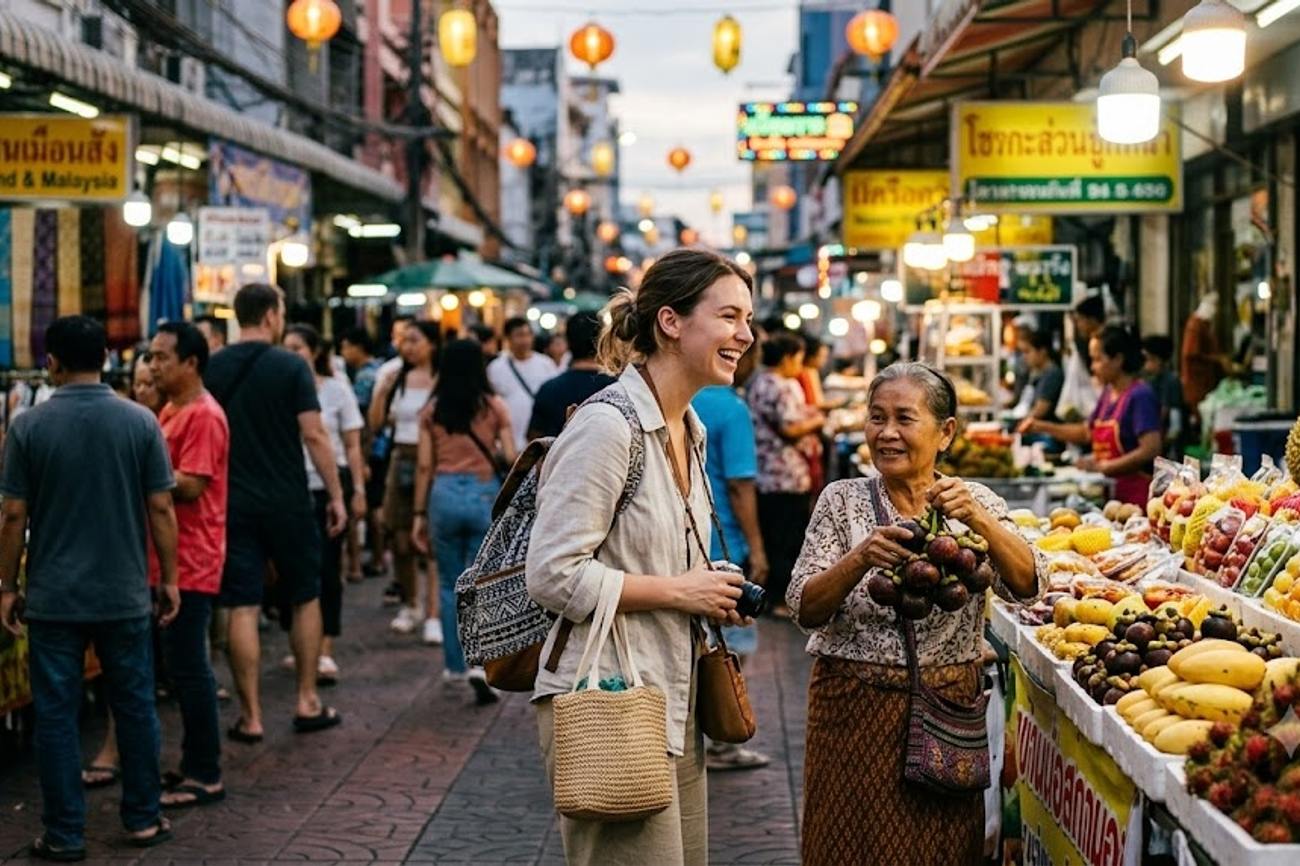
Image generated by AI
title: Decoding the Cost of Southeast Asia: A Local's Guide to Four Major Hubs description: An insider analysis of spending patterns in Bangkok, Kuala Lumpur, Singapore, and Ho Chi Minh City for 2026, moving beyond generic budget guides to reveal the true cost of urban exploration.
The most deceptive part of planning a Southeast Asian circuit is the "affordable" label; in reality, a six-day trip to Singapore can cost nearly four times as much as a similar stay in Kuala Lumpur. While the region is often lumped together as a budget-friendly paradise, the structural costs of accommodation and urban infrastructure create wildly different financial realities for the modern nomad.
The Shifting Economics of the Asian Metropolis
For 2026, the financial profile of a Southeast Asian city break is no longer about finding the cheapest hostel, but about understanding "spending bands." When we strip away international flights and shopping to look at a standard six-day land budget (five nights in mid-range lodging, three meals a day, and a mix of public and private transport), the divergence is stark.
Singapore sits at the apex of the spending curve, with a projected land budget ranging from US$880 to US$1,465. In contrast, Ho Chi Minh City and Kuala Lumpur offer a more accessible entry point, with budgets starting at US$310 and US$295 respectively. Bangkok occupies the volatile middle, where a traveler might spend between US$405 and US$725 depending entirely on their appetite for luxury.
The trend we are seeing is a widening gap between "everyday consumption" and "curated experiences." In cities like Ho Chi Minh City, the cost of a local meal remains negligible, but the price of organized, high-end tours is rising. Meanwhile, Singapore is leveraging its massive tourism infrastructure—welcoming 16.9 million international visitors in 2025—to maintain a premium pricing model, with tourism receipts hitting a record S$32.8 billion.
What Makes These Hubs Different
Each city possesses a unique "cost driver" that dictates how your money disappears.
In Singapore, the driver is almost exclusively real estate. The accommodation market creates immense upward pressure, with mid-range hotels costing between US$550 and US$850 for five nights. However, the city offsets this with a sophisticated "free-to-pay" attraction model. You can wander the general areas of Gardens by the Bay for free, only paying when you enter specific conservatories. This allows a savvy traveler to balance the high cost of a hotel with low-cost urban exploration.
Bangkok operates on a system of "friction costs." While food for six days can be as low as US$90, the city's legendary traffic creates a hidden tax. If you aren't based near a BTS or MRT station, you will spend significantly more on ride-hailing and private transfers to avoid the heat and congestion. The city's scale is massive; Thailand saw 32.97 million international visitors in 2025, and the sheer volume of people means that "convenience" comes at a price.
Kuala Lumpur offers the most stable middle ground. With a mid-range hotel band of US$125–260 for five nights, it is significantly cheaper than its neighbors to the north and south. The city's strength lies in its integrated transport via Rapid KL, which allows visitors to navigate the city with precision and low cost. However, the "flagship tax" is real here; while the city is affordable, specific icons like the Petronas Twin Towers (RM127 on weekdays, RM137 on weekends for non-Malaysians) can spike a daily budget.
Ho Chi Minh City remains the champion of the "low-baseline" budget. Mid-range hotels here range from US$140 to US$300 for five nights, and food is the most affordable of the four, potentially costing as little as US$70 for six days. The experience here is about the contrast between the street-level economy and the emerging luxury sector.
Visitor Insider Tips
To navigate these cities without overspending, you need to move beyond the guidebook and understand the local rhythms.
Singapore: The Strategic Base Avoid the central business district for lodging. Look for boutique hotels in neighborhoods like Tiong Bahru or Little India to drop your hotel costs. Use the Singapore Tourism Board to track seasonal events, as hotel rates spike aggressively during major festivals.
Bangkok: The Transit Hack The biggest mistake visitors make is relying on taxis. Base yourself within a 5-minute walk of the Sukhumvit line (BTS). Your food budget will stay low if you eat at "Soi" (side street) stalls, but be wary of rooftop bars; a single cocktail at a skyline venue can cost as much as three days of street food.
Kuala Lumpur: The Timing Window To avoid the weekend price hikes at major attractions like Aquaria KLCC (RM85 on weekends vs RM80 on weekdays), schedule your "big" sights for Tuesday through Thursday. Use the Rapid KL integrated fare calculator to map your route before you leave the hotel to avoid overpriced tourist shuttles.
Ho Chi Minh City: The Local Lens The real city is found in the alleys (hem). For the best value, avoid the restaurants directly facing the main roads in District 1. Venture two or three turns deep into the alleyways to find the prices locals pay.
Cultural and Environmental Context
Tourism in these four hubs is not just an economic engine; it is a source of significant urban tension. In Bangkok, the influx of 32.97 million visitors puts immense pressure on the city's aging drainage and transport systems, leading to the "friction" mentioned earlier. There is a growing movement toward decentralizing tourism to reduce the burden on the city center.
Singapore represents the gold standard of managed tourism. By directing visitors toward high-value, controlled environments like the UNESCO World Heritage sites or the meticulously planned Gardens by the Bay, the city minimizes the chaotic impact on local residential zones. However, this creates a "curated" experience that can feel sterile to some.
In Malaysia, the "Visit Malaysia 2026" campaign, which targets 43 million international visitors with over 300 events, is a bold attempt to pivot the national economy further toward tourism. This growth is essential for heritage preservation but risks "museumifying" the city center of Kuala Lumpur, where traditional trades are often replaced by souvenir shops.
Ho Chi Minh City faces a different challenge: the rapid modernization of its urban fabric. As the city attracts more mid-range and luxury travelers, the traditional street-food culture—the very thing visitors come for—is often pushed out to make room for air-conditioned malls and high-rise hotels.
FAQ: Visiting Southeast Asia 2026
What is the best time to visit these cities? For Bangkok and Ho Chi Minh City, November to February offers the coolest weather. Singapore is humid year-round, but avoid the peak school holiday periods in June and December to keep hotel costs within the mid-range bands.
How do I get between these hubs efficiently? Budget airlines like AirAsia connect these cities in 2-3 hours. For Singapore to KL, the luxury bus is a viable, low-cost alternative that drops you in the city center, avoiding expensive airport transfers.
Is it safe for solo travelers? Yes, all four cities are generally very safe. Singapore is the safest, while Bangkok and Ho Chi Minh City require more vigilance regarding petty theft and tourist scams in high-traffic areas.
Do I need a visa for these destinations? Visa requirements vary by nationality. Check the official Thailand Tourism or Malaysia Tourism portals for the most current 2026 entry requirements.
The true cost of the trip isn't found in the hotel rate, but in the choices you make between the street stall and the skyline.
Tags: BangkokTravel2026, SingaporeBudgetGuide, KualaLumpurTourism, HoChiMinhCityTravel, SoutheastAsiaCosts2026
Related Travel Guides
- Florida Creates A Powerful Underwater Paradise In Destin-Fort Walton Beach As Millions Of Pounds Of Concrete Transform U.S. Gulf Tourism
- Singapore Alongside Hong Kong And Global Markets Support Japan Tourism Recovery Amid China Tensions
- Nepal Airlines Faces Aviation Storm As Tourism Growth Is Blocked By Grounded Jets And Reform Failures
Disclaimer
This article is for informational and educational purposes only. It does not constitute legal, financial, or professional advice. While we strive to provide accurate and up-to-date information, travel policies, regulations, and conditions change rapidly. Always verify information with official sources before making travel decisions. Nomad Lawyer makes no representations about the accuracy, reliability, completeness, or suitability of the information provided. Readers should consult qualified professionals for advice specific to their circumstances. The views expressed in this article are those of the author and do not necessarily reflect the views of Nomad Lawyer.
Kunal K Choudhary
Co-Founder & Contributor
A passionate traveller and tech enthusiast. Kunal contributes to the vision and growth of Nomad Lawyer, bringing fresh perspectives and driving the community forward.
Learn more about our team →