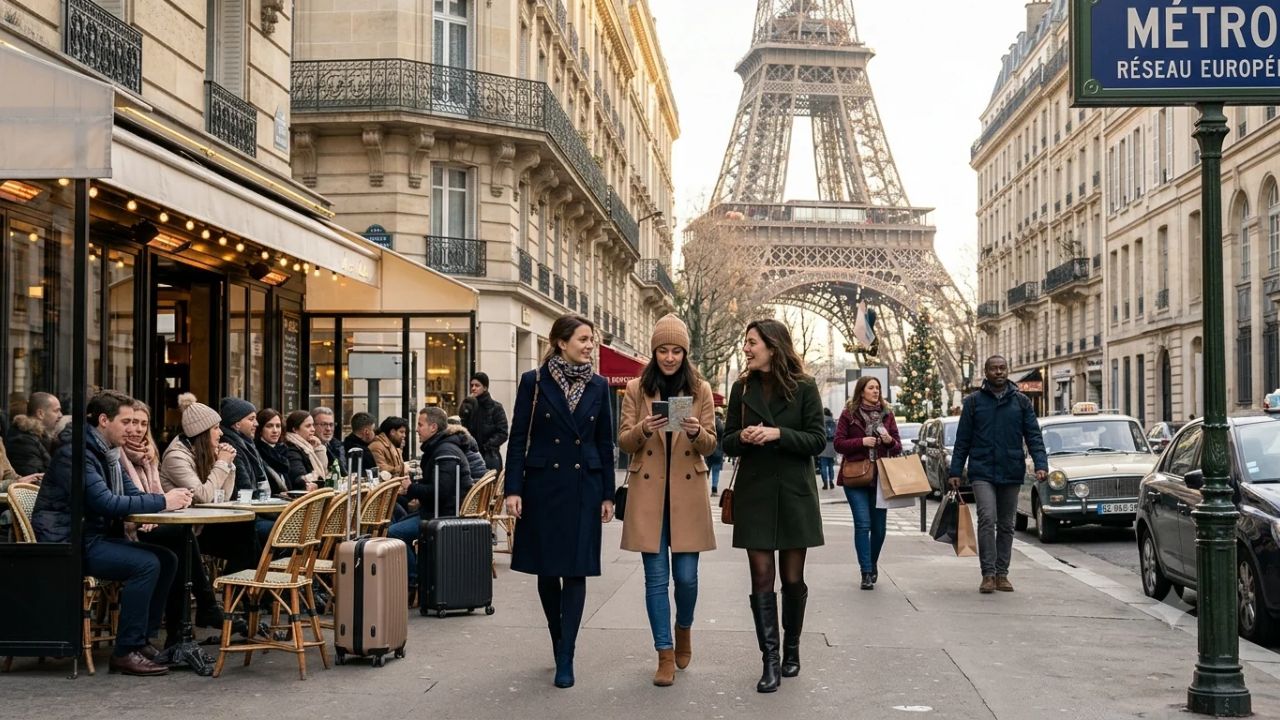
Sweden, Italy And Several Other Top Countries Propel Ireland Tourism With Rising Demand

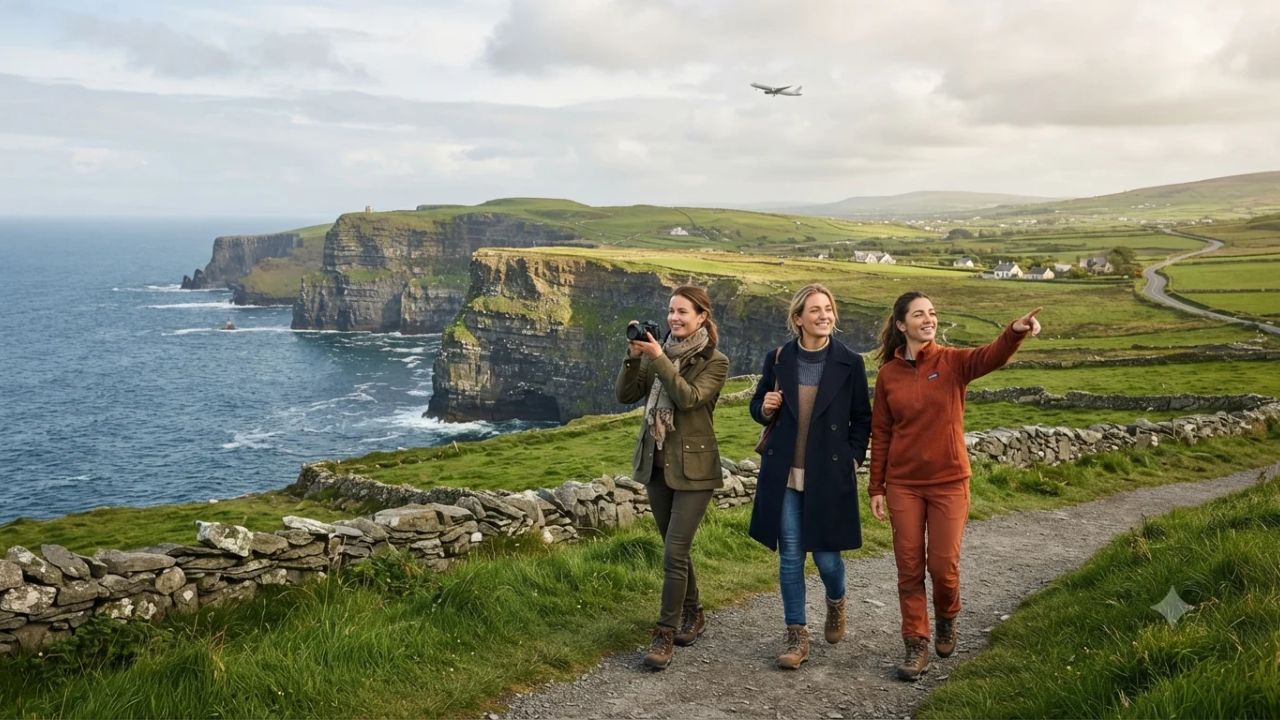
Surging tourism demand from Sweden, Italy, and key European source markets is driving Ireland’s transition toward high-yield, slow-travel tourism, advancing the national goal of exceeding €10 billion in annual overseas visitor expenditure by 2031.
The Quality-First Paradigm: Redefining Irish Tourism for a New Era
The island of Ireland is undergoing a profound structural evolution in how it approaches international tourism. Moving decisively away from the post-pandemic recovery era of chasing raw visitor headcounts, Tourism Ireland and the Department of Enterprise, Tourism and Employment have pivoted toward a value-driven, quality-first paradigm. Rather than measuring success solely through entry border tallies, national tourism policymakers are prioritizing the economic yield per visitor, the geographical distribution of spending across rural communities, and the environmental sustainability of incoming travel flows.
At the heart of this strategic transformation is a marked surge in demand from Sweden, Italy, and other key Mainland European source markets. In contrast to high-volume, short-duration weekend city breakers who often remain concentrated within the historic core of Dublin, travelers originating from the Nordic nations, Southern Europe, and Central Europe demonstrate a strong inclination toward extended stays, active outdoor pursuits, regional heritage exploration, and off-peak travel.
This growing European momentum serves as a vital catalyst for Ireland’s long-term national tourism strategy, titled "A New Era for Irish Tourism." Designed as a comprehensive decadal roadmap containing 71 discrete policy actions, the framework targets expanding annual overseas visitor spending from over €6 billion in 2025 to more than €10 billion (approximately €10.25 billion / £8.9 billion) by 2031. By leveraging expanding direct air connections, targeted trade partnerships, and experiential slow-travel branding, Ireland is converting rising European demand into sustainable economic prosperity across every county.
The Nordic Engine: High-Spending Swedish Travelers and Active Escapes
The Nordic region—encompassing Sweden, Denmark, Norway, and Finland—has emerged as one of Ireland’s most promising, high-yield growth corridors. Managed through Tourism Ireland’s regional operational hub in Copenhagen, outreach across the Nordic countries has delivered exceptional commercial returns, with Sweden and Denmark serving as primary growth engines.
2025 Performance and Economic Yield
Statistical evaluations of Nordic travel to the island of Ireland underscore the market’s lucrative spending profile:
- Visitor Volume & Revenue: In 2025, the Nordic region delivered approximately 147,000 visitors to the island of Ireland, generating roughly €112 million (about £98 million) in direct foreign exchange expenditure.
- High Per-Trip Expenditure: Nordic holidaymakers spent an impressive average of €766 (nearly £666) per individual trip. This elevated spending rate places the Nordic bloc as Ireland’s tenth-largest overseas source of tourist revenue, outperforming numerous markets with considerably larger population baselines.
- Historical Growth Potential: Historical benchmark performance demonstrates substantial headroom for further expansion. In 2019, prior to global travel disruptions, the Nordic market delivered 256,000 visitors who generated €116 million in spending. Tourism officials view this previous peak as an achievable baseline that can be surpassed through targeted trade distribution.
The 2026 Aviation Capacity Jump
Recognizing rising consumer demand, international airline carriers significantly increased direct flight access connecting the Nordic capitals with Ireland. For the summer 2026 operating season, scheduled air seat capacity between the Nordic region and Ireland climbed by +14 percent, reaching approximately 395,000 seats.
Carriers such as Scandinavian Airlines (SAS), Norwegian Air Shuttle, and Ryanair expanded non-stop frequencies connecting Stockholm Arlanda (ARN), Copenhagen (CPH), Oslo Gardermoen (OSL), and Helsinki (HEL) directly with Dublin Airport (DUB), providing the accessible seat capacity necessary to convert prospective interest into confirmed bookings.
Traveler Psychographics: Active, Inquisitive, and Dispersed
Nordic holidaymakers exhibit specific travel preferences that align closely with Ireland’s sustainable tourism ambitions:
- Active Outdoor Orientation: Swedish and Nordic travelers display a strong preference for multi-activity vacations that combine coastal hiking along the Wild Atlantic Way, cycling on designated off-road greenways, sea kayaking, and championship links golfing.
- Cultural and Community Engagement: Characterized by exceptionally high English language fluency, Nordic visitors actively seek opportunities to interact with local residents, attend traditional music sessions in rural pubs, and learn about Irish folklore, literature, and artisan craftsmanship.
- The "Dublin Plus" Routing: While approximately 60 percent of Nordic visitors designate Dublin as an essential itinerary component, they rarely stay exclusively in the capital. Instead, Dublin functions as a multi-day cultural entry point before travelers disperse to the rugged cliffs of County Donegal, the culinary trails of County Sligo, or the quiet waterways of Ireland’s Hidden Heartlands.
B2B Deal-Making in Stockholm: Showcasing Irish SMEs at Travel News Market
Converting international consumer interest into confirmed retail travel bookings requires direct, structured engagement with overseas travel trade intermediaries. Direct commercial contracting between Irish tourism small-and-medium enterprises (SMEs) and Swedish wholesale tour operators serves as the operational engine of Tourism Ireland's Nordic strategy.
The Travel News Market Platform
A cornerstone of this commercial outreach is Tourism Ireland's recurring participation in Stockholm’s Travel News Market, Sweden’s premier annual B2B travel trade event. Having established a consistent presence across successive editions—including November 2023, November 2025, and the landmark November 12, 2026 event—Tourism Ireland facilitates hundreds of pre-scheduled one-to-one commercial meetings connecting local Irish suppliers directly with Swedish retail agents, outbound operators, and MICE (Meetings, Incentives, Conferences, and Exhibitions) planners.
At the November 2026 edition in Stockholm, Tourism Ireland led a diverse delegation of innovative Irish tourism enterprises:
- Taste of Sligo: Showcasing guided gastronomic walking tours, wild food foraging excursions, and farm-to-fork culinary masterclasses that spotlight the emerging food culture of the northwest coast.
- Howth Adventures: Presenting coastal hiking, cliff walking, and e-biking tours around the historic Howth Peninsula just north of Dublin Bay, combining dramatic maritime scenery with fresh seafood dining.
- The Chocolate Manor: An artisan chocolatier based in Castlerock, County Londonderry, offering bespoke confectionery workshops and sensory tasting experiences along the Causeway Coastal Route.
These specialized suppliers joined established operators who had featured in earlier Stockholm showcases, such as Creative Tours Belfast, Ethical Tours, and Sliabh Liag Distillers—the historic Donegal distillery producing authentic peated single malt Irish whiskey in the shadow of Europe’s highest accessible sea cliffs.
Forward Contracting and Pan-Nordic Trade Networks
The primary objective of these Stockholm workshops is forward contracting. Irish suppliers negotiate contract rates and exclusive group departures for 2027 and 2028, embedding regional Irish experiences into Swedish holiday brochures and digital booking portals.
Beyond Travel News Market, Tourism Ireland maintains an active pan-Nordic outreach strategy. In 2026, the agency convened dedicated regional workshops linking Irish enterprises with 48 top tour operators and travel agents across Sweden, Denmark, Norway, and Finland. This trade activity is reinforced by cooperative digital advertising campaigns with airline partners and the continuous optimization of the English-language Nordic portal on Ireland.com.
Mainland Europe's Surge: Italy, Germany, France, and Spain Driving Overnight Growth
While the Nordic surge represents an essential high-yield development, Mainland Europe as a whole remains one of Ireland's foundational economic pillars. In 2025, Mainland European source markets delivered over 2.2 million visitors and generated nearly €1.9 billion in direct visitor spending. Demonstrating continued momentum, total visitor nights generated by Mainland European travelers climbed by +12 percent year-on-year through August 2026.
Italy plays an increasingly vital role in this expansion, alongside Germany, France, Spain, and the Benelux nations:
Italy: Expanding Air Footprint and Regional Curiosity
Italian travelers have embraced Ireland as a premier destination for scenic touring and heritage discovery.
- Air Capacity Expansion: Scheduled air seat capacity connecting Italian airports with Ireland expanded by +6 percent for summer 2026, with third-quarter capacity increasing by +7 percent. Direct flights connecting Rome Fiumicino, Milan Malpensa, Milan Bergamo, Naples, and Venice with Dublin and regional airports provided accessible flight pipelines.
- Targeted Media Itineraries: Tourism Ireland has paired Italian-language digital marketing campaigns with targeted media hosting. In autumn 2026, prominent Italian food and travel journalists were hosted on curated press trips through County Galway and the Connemara region, highlighting local oyster harvesting, artisan cheesemaking, and traditional Irish hospitality.
- Trade and OTA Collaborations: Partnerships with major Italian tour operators and online travel agencies (OTAs) have focused on promoting self-drive coastal itineraries and shoulder-season autumn city breaks.
Great Britain: The High-Volume Foundation
Great Britain continues to serve as Ireland’s largest and closest overseas source market.
- Capacity and Overnight Growth: Scheduled air seat capacity from Britain increased by +6 percent in summer 2026 (+4 percent in Q3), translating to an +8 percent increase in visitor bed-nights recorded between January and August 2026.
- Regional Air Linkages: The restoration of regional aviation routes—such as direct flights connecting London Southend Airport with George Best Belfast City Airport—has facilitated short-break holidays and visiting-friends-and-relatives (VFR) travel across Northern Ireland and the border counties.
Germany: Shoulder-Season Resilience and Nature Immersion
Germany ranks as Ireland’s fourth-largest overseas source market overall and its largest single market in Mainland Europe.
- Market Diversification Strategy: Supported by targeted government diversification funding, Tourism Ireland conducts extensive German-language promotions in key economic centers, including Frankfurt, Munich, Hamburg, and Berlin.
- Commercial Alliances: Strategic joint marketing campaigns with major German wholesale tour operators, such as Wolters Reisen, curate packaged nature, walking, and wellness itineraries across the Ring of Kerry and the Dingle Peninsula. German travelers are noted for their high propensity to travel during shoulder-season months (April, May, September, and October), smoothing hotel occupancy curves throughout the year.
France: The "Plus One" Itinerary and Luxury Workshops
France represents a mature, culturally appreciative source market.
- Strategic Campaign Focus: French promotional initiatives emphasize "Plus One" five-day itineraries, encouraging travelers arriving on direct ferry routes from Cherbourg and Roscoff to Rosslare and Cork to combine urban stays with rural retreats.
- Luxury and Content Creator Summits: Tourism Ireland has engaged French digital travel creators and convened high-level luxury trade workshops in Paris, positioning Ireland's historic castle hotels, manor estates, and private equestrian retreats before high-net-worth French travelers.
Spain and the Benelux Corridors
- Spain: Air seat capacity from Spain grew by +2 percent in summer 2026. Spanish visitors demonstrate strong interest in literary heritage, music festivals, and student language-immersion programs, supported by regional storytelling campaigns.
- Belgium and the Netherlands: Benelux travelers represent dependable, environmentally conscious visitors who make extensive use of Ireland’s rail network and cycling infrastructure. Digital marketing packages and hosted-buyer showcases have maintained steady demand from Amsterdam and Brussels.
| Source Market / Region | 2025/2026 Performance Highlights | Summer 2026 Air Seat Capacity Growth | Key Behavioral Characteristics | Primary Geographic Focus in Ireland |
|---|---|---|---|---|
| Sweden & Nordics | 147k visitors; €112M spend (€766/trip); 10th largest market | +14% (395,000 scheduled seats) | High English fluency, active outdoors, heritage exploration | Dublin paired with Donegal, Sligo, and Hidden Heartlands |
| Italy | Visitor nights up +12% across Mainland Europe | +6% (+7% in Q3 2026) | Scenic driving tours, culinary curiosity, shoulder breaks | Galway, Connemara, Wild Atlantic Way, Dublin |
| Great Britain | Foundational core; +8% overnight stays (Jan–Aug 2026) | +6% (+4% in Q3 2026) | Short breaks, weekend escapes, regional pub culture | Belfast, Dublin, Cork, Causeway Coastal Route |
| Germany | 4th-largest overseas market; strong shoulder season | Stable high-frequency network | Hiking, cycling, nature retreats, environmental mindfulness | Kerry, Dingle, Cork, Ireland's Ancient East |
| France | Steady demand via air and direct maritime ferry links | Stable with expanded ferry capacity | "Plus One" itineraries, culinary heritage, luxury stays | West Cork, Kilkenny, Waterford, Boyne Valley |
The "Plus-One" Playbook: Slow Travel, Regional Dispersal, and Off-Peak Discovery
As international visitor demand expands across Europe, tourism authorities are actively guarding against the perils of overtourism. Concentration of visitor crowds around a handful of hyper-famous landmarks—such as the Temple Bar district in Dublin, the Cliffs of Moher, or Killarney National Park—can strain municipal infrastructure, inflate local housing costs, and degrade the authentic visitor experience.
To distribute economic benefits equitably, Tourism Ireland and national tourism development authority Fáilte Ireland have pioneered the "Plus-One" Playbook, anchored by international marketing platforms such as "Ireland Goes Beyond" and "Ireland Unrushed".
The Mechanics of the "+1 Night and +1 Place" Concept
The "+1" operational strategy encourages visiting international travelers to incorporate two deliberate adjustments into their travel plans:
- Adding "+1 Night": Encouraging travelers to extend a standard three-night weekend city break into a four- or five-night stay by taking advantage of European public holidays, bridge days, and flexible remote work opportunities.
- Adding "+1 Place": Guiding visitors to complement a primary urban visit with a secondary regional stop. For example, a traveler visiting Dublin is encouraged to take a two-hour train ride to Belfast, while a visitor exploring Cork City is nudged toward the maritime coastal villages of West Cork.
Stimulating Growth in Designated Regional Tourism Brands
Under national policy targets, Fáilte Ireland has established a mandate to achieve at least 7 percent annual growth in visitor activity across three designated regional destination brands:
- Ireland’s Hidden Heartlands: Centered along the majestic River Shannon and the Lough Derg blueway, this region promotes tranquil barge cruising, off-road walking trails, lakeside glamping, and unhurried exploration of historic lock-keeper cottages and abbey ruins across counties Roscommon, Leitrim, Longford, and Offaly.
- Ireland’s Ancient East: Spanning the historic landscape between the River Shannon and the Irish Sea, this corridor showcases 5,000 years of recorded human history. Travelers explore the megalithic passage tombs of Newgrange in the Boyne Valley (older than the Egyptian pyramids), medieval castles in Kilkenny, the Viking triangle of Waterford, and the monastic ruins of Glendalough in County Wicklow.
- The Northern Stretch of the Wild Atlantic Way: While the southern sections of the Wild Atlantic Way in Kerry and Clare receive heavy summer traffic, promotional campaigns actively redirect European travelers northward to the dramatic sea cliffs of Slieve League in Donegal, the surf beaches of Bundoran and Strandhill in Sligo, and the untamed boglands of Erris in County Mayo.
By developing dedicated greenways—such as the Royal Canal Greenway, the Waterford Greenway, and the Great Western Greenway—Ireland provides European visitors with car-free, low-carbon infrastructure that encourages multi-day walking and cycling vacations, injecting visitor expenditure directly into rural village bakeries, family-run guesthouses, and community craft cooperatives.
The 2031 Vision: €10 Billion Revenue, Infrastructure Investments, and Policy Enablers
The successful cultivation of European demand operates within the legislative and fiscal architecture established by the Irish Government’s policy statement, "A New Era for Irish Tourism." Formulated under the oversight of the Department of Enterprise, Tourism and Employment, the policy integrates tourism into national economic planning, recognizing the sector as an essential driver of regional employment and foreign earnings.
Ambitious Decadal Targets
The policy outlines rigorous, measurable performance targets to be achieved by 2031:
- Revenue Objective: To increase annual overseas visitor expenditure from just over €6 billion in 2025 to more than €10 billion (projected at approximately €10.25 billion / £8.9 billion) by 2031. Achieving this milestone requires sustaining an average compound annual revenue growth rate of roughly 6 percent.
- Workforce and Enterprise Expansion: The national strategy aims to lift direct tourism employment from approximately 228,000 positions toward 251,000 high-quality jobs by 2030, while providing strategic business development support to the island's 46,000 tourism enterprises.
Dedicated Capital Infrastructure Funding
To ensure that the physical destination can comfortably accommodate this revenue expansion without compromising environmental standards, the government has committed substantial financial resources through the Sectoral Capital Plan (2026–2030):
- €400 Million Capital Allocation: Directly earmarked for tourism infrastructure, product innovation, and heritage site conservation.
- Greenway and Blueway Networks: Expanding segregated pedestrian and cycling greenways, upgrading electric vehicle (EV) charging corridors across rural routes, and modernizing visitor reception facilities at key cultural monuments.
- Overseas Marketing Fund: In Budget 2026, the government allocated €71.43 million directly to the Overseas Tourism Marketing Fund, ensuring that Tourism Ireland maintains high-impact commercial campaigns across Europe, North America, and emerging long-haul markets.
Fiscal Support: The 9 Percent VAT Reintroduction
A critical legislative measure designed to safeguard the competitiveness of the domestic hospitality sector is the targeted reduction of Value Added Tax (VAT). In recognition of rising operational costs, energy expenses, and food commodity inflation faced by independent restaurants, cafes, and catering establishments, the government announced a dedicated 9 percent VAT rate on food and catering services, effective from July 2026. This fiscal relief provides vital financial breathing room for small hospitality operators, enabling them to reinvest in staff training, menu innovation, and sustainable local sourcing while maintaining competitive dining prices for international visitors.
Expanding Global Horizons: Long-Haul Connectivity, Global Events, and Sustainability
While European markets like Sweden and Italy drive immediate high-yield growth, Ireland is simultaneously diversifying its international footprint across emerging global corridors, major sporting events, and comprehensive environmental frameworks.
Emerging Markets and New Long-Haul Gateways
To insulate the national tourism economy against regional downturns, Tourism Ireland is actively establishing commercial beachheads in high-growth international markets:
- Direct Presence in the Middle East and India: In 2026, Tourism Ireland formally opened dedicated marketing and trade representations in the United Arab Emirates (UAE) and India, capturing rising outbound luxury travel from the Gulf states and India’s rapidly expanding affluent demographic.
- Direct East Asian Connectivity: In April 2026, civil aviation authorities announced a historic direct scheduled non-stop flight connecting Dublin Airport (DUB) with Shanghai Pudong International Airport (PVG). This direct corridor provides frictionless access for high-spending Chinese business and leisure travelers, supporting university partnerships and corporate investment.
- Managing Airline Capacity Realities: Simultaneously, aviation planners continue to navigate global airline capacity shifts, addressing seasonal fluctuations, fuel price volatility, and geopolitical airspace constraints to protect vital transatlantic and European flight corridors.
Mega-Event Sports Tourism: The Road to the 2027 Ryder Cup
Major sporting fixtures serve as powerful global marketing catalysts for Ireland’s visitor economy:
- The 2027 Ryder Cup at Adare Manor: In September 2027, the world’s most prestigious biennial team golf competition will take place at the luxurious Adare Manor estate in County Limerick. Generating hundreds of millions of euros in global economic impact, the event will focus international broadcast attention on Ireland's premier luxury lodging and championship golf infrastructure.
- Championship Golf Lineup: Preceding the Ryder Cup, Ireland hosts a prestigious roster of international tournaments, including The Open Championship at Royal Portrush in Northern Ireland, the Walker Cup, and the annual Irish Open.
- Cultural and Diaspora Milestones: The tourism calendar actively aligns with the "America 250" celebrations in 2026—celebrating two-and-a-half centuries of deep transatlantic cultural and diaspora bonds—alongside synchronized global St. Patrick’s Day festival activations.
- Business Tourism at Scale: Through the Meet in Ireland brand, Tourism Ireland facilitates connections for over 1,000 domestic tourism SMEs with international corporate meeting buyers at premier global trade exhibitions such as IMEX in Frankfurt and IBTM World in Barcelona.
Environmental Stewardship and Circular Tourism
Sustainable growth requires verifiable environmental accountability. Guided by Fáilte Ireland’s Climate Action Roadmap, the Irish tourism industry is executing comprehensive carbon-reduction measures:
- Carbon Emissions Tracking: Implementing standardized emissions-measurement tools for hotel properties, coach operators, and visitor attractions.
- Circularity and Waste Reduction: Phasing out single-use plastics across hospitality supply chains, eliminating commercial food waste, and encouraging local, seasonal farm procurement.
- The Sustainable Tourism Pledge: Encouraging hundreds of tourism enterprises to attain verified third-party eco-certifications, ensuring that the natural landscapes that attract international visitors—from the Burren to the Slieve Bloom Mountains—remain pristine for generations to come.
Frequently Asked Questions Regarding Ireland's Tourism Expansion and European Strategy
Why are Sweden and the Nordic countries vital to Ireland’s tourism strategy?
Swedish and Nordic travelers represent a high-yield, low-impact demographic that aligns with Ireland's sustainable tourism vision. In 2025, Nordic visitors spent an average of €766 per trip, generating €112 million in foreign exchange. Nordic travelers possess high English fluency, favor active outdoor holidays (such as hiking, cycling, and links golf), and frequently venture beyond Dublin into regional communities along the Wild Atlantic Way and Ireland's Hidden Heartlands. Scheduled summer 2026 air seat capacity from the Nordic region climbed by +14 percent to support this rising demand.
What is the "+1 Night and +1 Place" slow-travel strategy?
The "+1" playbook is an operational marketing strategy designed by Tourism Ireland and Fáilte Ireland to counter seasonal crowding and spread economic benefits into rural regions. It encourages overseas visitors to add an extra night to their trip (taking advantage of public holidays or remote work flexibility) and to incorporate a secondary, less-visited regional destination alongside major city hubs—such as pairing Dublin with Belfast, or combining Cork City with the coastal villages of West Cork.
What are the key financial and employment targets of Ireland's 2031 tourism vision?
Under the national policy "A New Era for Irish Tourism," the Irish Government targets expanding annual overseas visitor revenue from over €6 billion in 2025 to more than €10 billion (approximately €10.25 billion) by 2031, representing an average annual growth rate of roughly 6 percent. The strategy also aims to increase direct tourism employment from 228,000 to 251,000 high-quality jobs by 2030, providing strategic support for 46,000 tourism enterprises across the island.
How is Ireland expanding direct long-haul air connectivity beyond Europe?
In addition to strengthening European and North American flight corridors, Ireland is actively cultivating high-yield emerging markets. In 2026, Tourism Ireland established official representation offices in the United Arab Emirates and India. In addition, civil aviation authorities announced a direct non-stop air link connecting Dublin with Shanghai Pudong in April 2026, opening direct connectivity for East Asian leisure and business travelers.
What major international sporting events will drive Irish tourism through 2027?
Ireland’s international tourism calendar is anchored by several world-class sporting fixtures, most notably the prestigious 2027 Ryder Cup, which will be staged at Adare Manor in County Limerick. Additional premier golf events include The Open Championship at Royal Portrush in Northern Ireland, the Walker Cup, and the annual Irish Open, alongside global diaspora celebrations surrounding America 250 in 2026.
What fiscal and infrastructure supports are being introduced for the Irish hospitality industry?
To protect hospitality competitiveness, the Irish Government announced a reduced 9 percent VAT rate on food and catering services effective from July 2026, providing critical financial relief to independent restaurants and cafes. On the infrastructure front, the Sectoral Capital Plan (2026–2030) commits €400 million toward greenways, blueways, and visitor heritage facilities, complemented by a €71.43 million allocation in Budget 2026 for the Overseas Tourism Marketing Fund.
Related Travel Guides
This article is for informational purposes. Flight routes, passenger regulations, visa rules, and transit advisories are subject to change by airlines and aviation authorities. Readers are advised to verify schedules and travel documentation with relevant carriers and border agencies before departure.
Related Stories
12 Beautiful Small Cities in Italy That Reddit Travelers Recommend Over Rome and Venice
Europe and Saudi Arabia Reveal Two Competing Models for the Future of Sustainable Tourism