Tanzania and UNESCO Unleash Powerful Heritage Transformation as Zanzibar Tourism Enters a New Sustainable Growth Era

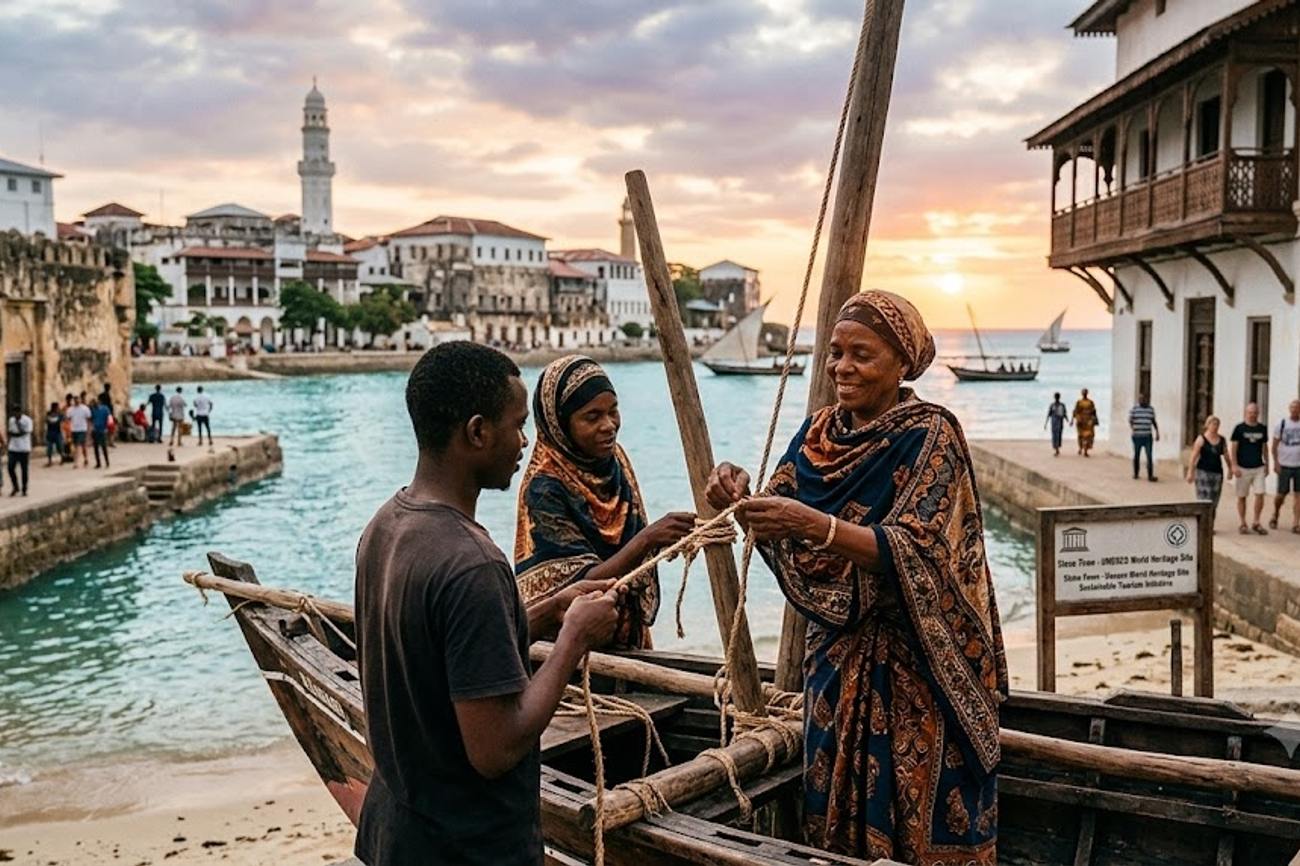
Image generated by AI
Tanzania's tourism arrivals have surged to over 1.8 million visitors annually, yet the conversion of this volume into sustainable, community-led heritage preservation remains uneven across the archipelago. This current pivot toward a renewed UNESCO partnership signals a strategic shift from quantity-driven growth to a value-driven model, attempting to synchronize cultural conservation with economic scalability. While the raw number of arrivals indicates a robust recovery, the structural gap between visitor spending and the actual maintenance of Zanzibar’s historic sites necessitates a formalized, data-backed framework to prevent the degradation of the very assets driving the industry.
The Heritage-Tourism Equation in Numbers
The current strategic realignment between the Tanzanian government and UNESCO is not merely a diplomatic gesture but a response to the volatility of heritage-based tourism. According to the World Tourism Organization (UNWTO), sustainable tourism requires a precise balance between carrying capacity and infrastructure investment. In Zanzibar, the pressure on cultural landscapes is mounting as the island attempts to scale its offerings.
The core of this renewed cooperation focuses on five primary pillars:
- Education: Enhancing institutional capacity for workforce development.
- Scientific Development: Utilizing evidence-based solutions for national challenges.
- Cultural Heritage Protection: Specifically targeting the preservation of Zanzibar's historic sites.
- Communication: Improving access to information for both locals and visitors.
- Institutional Coordination: Utilizing the National Commission for UNESCO to link international technical support with domestic priorities.
The critical data gap currently facing the region is the lack of "measurable goals." Without defined KPIs—such as the percentage of tourism revenue reinvested into site conservation or the number of local residents employed in certified heritage roles—the partnership risks remaining a policy-level conversation. The proposed "development partners’ roundtable" is intended to bridge this gap by transforming qualitative goals into quantitative investment commitments.
Comparative Context: Heritage Preservation vs. Mass Tourism
When comparing Tanzania's approach to other regional hubs in East Africa, a pattern emerges: the tension between rapid infrastructure expansion and the preservation of "Authentic Heritage" markers. While neighboring markets have often prioritized luxury resort development, Tanzania is attempting to integrate UNESCO’s technical expertise to ensure that the growth of the tourism sector does not cannibalize the cultural assets that attract high-value travelers.
The following table illustrates the projected shift in focus required to move from a traditional tourism model to the sustainable heritage model proposed in the UNESCO partnership:
| Metric | Traditional Tourism Model (Pre-UNESCO Pivot) | Sustainable Heritage Model (Proposed Goal) | Impact on Market Value |
|---|---|---|---|
| Primary Driver | High-volume visitor arrivals | High-value, low-impact cultural tourism | Increases Average Daily Rate (ADR) |
| Revenue Distribution | Concentrated in large resort entities | Distributed via community-based projects | Improves local economic resilience |
| Site Management | Reactive maintenance | Proactive, UNESCO-standard conservation | Extends asset lifespan by decades |
| Workforce Skillset | General hospitality services | Certified heritage and conservation roles | Increases local wage potential |
| Success Metric | Total passenger counts | Heritage health index & local benefit % | Shifts focus to long-term sustainability |
This shift mirrors trends seen in other UNESCO World Heritage sites globally, where a transition toward "regenerative tourism" has historically led to higher per-visitor spending and reduced environmental degradation. Data from IATA suggests that travelers are increasingly selecting destinations based on sustainability credentials, making this pivot a financial necessity rather than just a cultural preference.
Practical Traveler Advisory and Strategic Insights
For the individual traveler, the institutionalization of Zanzibar's heritage management will fundamentally change the on-the-ground experience. If the UNESCO partnership successfully implements its "community-based tourism projects," the market will shift away from sanitized resort experiences toward authentic, regulated cultural exchanges.
Actionable Advice for Q3 and Q4 Planning:
- Diversify Your Itinerary: Expect a rise in "creative industries" and specialized cultural experiences. Rather than sticking to the beach periphery, plan for deeper excursions into the historic quarters of Stone Town and surrounding cultural landscapes.
- Budget for "Impact" Experiences: As the government implements regulations to balance commercial interests with conservation, expect a slight increase in entry fees or "conservation levies" for heritage sites. These funds are intended for the "measurable results" cited in the partnership.
- Seek Certified Local Guides: With the focus on "strengthening local capacity," look for guides who have undergone the new UNESCO-backed training programs. This ensures your spending directly supports the local workforce development goals of the partnership.
- Booking Window: Because sustainable tourism models often involve "carrying capacity" limits to protect sites, expect stricter caps on visitor numbers at key heritage locations. Booking specialized cultural tours 12-16 weeks in advance will become necessary to avoid lockout.
Forward Projection: The 2025-2030 Trajectory
Based on the current trajectory, Tanzania is positioning itself to move from a "destination of convenience" to a "destination of consequence." The integration of scientific cooperation and education into the tourism framework suggests that by 2030, Zanzibar could serve as a global case study for the "Heritage-Economy Loop"—where tourism revenue directly funds the scientific research required to preserve the site.
The strategic partnership between Tanzania and UNESCO aims to preserve the architectural integrity of Stone Town while scaling sustainable visitor numbers. Travelers can explore official guidelines and heritage sites through the Tanzania Tourist Board, which oversees the integration of cultural preservation with modern tourism growth.
The success of this trajectory depends entirely on the "financial commitments" mentioned in the partnership. If the development partners' roundtable results in a dedicated Heritage Fund, we can expect a surge in boutique, heritage-centric accommodations and a decline in unregulated, high-density developments. We will likely see a transition where the National Commission for UNESCO acts as a quality-control auditor for tourism growth, ensuring that any new project meets international conservation benchmarks before approval.
The broader movement here is the "professionalization of preservation." By connecting universities and research institutions with tourism stakeholders, Tanzania is building an intellectual infrastructure that protects the destination from the "boom-and-bust" cycle of mass tourism.
FAQ: Tanzania UNESCO Partnership 2024
Will this partnership increase travel costs to Zanzibar? Likely yes, but marginally. The shift toward sustainable tourism often includes conservation fees and higher wages for certified local guides. However, this typically results in a higher-quality, less crowded experience for the traveler.
Is this a good time to book a cultural tour in Tanzania? Yes. We are currently in a transition phase where authentic experiences are still accessible before the full implementation of stricter "carrying capacity" limits and higher-demand certification standards.
Which sectors are expanding most rapidly under this plan? The "creative industries" and community-based tourism sectors are the primary growth targets. Expect more opportunities for artisanal workshops, historical research tours, and local education-based excursions.
How does this affect the environment? The partnership emphasizes "responsible investment" and "conservation measures." This means a reduction in uncontrolled construction and a greater focus on protecting the natural and cultural landscapes from urban sprawl.
The transition from volume to value is no longer optional for heritage destinations; it is the only path to survival in a conscious travel market.
Related Travel Guides
- Ethiopia Expands Bale Conservation Tourism With Robe Access and Goba Park Links as Lodge Projects Advance
- Croatia’s 500-Year-Old Erdödy Castle Reopens After £11 Million Restoration Welcoming Travellers Again
- New York Outpaces Toronto, Mexico City and More American and Caribbean Shopping Travel Destinations for Shopaholics Turning Retail Into an Experience
This article is for informational purposes. Flight routes, passenger regulations, visa rules, and transit advisories are subject to change by airlines and aviation authorities. Readers are advised to verify schedules and travel documentation with relevant carriers and border agencies before departure.
Related Stories

Thailand Tourism Slowdown Tests Small Businesses as Kingdom Pivots to High-Yield Travel and Secondary Provinces

South Africa Expands Inclusive Wildlife Tourism with Woman-Owned Wellness Centre at Addo Elephant National Park