Ethiopia Expands Bale Conservation Tourism With Robe Access and Goba Park Links as Lodge Projects Advance

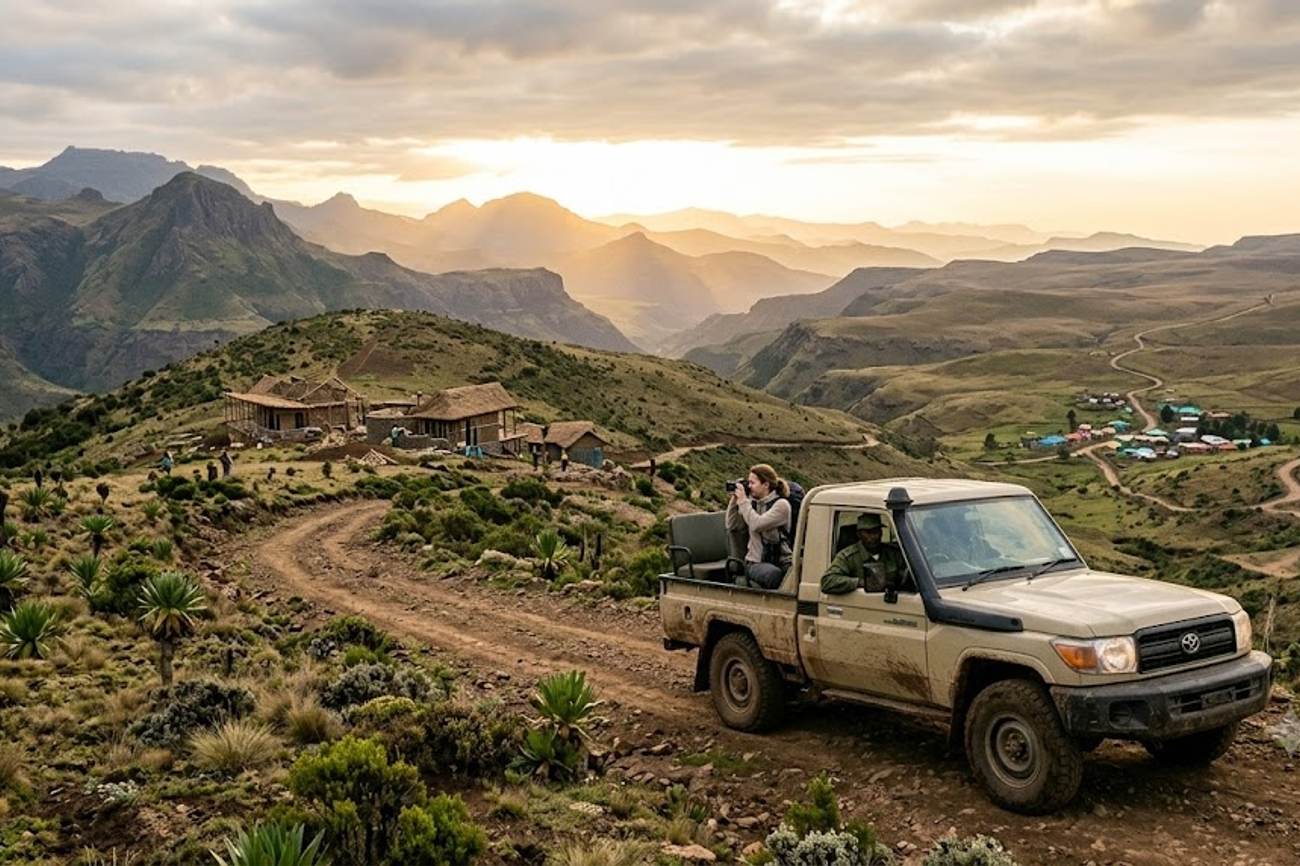
Image generated by AI
Zero confirmed commercial opening dates, room counts, or public tariff structures exist for the premium lodge pipeline in Ethiopia’s Bale region as of September 20, 2026. Despite high-level government narratives promising a transformation of the region into a luxury conservation circuit, a critical gap has emerged between state-led infrastructure investment and the actual bookable inventory available to international tour operators. While the Ethiopian government frames these developments as catalysts for economic transformation, the current operational reality remains tethered to basic community lodges and campsites.
The Infrastructure-Inventory Gap in the Bale Mountains
The current tension in the Bale tourism market is a conflict between "projected capacity" and "sellable inventory." For years, the region has been marketed as a rugged expedition destination. However, the strategic shift initiated by the Ethiopian government aims to pivot Bale toward a high-yield, premium model. This transition is centered on three primary nodes: Dinsho, Sof Omer, and Harenna.
According to the Government Communication Service, the Dinsho Lodge and the Sof Omer Luxury Lodge were both categorized as "nearing completion" during federal reviews. Specifically, reporting from October 2025 indicated that the Sof Omer Luxury Lodge was moving toward its final stages, designed to offer high-end leisure facilities that deviate sharply from the traditional expedition-style tents and guesthouses.
Despite these optimistic milestones, the Ethiopian Wildlife Conservation Authority continues to direct the public toward basic guesthouses in Dinsho and designated camping sites. This discrepancy suggests a bottleneck in the final commissioning phase—where a building is physically complete but lacks the operational certifications, staffing, and distribution partnerships required to accept international bookings.
Mapping the Integrated Conservation Circuit
The government's strategy is not merely about adding beds; it is about creating a distributed destination circuit that encourages longer dwell times and higher spending. The goal is to move away from "drive-through" tourism toward a multi-node experience.
| Tourism Asset | Latest Official Status | Trade & Traveler Implication |
|---|---|---|
| Dinsho Lodge | Nearing completion per federal development review. | Cannot be used as confirmed inventory in itineraries. |
| Sof Omer Luxury Lodge | Nearing completion; focuses on premium leisure. | Shifts the region's appeal from trekking to luxury heritage. |
| Rira Eco Lodge | Construction integrated into the Harenna cluster. | Enables southern forest stays over simple excursions. |
| Harenna Facilities | Viewpoints, cafes, and restaurants under development. | Increases visitor spend via non-accommodation services. |
| Robe–Goro–Sof Omer Route | Upgraded corridor for improved regional access. | Facilitates the packaging of multiple sites into one trip. |
| Weib River Project | Flood-control system to regulate cave access. | Reduces seasonal volatility for Sof Omer Cave visits. |
The inclusion of the Weib River flood-control project is a critical technical detail. By regulating water flow through the Sof Omer cave system, the state is attempting to mitigate the seasonal risks that previously made the cave inaccessible during certain months, thereby stabilizing the revenue stream for the adjacent luxury lodge.
Expert Analysis: The Geopolitical and Commercial Shift
For travel planners and luxury operators, the current state of Bale represents a high-risk, high-reward window. The direct consequence of this "infrastructure-first, inventory-second" approach is a temporary vacuum in the market. Operators who market "luxury Bale" based on government press releases risk significant reputational damage if those properties remain in a pre-opening phase.
The pricing pressure created by the introduction of "Luxury Lodges" will inevitably push the average daily rate (ADR) for the region upward. However, this is a calculated move by the state to align with UNESCO World Heritage conservation goals. By attracting fewer, higher-paying visitors, Ethiopia can generate the necessary revenue for the 215,000 hectares of the World Heritage property and the 235,121 hectares of the buffer zone without increasing the ecological footprint of mass tourism.
Furthermore, the diverging roles of Robe and Goba are now commercially distinct. Robe is evolving into the logistics hub for the surface corridor (Robe–Goro–Sof Omer–Ginir), making it the primary staging point for provisioning and transfers. Goba, meanwhile, remains the aerial gateway. The fact that Ethiopian Airlines maintains dedicated booking pages for Addis Ababa–Goba flights confirms the city's role in the destination architecture, even if daily frequencies remain inconsistent.
The most significant shift is the emergence of the Harenna cluster. By developing Rira Eco Lodge and supporting facilities toward Tulu Dimtu, the government is diversifying the "Bale product." It is no longer just about the Sanetti Plateau's highlands; it is now a three-tiered offering:
- The Highlands: Dinsho and Sanetti (Wildlife and Trekking).
- The Forest: Harenna and Tulu Dimtu (Eco-tourism and Coffee).
- The Subterranean: Sof Omer (Heritage and Geology).
Key Takeaways
- Inventory Warning: Neither Dinsho Lodge nor Sof Omer Luxury Lodge has a confirmed commercial opening date or public tariff as of September 2026.
- Logistical Pivot: Robe is now the critical hub for ground-based circuits, while Goba remains the primary air-access point via Ethiopian Airlines.
- Diversification: The Harenna cluster (including Rira Eco Lodge) transforms Bale from a single-stop expedition into a multi-node circuit.
- Risk Mitigation: The Weib River project is designed to eliminate seasonal access issues at Sof Omer Cave, making year-round luxury packaging viable.
- Conservation Logic: High-yield tourism is being used as a tool to protect 450,121 total hectares of protected and buffer land.
FAQ: Bale Tourism 2026
Can I currently book a luxury lodge in the Bale Mountains? No. While Dinsho and Sof Omer Luxury Lodges are reported as nearing completion, there are no confirmed distribution channels or booking dates. Travelers must still rely on community lodges, basic guesthouses, and camping.
What is the best way to access the Bale region? For air travel, Goba is the primary destination via Ethiopian Airlines. For ground-based itineraries involving the Sof Omer Cave, Robe serves as the most effective staging point due to recent road upgrades.
Is the Sof Omer Cave accessible year-round? Traditionally, access was seasonal. However, the new Weib River flood-control project is specifically designed to regulate water levels, which should allow for more consistent year-round visitation.
What makes the Harenna cluster different from Dinsho? While Dinsho focuses on highland wildlife and the Sanetti Plateau, Harenna offers a forest-based experience with new facilities at Rira Eco Lodge and viewpoints leading toward Tulu Dimtu.
The gap between a government's vision of luxury and a traveler's ability to book a room is where the most expensive mistakes in itinerary planning are made.
Tags: Bale Mountains National Park, Sof Omer Luxury Lodge, Ethiopian Wildlife Conservation Authority, Harenna Forest, Ethiopian Airlines Goba, UNESCO Ethiopia 2026
Related Travel Guides
- Croatia’s 500-Year-Old Erdödy Castle Reopens After £11 Million Restoration Welcoming Travellers Again
- New York Outpaces Toronto, Mexico City and More American and Caribbean Shopping Travel Destinations for Shopaholics Turning Retail Into an Experience
- Iceland Resonates With Hawaii and Sicily in Attracting Adventure Seekers in Fiery Landscapes Booming Volcano Travel Across America
This article is for informational purposes. Flight routes, passenger regulations, visa rules, and transit advisories are subject to change by airlines and aviation authorities. Readers are advised to verify schedules and travel documentation with relevant carriers and border agencies before departure.
Related Stories
South Africa Expands Inclusive Wildlife Tourism with Woman-Owned Wellness Centre at Addo Elephant National Park
Cambodia Tourism Shock: Angkor Archaeological Park Foreign Arrivals Drop 26% Amid Sharp Asian Slump