
Tampere Aligns Copenhagen, and More Cities Deploy Futuristic Travel Technology with Blooming Europe’s Smart Tourism
Tampere Aligns Copenhagen, and More Cities Deploy Futuristic Travel Technology with Blooming Europe’s Smart Tourism

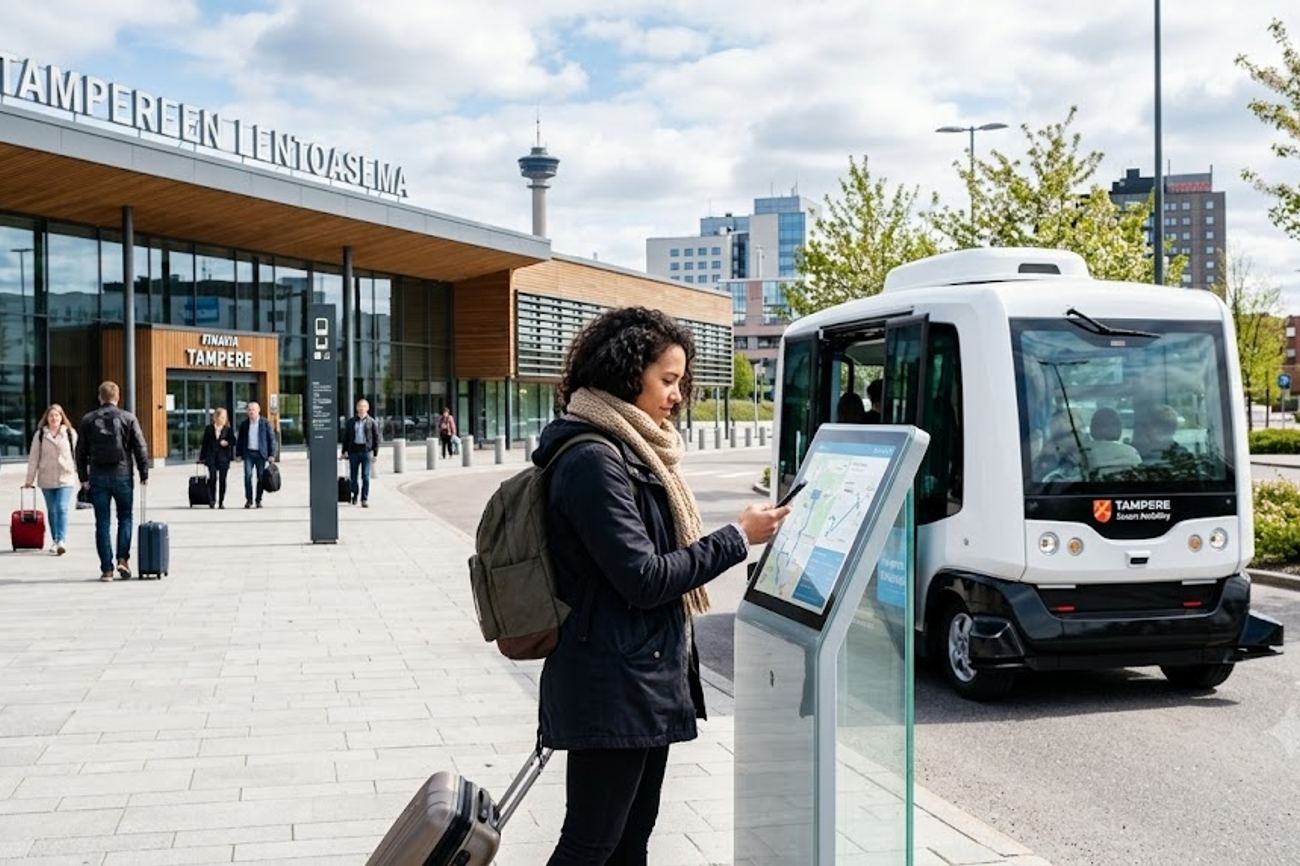
Image generated by AI
Four European cities—Tampere, Copenhagen, Braga, and Dubrovnik—now serve as the primary blueprints for a systemic shift in destination management as of September 2026. This transition marks the end of the "experimental" phase of travel technology, moving away from standalone apps toward integrated digital ecosystems that merge mobility, sustainability, and heritage management. For the modern traveler, this means the interface of the city itself is becoming a programmable layer, where access to cultural sites is tied to transport tickets and sustainable behavior is incentivized through digital currency.
The Architecture of Integrated Urban Tourism
The current push toward "smart tourism" in Europe is not a pursuit of novelty, but a response to acute structural pressures. European municipalities are facing a paradoxical challenge: the need to maintain high visitor volumes for economic stability while simultaneously reducing the physical and environmental degradation caused by those same crowds. The solution being deployed across the continent is the integration of fragmented data silos—transport, ticketing, and tourism information—into a single, cohesive digital layer.
This systemic integration is most evident in the shift toward "mobility-as-a-service" (MaaS) for tourists. Rather than navigating separate systems for hotels, museums, and buses, cities are embedding these into singular platforms. This allows municipal authorities to track visitor movement in real-time, enabling a shift from reactive crowd control to predictive flow management. By leveraging data from the International Air Transport Association (IATA) and local transit APIs, these cities are attempting to flatten the "peak" hours of tourism, distributing visitors more evenly across a city's geography and schedule.
Digital Deployment: City-Specific Models
The implementation of these technologies varies based on the specific pain points of each city. While one city may struggle with accessibility, another fights the effects of overtourism.
| City | Primary Tech Focus | Key Platform/System | Strategic Objective |
|---|---|---|---|
| Tampere | Integrated Mobility | Tampere.Finland / Nysse | Merging event access with public transit |
| Copenhagen | Behavioral Economics | CopenPay | Incentivizing sustainable visitor actions |
| Braga | Immersive Heritage | Braga Ciclável / WebSIG | AR storytelling and cycling navigation |
| Dubrovnik | Flow Management | Real-time monitoring | Mitigating overtourism in historic centers |
In Finland, Tampere has leveraged its status as the 2026 European Capital of Smart Tourism to pioneer the Nysse event-ticketing infrastructure. This system removes the friction between attending a cultural event and the logistics of getting there, effectively treating the transport journey as part of the event ticket itself.
Conversely, Copenhagen is treating sustainability as a gamified experience. Through CopenPay, the city has shifted from passive requests for "green travel" to an active reward system. Visitors who engage in sustainable activities are granted tangible benefits, such as free refreshments or cultural access. This "DestinationPay" logic is already migrating to other hubs, including Berlin, Helsinki, Bremen, and Normandy, suggesting the emergence of a pan-European standard for sustainable rewards.
Expert Analysis: The Shift from Convenience to Control
For the traveler, these developments appear as mere conveniences—a smoother app or a free coffee for biking. However, from a regulatory and business perspective, this represents a fundamental shift in how cities exercise sovereignty over their tourist zones.
The "smart" in smart tourism is less about the user experience and more about destination management. When Dubrovnik implements real-time visitor-flow monitoring and smart parking, it is not simply helping a tourist find a spot for their car; it is creating a digital perimeter that allows the city to throttle access to the historic center based on live capacity data. This is the digitalization of "carrying capacity." For travelers booking trips to high-density Mediterranean hubs, the direct consequence will be a transition toward "appointment-based" tourism, where access to certain zones may eventually require digital reservations linked to these smart systems.
Furthermore, the use of Augmented Reality (AR) in Braga—a UNESCO Creative City of Media Arts—solves a permanent legal and architectural conflict: how to provide deep historical context without physically altering protected heritage sites. By adding a digital layer to the physical environment, the city can update its narrative and information in real-time without needing a single construction permit or physical signpost.
The pricing pressure created by these systems will likely manifest in "tiered" access. As cities integrate transport and tourism, we may see the rise of bundled digital passes that prioritize those using low-emission transport, effectively taxing high-impact travel through the removal of convenience.
Key Takeaways
- Integrated Logistics: Tampere's Nysse system proves that the future of tourism is the total merger of event ticketing and public transportation.
- Gamified Sustainability: Copenhagen's CopenPay model is evolving into a broader "DestinationPay" trend, rewarding low-impact behavior with tangible incentives.
- Digital Preservation: Braga is using AR and the Geoportal WebSIG to provide immersive heritage experiences without physically modifying historic structures.
- Data-Driven Throttling: Dubrovnik is utilizing real-time flow monitoring and smart parking to actively manage and limit the impact of overtourism in sensitive areas.
- Expanding Network: Brussels and Genoa are currently developing open-data and accessibility solutions to join this smart-tourism ecosystem.
FAQ: European Smart Tourism 2026
Do I need a specific app to visit these cities in 2026? While not mandatory, using platforms like Tampere.Finland or CopenPay is highly recommended to access integrated transport tickets, sustainable rewards, and AR heritage guides that are not available via traditional signage.
How does CopenPay actually work for a tourist? Visitors perform a verified sustainable action—such as cycling or using public transit—and then present proof via the digital platform to receive rewards like free museum entry or food and beverage discounts.
Will smart tourism systems limit my access to city centers? In cities like Dubrovnik, these systems are used to manage crowds. While they may not "block" entry, they provide real-time data that may steer you toward less crowded areas or suggest alternative visiting times.
Is the AR technology in Braga available for all smartphones? Generally, these systems are deployed via web-based AR or dedicated apps designed to work on standard iOS and Android devices, utilizing the phone's camera and GPS for navigation.
The era of the passive destination is over; the city is now an active operating system.
#Tampere2026 #CopenPay #DubrovnikSustainability #BragaMediaArts #EuropeanSmartTourism #DestinationPay
Related Travel Guides
Disclaimer
This article is for informational and educational purposes only. It does not constitute legal, financial, or professional advice. While we strive to provide accurate and up-to-date information, travel policies, regulations, and conditions change rapidly. Always verify information with official sources before making travel decisions. Nomad Lawyer makes no representations about the accuracy, reliability, completeness, or suitability of the information provided. Readers should consult qualified professionals for advice specific to their circumstances. The views expressed in this article are those of the author and do not necessarily reflect the views of Nomad Lawyer.
Raushan Kumar
Founder & Lead Developer
Full-stack developer with 11+ years of experience and a passionate traveller. Raushan built Nomad Lawyer from the ground up with a vision to create the best travel and law experience on the web.
Learn more about our team →