
Syrian Airlines Restores Direct Damascus to Moscow Flights After 18-Month Suspension in 2026
Syrian Airlines has officially resumed its direct flight corridor between Damascus and Moscow after a 1.5-year hiatus, reinstating a critical political and travel link.

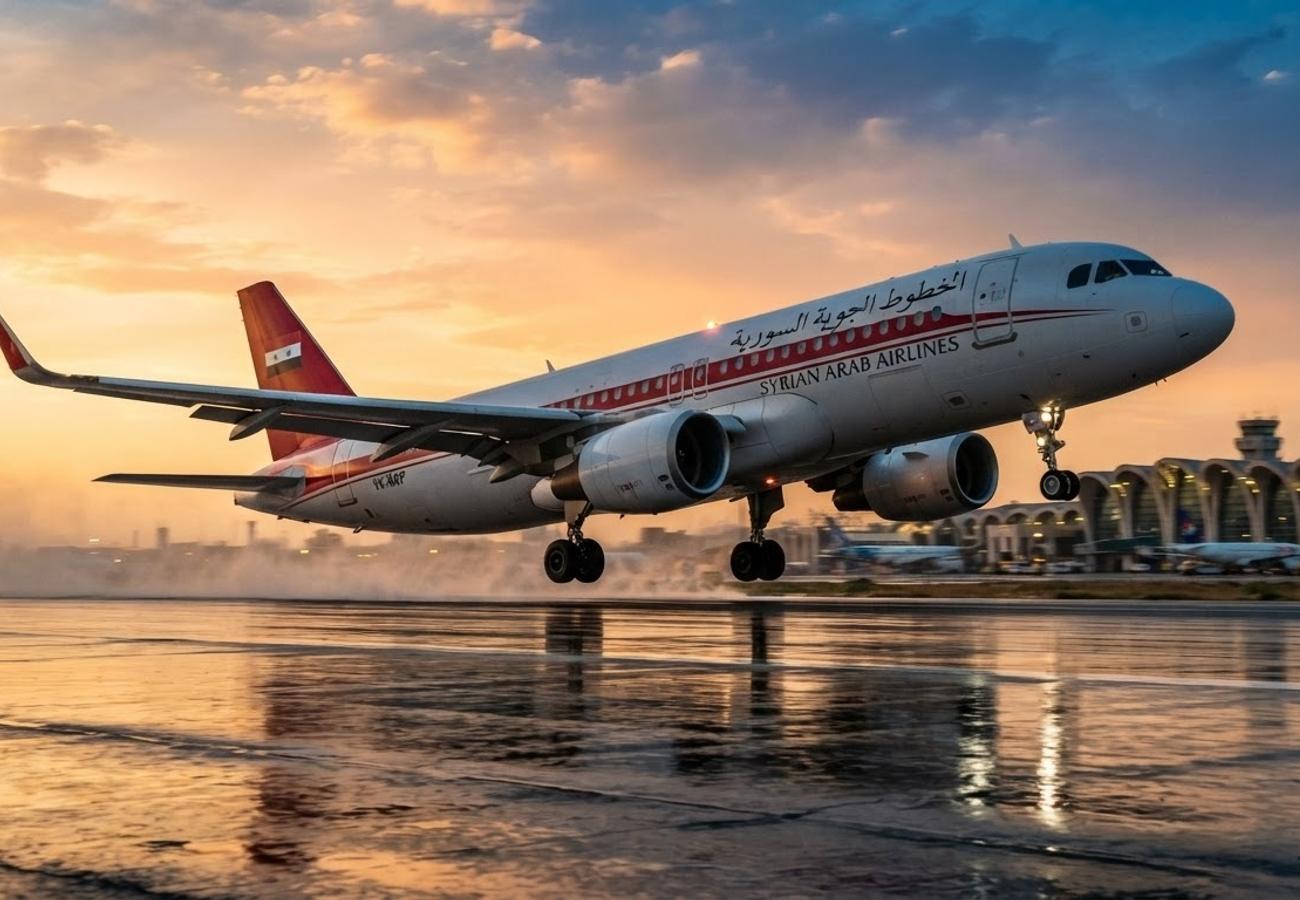
Image generated by AI
Direct passenger services between Damascus and Moscow have resumed after a suspension of approximately 18 months, restoring a vital strategic corridor for the Syrian state carrier.
The restoration of this route marks a significant shift in regional connectivity, as Syrian Airlines re-establishes a direct link between Syria's primary international gateway and the Russian capital. This corridor has historically served as a primary artery for political, economic, and personal transit between the two nations.
Restoration of the Damascus-Moscow Aviation Corridor
According to flight tracking data and regional aviation reports, Syrian Airlines has officially reintegrated the Damascus–Moscow sector into its active network. The service had been dormant for roughly one and a half years, leaving a void in direct state-carrier connectivity. This resumption is viewed as a critical step in maintaining the long-haul capabilities of Syria's national airline.
Historically, the route was served by both the state-owned Syrian Airlines and various private Syrian operators. However, these services faced repeated interruptions over the last decade due to a combination of armed conflict, international sanctions, airspace restrictions, and fluctuating security protocols. The current return of service suggests that despite these persistent hurdles, there is sufficient demand to justify the return of a scheduled national-flag operation.
Current timetables indicate that the airline is employing a limited frequency model. Rather than returning to daily operations, the carrier is utilizing a cautious ramp-up strategy to evaluate current market demand and the operational environment. While aviation observers note that total seat capacity remains significantly lower than pre-conflict levels, the restart is seen as both a practical necessity and a symbolic gesture of recovery.
Operational Framework and Flight Logistics
Data from airport arrival and departure boards confirm that the reinstated service connects Damascus International Airport with one of Moscow’s primary aviation hubs. This provides a nonstop alternative for travelers who, over the last 18 months, were forced to rely on indirect itineraries involving transit through regional hubs in the Gulf or neighboring countries.
The carrier is reportedly deploying narrowbody aircraft for these sectors. These aircraft are well-suited for medium-haul distances and align with the current fleet profile of Syrian Airlines. The flight scheduling has been designed to facilitate two primary types of travel: point-to-point journeys for students, medical patients, and business professionals, and onward connections for those traveling beyond Moscow.
From a logistical standpoint, the direct flight significantly reduces total travel time. Travelers previously faced grueling itineraries with multiple stops, which increased the risk of delays and complicated transit requirements. Industry reports suggest that ticket pricing is currently aligned with other international departures from Damascus, though the booking process remains influenced by local currency volatility and restricted payment channels.
Strategic Alignment and Bilateral Relations
The revival of this specific route is widely interpreted by regional analysts as a reflection of the deep political and military ties between Damascus and Moscow. Russia remains a primary ally of the Syrian government, and the restoration of direct air links is essential for the movement of official delegations, trade missions, and technical cooperation teams.
Beyond the political sphere, the route serves a significant civilian population. For decades, a steady flow of students, laborers, and families has moved between the two capitals. Public records indicate that while Syria once operated a vast network across Europe and Asia, Russia has remained one of the few long-haul destinations to maintain a semblance of continuity despite years of systemic disruption.
Aviation commentators suggest that the return of the state carrier—as opposed to relying solely on private operators—is a calculated move to project stability. By placing the national flag on this corridor, the Syrian government is signaling a move toward the normalization of its civil aviation sector and an effort to rebuild the prestige of its national hub.
Impact on Passenger Experience and Regional Networks
For the traveler, the most immediate benefit is the removal of transit complexities. Passengers can now avoid the need for third-country transit visas and the logistical stress of connecting flights in Gulf states or Iraq. This streamlined process reduces both the cost and the time associated with travel between the two capitals.
However, the operational environment remains volatile. Various government travel advisories continue to warn of security risks and infrastructure limitations within Syria. Passengers are urged to monitor airspace notices and airport operational status in real-time, as schedules in this region are subject to abrupt changes.
There is also a broader network implication. If load factors on the Moscow route remain sustainable, Syrian Airlines may use this as a blueprint for adjusting capacity on other international sectors. This could lead to better integration of flights to regional capitals and Gulf destinations, creating a more cohesive network for passengers traveling from Russia into the Levant.
Incremental Recovery of Syrian Civil Aviation
The return of the Moscow service is not an isolated event but part of a gradual, stepwise rebuilding of Syria’s international air links. Following years of infrastructure damage and security incidents, Damascus International Airport has seen a pattern of incremental reopenings.
In recent years, carriers have slowly restored links to North Africa, Iraq, and the Gulf. Each of these returns has required the airline to navigate a minefield of regulatory hurdles, insurance complexities, and the need to prove commercial viability.
Analysts view the Moscow restoration as another milestone in this long-term recovery process. It highlights the duality of the current situation: while the aviation sector is still heavily constrained by external sanctions and internal recovery needs, there is a clear and persistent effort to reconnect with strategic global partners.
The stabilization of this route will serve as a key indicator for the future of Syria's international aviation ambitions.
Related Travel Guides
Disclaimer
This article is for informational and educational purposes only. It does not constitute legal, financial, or professional advice. While we strive to provide accurate and up-to-date information, travel policies, regulations, and conditions change rapidly. Always verify information with official sources before making travel decisions. Nomad Lawyer makes no representations about the accuracy, reliability, completeness, or suitability of the information provided. Readers should consult qualified professionals for advice specific to their circumstances. The views expressed in this article are those of the author and do not necessarily reflect the views of Nomad Lawyer.
Kunal K Choudhary
Co-Founder & Contributor
A passionate traveller and tech enthusiast. Kunal contributes to the vision and growth of Nomad Lawyer, bringing fresh perspectives and driving the community forward.
Learn more about our team →