
Mexico's Tourism and Hospitality Boom in 2026: What Global Visitors Need to Know
Defying global headwinds, Mexico's tourism sector is executing a magnificent 2026 comeback, delivering extraordinary hospitality experiences across its beaches, ruins, and cities.

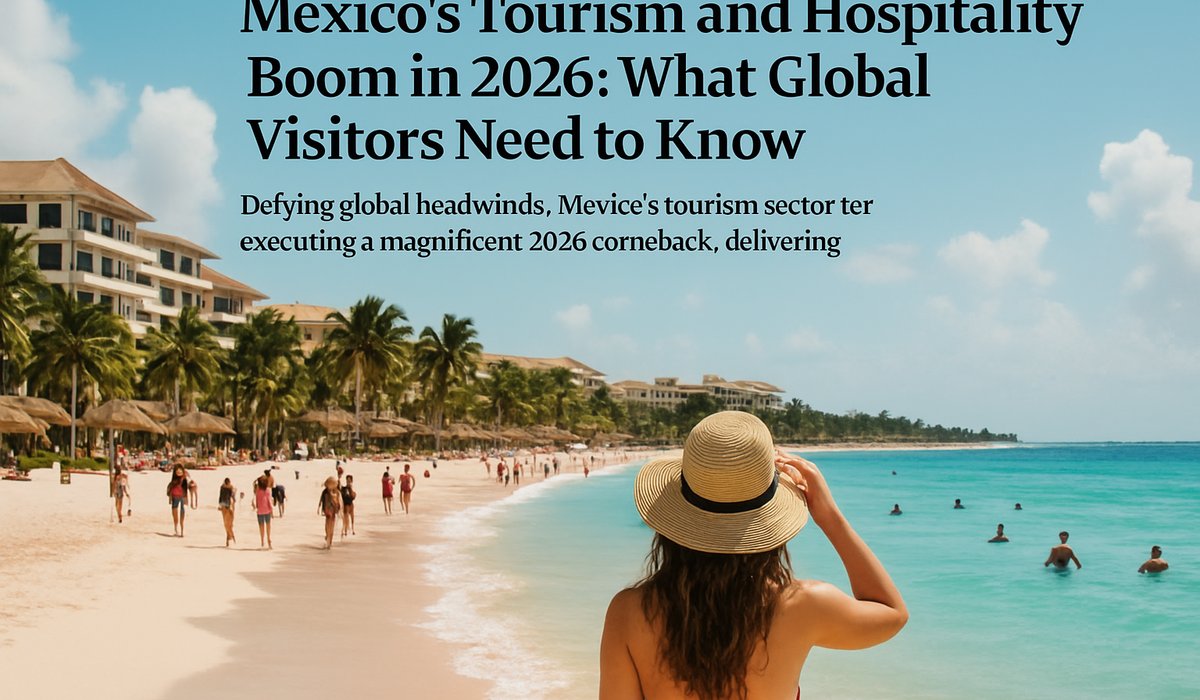
Image generated by AI
Mexico's Extraordinary Tourism Revival
Shaking off years of narrative uncertainty and executing a remarkable structural recovery, Mexico's tourism and hospitality sector is delivering an extraordinarily vibrant, deeply rewarding travel experience in 2026 that is firmly reestablishing the country's position as the premier international destination for North American travelers. Record visitor numbers, aggressive luxury hotel development, reopened cultural institutions, and a thriving culinary revolution are collectively pushing Mexico to the forefront of global travel conversations. The breadth of the Mexican tourism offering — from the Caribbean perfection of the Riviera Maya and the colonial magnificence of Oaxaca to the hypermodern cultural intensity of Mexico City — ensures that virtually every travel demographic finds genuine, world-class value.
The hospitality infrastructure investment driving Mexico's 2026 boom is staggering. The Riviera Maya corridor between Cancun and Tulum has witnessed a wave of ultra-luxury boutique resort openings, complementing the established all-inclusive resort ecosystem with smaller, architecturally ambitious properties offering highly personalized service. In Mexico City, international hotel groups have continued their march into historic Colonia Roma and Condesa neighborhoods, converting century-old mansions into intimate, design-forward boutique hotels that compete directly with Paris and Buenos Aires for cultural sophistication.
Mexico's 2026 Premier Destinations
Mexico City (CDMX): The largest city in North America is simultaneously a world-class gastronomic capital (Pujol, Rosetta, and Quintonil are all globally celebrated), one of the world's premier museum corridors (Museo Nacional de Antropología, Museo Frida Kahlo, Palacio de Bellas Artes), and a vibrant street culture ecosystem. The Roma Norte neighborhood's café and bookshop culture rivals Barcelona.
Riviera Maya (Cancun to Tulum): The Caribbean coast continues delivering its core promise of extraordinary turquoise water and white coral sand, now amplified by the expanding luxury resort infrastructure and Tulum's evolution into a globally recognized wellness and eco-resort destination. The cenote network offers some of the world's most extraordinary freshwater swimming experiences.
Oaxaca: The undisputed cultural capital of indigenous Mexican civilization. World-class mole cuisine, mezcal distilleries operating ancient techniques, markets overflowing with Zapotec textiles, Monte Albán archaeological complex, and a thriving contemporary art scene have made Oaxaca the favorite cultural destination of serious international travelers.
San Miguel de Allende: The UNESCO-inscribed Baroque gem of the Mexican Highlands continues attracting a sophisticated international community. The pink stone Parroquia de San Miguel Arcángel, the hot spring spas of the altiplano, and the autumn arts and music festivals make it one of the most consistently rewarding urban environments in Latin America.
The Mexico Destination Matrix (2026)
| Destination | Core Draw | Optimal Season |
|---|---|---|
| Mexico City | Gastronomy; museums; architecture | October-April (dry season; avoid July heat) |
| Riviera Maya / Cancun | Caribbean beaches; cenotes; luxury resorts | November-May (dry season; avoid hurricane window) |
| Oaxaca | Indigenous culture; mole; mezcal; markets | October-March |
| San Miguel de Allende | Colonial architecture; arts festivals | Year-round; September festival peak |
| Los Cabos (Baja) | Desert-meets-sea luxury; sportfishing | October-June |
What Guests Get
- Extraordinary gastronomic value — accessing three restaurants (Pujol, Quintonil, Rosetta) consistently ranked in the World's 50 Best Restaurants at a pricing structure that is 40-60% more accessible than comparable European Michelin benchmarks.
- Cultural complexity — experiencing a civilization layering pre-Columbian indigenous heritage (Aztec, Maya, Zapotec, Mixtec), Spanish colonial architecture, and vibrantly modern creative culture into a uniquely powerful national identity.
- Climate diversity — choosing between Caribbean beach perfection, temperate highland cultural cities, and Baja California's desert luxury according to specific traveler preference.
What This Means for Travelers
If you are planning a Mexico trip in 2026: The single most significant booking decision is aligning your destination to the correct seasonal window. The Caribbean coast (Cancun, Playa del Carmen, Tulum) is most beautifully accessible from November through May, before the summer heat and Atlantic hurricane season window arrives. Conversely, the highland cultural cities (Mexico City, Oaxaca, San Miguel) are supremely comfortable year-round but reach their festival and gastronomic peak from October through March.
Navigating Entry Requirements: US, Canadian, and most EU citizens enter Mexico entirely visa-free for tourism stays up to 180 days. Upon arrival, you will complete a digital Forma Migratoria Múltiple (FMM) entry form — most international airlines now integrate these digitally into the check-in process. Retain the stamped copy throughout your stay.
FAQ: Traveling to Mexico in 2026
Is Mexico safe for tourists in 2026? Major tourist corridors — the Riviera Maya, Mexico City's tourist neighborhoods, Oaxaca, San Miguel de Allende, and Los Cabos — maintain mature tourism infrastructure with strong hospitality industry investment in visitor security. The US State Department maintains destination-specific safety advisories that travelers should review by specific state, as safety conditions vary significantly across Mexico's diverse geography.
What currency is used in Mexico? The Mexican Peso (MXN). USD is widely accepted in major tourist zones but at unfavorable exchange rates. ATMs dispensing pesos at the interbank rate are available throughout tourist areas, and major credit cards are accepted universally in hotels and restaurants.
Do I need travel insurance for Mexico? Strongly recommended. Medical costs at private facilities (which provide the highest standard of care accessible to tourists) can be substantial without insurance coverage. Comprehensive travel insurance covering medical evacuation is considered essential by experienced Mexico travelers.
External Resources
- Visit Mexico – Official Tourism Board
- US State Department Mexico Travel Advisory
- World's 50 Best Restaurants – Mexico Entries
Related Travel Guides
Disclaimer
This article is for informational and educational purposes only. It does not constitute legal, financial, or professional advice. While we strive to provide accurate and up-to-date information, travel policies, regulations, and conditions change rapidly. Always verify information with official sources before making travel decisions. Nomad Lawyer makes no representations about the accuracy, reliability, completeness, or suitability of the information provided. Readers should consult qualified professionals for advice specific to their circumstances. The views expressed in this article are those of the author and do not necessarily reflect the views of Nomad Lawyer.
Raushan Kumar
Founder & Lead Developer
Full-stack developer with 11+ years of experience and a passionate traveller. Raushan built Nomad Lawyer from the ground up with a vision to create the best travel and law experience on the web.
Learn more about our team →