
Sydney Emergency Services Hit Record Highs in 2026: Impact of 10,000 Hospital Admissions on Travelers
Sydney emergency services are facing unprecedented winter pressure with 4,100 ambulance callouts and 10,000 hospital presentations, potentially impacting medical access for international tourists.

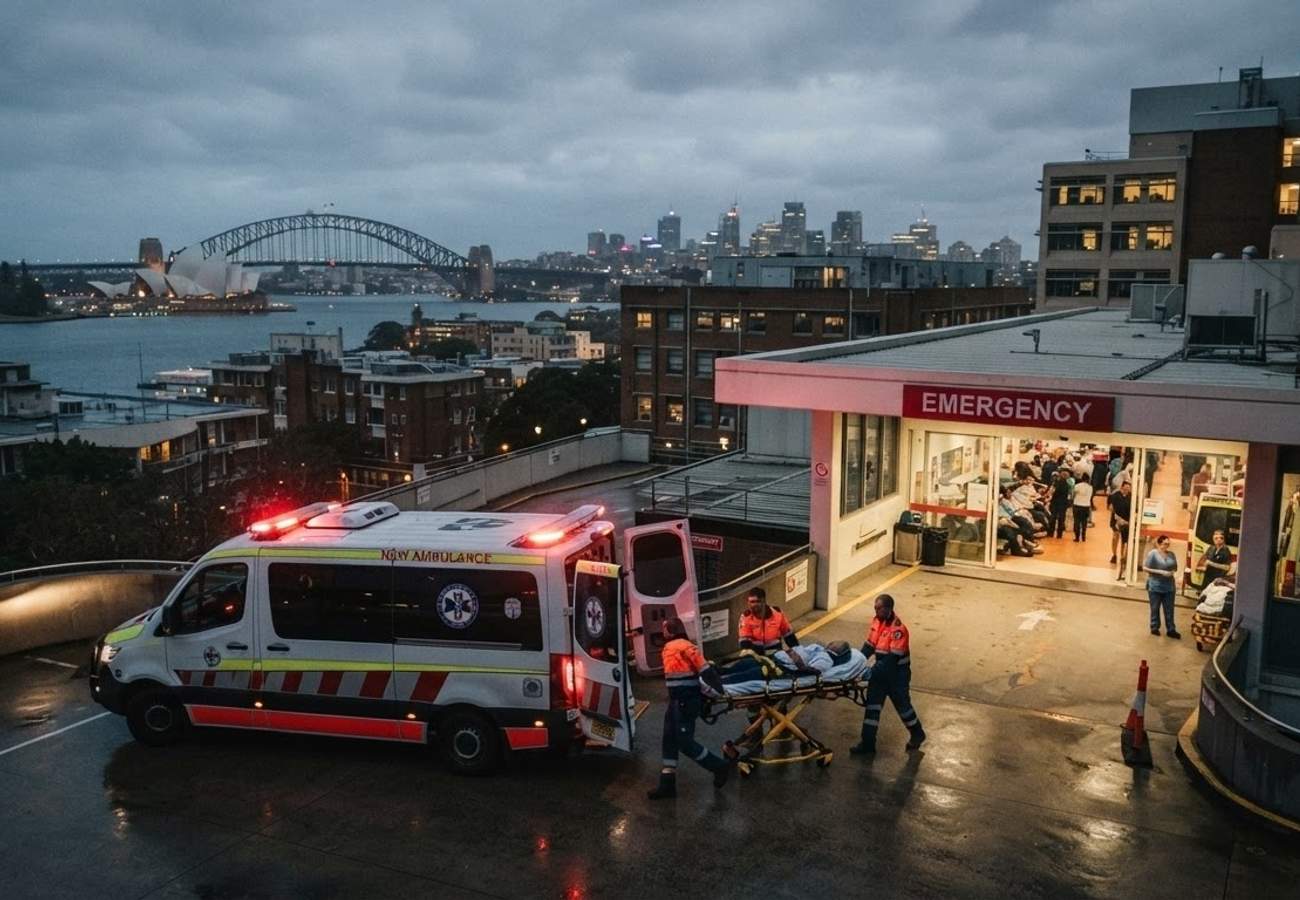
Image generated by AI
Sydney is currently grappling with a healthcare crisis as emergency services record one of the most demanding winter days in history, featuring 4,100 ambulance callouts and over 10,000 emergency department presentations. While tourism infrastructure remains fully operational, the surge in medical demand creates a critical variable for international visitors requiring urgent care.
Sydney serves as the primary international gateway for Australia, drawing millions of students, business professionals, and cruise passengers. August is typically a peak window for whale-watching and city excursions, yet this year's tourism surge coincides with a severe strain on the New South Wales (NSW) medical network.
Officials have confirmed that a recent Monday saw the highest winter emergency department activity ever documented. With nearly 10,000 patients presenting at hospitals—approximately 1,000 more than the seasonal average—the system is operating under extreme duress. Simultaneously, ambulance crews managed 4,100 incidents, a figure that far exceeded previous operational forecasts.
Healthcare Strain Across Sydney’s Medical Network
For the average tourist, the city's physical infrastructure—including Sydney Airport, public transit, and hotel networks—continues to function without interruption. However, the "invisible" infrastructure of public health is under significant pressure. Visitors who require medical intervention may face extended wait times as hospitals prioritize life-threatening cases over non-urgent ailments.
The following data outlines the current state of emergency services in the region:
| Indicator | Latest Situation |
|---|---|
| Ambulance callouts | More than 4,100 |
| Emergency department presentations | Nearly 10,000 |
| Increase above seasonal average | Around 1,000 additional patients |
| Most affected regions | Western and South-Western Sydney |
| Primary seasonal drivers | Influenza, RSV, COVID-19 and winter respiratory illnesses |
| Airport operations | Normal |
| Tourism attractions | Operating normally |
Respiratory Trends and Structural Pressures in NSW
The spike in admissions is not an isolated event but a result of a pronounced winter respiratory season. Health authorities have identified COVID-19, respiratory syncytial virus (RSV), and influenza as the primary catalysts for the increase in emergency visits. Interestingly, surveillance data indicates that while COVID-19 activity is relatively low and RSV and influenza remain at moderate levels, the cumulative effect has still overwhelmed the system.
Beyond viral outbreaks, the NSW health network is battling structural challenges. An aging population and a backlog of patients awaiting residential aged-care placements have reduced the available bed capacity in hospitals. This creates a bottleneck effect where emergency departments cannot discharge patients quickly enough to make room for new arrivals, exacerbating the wait times during seasonal peaks.
Long-term Growth in Emergency Demand
The current crisis is part of a documented upward trend in healthcare utilization across New South Wales. Data from the Bureau of Health Information reveals that the region has seen record-breaking emergency department attendances and admitted patient episodes since tracking began in 2010.
The scale of this growth is evident in the statistics from the October–December 2025 quarter:
| NSW Health System Trend | Recent Position |
|---|---|
| Quarterly emergency attendances | 820,009 |
| Ambulance demand | Highest since 2010 |
| Record admitted patient episodes | Yes |
| Median emergency department stay | 3 hours 46 minutes |
| Patients leaving before completing treatment | More than 79,000 during the quarter |
These figures suggest that the recent surge is not a random anomaly but a symptom of a healthcare system struggling to keep pace with a growing and aging population.
Implications for International Visitors in Sydney
While flights, ferries, and cultural venues remain open, the risk profile for travelers has shifted. The Australian public health system utilizes a strict clinical triage model. This means medical urgency, not arrival time, determines the order of treatment. A traveler with a minor injury or a non-critical illness will inevitably face longer delays when the system is at the capacity seen this August.
For those managing chronic health conditions, the current environment makes it essential to carry ample medication and physical copies of prescriptions. Furthermore, the necessity of comprehensive travel insurance is amplified; having access to private healthcare options may be the only way to avoid the bottlenecks currently affecting public hospitals.
Strategic Response from New South Wales Authorities
To mitigate the crisis, the NSW government is shifting away from simply adding beds and toward a more coordinated operational strategy. This includes the establishment of a permanent Health System Operations Command Centre, designed to synchronize efforts between ambulance services, patient transport teams, and local health districts.
Other measures include:
- Extending operational hours for specific hospital services.
- Promoting "clinically appropriate" urgent care pathways to divert non-emergency patients away from hospitals.
- Expanding the use of Extended Care Paramedics, who can treat lower-acuity patients in the community, thereby preventing unnecessary hospital admissions.
By encouraging the use of pharmacies, general practitioners, and the Healthdirect service, authorities aim to reserve emergency rooms for those in critical condition.
Why This Matters: The Traveler's Perspective
From a logistical standpoint, this situation transforms healthcare from a background consideration into a primary travel planning factor. For the modern traveler, the "destination experience" now includes the resilience of the local health grid.
If you are visiting Sydney during this window, the practical reality is that a trip to the emergency room for a non-life-threatening issue could result in a wait of several hours, or potentially lead to a situation where you are encouraged to seek care at a private clinic or urgent care center instead. This creates a financial and temporal burden on the visitor. Understanding the triage system is vital: do not expect "first-come, first-served" treatment. By utilizing community-based care for minor ailments, travelers can avoid the congestion of the public system and ensure that critical resources remain available for genuine emergencies.
Stay informed on local health alerts to ensure your Australian winter getaway remains seamless.
Related Travel Guides
Disclaimer
This article is for informational and educational purposes only. It does not constitute legal, financial, or professional advice. While we strive to provide accurate and up-to-date information, travel policies, regulations, and conditions change rapidly. Always verify information with official sources before making travel decisions. Nomad Lawyer makes no representations about the accuracy, reliability, completeness, or suitability of the information provided. Readers should consult qualified professionals for advice specific to their circumstances. The views expressed in this article are those of the author and do not necessarily reflect the views of Nomad Lawyer.
Kunal K Choudhary
Co-Founder & Contributor
A passionate traveller and tech enthusiast. Kunal contributes to the vision and growth of Nomad Lawyer, bringing fresh perspectives and driving the community forward.
Learn more about our team →