Sydney Drives Australia Tourism Surge with Seven Consecutive Months of Growth in 2026

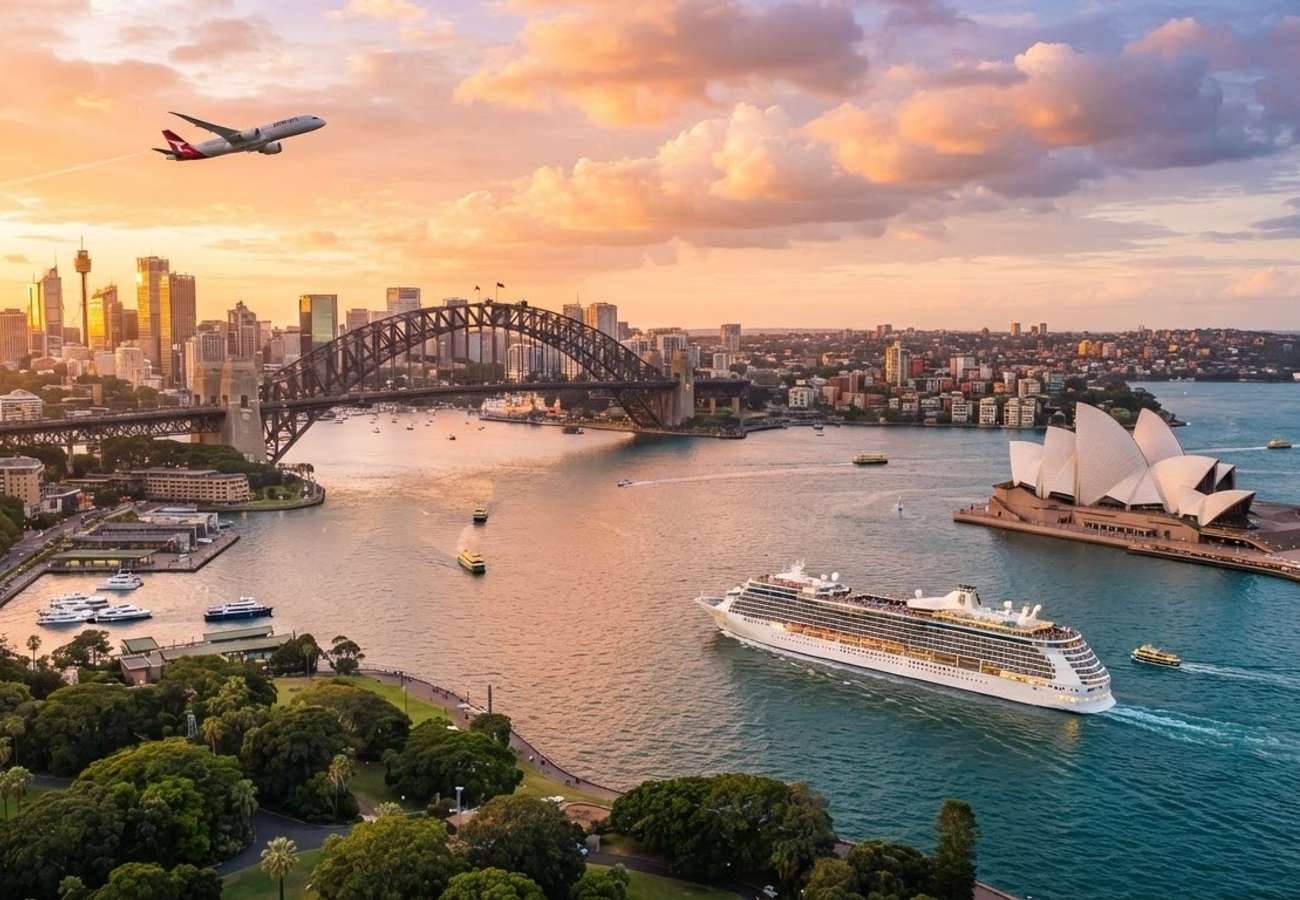
Image generated by AI
Sydney has maintained its position as the primary engine of the Australian visitor economy for seven consecutive months leading up to August 2026. This sustained momentum is fueled by a strategic pivot toward high-net-worth travelers and massive infrastructure investments.
The Australian tourism sector has officially entered a new era of structural evolution. Moving beyond simple post-pandemic recovery, the industry is now experiencing a high-yield boom characterized by a sophisticated mix of border modernization, expanded aviation capacity, and targeted marketing.
Sydney remains the epicenter of this growth. By acting as the primary logistical artery for the Asia-Pacific region, the city has not only attracted record numbers of visitors but has also served as the critical transit hub that distributes traveler traffic across the rest of the continent.
High-Yield Shifts in International Visitor Spending
Recent data from Tourism Research Australia (TRA) for the year ending March 2026 reveals a significant shift in who is visiting Australia. While the volume of travelers is increasing, the financial impact is growing at a much faster rate, suggesting a successful pivot toward premium tourism.
International trips reached 9.2 million, a 10% year-on-year increase. However, the spending associated with these trips surged by 20%, totaling $40.9 billion. This disparity indicates that the current growth is driven by high-net-worth individuals, corporate travelers, and long-stay visitors who contribute more significantly to the local economy per capita.
When combining domestic and international sectors, the national impact is substantial:
- Total Trips: 405.4 million
- Total National Spend: $197.9 billion
Domestic Travel Trends: The Rise of Regional Day Trips
While international arrivals capture the headlines, the domestic market provides the foundational stability for the industry. Interestingly, the data shows a divergence between overnight stays and short-term regional visits.
Domestic overnight trips saw a slight contraction of 2.3%, falling to 113.1 million. Despite this, spending in this category actually rose by 0.7% to $107.6 billion.
The real surge is found in domestic day travel. There was a 9% increase in volume, with 283.2 million trips recorded. More impressively, the financial output of these day trips jumped 27% to $49.4 billion, highlighting a trend where Australians are spending more on high-quality, short-duration regional excursions.
Sydney Airport: Operational Excellence Amidst Record Volume
Sydney Airport is the primary facilitator of this surge. In the second quarter of 2026, the hub managed 9.96 million passengers. Although this was a marginal 0.7% dip compared to Q2 2025—attributed to geopolitical disruptions affecting Middle Eastern flight paths—the overall six-month trend remains strongly positive.
For the first half of 2026, total passenger volumes rose by 1.5% over the previous year.
Aviation Traffic Breakdown (H1 2026):
- International Passengers: 8.44 million (up 2.1%)
- Domestic Passengers: 12.29 million (up 1.0%)
The airport has balanced this massive volume with aggressive operational optimizations. During Q2 2026, 99.9% of passengers at the T1 International terminal cleared security within 10 minutes. Additionally, 90% of arriving international travelers cleared customs and immigration within 32 minutes, while 100% of domestic passengers cleared security in under 10 minutes.
Tourism Performance Metrics (Year Ending March 2026)
| Metric | Volume | Year-on-Year Change (%) | Total Spend | Spend Change (%) |
|---|---|---|---|---|
| International Trips | 9.2 Million | +10% | $40.9 Billion | +20% |
| Domestic Overnight Trips | 113.1 Million | -2.3% | $107.6 Billion | +0.7% |
| Domestic Day Trips | 283.2 Million | +9% | $49.4 Billion | +27% |
| Total National Tourism | 405.4 Million | N/A | $197.9 Billion | N/A |
Strategic Policy Drivers
This growth is the result of coordinated efforts between federal ministries, state governments, and bodies such as Tourism Australia and Destination NSW. The government's blueprint focused on two main pillars:
- Bilateral Aviation Agreements: Intense diplomatic negotiations to expand flight capacity from high-growth markets in North America, Europe, and Asia.
- Infrastructure Investment: Large-scale construction projects and aviation deals in Sydney to ensure the city could handle record capacities without degrading the premium passenger experience.
By prioritizing the "premium experience"—from biometric border screening to sustainable aviation investments—Australia has positioned itself as a top-tier destination for the world's most affluent travelers.
Sydney's current trajectory suggests that the city will remain the dominant force in Pacific tourism for the foreseeable future.
Related Travel Guides
This article is for informational purposes. Flight routes, passenger regulations, visa rules, and transit advisories are subject to change by airlines and aviation authorities. Readers are advised to verify schedules and travel documentation with relevant carriers and border agencies before departure.
Related Stories
Oceania Tourism Shifts to Night-Time Operations to Combat Extreme Heatwaves in 2026

Bolivia Emerges as Top Corporate Incentive Destination for High-Impact Executive Retreats in 2026