
Switzerland Implements Mandatory Digital Reservations for Oeschinensee and Stoos Hiking Access in 2026
Switzerland introduces strict digital time-slot reservations and capacity controls at Oeschinensee and Stoos to combat overtourism and protect alpine ecosystems.

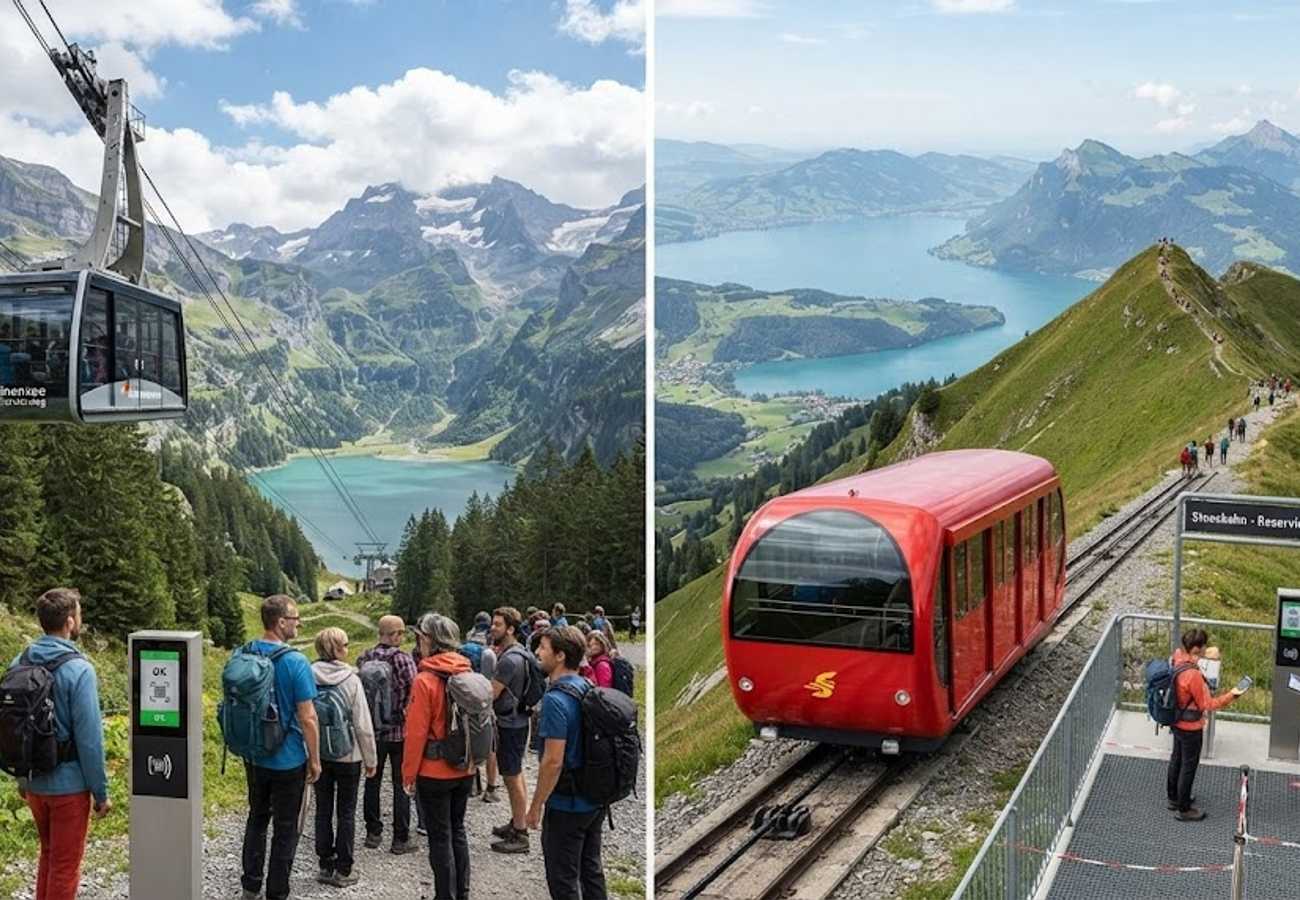
Image generated by AI
Swiss alpine authorities have transitioned to a mandatory reservation model for high-traffic hiking hubs to prevent ecological collapse and infrastructure failure. Access to Oeschinensee and the Stoos Ridge Trail now requires digital time-slot bookings during peak periods.
Alpine Access Restrictions and Capacity Controls
Switzerland is pivoting toward an equitable visitor management system to protect the fragile alpine landscape from the surge of social-media-driven tourism. The primary objective is to mitigate congestion on transport systems and ensure visitor safety on narrow mountain pathways.
The implementation of digital reservation systems, capacity caps, and time-access controls is now standard across several high-demand regions. This shift mirrors global trends seen in Italy’s Dolomites and Japan’s Mount Fuji, where "first-come, first-served" access has been replaced by scheduled entries.
Oeschinensee: Mandatory Cable Car Time Slots
Oeschinensee, located above Kandersteg in the Bernese Oberland, has implemented strict controls on its primary ascent route.
- Access Requirement: During peak summer periods, cable car ascent reservations are mandatory.
- Enforcement: Transport is unavailable to passengers without a valid digital time-slot booking once capacity is reached.
- Impact: This system distributes arrivals throughout the day to prevent bottlenecks at transport stations and parking areas in Kandersteg.
Stoos Ridge Trail: Transport-Led Flow Management
The Stoos Ridge Trail, overlooking Lake Lucerne, utilizes its specialized transport infrastructure to regulate hiker volume.
- Control Points: The Stoos funicular and connecting chairlifts serve as the primary mechanisms for controlling the number of travelers reaching higher elevations.
- Congestion Points: High-density crowds typically cluster at popular viewpoints and narrow ridge sections.
- Mitigation Strategy: Authorities recommend "reverse-flow" hiking—starting from Fronalpstock and moving toward Klingenstock—to avoid peak morning congestion.
Passenger Rights & Access Advisory
For the affected traveler, the transition to a reservation-based system changes the legal and practical nature of mountain access. Our analysis of these policy shifts suggests the following guidance for 2026 visitors:
Booking and Rebooking Rights Unlike commercial flights under EU261, mountain transport reservations are often governed by local operator terms. If a cable car is delayed or canceled despite a reservation, passengers should check for "force majeure" clauses (e.g., extreme weather) which typically exempt operators from compensation. However, for paid time-slot bookings, travelers should verify the refund policy for missed slots due to transport delays.
Alternative Access Options To bypass digital bottlenecks, travelers can utilize non-regulated routes:
- Oeschinensee: Hiking directly from Kandersteg village avoids the cable car reservation requirement entirely.
- Stoos: Adjusting departure times to late afternoon often yields lower density, provided travelers verify the final descent lift operating hours to avoid being stranded.
Parking and Logistics Parking in Kandersteg is now severely limited. Travelers are advised to use public rail links to avoid being turned away from parking lots, which are not integrated into the digital reservation system.
Industry Analyst View: The "Next-Ridge-Over" Trend
The shift in Switzerland is a response to "Instagram tourism," where a disproportionate number of visitors flock to a handful of visually iconic spots. By restricting access to Oeschinensee and Stoos, Switzerland is effectively pushing travelers toward "next-ridge-over" tourism.
This strategy redistributes economic and environmental pressure to underutilized but equally impressive sites. For those seeking to avoid crowds in 2026, our analysis suggests the following alternatives:
- Instead of Oeschinensee: Explore Gasterntal Valley, Blüemlisalp routes, or the Gemmi Pass toward Daubensee.
- Instead of Stoos: Visit Niederbauen Chulm or Gross Mythen for comparable panoramic views of Central Switzerland.
The long-term sustainability of Swiss alpine tourism now depends on the traveler's willingness to move from spontaneous exploration to planned, digital-first itineraries.
The era of unplanned alpine exploration is ending; the era of the digital permit has arrived.
Related Travel Guides
Disclaimer
This article is for informational and educational purposes only. It does not constitute legal, financial, or professional advice. While we strive to provide accurate and up-to-date information, travel policies, regulations, and conditions change rapidly. Always verify information with official sources before making travel decisions. Nomad Lawyer makes no representations about the accuracy, reliability, completeness, or suitability of the information provided. Readers should consult qualified professionals for advice specific to their circumstances. The views expressed in this article are those of the author and do not necessarily reflect the views of Nomad Lawyer.
Kunal K Choudhary
Co-Founder & Contributor
A passionate traveller and tech enthusiast. Kunal contributes to the vision and growth of Nomad Lawyer, bringing fresh perspectives and driving the community forward.
Learn more about our team →