Global Tourism Surge in 2026: Hong Kong, Brazil, New Zealand, and Breakout Destinations Post Double-Digit Arrival and Revenue Gains

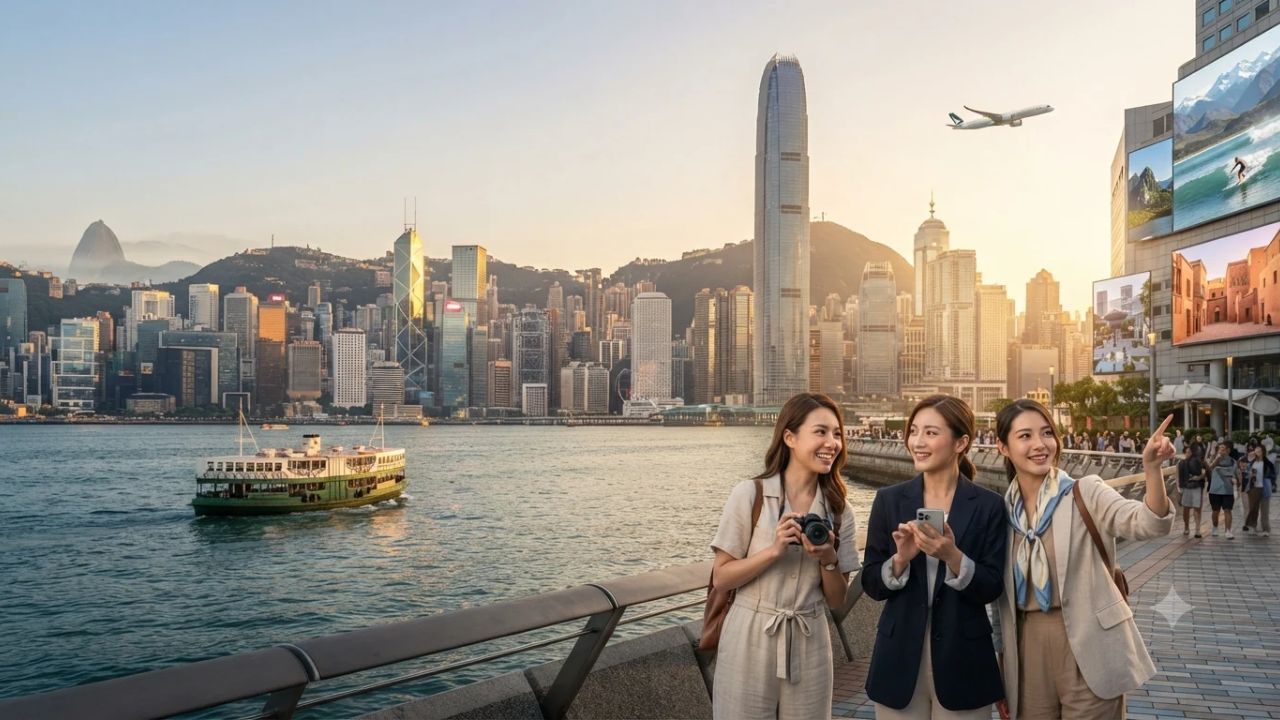
International travel has broken global performance records throughout 2026 despite persistent macroeconomic headwinds and regional geopolitical tensions, propelled by standout destinations like Hong Kong, Brazil, New Zealand, Paraguay, and El Salvador delivering double-digit surges in foreign visitor arrivals and cross-border tourism receipts.
Leading the post-recovery acceleration across East Asia, Hong Kong recorded a powerful 12% year-on-year increase in October visitor arrivals, welcoming 5.13 million international travellers in a single month. Simultaneously, South American economic powerhouse Brazil matched that 12% growth benchmark in total tourism receipts by dispersing visitors into high-yield ecological and cultural regions well beyond its traditional Carnival season. Across Oceania and Central America, even sharper gains were logged, with New Zealand staging a dramatic 45% international arrival expansion and El Salvador posting a 43% leap driven by public safety turnarounds and its signature "Surf City" branding.
These breakthrough performances demonstrate that international travellers in 2026 are not simply returning to pre-pandemic routines; they are actively rewriting the geography of global tourism. By pairing aggressive aviation route expansions with frictionless digital entry systems, high-profile mega-events, and targeted outreach to emerging middle-class source markets such as India and the Middle East, high-performing nations are establishing a new masterclass in international destination marketing.
GLOBAL TOURISM BREAKTHROUGHS 2026: KEY PERFORMANCE SNAPSHOT
| Category / Entity | Details / Impact |
|---|---|
| Hong Kong (East Asia) | +12% YoY October Arrivals (5.13M Visitors in a Single Month) |
| Brazil (South America) | +12% YoY International Tourism Receipt Growth |
| New Zealand (Oceania) | +45% Surge in Inbound International Arrivals |
| Paraguay (South America) | +46% Growth in Cross-Border Arrivals via Regional MICE Hubs |
| El Salvador (Central America) | +43% Surge Powered by Coastal "Surf City" Infrastructure |
| South Korea (East Asia) | +38% Increase in International Visitor Receipts (Hallyu Wave) |
| Pakistan (South Asia) | +60% Surge in Tourism Revenue via E-Visas & Karakoram Trekking |
| Morocco (North Africa) | +24% Receipt Growth Driven by European Low-Cost Carriers |
Global Tourism in 2026: Macroeconomic Defiance and Record-Breaking Trajectories
The global tourism sector entered 2026 confronting an intimidating array of external headwinds: volatile jet fuel prices, elevated commercial interest rates, inflationary pressures on household discretionary budgets, and airspace diversions across Eastern Europe and the Middle East. Yet rather than depressing international travel demand, consumer behaviour has demonstrated extraordinary structural resilience.
International travellers have fundamentally altered their household spending hierarchies, prioritizing experiential leisure, cultural discovery, and personal wellness over traditional durable goods purchases. According to international tourism economists, foreign travel is no longer regarded as an optional luxury by middle-class and affluent households; it has become an essential life priority.
Macroeconomic Headwinds vs. Travel Resilience Factors (2026):
=============================================================================
External Pressures:
* Sustained aviation fuel surcharges affecting long-haul ticket pricing
* Currency fluctuations impacting international purchasing power
* Airspace closures requiring longer routing across Eurasian transit lines

Compensating Growth Drivers:
* Structural shift toward experiential spending over physical consumer goods
* Massive expansion of secondary city air routes by international carriers
* Proliferation of digital arrival authorizations, e-visas, and mobile pay
* Rise of multi-generational, wellness, and event-anchored travel bookings
=============================================================================
This structural shift has created stark divergence across the international tourism landscape. While mature destinations that relied on passive sightseeing or conventional beach package tours have experienced modest single-digit stabilization, agile destinations that invested in direct flight capacity, modern event infrastructure, and simplified border clearance have achieved historic double-digit gains.
| Destination | World Region | Primary 2026 Growth Metric | Strategic Catalyst Behind the Surge |
|---|---|---|---|
| Hong Kong | East Asia | +12% YoY October Arrivals (5.13M) | National Day Golden Week, mega-events, long-haul recovery |
| Brazil | South America | +12% YoY Tourism Receipt Growth | Expanded direct flights, Amazon & Pantanal ecotourism |
| New Zealand | Oceania | +45% Surge in International Arrivals | Restored trans-Pacific capacity, off-peak seasonal campaigns |
| Paraguay | South America | +46% Inbound Arrival Expansion | Regional MICE conferences, sports hosting, border transit ease |
| El Salvador | Central America | +43% International Arrival Jump | "Surf City" coastal branding, historic safety improvements |
| South Korea | East Asia | +38% Jump in Tourism Receipts | Hallyu pop culture exports, medical travel, K-ETA ease |
| Mongolia | Central/East Asia | +20% Aviation Passenger Growth | "Years to Visit Mongolia", liberalized air pacts, yurt lodges |
| Pakistan | South Asia | +60% Rise in Tourism Receipts | E-visas for 120+ nations, Karakoram high-altitude mountaineering |
| Morocco | North Africa | +24% Growth in Tourism Receipts | European budget carrier routes, 2030 World Cup prep |
| Cabo Verde | Sub-Saharan Africa | +24% Aviation Arrival Expansion | Year-round Atlantic winter sun, European resort investment |
| Macao SAR | East Asia | +11.8% Mainland / +34.3% India | Integrated resort entertainment, GBA cross-border flows |
Hong Kong’s Double-Digit Rebound: Mega-Events, Aviation Super-Connectors, and GBA Integration
Hong Kong’s performance in October 2026 stands as one of the most remarkable destination turnarounds in modern East Asian travel. The city recorded 5,128,162 provisional visitor arrivals during the month—representing a 12% year-on-year increase and an impressive 27.2% sequential surge from September’s tally of 4.03 million travellers.
Cumulative data for the first ten months of 2026 shows that Hong Kong welcomed 45.83 million visitors, achieving 85.2% of the Hong Kong Tourism Board’s (HKTB) ambitious full-year target of 53.8 million travellers.
Monthly International Arrivals to Hong Kong (2026 Trajectory):
6.0M +----------------------------------------------------------------------+
     |                                                         [5.13M]      |
5.0M +--------------------------------------------------------- October ----+
     |                                          [4.03M]                     |
4.0M +------------------------------------------ Sept ----------------------+
     |                 [3.85M]                                              |
3.0M +----------------- June -----------------------------------------------+
     |                                                                      |
2.0M +----------------------------------------------------------------------+
     |                                                                      |
  0M +-----+--------------+------------------------+--------------+---------+
          Jan            Apr                      Jul            Oct
Diversifying Beyond Mainland China
While Mainland China remained the indispensable volume foundation of Hong Kong's visitor numbers—delivering 3.97 million arrivals in October (+15% year-on-year) driven by the National Day Golden Week—the most significant strategic trend was the sharp expansion of non-mainland visitor cohorts:
- Long-Haul Markets: Expanded by 19% year-on-year to 444,627 arrivals, with strong growth recorded from the United States, the United Kingdom, Canada, and Australia.
- Emerging Short-Haul Markets: Surged by an astonishing 37% year-on-year, led by the high-spending Gulf Cooperation Council (GCC) states of the Middle East and emerging Southeast Asian markets like Indonesia and the Philippines.
- India as a Growth Powerhouse: Indian arrivals posted double-digit growth, bolstered by extended festival long weekends, corporate MICE delegations, and expanded direct flight frequencies from Mumbai, Delhi, and Chennai.
The Experiential Mega-Event Playbook
The HKTB successfully repositioned Hong Kong from a purely retail-driven hub into a premier cultural and entertainment stage. October was anchored around high-impact experiential festivals, including the International Lantern Spectacular, the Hong Kong Wine & Dine Festival along the Central Harbourfront, world-class symphony performances, and international rugby and tennis tournaments.
Aviation Recovery at Hong Kong International Airport (HKIA)
The city’s transit engine supported this inbound influx. In October alone, HKIA handled 34,690 flight movements. Bolstered by an 11.7% increase in transfer and transit passenger volumes, the airport solidified its standing as Asia’s foremost international super-connector, routing passengers between Western long-haul corridors and the broader Guangdong-Hong Kong-Macao Greater Bay Area (GBA).
Brazil’s High-Yield Evolution: Year-Round Regional Dispersal and Long-Haul Aviation Links
In South America, Brazil matched Hong Kong’s 12% growth benchmark by recording a 12% year-on-year expansion in total international tourism receipts. Brazil’s achievement is particularly noteworthy because it represents a qualitative evolution: rather than depending solely on brief arrival spikes during the February Carnival in Rio de Janeiro, the country succeeded in distributing international visitor spending across all four quarters of 2026.
BRAZIL'S FOUR-PILLAR TOURISM EXPANSION
| Category / Entity | Details / Impact |
|---|---|
| 1. Secondary Gateway Airlift | New direct routes to Salvador, Recife, |
| Belém, and Manaus from Europe and the US | |
| 2. Ecological Immersion | Spotlight on the Pantanal, Amazon basin, |
| and sand dunes of Lençóis Maranhenses | |
| 3. Cultural Mega-Events | Free beachfront stadium concerts, culinary |
| festivals in São Paulo and Bahia | |
| 4. Frictionless Finance | Nationwide rollout of Pix digital payments |
| integrated with foreign credit cards |
Expanding Long-Haul Aviation Corridors
Historically, long-haul travellers entering Brazil were channeled almost exclusively through São Paulo (GRU) or Rio de Janeiro (GIG), creating logistical bottlenecks and high domestic connecting costs. Throughout 2025 and 2026, the Brazilian government and national tourism board (Embratur) partnered with European and North American carriers to establish direct long-haul flights into secondary coastal and interior hubs:
- Direct flights linking Lisbon, Madrid, and Paris to Salvador da Bahia, Recife, and Fortaleza in the Northeast.
- Direct scheduled services linking Miami and Panama City to Belém and Manaus, unlocking immediate access to the Amazon River basin.
Eco-Tourism and Pristine Wilderness
Brazil’s promotional campaigns tapped directly into the global hunger for biodiversity and nature conservation travel. International visitors increasingly bypassed crowded city centres to explore the wildlife-rich wetlands of the Pantanal—home to the world's densest jaguar population—the pristine freshwater lagoons amongst the white sand dunes of Lençóis Maranhenses National Park, and remote eco-lodges along the Rio Negro in the Amazon rainforest.
Frictionless Digital Payments
Brazil eliminated a major historical friction point for international visitors by adapting its revolutionary domestic instant payment system, Pix, to accommodate foreign credit cards and digital wallets. From street vendors selling fresh coconut water along Ipanema Beach to remote craft cooperatives in Bahia, foreign tourists can pay instantly using their smartphones, eliminating currency conversion barriers and stimulating localized discretionary spend.
New Zealand’s Long-Haul Resurgence: Trans-Pacific Restorations and Off-Peak Seasonality
Few developed travel economies have matched the sheer velocity of New Zealand in 2026, which posted an extraordinary 45% year-on-year surge in international visitor arrivals. Having spent previous years navigating conservative border policies and slow airline capacity returns, New Zealand’s visitor economy achieved full-throttle recovery as global carriers restored trans-Pacific networks.
Long-Haul Aviation Rebound to New Zealand:
[North American Gateways (LAX, SFO, DFW, YVR)] ───► [Auckland & Christchurch]
                                                     ▲
[East Asian Hubs (Singapore, Shanghai, Tokyo)] ──────┘
* Re-establishment of widebody Boeing 787 and Airbus A350 daily flights
* Significant airfare deflation compared to 2023-2024 pricing peaks
* Coordinated marketing by Tourism New Zealand promoting off-peak travel
Conquering the Off-Peak Season
A major victory for Tourism New Zealand was the successful redistribution of visitor arrivals into the autumn, winter, and spring shoulder seasons. Recognizing that popular summer hotspots (such as Queenstown, Wanaka, and Rotorua) frequently experience accommodation capacity bottlenecks in December and January, international marketing campaigns spotlighted:
- Alpine Skiing and Winter Wellness: Queenstown and the Southern Lakes ski fields attracted massive contingents from Australia, North America, and Southeast Asia during July and August.
- Dark Sky Astro-Tourism: International visitors flocked to the Aoraki Mackenzie International Dark Sky Reserve during the clear, crisp autumn and winter months to view the Aurora Australis and the galactic core of the Milky Way.
- Māori Cultural Immersion and Matariki: The national celebration of the Māori New Year (Matariki) in mid-winter was promoted globally as an authentic cultural journey, attracting high-spending cultural heritage enthusiasts.
Screen Tourism and Luxury Adventure
New Zealand continues to extract high economic yields from its cinematic landscapes. Film and television production partnerships, paired with luxury heli-hiking on Franz Josef and Fox Glaciers, private lodge expeditions in Fiordland National Park, and cycle touring along the Great Rides network, ensured that arriving visitors stayed longer (averaging over 19 nights per trip) and spent considerably more in regional communities.
Latin America’s Breakout Champions: The Rise of Paraguay and El Salvador
In Central and South America, two smaller nations stunned international travel analysts by recording the highest percentage arrival growth figures globally: Paraguay (+46%) and El Salvador (+43%). Their achievements illustrate how proactive security policy, infrastructural specialization, and strategic geographic positioning can rapidly transform tourism outcomes.
LATIN AMERICA'S HIGH-VELOCITY GROWTH MODELS
| Country | 2026 Growth Metric | Primary Strategic Growth Mechanism |
|---|---|---|
| Paraguay | +46% Arrivals | Regional MICE conferences, continental sports hosting, |
| modern convention facilities in Asunción, border shopping | ||
| El Salvador | +43% Arrivals | Coastal "Surf City" investments, dramatic transformation |
| in public safety, high-frequency North American airlinks |
El Salvador: The "Surf City" Transformation
El Salvador’s 43% arrival jump represents one of the most remarkable destination transformations in the Western Hemisphere. Under national leadership that prioritized domestic public safety and gang eradication, international perceptions of the country underwent a radical reversal. Travellers who once viewed Central America with security concerns now visit El Salvador in record numbers.
The cornerstone of this success is the "Surf City" initiative along the Pacific coastline:
- Massive public investments in four-lane coastal highways, illuminated beachside promenades, modern wastewater facilities, and eco-certified boutique hotels across surf hubs like El Tunco, El Zonte, and Punta Mango.
- Hosting prestigious World Surfing Games and international championship circuits, transforming local breaks into a global lifestyle brand.
- Expanding nonstop flight links to major North American hubs (including Houston, Los Angeles, Miami, Washington, and Toronto), enabling spontaneous short-haul getaways for surfers, digital nomads, and diaspora visitors.
Paraguay: The Emerging Regional MICE Powerhouse
Paraguay’s 46% arrival surge was fueled by an entirely different, highly calculated economic strategy: business travel and sports tourism. Situated at the geographic heart of South America, the capital city of Asunción capitalized on its affordability, tax-friendly commercial environment, and modern convention centres to capture major regional conferences, trade expos, and continental sporting championships. Cross-border visitor traffic from neighbouring Brazil and Argentina expanded rapidly, generating sustained hotel occupancy across all twelve months.
Asian Performance Outliers: South Korea, Mongolia, Pakistan, and Macao SAR
Asia’s travel landscape in 2026 extended well beyond traditional beach holidays, with several distinct markets registering phenomenal revenue and arrival jumps through innovative niche positioning.
Diverse Asian Growth Drivers (2026):
+-----------------------------------------------------------------------------+
|  South Korea (+38% Receipts)  --> Hallyu Pop Culture, K-Beauty, Medical     |
|  Pakistan    (+60% Receipts)  --> E-Visa Liberalization, Karakoram Treks    |
|  Mongolia    (+20% Aviation)  --> Open Skies, Nomadic Eco-Lodges, Ger Camps |
|  Macao SAR   (+34.3% India)   --> Integrated Resorts, GBA Entertainment     |
+-----------------------------------------------------------------------------+
South Korea: The Hallyu Economic Multiplier
South Korea recorded a stunning 38% increase in international tourism receipts in 2026. The global cultural phenomenon of Hallyu (Korean Wave)—spanning K-pop music, Korean television dramas, and cinema—acted as an unmatched tourism conversion funnel. Travellers arrived in Seoul, Busan, and Jeju Island not merely to sightsee, but to immerse themselves in Korean lifestyle:
- Attending stadium-scale K-pop concerts and touring iconic drama filming sets.
- Participating in high-spending medical, dermatology, and advanced aesthetic wellness tourism in specialized clinics across Gangnam.
- Shopping for skincare, cosmetics, and avant-garde street fashion, supported by streamlined duty-free digital tax refunds and the simplified Korea Electronic Travel Authorization (K-ETA) system.
Pakistan: Mountain Majesty and E-Visa Reforms
Recording one of the highest percentage surges in global tourism revenue, Pakistan achieved a 60% increase in international visitor receipts. This growth was catalyzed by comprehensive visa deregulation: the federal government introduced a frictionless online e-visa system granting approvals within 48 hours for citizens of over 120 nations.
Combined with major infrastructure upgrades along the scenic Karakoram Highway, global mountaineers, trekking expeditions, and cultural heritage travellers flooded into the northern territories of Gilgit-Baltistan, Skardu, and Hunza to experience the planet’s highest concentration of 8,000-metre peaks.
Mongolia: Nomadic Wilderness and Open Skies
Mongolia achieved a 20% jump in international aviation passenger arrivals under its multi-year "Years to Visit Mongolia" campaign. By signing liberalized bilateral air services agreements that attracted direct flights from Seoul, Tokyo, Beijing, and Istanbul, and granting unilateral visa exemptions to over 60 nationalities, Mongolia made its remote nomadic landscapes accessible. Luxury heated ger (yurt) camps, horse-trekking across the steppes, and ancient eagle-hunting festivals provided adventurous travellers with authentic, low-density wilderness escapes.
Macao SAR: Regional Entertainment and Indian Influx
In close synergy with Hong Kong, Macao SAR recorded an 11.8% rise in Mainland visitors (reaching 2.83 million in October) and an extraordinary 34.3% leap in Indian holidaymakers. Macao’s diversified integrated resorts—offering international culinary dining, high-tech indoor waterparks, luxury shopping, and major theatrical shows—positioned the territory as an essential component of Greater Bay Area multi-destination itineraries.
African Destinations Ascendant: Morocco, Namibia, and the Atlantic Winter Sun Corridor
The African continent emerged as one of the fastest-growing global tourism theatres in 2026, outperforming traditional Mediterranean holiday markets through strategic aviation partnerships and unique conservation models.
AFRICAN TOURISM ACCELERATION PROFILE (2026)
| Entity / Route | Metrics | Operational Status |
|---|---|---|
| Destination | Growth Indicator | Primary Growth Driver |
| Morocco | +24% Tourism Receipts | European LCC point-to-point routes, 2030 World |
| Cup infrastructure, desert luxury glamping | ||
| Cabo Verde | +24% Aviation Arrivals | Atlantic winter sun, direct UK & EU charters |
| Namibia | +22% Aviation Arrivals | Community wildlife conservancies, desert lodges |
| Burundi | +35% Regional Arrivals | Lake Tanganyika ecotourism, transit ease |
| Sierra Leone | +23% Coastal Inbound | Pristine Atlantic beaches, heritage circuits |
Morocco: Africa’s Inbound Colossus
Morocco cemented its position as Africa’s most visited destination, logging a 24% surge in international tourism receipts. Partnering aggressively with European low-cost carriers (including Ryanair, easyJet, and Transavia), Morocco established dozens of direct point-to-point air corridors linking secondary European cities with Marrakech, Agadir, Tangier, and Fes.
In addition, extensive national infrastructure upgrades undertaken ahead of co-hosting the 2030 FIFA World Cup—including high-speed rail expansions, modern airport terminals, and historic medina restorations—created immense international buzz and investor confidence.
Namibia and Cabo Verde: Pristine Sanctuaries
- Namibia (+22% Arrivals): Capitalized on its reputation as a premier destination for low-density, high-yield conservation tourism. Travellers sought private photographic expeditions through the ancient red dunes of Sossusvlei and wildlife safaris across Etosha National Park, directly supporting community-managed wildlife conservancies.
- Cabo Verde (+24% Arrivals): The volcanic Atlantic archipelago emerged as a primary winter sun alternative for European holidaymakers seeking warm coastal weather, windsurfing, and vibrant Creole musical heritage within a six-hour flight from Western Europe.
The Four Strategic Pillars Defining 2026’s High-Growth Tourism Economies
An empirical analysis of the nations posting double-digit gains in 2026 reveals that success was neither accidental nor purely geographic. The standout travel economies shared four fundamental operational pillars:
                      +---------------------------------------+
                      | FOUR PILLARS OF 2026 TOURISM SUCCESS  |
                      +---------------------------------------+
                                          |
         +--------------------------------+-------------------------------+
         |                                |                               |
         v                                v                               v
+------------------+            +-------------------+           +-------------------+
| 1. AIRLIFT FIRST |            | 2. FRICTIONLESS   |           | 3. EVENT-DRIVEN   |
| Direct capacity, |            | BORDERS           |           | URGENCY           |
| point-to-point   |            | E-visas, digital  |           | Concerts, sports, |
| route incentives |            | declarations      |           | cultural festivals|
+------------------+            +-------------------+           +-------------------+
                                          │
                                          v
                                +-------------------+
                                | 4. DIVERSIFIED    |
                                | SOURCE MARKETS    |
                                | India, GCC, ASEAN |
                                | diaspora outreach |
                                +-------------------+
1. Aviation Connectivity First
Airlift remains the single most reliable predictor of international visitor arrivals. Destinations like New Zealand, Morocco, and Brazil achieved breakout growth by aggressively restoring seat capacity, incentivizing international airlines with airport landing rebates, and opening direct routes into secondary regional gateways. Without convenient, affordable air access, destination marketing cannot convert interest into confirmed bookings.
2. Frictionless Border Systems
Outdated paper visa applications, consular appointments, and restrictive entry fees represent severe barriers to spontaneous travel. The 2026 winners—such as Pakistan, Mongolia, and El Salvador—dismantled bureaucratic hurdles by implementing fast digital e-visas, bilateral visa waivers, and automated airport smart gates. Making entry effortless consistently captures high-spending spontaneous travellers.
3. Event-Driven Urgency
Modern international consumers increasingly plan trips around specific, time-sensitive occurrences rather than general sightseeing. Whether attending the Hong Kong Wine & Dine Festival, an international surfing championship in El Salvador, a global concert tour in Brazil, or an international business convention in Paraguay, anchoring travel around headline events creates immediate booking urgency and lifts average hotel room yields.
4. Source Market Diversification
Relying exclusively on a single source market exposes a destination to extreme macroeconomic risk. Hong Kong successfully insulated itself by cultivating long-haul Western travellers, Middle Eastern Gulf delegations, and the burgeoning Indian outbound market. Leading travel destinations deliberately balance short-haul regional visitors with high-spending, long-stay international travellers.
Strategic Challenges: Capacity Bottlenecks, Inflation, and Environmental Sustainability
While double-digit tourism growth delivers immense economic benefits, it introduces profound operational challenges that governments and destination managers must confront to ensure long-term viability.
MANAGEMENT CHALLENGES IN HIGH-GROWTH DESTINATIONS
| Entity / Route | Metrics | Operational Status |
|---|---|---|
| Operational Pressure | Manifestation in Host Communities | Strategic Mitigation Policy |
| Hotel Capacity Strains | Room shortages during peak festivals | Dispersal to secondary towns, |
| and surging room tariff inflation | incentivizing eco-lodge builds | |
| Ecological Wear | Overcrowded national parks, waste | Timed ticketing, daily visitor caps |
| management in fragile island ecosystems | and mandatory conservation fees | |
| Aviation Bottlenecks | Congested air traffic control, runway | Digital airport smart-lanes and |
| constraints during peak arrival banks | off-peak slot incentives | |
| Local Resident Equity | Housing affordability pressures from | Enforcing short-term rental rules |
| unregulated short-term holiday rentals | and reinvesting tourism taxes |
Balancing Volume with Ecological Preservation
Fragile environments like the Pantanal in Brazil, the marine sanctuaries of Cabo Verde, and the alpine glaciers of New Zealand cannot absorb unlimited human footprints. Leading destinations are shifting their measurement metrics away from gross arrival counts toward qualitative indicators: average visitor length of stay, regional spending retention, and carbon-offset contributions. Implementing timed entry passes, mandatory certified guide requirements, and dedicated conservation levies ensures that tourism revenues directly finance habitat preservation.
Managing Local Housing and Infrastructure Pressures
Rapid tourism surges often exacerbate cost-of-living tensions in host communities, particularly through the conversion of residential rental housing into short-term tourist accommodation. Municipal authorities in high-demand destinations are enacting balanced regulatory frameworks to license holiday rentals, prevent resident displacement, and channel tourism tax revenues into local public transit, healthcare, and water treatment systems.
Frequently Asked Questions About the 2026 Global Tourism Growth Phenomenon
Why is global tourism experiencing record growth in 2026?
Global tourism is breaking records in 2026 because international consumers have fundamentally prioritized experiential travel, cultural immersion, and wellness over physical material goods. Despite global inflation and fuel surcharges, destinations that expanded direct flight connectivity, simplified visa entry through digital e-visas, and hosted world-class mega-events captured massive pent-up travel demand.
How did Hong Kong achieve a 12% increase in visitor arrivals in October 2026?
Hong Kong achieved a 12% year-on-year arrival increase (5.13 million visitors) through a combination of strong National Day Golden Week demand from Mainland China (3.97 million arrivals), an 18% expansion in long-haul international visitors, and a 37% surge from emerging markets like the Middle East and Southeast Asia. The recovery was accelerated by signature events like the Wine & Dine Festival, high-profile concerts, and enhanced flight capacity at Hong Kong International Airport.
What drove Brazil’s 12% growth in international tourism revenue?
Brazil achieved a 12% increase in tourism receipts by moving beyond seasonal reliance on Rio de Janeiro’s Carnival. The country added direct long-haul flights from North America and Europe into secondary cities across the Northeast and Amazon, launched targeted ecotourism marketing for the Pantanal and Lençóis Maranhenses, and integrated its national instant payment system (Pix) with international credit cards to streamline on-ground tourist spending.
Why did New Zealand record an astonishing 45% surge in international visitors?
New Zealand’s 45% arrival jump was propelled by the full restoration of trans-Pacific flight capacity from North American hubs (such as Los Angeles, San Francisco, and Dallas) and expanded direct links from East Asia. Additionally, Tourism New Zealand successfully promoted off-peak and shoulder-season travel, attracting high-spending visitors for winter skiing, dark-sky stargazing, luxury adventure, and Māori cultural heritage.
How did El Salvador transform its tourism industry to achieve a 43% arrival jump?
El Salvador transformed its tourism sector through dramatic, nationwide improvements in public safety and security, erasing historical travel concerns. The government complemented this with massive infrastructure investments in its Pacific "Surf City" coastal corridor, constructing modern highways and hosting international surfing championships that attracted North American, European, and diaspora travellers.
What role did visa liberalization play in the success of 2026’s tourism winners?
Visa liberalization was a decisive growth catalyst. Countries like Pakistan (+60% receipts), Mongolia (+20% aviation growth), and various Southeast Asian nations introduced rapid online e-visas, visa exemptions, and electronic travel authorizations. Eliminating consular appointments and paper bureaucracy made spontaneous travel accessible for emerging middle-class source markets.
Why is South Korea seeing a 38% surge in international tourism receipts?
South Korea’s 38% revenue increase is driven by the global reach of the Hallyu (Korean Wave) cultural phenomenon. International visitors are flocking to Seoul and Busan for K-pop concerts and drama filming locations, while spending heavily on high-margin dermatological treatments, cosmetic medical tourism, K-beauty shopping, and culinary experiences.
Which African nations are outperforming global tourism averages in 2026?
Morocco led African growth with a 24% increase in tourism receipts, driven by new point-to-point routes from European low-cost carriers and major infrastructure investments ahead of the 2030 World Cup. Additionally, Cabo Verde (+24% arrivals) and Namibia (+22% arrivals) posted rapid gains due to European winter sun demand and world-class desert wildlife conservation safaris.
What is the "Event-Driven Urgency" travel trend?
"Event-Driven Urgency" refers to modern consumer behaviour where international travellers book journeys specifically around scheduled, high-profile occurrences—such as music festivals, culinary fairs, sporting tournaments, or professional conventions—rather than open-ended sightseeing. This trend allows destinations to command premium hotel rates and generate immediate booking spikes.
What are the main challenges facing high-growth destinations?
High-growth destinations face significant operational pressures, including peak-season hotel room shortages, air traffic congestion, and overcrowding at sensitive natural or historical sites. Managing these challenges requires proactive policies, such as timed-entry passes to protect fragile ecosystems, dispersing visitors to regional secondary towns, and regulating short-term holiday rentals to safeguard local housing markets.
Related Travel Guides
- Global Aviation Route Restorations and International Air Connectivity Trends
- Digital Visas, Frictionless Borders, and E-Travel Authorization Frameworks Across Asia
- Eco-Tourism and Wilderness Conservation Models: Lessons from Brazil and Namibia
- Mega-Event Tourism and Economic Impact Strategies: How Festivals Drive Travel Demand
This article is for informational purposes. Flight routes, passenger regulations, visa rules, and transit advisories are subject to change by airlines and aviation authorities. Readers are advised to verify schedules and travel documentation with relevant carriers and border agencies before departure.
Related Stories
Hong Kong Tourism Momentum Surges Past Five Million October Visitors: HKTB Growth Data, Long-Haul Recovery, and HKIA Aviation Expansion
Portugal Showcases Évora to Canadian Travel Buyers as Guest Nights Climb 7.5% Across Regional Heritage Corridors