Canada Winter Cities Guide 2026–2027: Nine Contrasting Cold-Weather Destinations

In Winnipeg, winter temperatures routinely plummet past -30°C, yet locals celebrate the deep prairie freeze by turning the frozen junction of the Red and Assiniboine rivers into a world-famous river skating trail and outdoor cultural gathering place. While international tourists often imagine Canada as a uniform blanket of snow, the country’s winter reality is a study in extreme regional contrasts. From the rain-swept temperate rainforests of British Columbia to the maritime squalls of Newfoundland and the fortified stone bastions of Old Québec, planning a Canadian winter city break requires matching personal travel styles with distinct microclimates.
Across the 2026–2027 season, nine standout destinations demonstrate that severe winter conditions can unlock remarkable urban adventures. Drawing on regional insights supported by Destination Canada, travelers exploring between November and March encounter a country that does not retreat indoors, but rather builds its festivals, culinary identities, and public art around northern weather patterns.
Nine Cities, Nine Winter Personalities: The Pan-Canadian Spectrum
Canada's immense geographic expanse produces wildly divergent winter personalities. Coastal ports encounter moisture-heavy storms, the interior plains experience clear Arctic air masses, and eastern heritage cities embrace heavy lake-effect snowfalls.
| Destination City | Province | Typical Winter Climate Pattern | Primary Seasonal Draw & Signature Activities | Ideal Traveler Profile |
|---|---|---|---|---|
| Quebec City | Quebec | Consistent sub-zero cold with deep snowfall | Old Québec, German Christmas Market, Winter Carnival | Historic architecture & European festive culture |
| Montreal | Quebec | Cold, snowy continental conditions | French-Canadian gastronomy, festivals, underground RÉSO | Urban foodies & arts and entertainment seekers |
| Ottawa | Ontario | Prolonged sub-zero freeze & steady snow | Winterlude celebrations, Rideau Canal Skateway, museums | Families, skaters & national heritage enthusiasts |
| Toronto | Ontario | Variable cold, lake-effect winds, intermittent snow | Nathan Phillips Square skating, world-class theatre & galleries | Metropolitan shopping, dining & indoor culture |
| Niagara-on-the-Lake | Ontario | Moderate cold with lake-influenced precipitation | Historic 19th-century streetscapes, vineyard icewine tours | Romantic weekenders & culinary wine tourists |
| Winnipeg | Manitoba | Severe continental Arctic freeze & bright sunshine | The Forks river trail, Festival du Voyageur, snow sculpting | Hardcore cold-weather adventurers & heritage buffs |
| Calgary | Alberta | Dry prairie chill interrupted by warm Chinook winds | Urban culinary scene, quick highway access to Rockies | Mountain skiers, snowshoers & multi-sport travelers |
| Vancouver | British Columbia | Mild coastal temperatures and persistent rainfall | Seawall strolls, gastronomy, nearby North Shore skiing | Mild-weather seekers & urban outdoor enthusiasts |
| St. John’s | Newfoundland and Labrador | Atlantic gale-force winds, shifting snow and rain | Jellybean Row houses, traditional live music, harbour views | Maritime culture purists & rugged coastal explorers |
Regional Contrasts: Coastal Rains to Prairie Freezes
Understanding Canadian winter requires letting go of the single-climate myth. In Vancouver, winter rarely brings sustained snow to street level; rather, Pacific low-pressure systems bring misty rains and temperatures between 5°C and 10°C, leaving local ski runs on Grouse Mountain and Cypress Mountain just 30 minutes away.
Travel 2,300 kilometers east to the Manitoba prairies, and Winnipeg delivers an uncompromising continental climate. Yet at The Forks, the city activates the Nestaweya River Trail along the frozen rivers, pairing warming huts designed by international architects with Indigenous culinary pop-ups. During February, the historic Saint-Boniface quarter hosts the Festival du Voyageur, celebrating French-Canadian and Métis fur-trade heritage with fiddling, maple taffy on snow, and monumental snow sculptures.
In Alberta, Calgary benefits from a unique meteorological phenomenon: the Chinook. These warm, dry winds descending from the eastern slopes of the Rocky Mountains can raise temperatures by 15°C in a single afternoon, melting snowbanks before winter returns. Positioned on the Trans-Canada Highway, Calgary functions as the premier urban springboard to Parks Canada protected wonders in Banff National Park.
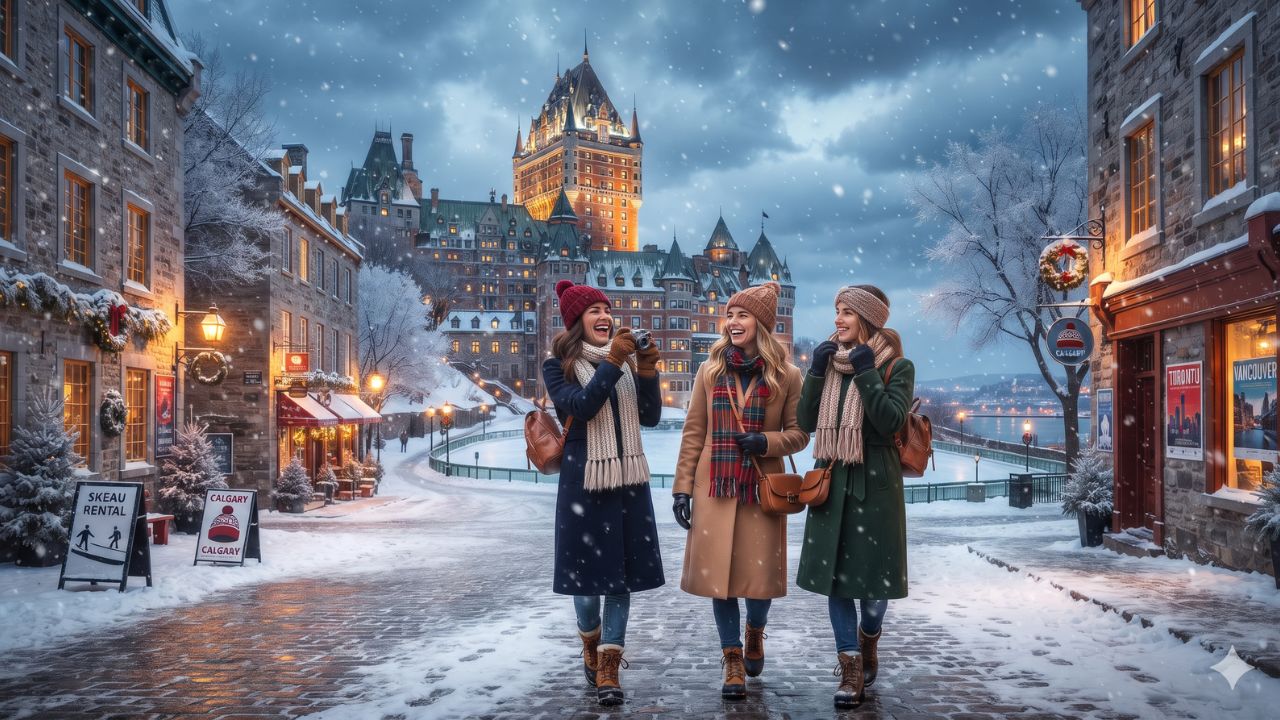
Further east along the St. Lawrence River, Quebec City stands as North America's only preserved fortified city north of Mexico. Its UNESCO World Heritage historic district, Old Québec, turns into an open-air storybook when snow blankets the copper roofs of the Château Frontenac. The city’s winter schedule is anchored by the German Christmas Market from 19 November to 23 December 2026, followed by the world-renowned Québec Winter Carnival from 5 to 14 February 2027.
Visitor Insider Tips for Canadian Winter Exploration
Navigating Canadian cities in mid-winter demands local knowledge and specialized wardrobe tactics:
- Master the Three-Layer Cold-Weather System: In deep-freeze cities like Ottawa, Montreal, and Winnipeg, never rely on a single heavy coat. Wear a thermal merino wool base layer against the skin, an insulating fleece or down mid-layer, and a windproof, waterproof outer parka. High-traction winter boots with insulated sub-zero ratings are non-negotiable for icy sidewalks.
- Verify Rideau Canal Ice Conditions Daily: Skating on Ottawa's historic Rideau Canal Skateway depends entirely on sustained freezing spells creating at least 30 centimeters of solid ice. Never assume the canal is open simply because the air feels frigid. Monitor daily status reports before renting skates.
- Leverage Montreal’s Underground Pedestrian Network: When windchills hit -25°C in downtown Montreal, navigate using the RÉSO (underground city). This 33-kilometer subterranean walkway links metro stations, shopping complexes, universities, and food halls, allowing you to cross town without putting on a parka.
- St. John’s Flight Flexibility: Winter weather in Newfoundland changes by the hour as Atlantic low-pressure systems meet Arctic air. Schedule flexible airfare into St. John's International Airport, and always keep a 24-hour buffer for return travel during storm cycles.
Cultural and Environmental Context of Northern Urban Life
Canadian cities have evolved sophisticated adaptations to thrive in cold climates, giving rise to the "WinterCity" movement. Urban planners design streets with solar orientation to capture low winter sun, build windbreaks along pedestrian pathways, and host outdoor patio culture centered around blazing cedar fire pits.
However, environmental change is increasingly disrupting traditional winter markers. Warming cycles and unpredictable freeze-thaw patterns have shortened natural outdoor skating seasons on Ottawa's Rideau Canal and Montreal's Parc La Fontaine. In response, municipal authorities are investing in refrigerated outdoor skating loops and climate-resilient festival infrastructure.
At the same time, winter tourism directly sustains local cultural heritage. In eastern Canada, Québécois sugar shacks (cabanes à sucre) and winter carnivals maintain French-Canadian winter folklore, while across the prairies, Indigenous-led winter trekking and storytelling tours preserve centuries of ancestral survival knowledge on the northern plains.
FAQ: Visiting Canada in Winter 2026–2027
Which Canadian city is best for a fairytale snowy Christmas?
Quebec City is the premier choice. The stone streets of Petit-Champlain, illuminated historic squares, and the German Christmas Market (19 November – 23 December 2026) create an authentic seasonal atmosphere.
Does Vancouver get snow during winter?
Vancouver rarely gets persistent snow at sea level, averaging mild, rainy days around 5°C to 8°C. However, heavy snow blankets the North Shore mountains directly overlooking the city.
Can tourists skate on Ottawa's Rideau Canal every day in winter?
No. Skating is only permitted when the National Capital Commission officially deems ice thickness safe, which varies year to year based on sustained cold weather.
How cold does it get in Winnipeg during winter?
January and February temperatures routinely hover between -15°C and -25°C, with wind chill values occasionally dipping below -35°C, requiring certified cold-weather insulated boots and parkas.
Embracing a Canadian winter is not about enduring the elements, but discovering the warmth of communities that make snow and ice their canvas.
Related Travel Guides
This article is for informational purposes. Flight routes, passenger regulations, visa rules, and transit advisories are subject to change by airlines and aviation authorities. Readers are advised to verify schedules and travel documentation with relevant carriers and border agencies before departure.
Related Stories
Edmonton Winter Festivals and Indigenous Heritage Tours Guide 2026–2027
Baton Rouge Christmas Lights and Winter Sports Guide 2026