
Switzerland Leads Europe’s Creative Power Surge with Design Culture and Tourism Strength
Switzerland Leads Europe’s Creative Power Surge with Design Culture and Tourism Strength

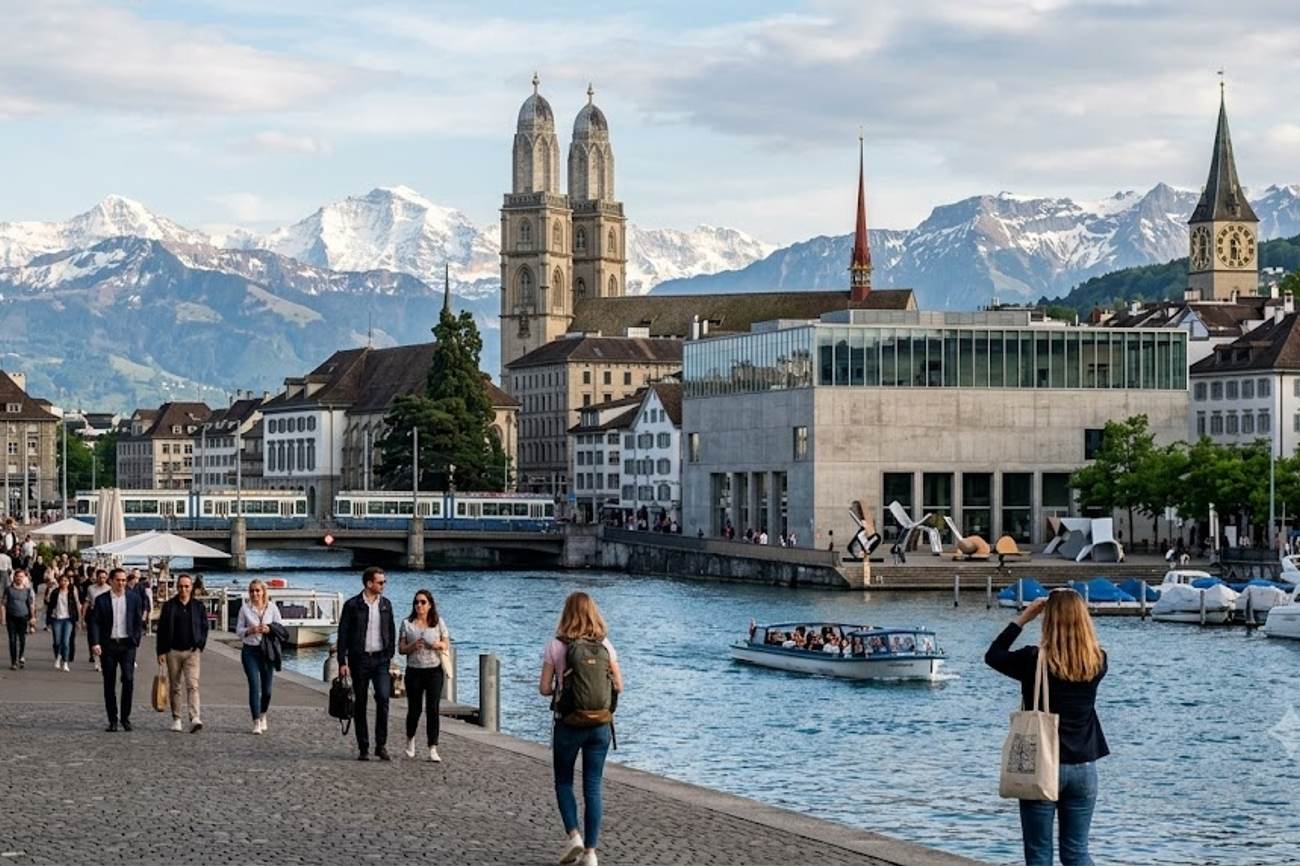
Image generated by AI
While most travelers associate Switzerland with banking and chocolate, the country actually leads the entire world in converting raw creativity into commercial value. According to the 2025 WIPO Creative Outputs pillar, Switzerland holds the top global position with a score of 68.8 out of 100, proving that its true export isn't just luxury watches, but a systemic ability to turn ideas into global brands.
The Shift Toward Creative Tourism in Europe
For decades, the European travel narrative centered on "Old World" monuments and static history. However, a new trend is emerging where travelers seek destinations based on their "creative output"—the tangible results of innovation, design, and digital artistry. Switzerland has dominated this space, securing the top spot in the Global Innovation Index for fifteen consecutive years. This isn't just a win for economists; it has fundamentally changed how the country approaches tourism.
Instead of relying solely on the seasonal draw of the Alps, Switzerland is leveraging its design culture to drive employment and international prestige. This shift is visible in the precise urban planning of its cities and the curation of its museums, which now serve as anchors for year-round visitation. The goal is to move the visitor's gaze from the mountain peaks to the intellectual and artistic engines driving the cities.
What Makes These Creative Hubs Different
Each of Europe's top creative powerhouses offers a distinct "flavor" of innovation that dictates the traveler's experience.
In Switzerland, creativity is synonymous with precision and luxury. The experience is found in the seamless integration of public transport and the high-fidelity hospitality of its urban centers. While Zurich and Geneva offer the polished side of this creativity, Basel and Lausanne provide deeper dives into the visual arts and architecture. You can see this commitment to excellence through the official Switzerland Tourism portal, which highlights how the country blends traditional craft with modern digital tools.
Sweden, ranking second globally with a score of 60.1, approaches creativity through a lens of accessibility and social integration. Their strength lies in "business sophistication," ranking second globally in that category. For the traveler, this manifests as a pervasive sense of design—from the minimalism of their furniture to the global dominance of their gaming and music industries. Gothenburg, for instance, is not just a port city but a UNESCO Creative City of Literature, boasting roughly 2,500 creative enterprises. This creates a city atmosphere where the Gothenburg Book Fair becomes a primary travel motivator, drawing professionals and bibliophiles alike.
The United Kingdom follows closely in third place globally (score: 59.7) and sixth in the overall Global Innovation Index. The British approach is rooted in "intangible assets"—the power of storytelling, film, and theatre. While London is the obvious hub, the creative weight is distributed. Edinburgh, the first-ever UNESCO City of Literature (designated in 2004), transforms the city into a living library during the Edinburgh International Book Festival. This ensures that the UK's tourism appeal extends far beyond the royal landmarks, pushing visitors toward the gritty, artistic energy of cities like Bristol, Glasgow, and Belfast.
Finally, the Netherlands offers a model of creative labor. With cultural employment making up 5.7% of its total workforce in 2025—the highest share in the European Union—culture is a primary economic driver rather than a hobby. Their dominance in online creativity (ranking third globally) means that Dutch cities like Utrecht are blending digital innovation with literary heritage, creating a hybrid experience for the modern nomad.
Visitor Insider Tips
To experience these creative hubs like a local rather than a tourist, you must shift your timing and your targets.
Switzerland: The Precision Pivot Avoid the midday rush in Zurich’s Bahnhofstrasse. Instead, head to the independent craft shops in the Altstadt during the early morning hours. To truly understand Swiss "creative output," visit the watchmaking towns in the Jura region rather than just the boutiques in Geneva. Use the SBB app for transport; the efficiency is the art form itself.
Sweden: The Design Deep-Dive In Stockholm and Gothenburg, look for "design walks" that avoid the main shopping malls. Sweden's creativity is often tucked away in residential-turned-studio districts. If you are visiting Gothenburg, time your trip with the Book Fair to see the city at its most intellectual peak. Base yourself in Södermalm in Stockholm for the best access to independent galleries and music venues.
United Kingdom: Beyond the Landmark In Edinburgh, skip the Royal Mile during the peak of the festivals if you hate crowds; instead, explore the bookstores in the Stockbridge neighborhood. In England, venture to the "Northern Powerhouse" cities like Manchester and Liverpool, where the creative energy is focused on music and digital media rather than traditional sightseeing.
Netherlands: The Digital-Physical Blend When visiting Utrecht or Amsterdam, prioritize the smaller "creative hubs" and co-working spaces that often double as galleries. The Dutch excel at software collaboration, and you will find many pop-up digital art installations that aren't listed in standard guides.
Cultural and Environmental Context
The rise of "creative tourism" brings a complex set of challenges. In Switzerland, the pressure to maintain a "premium" image can sometimes lead to an overly sanitized visitor experience, where the grit of actual artistic creation is hidden behind a polished luxury facade. There is a constant tension between preserving the quietude of the Alps and the commercial drive to turn every valley into a "branded experience."
In Sweden and the UK, the challenge is the "gentrification of creativity." As districts like East London or parts of Stockholm become global symbols of "cool," the original artists who built those creative ecosystems are often priced out by the very tourism their work attracted. The designation of UNESCO Creative Cities is a tool to combat this, as it encourages municipal governments to invest in the infrastructure of literature and art rather than just the hotels that house the tourists.
Furthermore, the Netherlands' high percentage of cultural employment creates a unique social contract where the state heavily supports the arts. However, as the country leads in "online creativity," there is an ongoing debate about how to maintain physical cultural spaces—like the libraries of Utrecht—in an era of digital dominance.
FAQ: Visiting Europe's Creative Hubs 2025
What is the best time to visit for cultural events? For the UK, August is peak for Edinburgh's festivals. For Sweden, the late summer months align with many design and literary events in Gothenburg and Stockholm. Switzerland is a year-round destination, but spring offers the best balance for urban exploration.
Do I need a visa for these destinations? Most travelers from the US, Canada, and Australia can enter the Schengen Area (Switzerland, Sweden, Netherlands) for up to 90 days visa-free. The UK has its own separate visa requirements; check the official UK government website for the latest updates.
How do I get between these creative hubs? The best way to experience the "precision" of Swiss creativity is via the Swiss Travel Pass. For travel between the UK, Sweden, and the Netherlands, budget airlines are common, but the European rail network is the preferred choice for those seeking a slower, more immersive journey.
Is it safe for solo travelers? Yes, all four nations are ranked as very safe for solo travelers. Switzerland and Sweden are particularly noted for their safety and ease of navigation. Use standard urban precautions in larger cities like London or Amsterdam.
Stop looking for the landmarks and start looking for the ideas.
#SwitzerlandTravel2025 #SwedenDesignTourism #UKCreativeCities #DutchCulturalEconomy #WIPOCreativeOutputs
Related Travel Guides
- Kyrgyzstan Boosts Travel Ambitions With Direct US Flight Plans to Unlock Tourism Business and Global Connectivity
- Norway Follows Switzerland and Others To Showcase The World’s Most Incredible Snow Covered Tourism Experiences And Unforgettable Winter Escapes
- Nigeria Aligns With Egypt And More Countries Across Africa As Oman E Visa Sparks The Next GCC And Africa Tourism Boom
Disclaimer
This article is for informational and educational purposes only. It does not constitute legal, financial, or professional advice. While we strive to provide accurate and up-to-date information, travel policies, regulations, and conditions change rapidly. Always verify information with official sources before making travel decisions. Nomad Lawyer makes no representations about the accuracy, reliability, completeness, or suitability of the information provided. Readers should consult qualified professionals for advice specific to their circumstances. The views expressed in this article are those of the author and do not necessarily reflect the views of Nomad Lawyer.
Raushan Kumar
Founder & Lead Developer
Full-stack developer with 11+ years of experience and a passionate traveller. Raushan built Nomad Lawyer from the ground up with a vision to create the best travel and law experience on the web.
Learn more about our team →