
Suriname Ramlila Week Brings Living Heritage to Saramacca: Cultural Tourism and Community Unity in Groningen

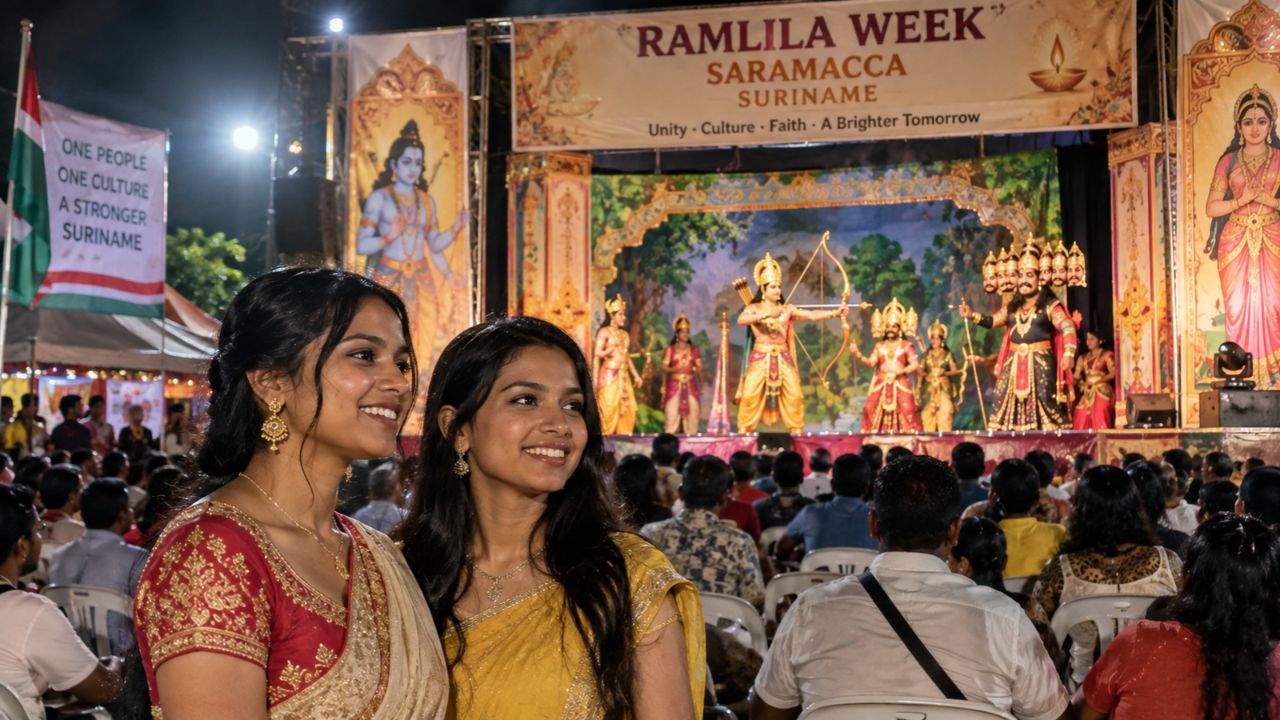
Suriname’s annual Ramlila Week transformed the riverfront town of Groningen in Saramacca District into an open-air cultural theatre from 7 to 12 September 2026, uniting multicultural communities and shining a national spotlight on the country’s 153-year-old Hindustani heritage. Staged across six dynamic evenings at the town’s central kermisterrein fairground, the festival transcended conventional religious drama to deliver a profound civic demonstration of social cohesion, living folklore, and grassroots cultural tourism.
The attendance of President Jennifer Simons at the opening ceremony on 7 September elevated the gathering into an affair of national significance. Joined by Member of Parliament Jayant Lalbiharie, recognized as a co-initiator of the programme, President Simons emphasized the power of folk performance in fostering cross-cultural understanding across Suriname’s multi-ethnic society. By opening the sacred drama of the Ramayana to audiences of every background, Saramacca District established itself as a vibrant model for community-driven heritage travel outside the traditional urban confines of Paramaribo.
The Local Trend: Decentralizing Cultural Tourism to Saramacca District
For decades, international travelers exploring Suriname focused almost exclusively on the historic inner city of Paramaribo, with its UNESCO World Heritage wooden architecture, or ventured south into the pristine rainforests of the Upper Suriname River. However, a significant shift in cultural travel is currently underway. Cultural travelers increasingly seek immersive regional events where tradition is actively lived and shared rather than staged for commercial tour groups.
The hosting of Ramlila Week at Groningen’s kermisterrein exemplifies this regional momentum. Organized through a collaborative partnership between the Ramlila Comité Saramacca and the youth foundation Stichting Sociaal Cultureel en Religieuze Jongeren van Leiding 9A, the festival mobilized dozens of local actors, musicians, costumers, and stage designers.
Sarwan Ramai, secretary of the Ramlila Comité Saramacca, voiced the central ethos of the celebration during his opening address, noting that genuine social advancement occurs only when diverse groups practice reciprocal respect. Ramai warned that fractured communities invite vulnerability, whereas cultural platforms that invite shared participation build resilience. By staging the theatrical production in an open, welcoming civic square rather than behind closed temple gates, the organizers invited Surinamese citizens of Creole, Javanese, Indigenous, Maroon, and European descent to sit alongside Hindustani families, creating an organic forum for intercultural dialogue.
A Living Epic: Ramayana Theatre and Indenture Diaspora Roots
The performance of Ramlila—a dramatic folk enactment of the ancient Sanskrit epic Ramayana—carries deep historical resonance across the Caribbean and northern South America. In Suriname, this tradition traces its roots to 5 June 1873, when the sailing ship Lalla Rookh docked in Paramaribo, carrying the first indentured workers contracted from Uttar Pradesh and Bihar in northern India.
These contract workers brought few material possessions across the Kala Pani (black waters), but they carried an extraordinary oral repository of folk songs, devotional chants, and the verses of the Ramcharitmanas, authored by the 16th-century poet-saint Tulsidas. Over the subsequent 153 years, these diaspora communities preserved and revitalized their ancestral stories, adapting them to the fertile coastal soil of Suriname while establishing distinct local dialects such as Sarnámi Hindustani.
The Groningen production built upon an established continuum of regional devotion and stagecraft:
- The 2025 Foundation: In 2025, the Shri Maha Shaktie Doerga Samaaj Leiding 9A hosted an ambitious ten-day Ramlila cycle focusing on the divine journey of Rama. That production mobilized hundreds of young performers, proving that community youth remain deeply engaged with ancestral oral arts.
- The 2026 Saramacca Expansion: Building directly on that success, the 2026 Saramacca edition compressed the narrative into six intensive, action-packed evening installments from 7 to 12 September.
- The Timeless Hero Journey: Night after night, spectators followed Prince Rama (Sri Ram), his steadfast brother Lakshmana, his devoted consort Sita, and the loyal monkey deity Hanuman through the trials of forest exile, the anguish of Sita’s abduction, and the moral confrontation with the ten-headed demon king Ravan.
- The Climactic Effigy Burning: On 12 September, the final night reached its peak with the ceremonial burning of a towering effigy of Ravan. Secretary Sarwan Ramai explained that in Saramacca, the flames represented far more than the mythological defeat of evil; they stood for the collective desire to incinerate modern social discord, economic anxiety, and ethnic prejudice across Suriname.
Cultural & Environmental Value: Slow Travel in an Agricultural Heartland
Saramacca District offers a refreshing contrast to the fast-paced life of the capital. Situated roughly 45 kilometers west of Paramaribo along the winding Saramacca River, the district functions as the primary agricultural pantry of northern Suriname. Traveling along the East-West Link (Oost-Westverbinding), visitors pass through open agricultural expanses dominated by rice paddies, citrus groves, banana plantations, and neat plots cultivating regional vegetables such as kousenband (yardlong yard beans), boulanger (eggplant), and antruwa (bitter tomato).
The environmental and cultural significance of experiencing Ramlila in Saramacca lies in its gentle, low-impact footprint:
- Direct Community Revenue: Rather than patronizing multinational resort chains, visitors to Groningen patronize family-run grocery shops, purchase fresh fruit from roadside farm stands, and dine at neighborhood eateries, ensuring that tourism dollars directly strengthen local agricultural households.
- Preserving Riverine Ecology: Groningen rests beside the tranquil waters of the Saramacca River, downstream from the pristine wilderness of the Coppename River estuary and the coastal mudflats that support hundreds of thousands of migratory shorebirds, pink flamingos, and scarlet ibises. Promoting cultural festivals in existing civic spaces like the kermisterrein avoids invasive infrastructure construction in sensitive mangrove and wetland zones.
- Empowering Generational Knowledge: Partnerships with youth organizations like Stichting Sociaal Cultureel en Religieuze Jongeren van Leiding 9A provide meaningful civic roles for rural teenagers and young adults. By learning traditional stagecraft, harmonium accompaniment, and dholak drumming, younger generations establish pride in their cultural roots while acquiring organizational and public event management skills.
Visitor Insider Tips: Exploring Groningen and Saramacca District
Travelers seeking authentic cultural encounters can plan an enriching excursion to Saramacca by applying these practical insider recommendations:
Strategic Timing and Weather Considerations
- Ideal Arrival Hours: Evening performances typically commence around dusk (18:30 to 19:00). Arrive in Groningen by 16:30 to secure parking along the perimeter of the kermisterrein and enjoy a tranquil pre-show walk along the riverfront embankment.
- Seasonal Windows: September falls squarely within Suriname’s long dry season (grote droge tijd), running from mid-August through late November. This period provides pleasant, rain-free evenings ideal for open-air theatre, with cooling breezes sweeping off the river.
Cultural Etiquette and Ground Rules
- Modest Attire: While Ramlila Week is a festive public gathering open to all, it centers on sacred Hindu scripture. Dress respectfully by ensuring shoulders and knees are covered. Light, breathable cotton linen or long trousers are recommended.
- Accepting Sacred Offerings (Prasad): At the close of each evening's performance, volunteers distribute blessed treats such as mohanbhog (rich semolina halwa prepared with ghee and raisins) and fresh fruit. Always receive offerings using both cupped hands or your right hand alone; never extend only your left hand, as doing so is considered impolite.
- Community Seating: Seating on wooden benches and folding chairs near the front is often reserved for village elders (nana/nani) and participating families. Arrive early or bring a lightweight folding camp chair to position comfortably near the perimeter.
Hidden Spots Around Groningen
- The Monument of the Boeroes: Located on Groningen’s tranquil grassy town square, this historic memorial marks the 1845 arrival of Dutch farming settlers (Boeroes) who established agricultural communities along the riverbanks, adding another unique chapter to Saramacca’s complex migration history.
- The Heritage District Commissioner’s Office: Admire the classic wooden architecture of the Commissariaat van Saramacca, an elegant white-painted colonial administration building that reflects 19th-century Dutch Caribbean craftsmanship.
- Saramacca River Dolphin Spotting: Arrange a private morning boat trip with a local river boatman at the landing jetty to spot the elusive Guiana dolphin (Sotalia guianensis), known locally as the profosu, which frequents the brackish river waters near the coast.
Flavors of Saramacca: Indulging in Indo-Surinamese Gastronomy
Attending an open-air community gathering in Suriname is inseparable from sampling its rich culinary traditions. The food stalls operating around the Groningen fairground showcase the spicy, aromatic crossroads of Hindustani and Javanese culinary arts:
- Authentic Surinamese Roti: The quintessential staple of the festival grounds. Unlike flat rotis found elsewhere, the Surinamese dhalpuri roti is stuffed with seasoned, crushed yellow split peas flavored with roasted cumin (gebraden komijn). It is served alongside tender curried chicken or rich stewed duck (doksi), paired with curried potatoes (aloo) and tender stewed yardlong beans (kousenband). Diners tear the flatbread with their right hand to scoop up the fragrant sauce.
- Fresh Bara with Mango Chutney: The ultimate festival snack. These ring-shaped, savory fritters are crafted from ground black gram lentils (urad dhal), spinach or shredded mustard greens, garlic, and fresh chilies. Deep-fried until crisp and golden on the outside while remaining tender within, they are served hot with a dollop of tangy green mango chutney seasoned with Madame Jeanette peppers.
- Javanese Saoto Soup: Highlighting Saramacca’s vibrant Javanese community, nearby warungs serve steaming bowls of fragrant chicken broth infused with lemongrass, galangal, and allspice. The soup is packed with shredded chicken breast, bean sprouts, boiled egg slices, fried shallots, and crunchy potato shreds, finished with sweet Indonesian soy sauce (ketjap manis) and spicy bird's eye chili paste.
- Refreshing Dawet: To balance the piquant spices of the dishes, grab a chilled glass of pink dawet. This comforting sweet beverage blends rich coconut milk, pandan and lemongrass syrup, and tiny rice flour droplets, served over crushed ice.
Tourism Outlook: The Future of Cultural Travel Across Suriname
The resounding success of Ramlila Week 2026 in Saramacca delivers a compelling blueprint for the future of sustainable tourism across the Guianas. As global travelers increasingly reject generic resort holidays in favor of genuine cultural immersion, Suriname possesses an unmatched competitive advantage: an authentic multi-ethnic heritage where distinct religious, linguistic, and culinary traditions thrive harmoniously side by side.
By supporting district-level cultural initiatives led by local heritage committees and youth organizations, national bodies such as the Suriname Tourism Foundation (Stichting Toerisme Suriname) and regional district administrations can decentralize economic opportunities. Promoting annual gatherings like Ramlila Week protects intangible cultural heritage, instills civic pride in younger generations, and provides curious travelers with an unforgettable window into South America's most fascinating cultural melting pot.
Related Travel Guides
- Brazil Tourism Surges 37%: Record 9.28 Million Arrivals and US$7.8 Billion Spending Reshape South American Travel
- Peru Sustainable Luxury Travel Guide: How Cusco and the Sacred Valley Lead Eco-Tourism
- South Africa Launches Digital ETA System: How Visa Modernization Across Africa Is Reshaping Safari Travel
Disclaimer
This article is for informational and educational purposes only. It does not constitute legal, financial, or professional advice. While we strive to provide accurate and up-to-date information, travel policies, regulations, and conditions change rapidly. Always verify information with official sources before making travel decisions. Nomad Lawyer makes no representations about the accuracy, reliability, completeness, or suitability of the information provided. Readers should consult qualified professionals for advice specific to their circumstances. The views expressed in this article are those of the author and do not necessarily reflect the views of Nomad Lawyer.
Raushan Kumar
Founder & Lead Developer
Full-stack developer with 11+ years of experience and a passionate traveller. Raushan built Nomad Lawyer from the ground up with a vision to create the best travel and law experience on the web.
Learn more about our team →