South America Tourism 2026: Brazil, Peru, Argentina, Chile, and Ecuador Capture Surging European Demand

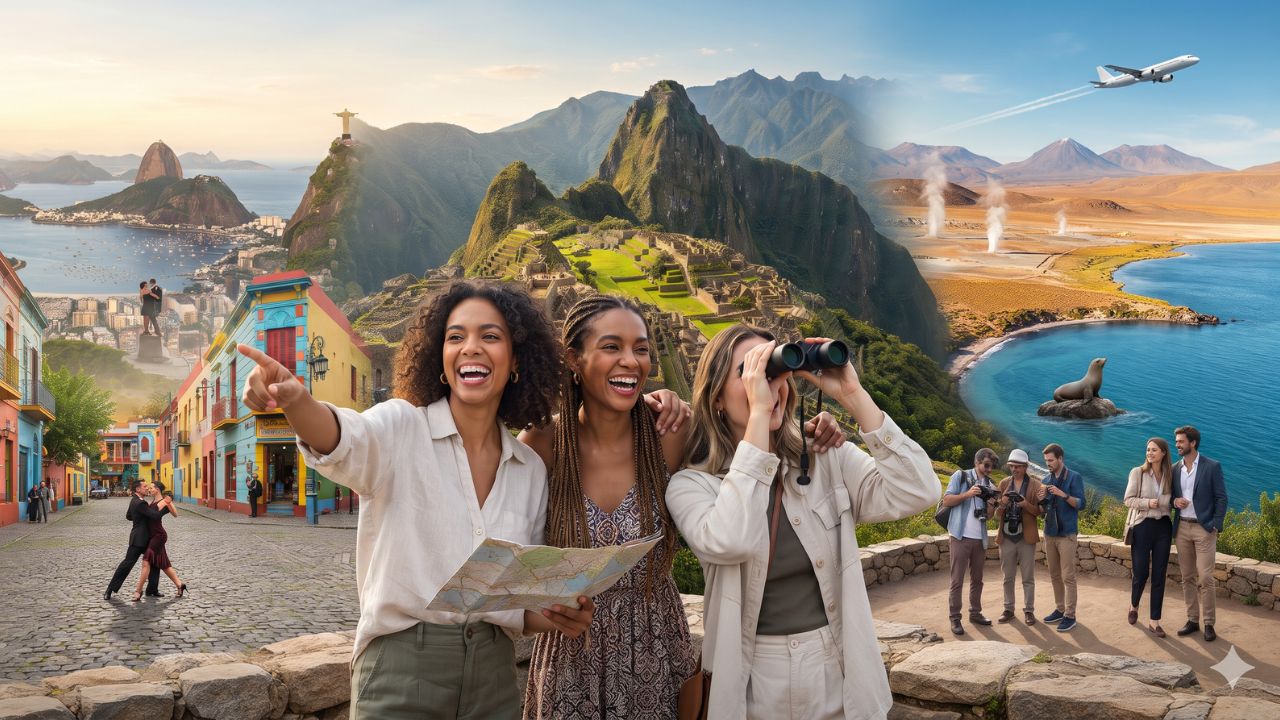
With ongoing airspace restrictions prompting European holidaymakers to rethink multi-stop flight itineraries through Middle Eastern transit gateways in Dubai, Doha, and Abu Dhabi, South America is experiencing an unprecedented travel redirection—headlined by Brazil recording more than four million foreign air arrivals between January and July 2026 alone. Driven by direct transatlantic flight routes, predictable flight corridors, and extraordinary geographical diversity, European travelers are bypassing traditional eastern routes in favor of multi-week journeys that span the cloud forests of the Andes, the ancient sanctuaries of the Incas, and the untamed wilderness of Patagonia.
The Transatlantic Realignment: Why European Explorers Are Looking West
International long-haul travel patterns have shifted markedly throughout 2026. While Gulf super-connectors continue to process substantial passenger traffic, recurring airspace closures, extended rerouting times, and regional security advisories across the Persian Gulf have motivated travelers from London, Paris, Frankfurt, and Madrid to seek single-leg transatlantic alternatives.
Direct non-stop air links connecting European capitals with South American gateways—including Rio de Janeiro, São Paulo, Buenos Aires, Santiago, and Lima—provide a dependable pathway free from Middle Eastern airspace complications. According to official Brazilian aviation data released via Visit Brasil (Embratur), international air arrivals crossed the four-million threshold during the first seven months of 2026, marking robust year-on-year growth over 2025. This aviation momentum is rippling outward into Peru, Argentina, Chile, and Ecuador, encouraging regional airlines to expand codeshare connections that facilitate seamless multi-country exploration.
Distinctive Regional Identities: Five Nations Defining South American Travel
Each of the continent's premier destinations offers a distinct cultural and geographic environment that caters to modern experiential travelers:
- Brazil (Culture, Coastal Splendor, and Rainforests): Rio de Janeiro captivates visitors with dramatic granite peaks rising above Copacabana and Ipanema, while São Paulo serves as South America's premier gastronomic and contemporary art hub. Beyond the coastal metropolises, the Afro-Brazilian heritage of Salvador da Bahia, the thundering waterfalls of Iguaçu, and deep river excursions into the Amazon basin showcase remarkable environmental wealth.
- Peru (Archaeological Heritage and Culinary Mastery): Anchored by the UNESCO World Heritage sanctuary of Machu Picchu, Peru remains the epicenter of Andean historical exploration. The cobblestone alleys of Cusco and the terraced agricultural amphitheatres of the Sacred Valley immerse travelers in ancient Inca engineering, while the coastal capital of Lima has earned global acclaim as the culinary capital of the Americas.
- Argentina (Cosmopolitan Culture, Wine Valleys, and Glaciers): Buenos Aires blends European belle-époque architecture, historic tango parlors in San Telmo, and world-class theaters. Westward along the Andean foothills, Mendoza offers high-altitude Malbec vineyard tours, while southern Patagonia reveals calving ice shelves at Los Glaciares National Park.
- Chile (Atacama Stargazing and Extreme Patagonian Trails): Stretching across 4,300 kilometers of Pacific coastline, Chile provides stark geographic contrasts. The northern Atacama Desert attracts astronomy enthusiasts with crystal-clear high-altitude skies and vast salt flats, while the granite spires of Torres del Paine National Park in the south represent one of the world's ultimate trekking challenges, supported by planning tools on Chile Travel.
- Ecuador (Galápagos Wildlife and Andean Colonial Sanctuaries): Quito preserves one of the Americas' best-preserved historic centers, surrounded by active volcanic peaks. Offshore, the Galápagos Islands offer an unparalleled living laboratory of evolutionary biology, where strictly regulated ecotourism protects marine iguanas, giant tortoises, and blue-footed boobies.
Comparative Overview of South American Travel Corridors (2026)
The table below summarizes the core attractions, seasonal highlights, and primary travel experiences across the continent's top five inbound markets:
| Country | Gateway Cities & Hotspots | Core Tourism Experiences | Seasonal Highlights & Best Windows |
|---|---|---|---|
| Brazil | Rio de Janeiro, São Paulo, Salvador, Amazon, Iguaçu | Coastal culture, rainforest ecology, culinary scenes | December–March (Summer & Carnival); May–Sept (Amazon dry season) |
| Peru | Lima, Cusco, Sacred Valley, Machu Picchu, Arequipa | Inca archaeology, high Andean trekking, gastronomy | May–September (Dry Andean winter; optimal for Inca Trail) |
| Argentina | Buenos Aires, Mendoza, Bariloche, El Calafate | Tango culture, wine estates, Patagonian ice trekking | October–April (Patagonian summer); March–May (Mendoza harvest) |
| Chile | Santiago, San Pedro de Atacama, Torres del Paine | Dark-sky stargazing, desert geysers, alpine trails | October–April (Patagonian hiking); Year-round (Atacama stargazing) |
| Ecuador | Quito, Cuenca, Galápagos Islands, Yasuní Amazon | Evolution wildlife encounters, colonial architecture | Year-round (Galápagos wildlife cycles); June–Sept (Highland dry season) |
Visitor Insider Tips: Navigating South America Like an Expert
- Book Machu Picchu Circuit Tickets Four Months Ahead: Peru's Ministry of Culture strictly regulates daily entry caps across designated walking circuits to prevent erosion at the citadel. Book your official entrance passes and matching Inca Rail or PeruRail train tickets months ahead, particularly if you plan to hike Huayna Picchu or Huchuy Picchu.
- Acclimatize Gradually to Andean Elevation in the Sacred Valley: When flying from sea-level Lima (0 meters) into Cusco (3,400 meters), do not stay in Cusco on your first two nights. Have a private transfer take you directly down into the Sacred Valley (Ollantaytambo or Urubamba, around 2,870 meters), allowing your body to adapt before returning to Cusco's steep stone staircases.
- Time Atacama Stargazing Around the New Moon: San Pedro de Atacama hosts some of the clearest skies on Earth, but bright lunar glare during the full moon obscures the Milky Way. Align your desert stay with the new moon cycle, and book night tours with local astronomers who operate high-powered Dobsonian telescopes outside town limits.
- Carry Small Denominations for Argentine Dining and Tipping: While credit cards utilizing the foreign tourist MEP exchange rate are widely accepted in Buenos Aires and Mendoza, smaller cafes, tango milongas, and taxi drivers prefer cash tips. Carry crisp 1,000 and 2,000 Argentine Peso bills in an interior pocket.
- Complete the Galápagos Transit Control Card Online: Before departing Guayaquil or Quito for the Galápagos, travelers must pay the $20 Transit Control Card (TCT) fee and clear baggage inspection by the Biosecurity Agency (ABG). Complete the digital pre-registration form online to bypass airport queuing lines.
Cultural and Environmental Context: Fragile Ecosystems and Heritage Protection
The surge in European travelers brings vital economic support to rural mountain villages, Amazon river settlements, and coastal communities. However, rapid visitor growth also heightens the necessity for sustainable conservation.
In Peru and Chile, high-altitude alpine trails face soil compaction and litter challenges. In response, park authorities at Torres del Paine and along the classic Inca Trail enforce strict Leave No Trace protocols, mandatory licensed mountain guide requirements, and restricted camping areas. In Ecuador's Galápagos archipelago, international tourist numbers are managed through strict vessel permits and certified naturalist escorts to prevent habitat degradation on uninhabited islands.
Furthermore, community-based tourism initiatives are empowering Indigenous Quechua and Aymara weaving collectives in Peru's high valleys, while Afro-descendant quilombo communities in northeastern Brazil gain direct revenue through culinary workshops and cultural heritage tours. By embracing low-impact travel choices, visitors ensure that South America's cultural traditions and ecological wonders endure for future generations.
FAQ: Traveling to South America in 2026
Why are European travelers increasingly choosing South America in 2026? European holidaymakers are choosing South America to avoid flight disruptions and airspace uncertainties across Middle Eastern transit hubs, benefiting from reliable direct transatlantic flight options.
How many international visitors arrived in Brazil by air in 2026? Official aviation statistics recorded more than four million foreign visitor arrivals by air in Brazil between January and July 2026, marking strong growth over the previous year.
Do European citizens need visas for South America? Citizens of the European Union, United Kingdom, and Switzerland can enter Brazil, Peru, Argentina, Chile, and Ecuador visa-free for tourism stays up to 90 days with a valid passport.
What is the best way to combine multiple countries on one trip? Regional airline alliances and air passes connect hubs like São Paulo, Lima, Buenos Aires, and Santiago, allowing travelers to build multi-destination itineraries spanning historic cities and remote wilderness areas.
From the mist-crowned heights of the Andes to the sun-drenched shores of Rio, South America invites travelers to rediscover the wonder of open skies, ancient paths, and boundless natural beauty.
Related Travel Guides
The 10 Best High-Altitude Wine Estates and Trekking Lodges in the Andes, According To Reddit (Coming Soon)
This article is for informational purposes. Flight routes, passenger regulations, visa rules, and transit advisories are subject to change by airlines and aviation authorities. Readers are advised to verify schedules and travel documentation with relevant carriers and border agencies before departure.
Related Stories
New Orleans November 2026 Travel Guide: Festivals, Bayou Classic, and Neighborhood Food Culture
Northeast Brazil Christmas Travel 2026: Natal, Maceió, and Aracaju Pioneer Tropical Seaside Markets