Sri Lanka’s Delft Island, Gal Oya and More Hidden Destinations Unlock Extraordinary Offbeat Travel Experiences Beyond Beaches

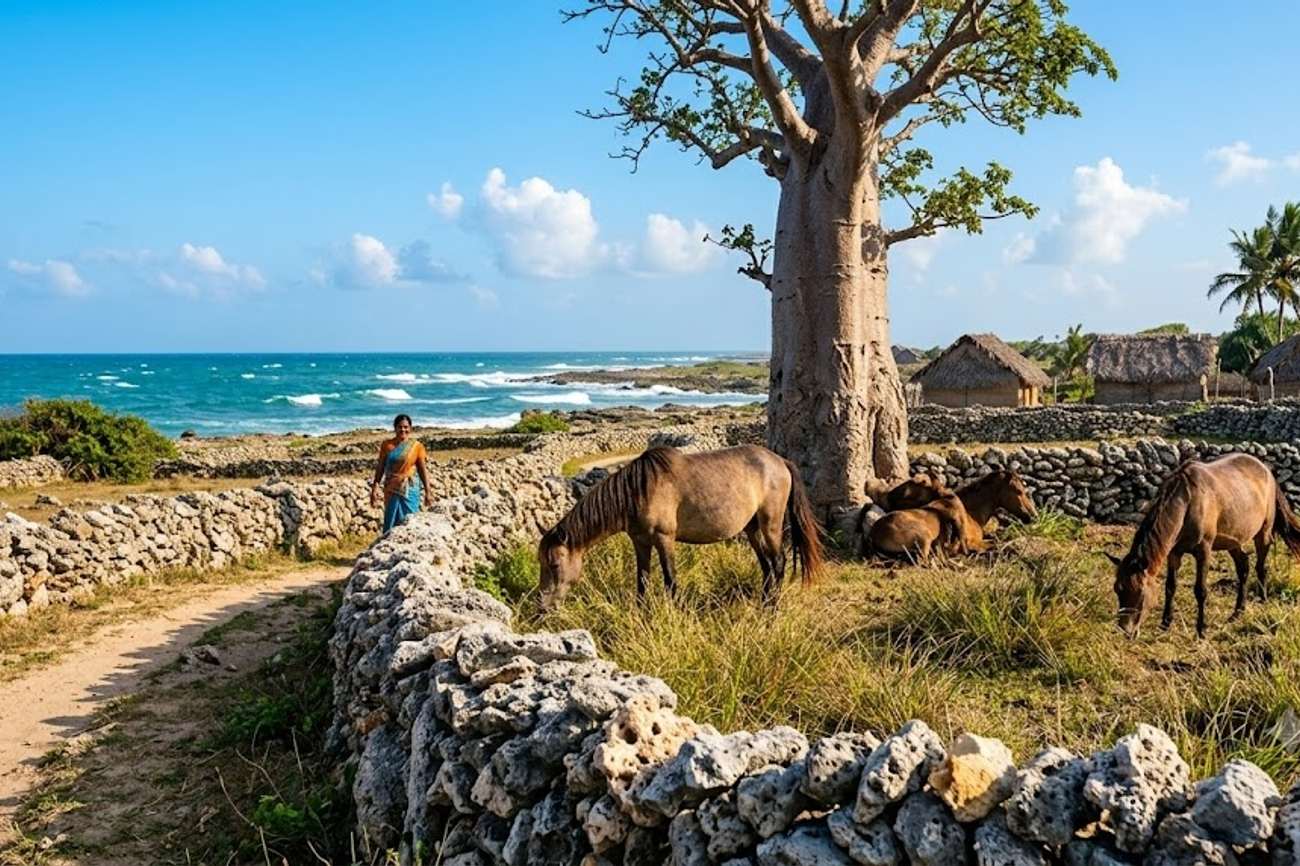
Image generated by AI
[Colombo, October 2023] — Sri Lanka is aggressively diversifying its tourism portfolio by shifting focus away from traditional beach resorts and ancient ruins toward underdeveloped, high-yield "alternative" destinations. The national strategy now prioritizes low-impact, authentic experiences in remote regions including the Palk Strait, the Eastern Province, and the Central Highlands to mitigate the effects of mass tourism and spread economic benefits to rural communities.
The initiative targets specific untapped zones: Delft Island for colonial heritage and unique ecology, Gal Oya National Park for water-based wildlife conservation, and the Pekoe Trail for immersive highland trekking. By promoting these underdeveloped sites, the Sri Lankan government and local operators aim to attract a demographic of "slow travelers" interested in cultural exchange and environmental sustainability over curated luxury.
The Shift Toward Alternative Tourism
The movement is a response to the saturation of primary tourist hubs. While the country continues to leverage its UNESCO World Heritage Sites and established tea plantations, the new focus is on "unspoiled" landscapes. This strategic pivot allows the state to develop infrastructure in neglected provinces while preserving the natural splendor that makes the island a year-round destination. The goal is to transform the visitor experience from passive observation to active interaction with local populations and indigenous ecosystems.
Regional Impact and Destination Profiles
The diversification effort is concentrated in three primary geographical clusters, each offering a distinct travel modality:
-
The Northern Frontier (Delft Island):
- Geography: A 50-square-kilometer landmass in the Palk Strait known as Neduntheevu.
- Key Assets: Free-roaming wild horses (descendants of Portuguese and Dutch colonial stock), coral stone walls, and a historic hollow baobab tree.
- Logistics: Access requires a 45-to-60-minute ferry from Kurikadduwan Jetty on Punkudutivu Island, following a road trip from Jaffna.
- Environment: Arid, wind-swept plains dominated by palmyra palms rather than typical tropical greenery.
-
The Eastern Wildlife Corridor (Gal Oya National Park):
- Geography: Centered around the Senanayake Samudra reservoir near Ampara.
- Key Assets: Boat-based safaris (replacing traditional jeep tours) focusing on Asian elephants, water buffalo, and diverse avian species.
- Logistics: Accessible via road networks from Kandy and other eastern hubs.
- Environmental Focus: Managed under the Department of Wildlife Conservation, the park emphasizes low-impact water travel to reduce noise pollution and habitat disruption.
-
The Central Highlands (The Pekoe Trail):
- Geography: A 300-kilometer network spanning the highlands, divided into 22 distinct stages.
- Key Assets: Direct access to working tea estates, rural village pathways, and the historic Galaha to Loolkandura route.
- Logistics: Flexible trekking options allowing visitors to complete single stages or the full circuit.
- Environmental Focus: Integration of agricultural heritage with physical adventure.
Practical Traveler Advisory and Strategic Insights
For the modern traveler, this shift means a move away from "all-inclusive" predictability toward "adventure-readiness." Booking a trip to these emerging zones requires a different set of preparations than a stay in Galle or Kandy.
Infrastructure Gaps: Travelers heading to Delft Island must operate under the assumption that modern amenities are absent. There are virtually no banking facilities or ATMs on the island; cash is the only viable currency. Furthermore, the lack of developed hospitality infrastructure means visitors must carry their own potable water and high-grade sun protection.
Seasonal Planning: Timing is now critical based on the specific destination rather than a general national window. For those targeting the northern islands, the window of December to April is mandatory for calm seas. Conversely, wildlife enthusiasts targeting Gal Oya should plan for May to September, when receding water levels in the reservoir force elephants into visible feeding areas.
Transport Logistics: The "last mile" of travel is becoming more complex. Reaching Delft involves a multi-step journey (Jaffna $\rightarrow$ Punkudutivu $\rightarrow$ Ferry $\rightarrow$ Delft). Once on the island, transport is limited to local tuk-tuks and small vehicles.
Future Development and Sustainability
The long-term objective is to create a sustainable tourism ecosystem that prevents the "over-tourism" seen in other Southeast Asian hubs. By promoting the Pekoe Trail and Gal Oya, Sri Lanka is betting on "slow tourism"—a model where visitors stay longer in one location and spend more within the local economy.
The development of the Pekoe Trail, in particular, represents a shift toward "active heritage." Rather than viewing tea plantations from a train window, the infrastructure now supports pedestrian movement through the heart of the industry. This is expected to increase the visibility of plantation communities and create new revenue streams for rural villagers who can provide guiding services or artisanal goods.
As the Sri Lanka Tourism Development Authority (SLTDA) continues to map these routes, the focus will remain on "low-impact" travel. The use of boats in Gal Oya instead of heavy 4x4 vehicles is a blueprint for how the country intends to scale its wildlife tourism without compromising the biodiversity of its protected landscapes.
FAQ: Sri Lanka Alternative Destinations 2023
How do I get to Delft Island from the main cities? Travelers must first reach Jaffna, then proceed by road to Kurikadduwan Jetty on Punkudutivu Island. From there, a ferry crossing of 45 to 60 minutes transports visitors across the Palk Strait to the island.
When is the best time to see elephants in Gal Oya? The optimal window is from May to September. During this dry season, water levels in the Senanayake Samudra reservoir drop, making it easier to spot elephants swimming or feeding on the islands.
Do I need to be an expert hiker to do the Pekoe Trail? No. The trail is divided into 22 stages, allowing travelers to choose sections based on their fitness level. You can complete a single short stage or attempt the full 300-kilometer journey.
What essentials should I pack for Delft Island? Due to limited infrastructure, you must bring sufficient cash (no ATMs), plenty of drinking water, and strong sun protection. Modern tourist services and banking are largely unavailable on the island.
Exploring the edges of the map is now the primary luxury in Sri Lankan travel.
Related Travel Guides
This article is for informational purposes. Flight routes, passenger regulations, visa rules, and transit advisories are subject to change by airlines and aviation authorities. Readers are advised to verify schedules and travel documentation with relevant carriers and border agencies before departure.
Related Stories

Melbourne Airport Unveils AU$500 Million T2 Baggage Upgrade: Traveler Guide 2026

Hainan Island Travel Guide 2026: Why UK Tourists Are Choosing China Over Hawaii