
Sri Lanka Hill Country Travel Alert: Hatton-Bogawantalawa Road Cut Off by Landslide Near Wanaraja Estate

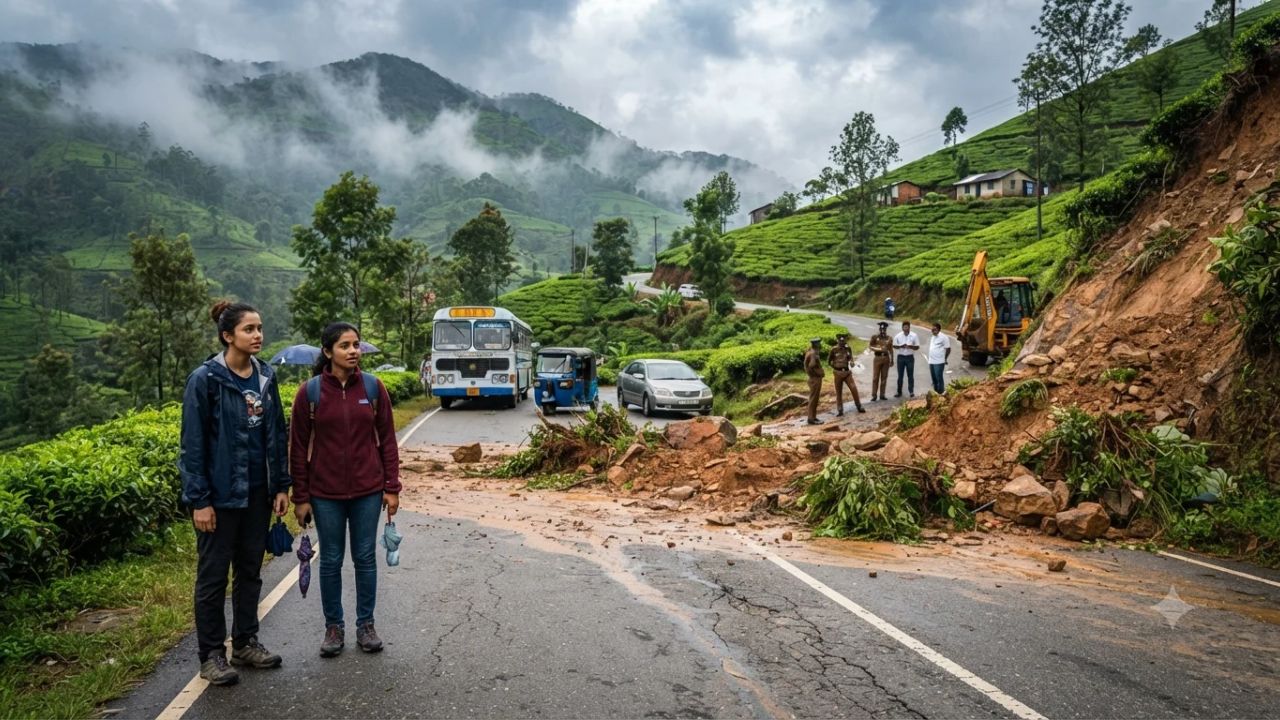
At approximately 11:00 a.m. on September 20, 2026, a powerful earth slip sent tons of saturated soil and boulders crashing across the main mountain artery near Wanaraja Estate in Dickoya, severing vehicle connectivity between Hatton, Bogawantalawa, Maskeliya, and Balangoda. The sudden blockage in Nuwara Eliya District has halted highway traffic through one of the island's most celebrated tea-growing corridors, prompting local police and the Road Development Authority to deploy heavy earth-moving machinery while warning travelers of potential secondary slips along unstable mountain slopes.
While no tourist injuries or casualties have occurred, the landslide creates immediate transit disruptions for independent travelers, private chauffeurs, and guided groups navigating the Central Highlands. Hatton serves as the primary railway and roadway gateway for pilgrims and trekkers climbing Adam's Peak (Sri Pada), as well as visitors staying in colonial planter bungalows scattered around Castlereagh Reservoir and the Golden Valley of Tea.
The Wanaraja Landslide: Impacted Routes and Road Conditions
The landslide struck during a window of relentless downpours that saturated high-altitude clay hillsides across Central Province. The resulting debris field completely smothered the two-lane mountain pass at Dickoya, halting buses, vegetable delivery trucks, and tourist vans.
The primary transport impacts and affected regional corridors include:
| Corridor & Sector | Location & Status | Traveler Impact & Routing |
|---|---|---|
| Hatton to Dickoya & Bogawantalawa | Blocked near Wanaraja Estate | Complete road closure; local diversions via estate tracks |
| Hatton to Maskeliya & Sri Pada | Experiencing severe traffic delays | Access to Adam's Peak trailheads restricted to verified routes |
| Dickoya to Balangoda Pass | Impassable to heavy vehicles | Southern descent toward Sabaragamuwa Province halted |
| Hatton Railway Hub (Main Line) | Fully operational | Scheduled blue trains between Kandy, Nanu Oya, and Ella running |
| Castlereagh Reservoir Access | North bank accessible; south detours active | Guests staying at luxury tea bungalows advised to coordinate private boats |
Hatton Police and regional emergency crews initiated manual clearing alongside resident estate workers before Road Development Authority bulldozers arrived to clear heavy rockfall. However, with geological monitoring units warning of soil supersaturation, clearing operations require extreme caution to prevent inducing further slope collapse.
What Sets Sri Lanka's Central Highlands Apart
The Central Highlands of Sri Lanka, recognized on the UNESCO World Heritage register for their extraordinary biodiversity and cloud forest ecosystems, feature terrain that transitions rapidly from humid lowland plains to mist-shrouded peaks rising above 2,000 meters.
This dramatic topography forms the cradle of the world's finest Ceylon tea:
- Bogawantalawa Valley: Revered among tea connoisseurs as the "Golden Valley of Tea," where high-altitude microclimates and manicured emerald bushes produce delicate, aromatic single-estate black teas.
- Adam's Peak (Sri Pada): A conical sacred mountain revered by Buddhists, Hindus, Muslims, and Christians alike, where pilgrims ascend thousands of stone steps during the dry season to witness the shadow of the peak cast across morning clouds.
- Colonial Planter Bungalows: Restored 19th-century stone mansions surrounded by manicured gardens, overlooking the tranquil waters of Castlereagh and Maussakelle reservoirs.
- Cascading Waterfalls: Spectacular mountain torrents, including Devon Falls and St. Clair's Falls (frequently called the "Little Niagara of Sri Lanka"), fed by monsoon runoff.
Travelers can review live weather alerts, road condition advisories, and certified highland accommodation statuses via the official Sri Lanka Tourism Development Authority (SLTDA) portal.
Visitor Insider Tips for Navigating Hill Country Weather
When traveling through Sri Lanka's mountain interior during heavy rain periods, adopting flexible local strategies prevents travel disruptions:
- Prioritize Sri Lanka Railways Over Mountain Roads: When moving between Kandy, Hatton, Nanu Oya (for Nuwara Eliya), and Ella, travel aboard the iconic blue passenger trains. Main Line railway tracks follow engineered stone viaducts and tunnel ridges that remain far less vulnerable to localized road blockages. Book reserved seats via the Sri Lanka Railways portal.
- Check the Disaster Management Centre (DMC) Daily: During the inter-monsoon and wet cycles, download the official DMC updates or consult local hotel front desks before beginning long-distance drives across Nuwara Eliya or Badulla districts.
- Avoid Night Driving on Mountain Passes: Never attempt to drive through rural highland passes after sunset during continuous rainfall. Reduced visibility, thick mountain mist, and sudden rockfalls make night journeys hazardous.
- Savor Warm Hill Country Fare: Take shelter from mountain showers inside heritage tea factory lounges or local roadside kades. Order a hot pot of unblended single-estate Ceylon tea sweetened with natural kithul jaggery, accompanied by freshly griddled coconut pol sambol and warm roti.
- Pack Specialized Wet-Weather Gear: Tropical highland downpours can be sudden and intense. Equip your daypack with waterproof dry bags for cameras, a breathable Gore-Tex rain jacket, and sturdy trail shoes with Vibram outsoles to navigate slick estate footpaths.
Cultural and Environmental Context of the Tea Country Slopes
The emerald tea plantations that carpet the slopes of Dickoya, Bogawantalawa, and Nuwara Eliya represent both an economic pillar and a delicate ecological balance. Cleared of indigenous montane rain forests during the British colonial era in the late 19th century, these steep gradients are prone to topsoil erosion during prolonged downpours.
Modern tea plantation management companies, in partnership with local Upcountry Tamil estate communities, are increasingly planting native deep-rooted trees—such as vetiver grass and endemic ficus varieties—along roadside embankments to bind the soil and mitigate landslide vulnerability.
Community welfare societies in estates like Wanaraja play an invaluable first-responder role when extreme weather events occur. By supporting community-led tea tourism initiatives, travelers ensure that entrance fees and hospitality spending directly fund estate healthcare clinics, school transport, and sustainable drainage infrastructure across the highland valleys.
FAQ: Sri Lanka Hill Country Travel 2026
What caused the landslide near Hatton on September 20, 2026? Intense and continuous rainfall weakened mountain slopes, triggering a large earth slip across the Hatton–Bogawantalawa road near Wanaraja Estate in Dickoya at around 11:00 a.m.
Are trains still running to Hatton and Nuwara Eliya? Yes. Sri Lanka Railways Main Line train services between Colombo, Kandy, Hatton, Nanu Oya, and Ella operate normally on their designated stone rail corridors.
Can tourists still visit Adam's Peak and tea estates in Dickoya? Yes, but visitors traveling by road around Dickoya and Bogawantalawa face detours and delays. Confirm open routes with your accommodation before traveling.
When is the safest time to explore the Central Highlands? The dry season from December through April offers clear skies, dry trails, and optimal conditions for climbing Adam's Peak and hiking tea estates.
When monsoon mists envelope the high tea valleys, patience and the steady rhythm of the mountain railway are the traveler's best companions.
Related Travel Guides
Disclaimer
This article is for informational and educational purposes only. It does not constitute legal, financial, or professional advice. While we strive to provide accurate and up-to-date information, travel policies, regulations, and conditions change rapidly. Always verify information with official sources before making travel decisions. Nomad Lawyer makes no representations about the accuracy, reliability, completeness, or suitability of the information provided. Readers should consult qualified professionals for advice specific to their circumstances. The views expressed in this article are those of the author and do not necessarily reflect the views of Nomad Lawyer.
Raushan Kumar
Founder & Lead Developer
Full-stack developer with 11+ years of experience and a passionate traveller. Raushan built Nomad Lawyer from the ground up with a vision to create the best travel and law experience on the web.
Learn more about our team →