
SpiceJet Joins Indigo, Air India, Akasa Air, Alliance Air and Others as India’s Aviation Industry Enters New Phase as It Tightens Baggage Allowances, Sparks Passenger Confusion, and Redefines Air Travel Convenience Across Major Domestic Carriers
India's airlines, including IndiGo and Air India, are tightening baggage allowances in 2026. Learn the latest 15kg/7kg r

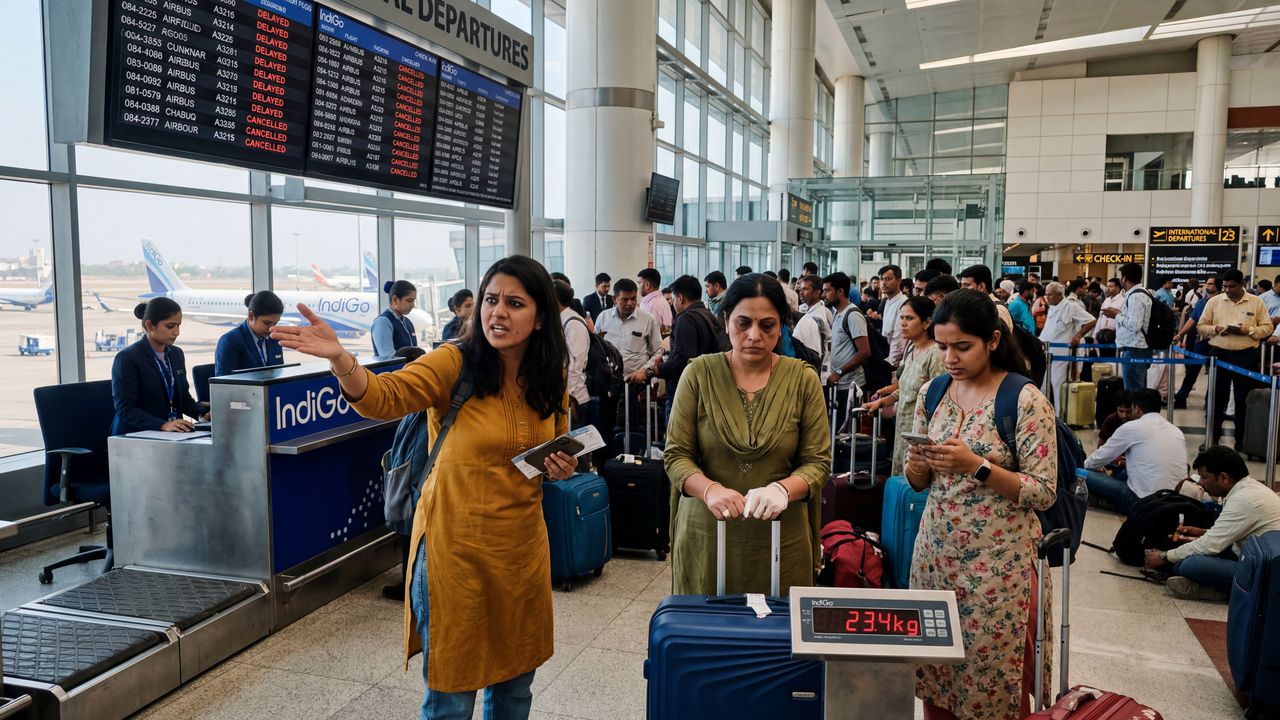
Image generated by AI
[New Delhi, June 23, 2026] — India’s domestic aviation sector is entering a restrictive new phase as major carriers including IndiGo, Air India, SpiceJet, Akasa Air, and Alliance Air tighten baggage allowances to combat rising passenger volumes and operational bottlenecks. Industry reports indicate that these carriers are intensifying the enforcement of weight limits and cabin restrictions to streamline boarding processes and minimize flight delays across the subcontinent.
The shift comes as Indian air travel experiences a surge in demand, driven by expanded airport infrastructure and competitive pricing. However, this growth has led to increased congestion in aircraft cabins and at check-in counters. To maintain operational efficiency and adhere to the security frameworks established by the Bureau of Civil Aviation Security (BCAS) and the Directorate General of Civil Aviation (DGCA), airlines are now strictly policing baggage entitlements. For travelers in 2026, a lack of awareness regarding these evolving rules is increasingly resulting in unexpected fees and boarding disruptions.
Standardized Cabin Baggage Protocols Across Indian Airports
While checked luggage rules vary by carrier, cabin baggage regulations have become largely standardized across the Indian aviation landscape to ensure security and safety. According to industry observers, the baseline for most domestic flights now permits a single piece of cabin luggage with a maximum weight limit of 7 kg.
Passengers are typically allowed one additional small personal item, such as a laptop bag or a handbag, provided it fits within the airline's specific size constraints and is approved by crew members. Security officials continue to enforce a strict ban on flammable materials, oversized lithium batteries, and sharp objects. These mandates are applied uniformly across all Indian airports to ensure consistent safety standards.
Air India Baggage Policy and International Flexibility
As a full-service carrier, Air India maintains a more versatile baggage structure compared to its low-cost competitors, particularly for those traveling on long-haul routes. For domestic economy passengers, the standard checked baggage allowance is generally set at 15 kg, with the 7 kg limit applying to cabin luggage.
The airline provides significantly higher allowances for premium cabins and international journeys, where passengers can often check a single bag weighing up to 32 kg, aligning with global aviation standards. To mitigate passenger confusion, the carrier has implemented digital baggage calculators, allowing travelers to determine their exact entitlements based on their specific fare class and destination before arriving at the airport.
IndiGo Operational Efficiency and Pre-booking Systems
IndiGo utilizes a streamlined baggage model designed to maximize aircraft turnaround times and boarding speed. For the majority of domestic economy travelers, the airline enforces a strict 15 kg limit for checked luggage and a 7 kg limit for cabin bags.
To avoid the high costs associated with excess baggage at the airport, the carrier encourages passengers to pre-purchase additional weight online. This digital-first approach is a core part of IndiGo's strategy to reduce congestion at check-in counters. Special items, including musical instruments and sports equipment, are permitted but are subject to specific handling fees and dimension checks.
SpiceJet Fare-Based Luggage Allowances
SpiceJet has adopted a flexible, fare-dependent baggage structure where allowances are tied directly to the ticket category or promotional offer selected at the time of purchase. While the standard domestic economy allowance remains 15 kg for checked bags and 7 kg for cabin luggage, these figures can vary.
The airline has placed a heavy emphasis on the prepayment of excess baggage. Industry data suggests that airport-counter rates for overweight luggage are substantially higher than those offered during the online check-in process. Strict monitoring of weight and size compliance is now standard at SpiceJet check-in points to ensure aircraft balance and safety.
Akasa Air Cabin Compliance and Modern Fleet Standards
Akasa Air, leveraging its new-generation fleet, has implemented a modernized baggage system that prioritizes strict compliance with size and weight limits. The standard entitlement for domestic economy passengers is 15 kg for checked baggage and 7 kg for cabin luggage.
Because the airline utilizes optimized cabin storage designs, there is a heightened focus on the physical dimensions of carry-on items during the boarding process. Like other low-cost carriers, Akasa Air offers discounted rates for additional baggage when purchased online, aiming to facilitate a smoother and faster boarding experience for all passengers.
Alliance Air Regional Connectivity Constraints
Operating primarily on regional routes and connecting smaller cities, Alliance Air faces unique challenges regarding aircraft capacity. While the general allowance for domestic passengers is 15 kg for checked bags and 7 kg for cabin luggage, these rules can fluctuate based on government-subsidized schemes or specific regional connectivity routes.
Due to the limited size of aircraft serving rural airports, the airline insists on strict adherence to baggage dimensions. Passengers on short-haul flights are advised to verify their specific booking conditions, as capacity constraints on smaller planes make baggage enforcement more critical than on major trunk routes.
Comparative Analysis of Domestic Baggage Allowances 2026
| Airline | Economy Checked Baggage | Cabin Baggage Limit | Primary Policy Focus |
|---|---|---|---|
| Air India | 15 kg (Domestic) / Up to 32 kg (Intl) | 7 kg | Flexibility & Premium Service |
| IndiGo | 15 kg | 7 kg | Speed & Standardisation |
| SpiceJet | 15 kg (Fare Dependent) | 7 kg | Fare-linked Allowances |
| Akasa Air | 15 kg | 7 kg | Size Compliance & Modern Fleet |
| Alliance Air | 15 kg (Variable by route) | 7 kg | Regional Capacity Management |
Impact of Stricter Enforcement on Indian Travelers
The transition toward more rigid baggage enforcement is creating a significant impact on the passenger experience. The primary consequence is a shift in financial responsibility, where travelers must now either strictly limit their belongings or pay premiums for extra weight.
The industry-wide push toward online pre-booking of baggage is designed to reduce the "bottleneck effect" at airport terminals. However, this has led to increased confusion for occasional travelers who may not be familiar with the nuances between full-service and low-cost carrier policies. The result is a higher frequency of last-minute repacking at kiosks and increased tension between ground staff and passengers.
Strategic Outlook for Air Travel Planning
As India's aviation network continues to expand in 2026, the trend toward "unbundled" pricing—where baggage is treated as a paid add-on rather than a complimentary service—is expected to persist. Passengers are advised to weigh their luggage at home and utilize digital tools provided by airlines to avoid costly airport surcharges.
The continued alignment of airline policies with DGCA and BCAS guidelines suggests that security and operational efficiency will take precedence over passenger convenience in the near term. Travelers who proactively manage their baggage allowances through digital platforms will find the airport experience significantly more seamless.
Related Travel Guides
-
Historic Pan Am Terminal at JFK Airport Faces Demolition as Aviation's Golden Age Fades Into History
Disclaimer: All information is obtained from reliable flight tracking and news sources and is subject to change.
Disclaimer
This article is for informational and educational purposes only. It does not constitute legal, financial, or professional advice. While we strive to provide accurate and up-to-date information, travel policies, regulations, and conditions change rapidly. Always verify information with official sources before making travel decisions. Nomad Lawyer makes no representations about the accuracy, reliability, completeness, or suitability of the information provided. Readers should consult qualified professionals for advice specific to their circumstances. The views expressed in this article are those of the author and do not necessarily reflect the views of Nomad Lawyer.
Kunal K Choudhary
Co-Founder & Contributor
A passionate traveller and tech enthusiast. Kunal contributes to the vision and growth of Nomad Lawyer, bringing fresh perspectives and driving the community forward.
Learn more about our team →