Spain Paralyzed by Nationwide 24-Hour General Strike as Madrid and Barcelona Air and Rail Transit Grind to a Halt

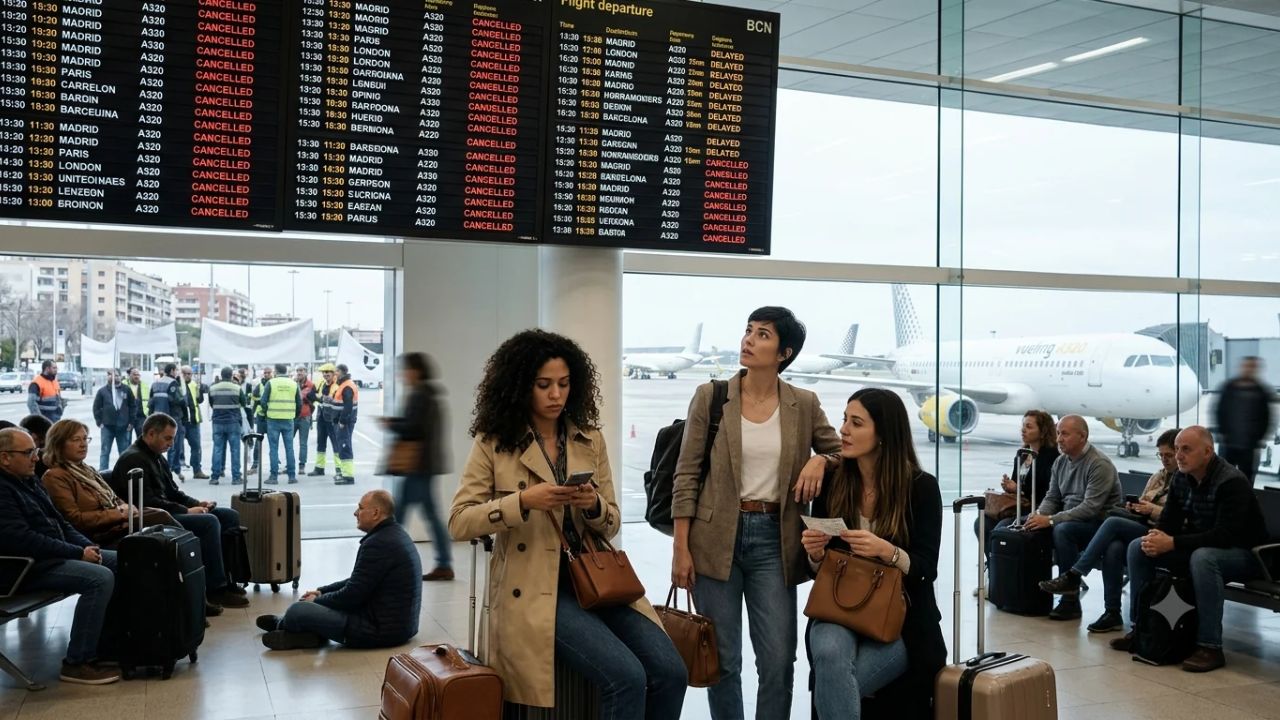
A coordinated 24-hour nationwide general strike on Wednesday, November 11, 2026, has brought air, rail, and metropolitan transport systems across Spain to an effective standstill, leaving millions of international travelers, business executives, and domestic commuters stranded across the Iberian Peninsula. Mobilized jointly by Spain’s preeminent labor confederations—the General Union of Workers (UGT), the Workers’ Commissions (CCOO), the General Confederation of Labor (CGT), and the National Confederation of Labor (CNT)—the walkout marks the first unified general labor action since the European austerity disputes of 2012. Triggered by a systemic urban housing emergency, stagnant real wages, and soaring everyday living costs, the industrial stoppage has forced major airlines and rail operators to slash flight rosters and train departures under legally mandated minimum service limits.
The nationwide shutdown has hit the critical hubs of Adolfo Suárez Madrid-Barajas Airport (MAD) and Josep Tarradellas Barcelona-El Prat Airport (BCN), alongside primary high-speed rail corridors operated by Renfe, Ouigo, and Iryo. Under the rallying banner of “Salaries. Housing. Prices” (Salarios. Vivienda. Precios), union pickets have choked city centers, blocked arterial logistics depots, and forced municipal transit systems onto skeletal emergency timetables. With ground-handling agents, baggage loaders, refueling crews, and train drivers joining the walkout, the disruption has reverberated through Andalusia, the Valencian coast, the Basque Country, and offshore archipelagos in the Balearic and Canary Islands.
The timing of this historic general strike carries acute political significance, unfolding just 18 days ahead of Spain’s snap general election. While grassroots tenant unions, left-wing syndicates, and civic coalitions accuse incumbent authorities of stalling on national housing reforms, business associations and conservative opposition parties have criticized the stoppage as politically motivated disruption. For international visitors navigating Spain, the result is widespread flight cancellations, severe luggage processing delays, and paralyzed inter-city connections.
SPAIN NATIONWIDE GENERAL STRIKE MATRIX
| Column 1 |
|---|
| STRIKE PARAMETER OPERATIONAL DETAILS & STATUTORY IMPACT |
| ------------------------------------------------------------------------------------------------ |
| Date & Duration Wednesday, November 11, 2026 (24 Hours: Midnight to Midnight) |
| Participating Labor Unions UGT, CCOO, CGT, and CNT (First unified action since 2012) |
| Primary Protest Slogan “Salaries. Housing. Prices” (Salarios. Vivienda. Precios) |
| Political Context Staged 18 days ahead of Spain's snap general election |
| Flight Service Minimums ~56%-57% International; ~78%-79% Islands; ~32%-34% Domestic |
| High-Speed Rail Mandate Renfe ~73% AVE/Avlo; Ouigo operating 18 of 26 daily trains (~69%) |
| Catalonia Commuter Rail Rodalies de Catalunya slashed down to 25% on key lines |
| Urban Ground Transport Madrid & Barcelona Metros cut to 50%-80%; Aerobús suspended |
| Primary Affected Gateways Madrid-Barajas, Barcelona-El Prat, Seville, Valencia, Palma, Bilbao |
Economic Roots: The Housing Crisis, Evictions, and Cost-of-Living Tensions
The nationwide walkout did not arise in isolation. While trade unions have long voiced frustration over wage stagnation amid persistent post-pandemic consumer inflation, public outrage reached a national tipping point following the eviction and subsequent death of an 87-year-old Madrid resident known in national media as Maricarmen.
Having resided in her apartment for more than seven decades, her court-ordered physical removal by bailiffs and death in a municipal hospital shortly thereafter transformed localized housing protests into a nationwide campaign. Neighborhood tenant syndicates, youth organizations, and labor federations adopted her story as the human face of unregulated urban property speculation.
Underlying Structural Pressures Driving Industrial Action
-------------------------------------------------------------------------------------
Metropolitan Rent Inflation:    [Virtually Doubled Over Past Decade in Madrid & BCN]
Household Income Eaten by Rent: [50% to 60%+ of Net Earnings for Working Households]
Union Wage Adjustment Demands:  [4% to 7% Baseline Increase with Inflation Safeguards]
Political Timing:               [18 Days Ahead of Spain's Snap General Election]
-------------------------------------------------------------------------------------
Over the past ten years, residential rental rates across Madrid, Barcelona, Valencia, and major coastal resort towns have doubled. Unchecked conversions of long-term apartments into short-term holiday rentals, speculative purchases by international investment funds, and expanding tourist accommodation have displaced local workers, healthcare personnel, and families from urban cores. With wage gains averaging under 2% annually over the same timeframe, working households are allocating over 50% to 60% of their net take-home earnings toward rent and basic utilities.
In response, the unified strike steering committee presented an uncompromising platform of statutory demands:
- Mandatory Baseline Wage Increases: Across-the-board wage increases between 4% and 7%, accompanied by mandatory inflation safeguard clauses (cláusulas de revisión salarial) to adjust wages automatically against price shocks.
- Strict Ceilings on Residential Rents: Immediate imposition of statutory price caps on residential rents in all officially declared high-stress housing areas (zonas tensionadas), coupled with administrative crackdowns on illegal, unlicensed tourist apartments.
- Expansion of Non-Privatizable Social Housing: Statutory creation of a permanent, legally protected public housing stock that cannot be liquidated or transferred to private investment funds.
- Enhanced Residential Tenancy Protections: Automatic lease extensions for economically vulnerable households, an immediate moratorium on no-fault evictions, and severe penalties for speculative rent hikes.
The political timing of the industrial action has polarized the country. While progressive tenant syndicates contend that the current government has hesitated to enforce the provisions of the national Right to Housing Law (Ley por el Derecho a la Vivienda), conservative opposition figures have characterized the walkout as a partisan effort to mobilize union voters ahead of the snap parliamentary ballot.
Legal Framework: Minimum Essential Services (Servicios Mínimos)
Under Spanish constitutional law, the Ministry of Transport and regional authorities are empowered to mandate servicios mínimos (minimum essential services) during general strikes to protect public health, safety, and basic national continuity. While these statutory decrees prevent an absolute societal shutdown, they have created severe operational friction across all transit modes.
STATUTORY MINIMUM SERVICE DECREES
| Column 1 |
|---|
| TRANSIT SECTOR MINIMUM SERVICE MANDATE LEVEL OPERATIONAL REALITY |
| ------------------------------------------------------------------------------------------------ |
| International Air 56% to 57% of Scheduled Flights Severe ground bottlenecks, luggage |
| (Madrid-Barajas & Barcelona-El Prat) backlogs, tarmac turnaround delays |
| Island Air Routes 78% to 79% of Scheduled Flights Protected lifelines; delays in bag |
| (Balearic & Canary Connections) handling and aircraft refueling |
| Mainland Domestic 32% to 34% of Scheduled Flights Massive cancellations; travelers forced |
| Aviation (Short-Haul Inter-City Routes) onto already strained rail links |
| High-Speed Rail Roughly 73% of AVE and Avlo Services Operating at reduced capacity; private |
| (Renfe) Roughly 65% of Regional Rail Routes competitors (Ouigo/Iryo) constrained |
| Suburban Rail 80% Peak Hours / 50% Off-Peak Major cancellations; severe platform |
| (Cercanías/Rodalies) Dropping to 25% on Key Catalan Lines crowding and extended wait times |
The Aviation Bottleneck: Ground Services and Security Stoppages
In aviation, the strike has paralyzed behind-the-scenes operations: ramp agents, baggage handlers, aircraft refueling technicians, maintenance crews, and private terminal security screeners.
Even where aircraft and cockpit crews were legally cleared to fly, flights were held at departure stands because there were insufficient baggage handlers to load aircraft cargo holds or inadequate security personnel to process travelers through terminal checkpoints. Airlines including Iberia, Vueling, Air Europa, and Ryanair were forced to consolidate schedules, cancel short-haul domestic hops, and offer emergency rebooking windows or refunds. Inside passenger terminals, security screening queues snaked through check-in halls, while baggage reclamation zones accumulated thousands of untransferred suitcases.
Strained Rail Networks and Compounding Infrastructure Failures
On the railway network, national operator Renfe and private high-speed open-access carriers (Ouigo and Iryo) had their schedules curtailed. Minimum service mandates obliged Renfe to operate approximately 73% of high-speed (AVE and Avlo) and long-distance trains, alongside roughly 65% of regional medium-distance services. French-backed budget operator Ouigo was restricted to running just 18 of its customary 26 daily services across its Spanish network.
However, Spain's railway network was already under severe strain prior to Wednesday’s general strike:
- Overlapping Train Drivers' Walkouts: Independent rolling strike actions organized by the train drivers' union (SEMAF - Sindicato Español de Maquinistas y Ferroviarios) scheduled around adjacent dates depleted available driver reserves.
- The October 28 Southern Rail Collision: A severe infrastructure disruption and train collision on October 28 had already partially crippled the primary high-speed trunk line connecting Madrid to Andalusia. The general strike eliminated the regional replacement buses and contingency bridges that were keeping passengers moving.
A minor delay on an early-morning commuter line quickly cascaded through interlockings and junctions, turning minor schedule deviations into network-wide gridlock.
Regional Breakdown: Disruptions Across Spain's Core Transit Nodes
The operational crisis has affected every major region of Spain, from the central plateau to the Mediterranean coast, northern industrial corridors, and offshore islands.
REGIONAL BREAKDOWN OF STRIKE DISRUPTIONS
| Column 1 |
|---|
| REGION / CORRIDOR PRIMARY TRANSPORT HUBS DISRUPTION PROFILE |
| ------------------------------------------------------------------------------------------------ |
| Madrid (Capital) Madrid-Barajas (MAD), Atocha, 32% domestic flights, T1/T4 luggage |
| Chamartín, Cercanías commuter rail delays; Gran Vía blocked by marches |
| Barcelona & Barcelona-El Prat (BCN), Sants, Rodalies cut to 25%; Aerobús suspended |
| Catalonia Rodalies de Catalunya commuter rail Via Laietana & Gràcia blocked by rallies |
| Madrid ↔ Andalusia Madrid-Seville line, Santa Justa, Compound failure; collision repairs & |
| Corridor Córdoba, Málaga María Zambrano driver walkouts; rental cars sold out |
| Valencia & Valencia (VLC), Alicante-Elche (ALC), Flight delays, Metrovalencia holiday |
| Alicante Port of Valencia ferry terminals schedules, Balearic cargo backlogs |
| Balearic & Canary Palma (PMI), Ibiza, Tenerife South, Flights protected at 78%-80% but |
| Archipelagos Gran Canaria (LPA) refueling & baggage ground meltdowns |
| Northern Spain Bilbao (BIO), Santiago de Compostela, Domestic flight cancellations, Feve |
| (Basque & Galicia) Oviedo, Feve narrow-gauge lines rail paralyzed, industrial pickets |
1. Madrid: The Central Transit Junction
As the hub of Spain’s radial transport network, Madrid experienced the highest volume of operational disruptions:
- Adolfo Suárez Madrid-Barajas Airport (MAD): Minimum service decrees permitted roughly 57% of international flights, 78% of island flights, and 32% of domestic mainland routes to operate. With baggage handlers and gate personnel walking off the job, extensive passenger queues accumulated inside Terminals 1, 2, and 4.
- Cercanías Commuter Rail: At Atocha and Chamartín rail stations, Cercanías Madrid commuter rail suffered sweeping cancellations. Crowds packed platforms waiting for trains operating at irregular, unpredictable intervals.
- Urban Streets and Metro: Metro de Madrid operated on an emergency schedule, offering approximately 80% capacity during peak morning hours and falling below 50% off-peak. Massive protest rallies moving through central avenues—including Paseo del Prado, Gran Vía, and Puerta del Sol—halted surface traffic, cutting off municipal EMT bus routes and preventing taxis from accessing downtown hotels.
2. Barcelona and Catalonia: The Mediterranean Economic Engine
In Catalonia, service cuts were among the most severe in the country:
- Josep Tarradellas Barcelona-El Prat Airport (BCN): Minimum service rules held international departures to roughly 56%, island flights to 79%, and mainland domestic flights to 34%. Lines stretched through check-in halls in Terminals 1 and 2, exacerbated by ground-handling pickets.
- Rodalies de Catalunya: Regional commuter rail operated at as low as 25% of standard schedules on major lines throughout significant portions of the day, cutting off suburban workers from the metropolitan center.
- Urban Arteries and Aerobús Suspension: Surface transport in Barcelona experienced severe paralysis. Rallies organized by tenant unions blocked Plaça de Catalunya, Via Laietana, and Passeig de Gràcia. The specialized Aerobús shuttle connecting Plaça de Catalunya to El Prat Airport was suspended, forcing travelers carrying heavy luggage to walk or attempt to find scarce taxis.
3. Central and Southern Corridors: Madrid to Andalusia
The transit corridor connecting Madrid to southern Spain faced compound operational failures:
- High-Speed Infrastructure Damage: The Madrid-Seville high-speed line remained compromised following an infrastructure shutdown and train collision on October 28. The general strike eliminated the regional replacement buses and coach bridges that had been maintaining passenger connectivity.
- Major Southern Stations: Railway stations including Seville Santa Justa, Córdoba Central, Málaga María Zambrano, and Granada recorded sweeping cancellations. Overlapping walkouts by the train drivers' union (SEMAF) left thousands of passengers stranded, resulting in rental car agencies completely selling out their fleets across Andalusia.
4. Valencia and Alicante: Eastern Mediterranean Logistics
Along the eastern seaboard, vital for maritime logistics and tourism:
- Airports: Manises Airport (VLC) in Valencia and Alicante–Elche Miguel Hernández Airport (ALC) faced widespread flight consolidations and ground-handling turnarounds.
- Urban Transit: The Metrovalencia network and municipal bus systems operated on holiday-style frequencies, struggling to manage passenger volumes. Street demonstrations blocked major commercial thoroughfares.
- Maritime Shipping: Ferry links departing Valencia and Dénia toward the Balearic Islands experienced schedule consolidations and cargo processing backlogs at port terminals.
5. Balearic and Canary Islands: Offshore Lifelines
Spain’s island territories are dependent on aviation and maritime links:
- Balearic Islands (Mallorca, Ibiza, Menorca): Palma de Mallorca Airport (PMI) and Ibiza Airport had flight schedules protected under statutory quotas (roughly 78% to 80% of mainland and inter-island services). However, ground operations suffered severe bottlenecks. Baggage unloading experienced multi-hour delays, aircraft refueling was disrupted, and arriving tourists faced long waits at airport taxi ranks.
- Canary Islands (Tenerife, Gran Canaria, Lanzarote): Tenerife South and Gran Canaria airports faced similar challenges. Inter-island hopper services experienced extensive departure delays under skeleton rosters, causing travelers to miss connecting long-haul international flights.
6. Northern Spain: Basque Country, Galicia, and Asturias
In the industrial north, strong union participation led to distinct transit stoppages:
- Basque Country: Bilbao Airport (BIO) saw domestic cancellations on routes to Madrid and Barcelona. Metro Bilbao operated skeletal schedules, while picket lines formed early at industrial freight parks and maritime docks.
- Galicia and Asturias: In Santiago de Compostela, A Coruña, Vigo, and Oviedo, regional railway networks ground to a virtual halt. Narrow-gauge Feve rail lines and intercity bus routes were canceled, isolating rural communities and leaving university students and workers without transport.
Impact on Hospitality, Cultural Institutions, and Daily Commerce
The general strike’s impact extended beyond railway stations and airport runways into everyday public and commercial life:
IMPACT ON PUBLIC, COMMERCIAL, AND CIVIC LIFE
| Column 1 |
|---|
| SECTOR OPERATIONAL DISRUPTION ENCOUNTERED |
| ------------------------------------------------------------------------------------------------ |
| Hotels & Lodging Staff absenteeism among housekeeping, kitchen, and front-desk personnel; |
| suspended room cleaning; breakfast services curtailed; corporate cancellations |
| Museums & Culture Partial gallery closures and delayed opening hours at major art museums and |
| cultural monuments across Madrid and Barcelona due to staffing shortfalls |
| Retail & Logistics Pickets outside wholesale distribution markets and commercial retail parks; |
| freight fulfillment centers operating at minimal capacity |
| Healthcare & Civil Routine outpatient clinics and civil registries rescheduled; emergency rooms |
| Administration and intensive care units fully protected under statutory health mandates |
The Hospitality Challenge
Hotels across Madrid, Barcelona, and Seville remained open, but interior operations were sharply reduced. High staff absenteeism among room attendants, kitchen staff, and reception clerks—caused by transport paralysis and strike participation—forced properties to suspend daily housekeeping and limit food services. Corporate business hotels saw international conferences canceled or shifted to virtual formats as delegates found themselves unable to travel to Spain.
Cultural Closures and Public Services
Premier cultural institutions in Madrid and Barcelona operated with reduced gallery access or delayed opening times due to security and ticketing staff shortages. In healthcare, non-emergency consultations and elective surgical procedures were rescheduled, ensuring emergency departments and acute care facilities remained fully staffed. Public schools and universities saw widespread class cancellations as teaching unions supported the general walkout.
Essential Travel Strategies for Navigating Strike Disruptions
Travelers caught in or planning travel through Spain during and immediately following the general strike should adopt disciplined travel strategies:
- Sever Same-Day Rail-to-Air Transfers: If your itinerary pairs a high-speed train journey with an international flight on the same day, decouple the legs immediately. Rail schedules remain unstable, creating acute risks of missing departure flights.
- Arrive at Departure Terminals 3.5 to 4.5 Hours Early: Budget substantial extra time when departing Madrid-Barajas, Barcelona-El Prat, or island airports. Airport approach highways are congested, and security processing lines are significantly backlogged.
- Rely Exclusively on Official Operator Portals: Avoid unverified social media commentary. Track flight and train updates directly via carrier mobile apps, Renfe’s official portal, or national airport operator Aena (aena.es).
- Travel Carry-On Only: Avoid checking baggage whenever possible. Ground-handling staffing shortages dramatically elevate the risk of luggage being misrouted or stranded in airport transit basements for multiple days.
- Avoid Major Demonstration Corridors: Maintain a safe distance from major union rallies along Paseo del Prado, Gran Vía, and Puerta del Sol in Madrid, as well as Plaça de Catalunya and Via Laietana in Barcelona.
- Understand Passenger Rights Under EU Regulation 261/2004: If your flight is canceled or faces multi-hour delays, airlines are legally required under EU Regulation (EC) No 261/2004 to provide duty-of-care assistance, including meals, refreshments, and hotel accommodations when overnight delays occur. Retain itemized receipts for all necessary expenses.
As the 24-hour strike concludes, transport networks will require several days to recover fully. Displaced aircraft, backlogged baggage facilities, and repositioned train sets mean schedule irregularities will linger through the weekend. While transit timetables will gradually normalize, the underlying social and economic debate surrounding housing affordability and wages in Spain remains unresolved.
Frequently Asked Questions
What caused the nationwide general strike in Spain on November 11, 2026?
The 24-hour general strike was called jointly by Spain's major labor unions (UGT, CCOO, CGT, and CNT) under the banner "Salaries. Housing. Prices." It was sparked by a severe housing crisis where rents have doubled over the past decade, stagnant wages, and the high-profile eviction and death of an 87-year-old Madrid resident, alongside demands for 4% to 7% wage increases and rent caps.
What minimum service levels were maintained during the strike?
Under statutory servicios mínimos decrees, authorities maintained approximately 56% to 57% of international flights, 78% to 79% of flights connecting the mainland to the Balearic and Canary Islands, and 32% to 34% of domestic mainland flights. High-speed rail services (AVE/Avlo) operated at roughly 73% capacity, while commuter rail lines were reduced to 50% to 80% during peak hours and as low as 25% on key lines in Catalonia.
How were travelers affected in Madrid and Barcelona?
In Madrid, domestic mainland flights at Barajas Airport were cut to 32%, with long queues at Terminals 1 and 4, while Cercanías commuter trains faced severe delays and city center marches shut down surface traffic. In Barcelona, Rodalies commuter trains were cut to 25% on select routes, El Prat Airport faced ground-handling delays, and the Aerobús airport shuttle was completely suspended due to protests.
What rights do passengers have if their flight in Spain was canceled or delayed?
Under European Union Regulation (EC) No 261/2004, airlines must provide passengers affected by cancellations or major delays with free meals, refreshments, communication access, and hotel accommodation for overnight delays, alongside options for full ticket refunds or re-routing. Travelers should keep all receipts for necessary expenses incurred during disruptions.
Related Travel Guides
This article is for informational purposes. Flight routes, passenger regulations, visa rules, and transit advisories are subject to change by airlines and aviation authorities. Readers are advised to verify schedules and travel documentation with relevant carriers and border agencies before departure.
Related Stories
Germany Issues Strict Travel Advisory for Poland and Portugal: Border Checks, Infrastructure Laws, and Weather Warnings