
Spain Heatwave 2026: UK FCDO Issues Wildfire Warnings for Balearic Islands and Mainland
The UK FCDO and AEMET have issued urgent warnings for travellers in Spain and the Balearic Islands due to extreme heatwave conditions and high wildfire risks.

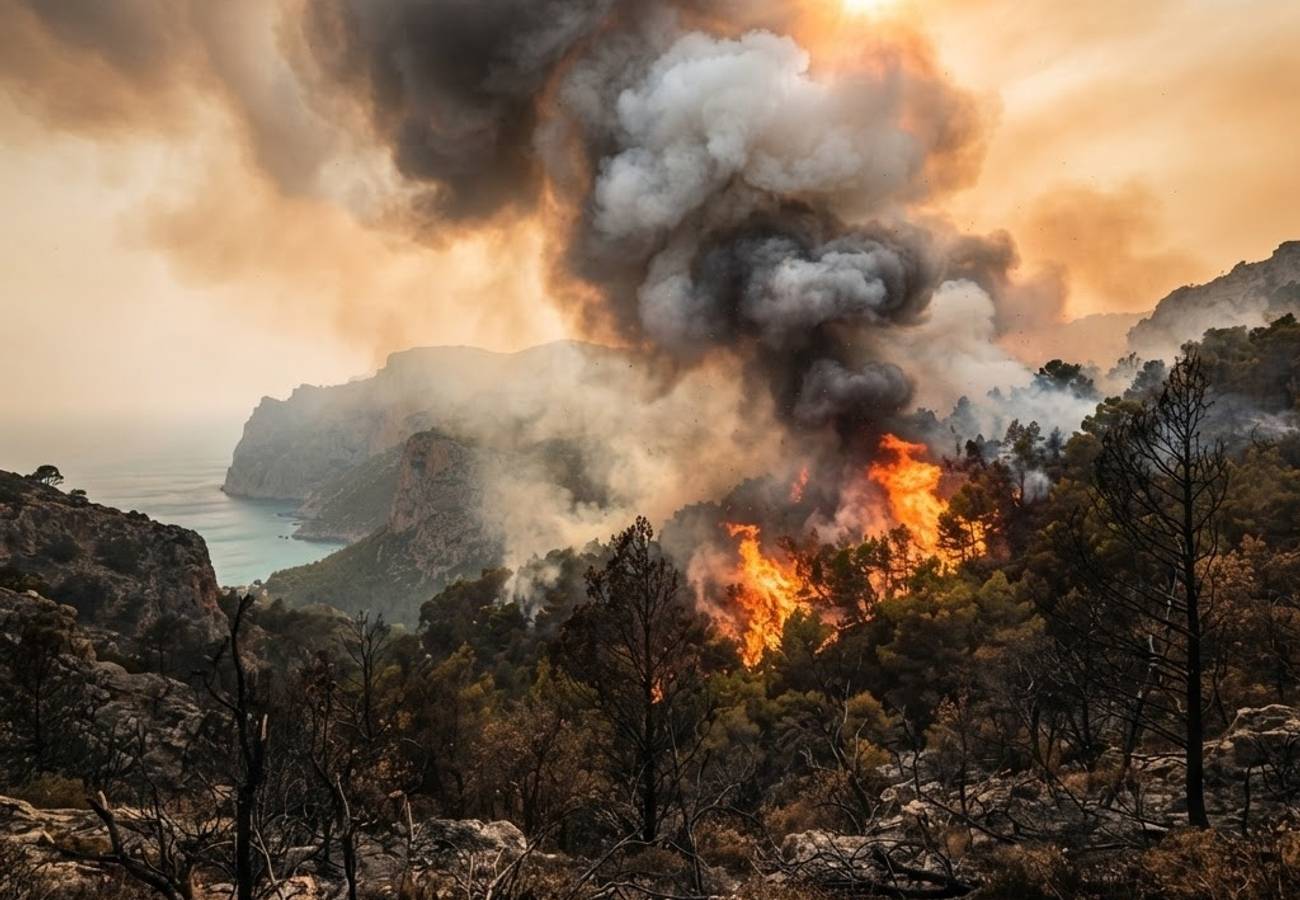
Image generated by AI
Millions of tourists in Spain and the Balearic Islands are facing "very high or extreme" wildfire risks as of August 18, 2026, prompting urgent safety advisories from the UK Foreign, Commonwealth and Development Office (FCDO) and Spain’s national weather agency, AEMET.
The current crisis is driven by a volatile combination of prolonged drought, intense Mediterranean heat, and strong westerly winds that can propel flames across dry landscapes with devastating speed. While Spain remains open for tourism, officials warn that the responsibility for safety now rests heavily on the individual traveler as climate-driven emergencies clash with peak holiday demand.
UK FCDO Urges Vigilance for British Tourists in Spain
The UK FCDO has updated its guidance for British nationals visiting the Spanish mainland and the Balearic Islands. While the government is not advising against travel, it is stressing the necessity of constant monitoring of local conditions.
According to official reports, wildfire situations in the region can deteriorate in minutes. The FCDO recommends that all visitors utilize Spain’s Civil Protection information system to receive real-time updates. This is particularly critical for those planning to visit national parks, hiking trails, or secluded beaches, as Spanish authorities are implementing immediate road closures and restricting access to recreational zones without prior notice to prevent casualties.
For those currently on the ground, the FCDO has outlined four primary safety mandates:
- Strict adherence to all instructions provided by local emergency personnel.
- Complete avoidance of designated high-risk wildfire zones.
- Regular consultation of official emergency bulletins.
- Immediate reporting of any smoke or flames via the 112 emergency line.
Given that Spain is a primary destination for UK holidaymakers, these warnings are timed to protect the massive influx of tourists currently occupying coastal resorts and Mediterranean cities.
AEMET Reports Extreme Fire Danger Through August 19
Spain’s state meteorological agency, AEMET, has categorized the wildfire threat as "very high or extreme" across significant portions of the mainland and the Balearic archipelago. The agency identifies a specific window of danger peaking on Wednesday, August 19, where the convergence of overheated westerly winds and desiccated vegetation creates a tinderbox effect.
While previous emergency declarations regarding major blazes near Ávila and Madrid have been downgraded, the broader national situation remains precarious. The instability is fueled by several compounding environmental factors:
| Risk Factor | Impact on Wildfire Danger |
|---|---|
| Temperature | Extreme highs reducing natural soil and plant moisture |
| Vegetation | Prolonged drought turning flora into highly flammable fuel |
| Wind Patterns | Strong westerly winds accelerating the spread of fire |
| Seasonality | Extended dry periods increasing landscape vulnerability |
| Human Activity | Peak tourism increasing foot traffic in high-risk nature areas |
Balearic Islands Face Record-Breaking Summer Heat
The Balearic Islands are currently experiencing temperatures that far exceed historical seasonal norms. Data from July 2026 reveals an average temperature of 28.1°C—approximately 3°C higher than the typical average for the region.
This heat spike is placing immense pressure on the tourism infrastructure of Mallorca, Ibiza, and Menorca. Because these destinations rely heavily on outdoor attractions—including archaeological sites, hiking routes, and nature reserves—authorities are urging a total shift in tourist behavior.
Visitors are strongly advised to avoid strenuous outdoor activity, open plazas, and unshaded historical sites between 12:00 PM and 5:00 PM. Sightseeing is now recommended exclusively for the cooler morning and evening hours to prevent heat-related medical emergencies.
British Travel Demand Surges Amid Weather Crisis
Despite the escalating environmental risks, the appetite for Spanish holidays has not waned. Industry reports indicate a 25% increase in British holiday bookings for Spain during this current period.
This surge creates a logistical paradox: while the Spanish economy benefits from the influx, the increased population density in vulnerable coastal and rural areas heightens the potential for mass-casualty events during a wildfire. This has forced a shift in how hotels and tour operators communicate; safety briefings and emergency evacuation protocols are now becoming as central to the guest experience as the amenities themselves.
Legal Consequences for Negligence and Fire Hazards
Spain is enforcing a zero-tolerance policy regarding fire prevention, reminding tourists that negligence can lead to criminal prosecution. Under Spanish law, causing a wildfire—even accidentally—is treated as a serious offense.
Travellers are warned that the following actions can result in heavy fines or legal action:
- Lighting barbecues or open fires in forest or restricted zones.
- Leaving glass bottles in natural environments (which can act as magnifying lenses).
- Improper disposal of cigarette butts.
- Any activity capable of generating sparks in dry brush.
Authorities emphasize that because wind directions shift rapidly, a small spark can become an uncontrollable blaze in seconds. Visitors are instructed not to investigate smoke personally but to contact 112 immediately.
Critical Health and Vehicle Safety Protocols
Beyond the threat of fire, the 2026 heatwave is triggering a rise in heat exhaustion and respiratory distress. Medical officials advise the continuous consumption of water, the use of high-SPF sunscreen, and the strategic use of air-conditioned indoor spaces like museums to escape peak temperatures.
Special precautions are urged for vulnerable groups, including:
- Young children and the elderly.
- Individuals with pre-existing cardiovascular conditions.
- Those with chronic respiratory illnesses, who may be further affected by stagnant air and wildfire smoke.
Furthermore, vehicle safety has become a priority. Authorities have issued a stern warning against leaving children or pets in parked cars, as interior temperatures can reach lethal levels almost instantly. Drivers are advised to carry emergency water supplies and check for road closures caused by fire activity before beginning any journey.
Safe travel in 2026 requires a transition from passive vacationing to active risk management.
Related Travel Guides
Disclaimer
This article is for informational and educational purposes only. It does not constitute legal, financial, or professional advice. While we strive to provide accurate and up-to-date information, travel policies, regulations, and conditions change rapidly. Always verify information with official sources before making travel decisions. Nomad Lawyer makes no representations about the accuracy, reliability, completeness, or suitability of the information provided. Readers should consult qualified professionals for advice specific to their circumstances. The views expressed in this article are those of the author and do not necessarily reflect the views of Nomad Lawyer.
Raushan Kumar
Founder & Lead Developer
Full-stack developer with 11+ years of experience and a passionate traveller. Raushan built Nomad Lawyer from the ground up with a vision to create the best travel and law experience on the web.
Learn more about our team →