
Spain Emerges Alongside Many European Markets as Mallorca and Menorca Highlight Europe’s Second-Destination Shift
Spain Emerges Alongside Many European Markets as Mallorca and Menorca Highlight Europe’s Second-Destination Shift

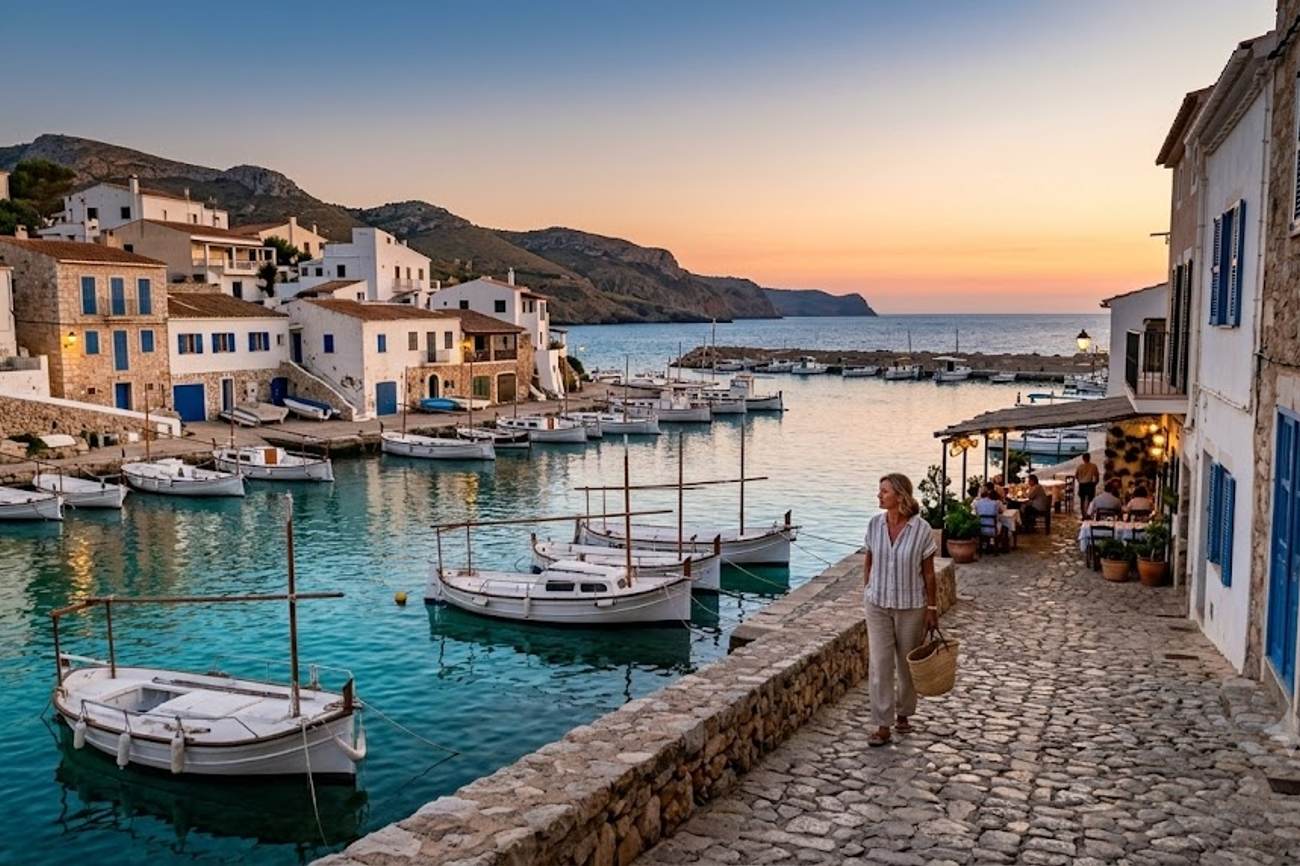
Image generated by AI
Are you planning a Mediterranean getaway but dreading the suffocating crowds of the Amalfi Coast or Santorini? If you want the prestige of a European summer without the logistical nightmare of peak-season congestion, you need to pivot your strategy toward "second-destination" pairing.
The Shift Toward Distributed Tourism
The European travel map is undergoing a structural realignment. For decades, the "Iconic Model" funneled millions of visitors into a handful of high-recognition hubs—think Dubrovnik, Mallorca, and Santorini. However, this model has hit a physical ceiling. Capacity constraints in historic centers and the sheer intensity of seasonality have pushed savvy travelers toward a "second-destination" approach.
This is not about abandoning the famous landmarks entirely, but rather pairing them with lower-density alternatives. Instead of a week in a single overcrowded city, travelers are now building parallel circuits. For example, the trend is moving away from short day-trips and cruise-heavy arrivals toward longer overnight stays in distributed lodging. This shift is backed by a broader change in traveler priorities; in Austria, for instance, outdoor holidays accounted for 47.8% of domestic trips in 2025, while traditional city breaks and sightseeing dropped to 17.9%.
The goal for the modern traveler is no longer to find a "hidden gem"—which often doesn't exist in the age of social media—but to find "distributed tourism." This means selecting regions where the infrastructure can actually support the visitor volume without degrading the experience.
Route and Schedule Details
When planning these alternative circuits, the logistics differ significantly from the "hub-and-spoke" model of major tourist cities. The following table outlines the primary "Second-Destination" pairings currently trending for 2026.
| Primary Hub | Second-Destination Alternative | Primary Appeal | Scale Comparison (2025 Data) | Status |
|---|---|---|---|---|
| Mallorca | Menorca | Rurality & Nature | Mallorca: 49.5M stays / Menorca: 71.7% rural occupancy | High Growth |
| Dubrovnik | Šibenik | National Parks/Sailing | Dubrovnik: 8.41M nights / Šibenik: 5.17M nights | Stable |
| Amalfi Coast | Cilento | Archaeology & Hiking | Amalfi: High Compression / Cilento: Dispersed | Emerging |
| Santorini | Naxos | Regional Variety | Greece Total: 244.7M nights / Santorini: 12.5% cruise arrivals | High Growth |
Traveler Logistics Guide
Transitioning from a primary hub to a second destination requires a different logistical approach. You cannot rely on the same high-frequency shuttle services found in the main tourist traps.
1. Booking and Accommodation Strategies In high-density hubs like Calvià (Mallorca), bed-place occupancy rates hit 81%, meaning hotels are often booked months in advance. In contrast, second destinations like Menorca prioritize rural tourism. If you are targeting Menorca, skip the coastal resorts and book "Agroturismo" (rural farm stays). In July 2025, Mallorca saw 185,000 rural stays, but Menorca led the Balearic Islands in rural occupancy rates at 71.7%, indicating that rural lodging is the premium choice there.
2. Ground Transport and Connectivity Avoid relying on public buses in regions like Cilento or Šibenik. While the Amalfi Coast suffers from limited road capacity and extreme congestion, Cilento offers a longer, more dispersed coastline. To navigate this, a rental car is non-negotiable. Use Google Maps for real-time traffic, but be aware that rural Italian and Croatian roads may not always be updated for the latest closures.
3. Navigating the Adriatic (Croatia) If you are pairing Dubrovnik with Šibenik, do not treat Šibenik as a "cheaper Dubrovnik." Instead, use it as a logistical base. From Šibenik, you have direct access to Krka National Park and the Kornati archipelago. I recommend booking your ferries and national park entries via official portals to avoid the queues that plague the Dubrovnik-Neretva County region, which saw 2.17 million arrivals in 2025.
4. Greek Island Hopping With Santorini absorbing 12.5% of all cruise-ship arrivals, the ports are often chaotic. To optimize your transit, use the Hellenic Seaways or Blue Star Ferries systems to move from Santorini to Naxos. Naxos offers a broader regional experience, meaning you will need more time for inland exploration than you would in the compressed landscape of Santorini.
5. Customs and Visa Notes Since all these destinations are within the Schengen Area, transit between Spain, Italy, Croatia, and Greece is seamless for visa holders. However, ensure your passport is valid for at least six months beyond your stay. If you are entering the EU via a primary hub, you will clear customs there, making your subsequent move to a second destination a domestic trip.
Regional Connectivity Impact
The rise of the second-destination model is fundamentally changing how regional transport is managed. We are seeing a shift from "monumental tourism"—where everything leads to one landmark—to "circuit tourism."
In Croatia, the contrast is stark: while Dubrovnik-Neretva County recorded 8.41 million commercial nights in 2025, Šibenik-Knin County recorded 5.17 million. This indicates that Šibenik is no longer a "quiet alternative" but a major player in its own right. For the traveler, this means that while the crowds are thinner, the infrastructure is professional and capable.
In Spain, the Balearic Islands are diversifying. Mallorca remains the volume leader with 49.5 million hotel overnight stays, but Menorca is carving out a niche based on protected landscapes and slower itineraries. This reduces the pressure on Mallorca’s infrastructure and provides a blueprint for sustainable growth.
In Italy, the shift toward Cilento relieves the extreme pressure on the Amalfi Coast's dramatic but limited topography. By distributing visitors toward the Cilento, Vallo di Diano, and Alburni National Park, the region is moving away from a single overloaded corridor toward a diversified cultural experience involving archaeology and agriculture.
FAQ: Europe Second-Destination Transit 2026
Do I need a separate visa to move from a primary hub to a second destination? No. Since Spain, Italy, Croatia, and Greece are all part of the Schengen Area, you only need your initial entry visa or passport. There are no border checks when moving between these specific regional pairings.
How much extra time should I allow for transit to "second destinations"? Allow 20-30% more time. While primary hubs have high-frequency shuttles, second destinations like Cilento or Menorca rely on more dispersed transport. Rental cars are highly recommended over public transit for these routes.
Can I check my bags through to a second destination? Generally, no. If you are switching from a major international flight to a regional ferry or local train, you will handle your own luggage. Use lightweight, durable luggage for the rural stays common in Menorca and Naxos.
Is it cheaper to stay in a second destination? Often, yes, in terms of value. While premium rural stays in Menorca can be expensive, the overall cost of dining and excursions in places like Šibenik is typically lower than in the hyper-inflated markets of Dubrovnik or Santorini.
Stop fighting the crowds and start planning the parallel circuit.
Related Travel Guides
Disclaimer
This article is for informational and educational purposes only. It does not constitute legal, financial, or professional advice. While we strive to provide accurate and up-to-date information, travel policies, regulations, and conditions change rapidly. Always verify information with official sources before making travel decisions. Nomad Lawyer makes no representations about the accuracy, reliability, completeness, or suitability of the information provided. Readers should consult qualified professionals for advice specific to their circumstances. The views expressed in this article are those of the author and do not necessarily reflect the views of Nomad Lawyer.
Preeti Gunjan
Contributor & Community Manager
A passionate traveller and community builder. Preeti helps grow the Nomad Lawyer community, fostering engagement and bringing the reader experience to life.
Learn more about our team →