
Palau Elevates Luxury Travel With Four Seasons Explorer Kayangel Route to a Hidden Island Paradise
Palau Elevates Luxury Travel With Four Seasons Explorer Kayangel Route to a Hidden Island Paradise

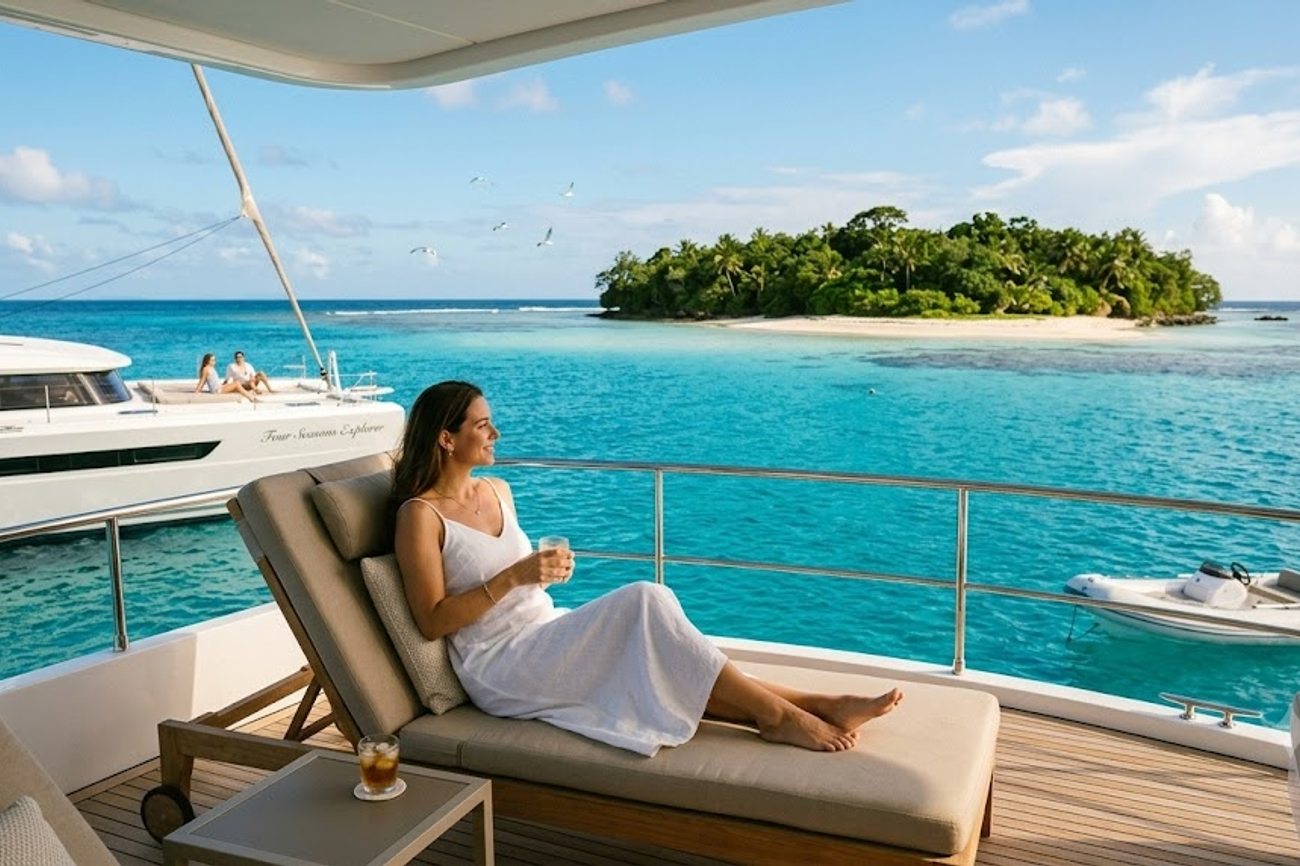
Image generated by AI
The Hyper-Niche Pivot in Pacific Luxury
While traditional luxury cruise capacities in the South Pacific have historically leaned toward ships carrying 500 to 2,000 passengers, the Four Seasons Explorer Palau has shifted the benchmark to a strict 22-guest limit. This 95% reduction in passenger density per vessel signals a market pivot from "mass-luxury" to "hyper-niche" exploration, where the value proposition is no longer the size of the ship, but the exclusivity of the coordinates it can reach. The introduction of the Kayangel Island route is the primary evidence of this shift, moving the high-net-worth traveler away from established hubs and into a 1.4 square kilometer territory that remains largely inaccessible to standard commercial tourism.
The Kayangel Expansion in Numbers
The operational data surrounding the new Kayangel route reveals a calculated strategy to monetize extreme seclusion. By leveraging a luxury catamaran capable of navigating the archipelago's northern and southern extremes, Four Seasons is capturing a segment of the market that prioritizes "hidden" geography over traditional amenities.
The scale of the environment being marketed is staggering when contrasted with the footprint of the destination itself. Guests are granted access to a nation protecting approximately 500,000 square kilometers (193,000 square miles) of marine territory, yet the Kayangel stop focuses on a landmass of only 1.4 square kilometers. This ratio—roughly 357,000:1—underscores the "needle in a haystack" appeal that drives current premium pricing in the region.
Furthermore, the integration of land-based infrastructure, such as the M-Dock waterfront restaurant, bar, and lounge scheduled for opening on 1 October 2026, indicates a move toward a "hub-and-spoke" luxury model. In this model, the vessel acts as the mobile spoke, while the shore-side facility provides a fixed anchor for the brand's ecosystem.
Comparative Context: The Shift to Remote Access
The movement toward Kayangel reflects a broader regional trend documented by the World Tourism Organization (UNWTO), where "off-the-beaten-path" luxury is outperforming traditional resort-based stays in growth percentages. Palau is positioning itself not as a destination for volume, but as a sanctuary for high-yield, low-impact visitors.
Historically, luxury travel in the Pacific relied on overwater bungalows and fixed-site resorts. The Four Seasons Explorer model replaces the fixed resort with a "floating resort," allowing for dynamic itinerary adjustments based on weather and sea conditions. This flexibility is a competitive advantage over larger cruise lines that are bound by rigid port schedules and deep-water requirements.
The following table illustrates the shift in luxury travel metrics within the Palauan market:
| Metric | Traditional Luxury Model | Four Seasons Explorer Model | Variance |
|---|---|---|---|
| Guest Capacity | 500+ (Standard Cruise) | 22 Guests | -95.6% |
| Destination Reach | Major Ports/Hubs | Remote (e.g., Kayangel) | High Access Gain |
| Environmental Focus | General Sightseeing | 500k sq km Marine Protected | Targeted Conservation |
| Itinerary Style | Fixed/Scheduled | Weather-Dependent/Flexible | High Adaptability |
| Land Footprint | Large Resort Complexes | 1.4 sq km (Kayangel stop) | Minimal Impact |
This data suggests a transition toward "regenerative luxury," where the goal is to minimize the physical footprint while maximizing the financial yield per visitor. By restricting the guest count to 22, the operator avoids the environmental degradation associated with larger vessels, aligning with the International Air Transport Association (IATA) and other global bodies' pushes toward sustainable transit and tourism.
What This Means for Travelers
For the individual traveler, the data indicates that the "window of discovery" for destinations like Kayangel is narrowing. As luxury operators secure exclusive access to secluded shorelines—such as the private beach reserved for Four Seasons guests—the ability for independent travelers to find truly untouched locations is diminishing.
If you are planning a trip to Palau for late 2026 or 2027, consider the following data-driven booking strategies:
- Prioritize Q4 Bookings: With the M-Dock opening on 1 October 2026, the final quarter of the year will see a surge in integrated sea-to-shore luxury packages. Booking 6-9 months in advance is now mandatory for the 22-guest capacity vessels.
- Budget for Hyper-Exclusivity: The shift from 500-passenger ships to 22-passenger catamarans typically results in a significant increase in per-person cost. Travelers should expect "boutique pricing" that reflects the operational cost of maintaining high-end service for a tiny group.
- Weather-Contingent Planning: Because the Kayangel route is only offered when sea conditions allow, travelers should not build their entire itinerary around this single stop. Ensure your travel insurance covers itinerary changes due to weather, as this is a stated operational constraint for the northern route.
Forward Projection: The "Invisible" Destination Trend
Based on the current trajectory, we can expect a rise in "invisible destinations"—places that are marketed specifically because they lack traditional infrastructure. The success of the Kayangel route will likely prompt other luxury operators to seek similar micro-destinations within the Pacific.
We are moving toward an era of "access-based luxury." In this economy, the luxury is not the gold-plated faucet or the thread count of the sheets, but the legal and logistical ability to step onto a beach that no other tourist can access. As Palau continues to leverage its 500,000 square kilometers of protected waters, the focus will shift from "what the hotel offers" to "where the vessel can go."
The integration of marine biology presentations and guided excursions through the UNESCO-listed Rock Islands Southern Lagoon suggests that educational value is becoming a primary driver for the premium traveler. We project that by 2028, "science-backed luxury" (where trips are led by biologists or historians) will become the standard for the top 1% of the travel market.
FAQ: Palau Luxury Trends 2026
Will the cost of visiting Kayangel increase? Yes. The transition to a 22-guest maximum capacity model creates a supply-demand imbalance. With extremely limited berths and exclusive beach access, pricing is expected to trend upward as the destination gains visibility.
Is now a good time to book Palau expeditions? Yes, particularly for those targeting the post-October 1, 2026 window. The addition of the M-Dock facility creates a new synergy between land and sea luxury that will likely drive up demand for the 2026-2027 season.
Which vessels are expanding into northern Palau? The Four Seasons Explorer is currently the primary luxury catamaran operating between the northern and southern islands. Most other carriers remain restricted to the southern hubs and established tourist zones.
How does the 22-guest limit affect the experience? It eliminates the "crowd effect" common in luxury cruising. Data shows this leads to higher personalization in dining (e.g., Mediterranean-inspired bento boxes) and more flexible, weather-responsive itineraries.
The era of the mega-ship is receding; the era of the exclusive coordinate has arrived.
#PalauLuxuryGrowth2026 #FourSeasonsExplorer #KayangelIslandAccess #HyperNicheTourism #PacificMarineConservation #BoutiqueCruiseMetrics
Related Travel Guides
Disclaimer
This article is for informational and educational purposes only. It does not constitute legal, financial, or professional advice. While we strive to provide accurate and up-to-date information, travel policies, regulations, and conditions change rapidly. Always verify information with official sources before making travel decisions. Nomad Lawyer makes no representations about the accuracy, reliability, completeness, or suitability of the information provided. Readers should consult qualified professionals for advice specific to their circumstances. The views expressed in this article are those of the author and do not necessarily reflect the views of Nomad Lawyer.
Preeti Gunjan
Contributor & Community Manager
A passionate traveller and community builder. Preeti helps grow the Nomad Lawyer community, fostering engagement and bringing the reader experience to life.
Learn more about our team →