
Oman Stands Alongside Dubai and Many Other Gulf Markets as Cruise Tourism Enters a New Itinerary Era
Oman Stands Alongside Dubai and Many Other Gulf Markets as Cruise Tourism Enters a New Itinerary Era

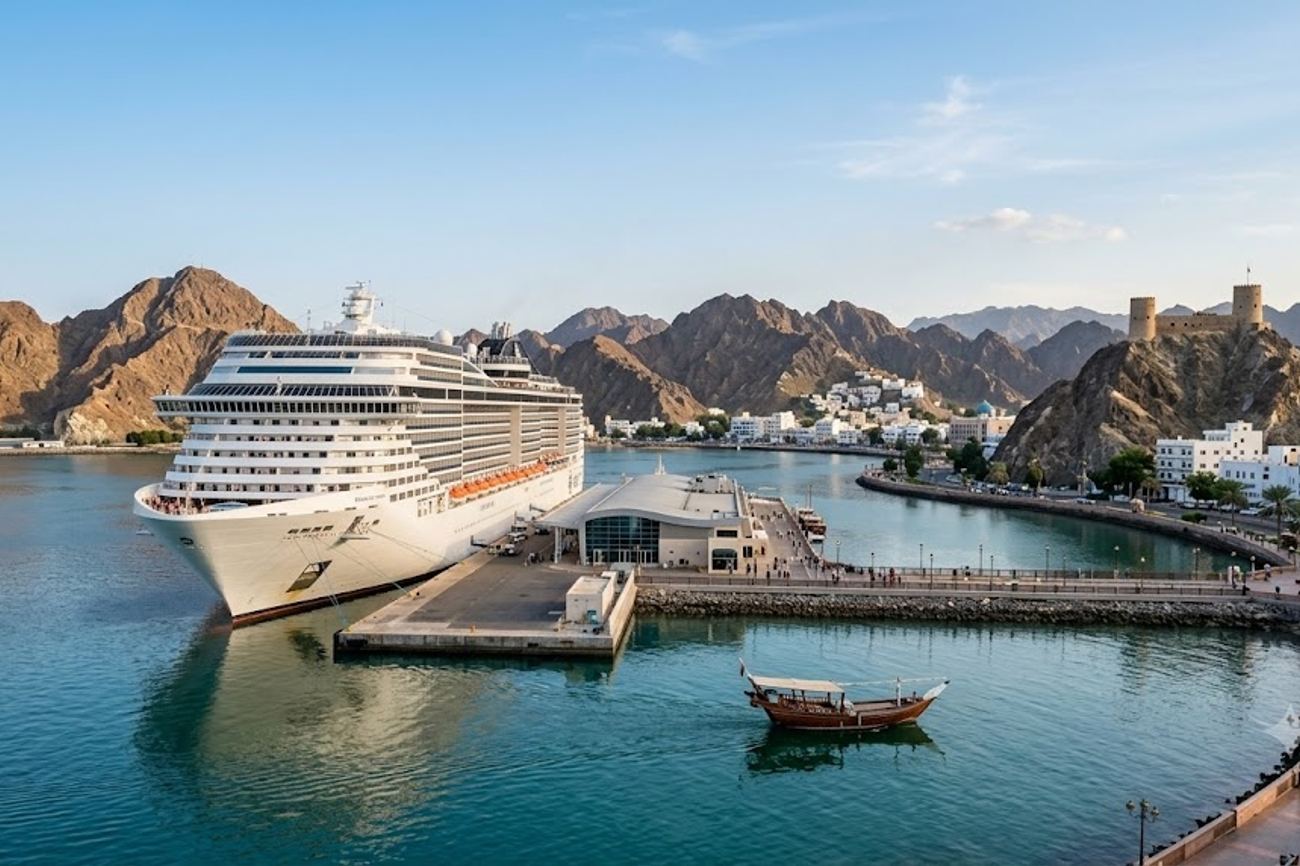
Image generated by AI
While most cruise passengers view the Gulf as a collection of futuristic skylines, the real secret lies in Khasab, Oman, where the coastline transforms into steep, fjord-like cliffs and sheltered waters that feel more like Norway than the Middle East. This geographic anomaly is the anchor of a shifting regional strategy, moving the Gulf away from isolated port stops toward a unified, multi-destination circuit.
The Rise of the Cruise Arabia Alliance
The Arabian Gulf is currently undergoing a structural transformation in how it handles maritime tourism. For years, ports like Dubai and Doha operated as independent gateways, but the landscape shifted with the launch of the Cruise Arabia Alliance in March 2024. Originally a partnership between Dubai, Abu Dhabi, Bahrain, and Oman, the alliance expanded in November 2025 to include Qatar and Saudi Arabia. This isn't just a branding exercise; it is a coordinated effort to synchronize infrastructure, streamline passenger processing, and create joint marketing campaigns that treat the entire region as a single, cohesive product.
The scale of this ambition is reflected in the numbers. Doha, for instance, has seen a rapid surge in demand, welcoming 396,265 cruise passengers across 87 ship calls during the 2024/25 season. This represents a 5% increase in passenger arrivals and a significant 19% jump in ship calls compared to the previous period. By integrating these ports, the alliance is attempting to mirror the successful "hub-and-spoke" models found in the Mediterranean, where a traveler can fly into one primary city and explore a diverse array of cultures and landscapes without ever repeating a route.
What Makes the Gulf Circuit Different
The primary draw of this new itinerary era is the extreme contrast available within a compact sailing area. The region is no longer just about luxury shopping and skyscrapers; it is a study in opposites. You have the hyper-modernity of Dubai and Doha juxtaposed against the rugged, traditional landscapes of Oman.
Dubai serves as the primary engine for the region's "fly-cruise" model. Because of its global aviation connectivity, it acts as the ideal embarkation point. The infrastructure here is staggering: the Hamdan bin Mohammed Cruise Terminal at Mina Rashid can accommodate seven mega-ships at once, handling up to 14,000 passengers. Meanwhile, the Dubai Harbour Cruise Terminal is engineered for speed, processing 3,250 passengers per hour per terminal. This allows travelers from East Asia, Europe, or Australia to use Dubai as a sophisticated base before sailing toward the more quiet, heritage-focused ports of Bahrain or the cultural anchors of Muscat.
Oman provides the necessary atmospheric break from the urban sprawl. In 2025, the Ministry of Heritage and Tourism recorded 137,330 tourists arriving via yachts and cruise ships. The Omani experience is defined by forts, traditional souqs, and the dramatic mountains of the Musandam Peninsula. The 2025/26 season highlights this specialization, with Aroya Cruises scheduling 11 visits to Khasab and five to Sultan Qaboos Port, ensuring that the "nature-led" aspect of the Gulf is represented.
Visitor Insider Tips
To truly experience the Gulf beyond the cruise ship's programmed excursions, you need to understand the local rhythms and logistical shortcuts.
- The Fly-Cruise Strategy: Do not simply arrive the day your ship departs. Base yourself in Dubai for 3-4 days prior to embarkation. This allows you to navigate the city's aviation hubs and hotels without the stress of a tight turnaround. Use the Dubai Economy and Tourism resources to plan a city break that serves as a preamble to your voyage.
- Oman’s Off-Beat Timing: When docking in Muscat, head to the Muttrah Souq early in the morning (before 10:00 AM) to avoid the midday heat and the bulk of the cruise crowds. In Khasab, prioritize dhow cruises over land tours; the fjord-like views are best experienced from the water.
- Doha’s Cultural Pivot: If your ship docks at the Old Doha Port, utilize the Grand Cruise Terminal's efficiency to head straight to the Museum of Islamic Art. The terminal can handle 12,000 passengers daily, so the "rush hour" is intense; leaving the port 30 minutes after docking often saves you an hour of queuing for taxis.
- Etiquette and Attire: While cruise ships are international bubbles, the ports in Oman and Saudi Arabia are more conservative. Carry a light shawl or linen shirt to cover shoulders and knees when visiting forts or traditional markets to show respect for local customs.
- Transport Hacks: In the UAE and Qatar, ride-sharing apps are highly efficient, but in Oman, hiring a local guide with a 4x4 is non-negotiable if you want to see the mountains beyond the immediate port area.
Cultural and Environmental Context
The rapid expansion of cruise tourism in the Gulf brings a complex set of challenges regarding heritage preservation and environmental impact. The shift toward "mega-ships"—some capable of carrying thousands of passengers—puts immense pressure on smaller ports like Khasab and Bahrain. The Cruise Arabia Alliance is tasked with balancing this economic windfall with the need to protect the very landscapes that attract visitors.
In Oman, the government is currently conducting strategic studies to ensure that the increase in cruise and yacht tourism doesn't erode the traditional character of its coastal towns. There is a delicate tension between developing "modern terminals" and preserving the "traditional landscapes" that the Ministry of Heritage and Tourism promotes. Similarly, the move toward "turnaround" ports in Doha—where passengers start and end their journey—means the city must manage long-term residency of thousands of tourists, impacting local traffic and resource consumption.
The environmental stakes are particularly high in the Musandam Peninsula, where the marine excursions that define the Khasab experience rely on pristine waters. As the number of ship calls increases, the regional authorities are under pressure to implement stricter maritime regulations to prevent pollution in these fragile ecosystems. For those interested in the preservation of these sites, the UNESCO World Heritage Centre provides context on the types of cultural landscapes the region is striving to protect.
FAQ: Visiting the Gulf 2026
What is the best time to visit the Gulf by cruise? The peak season runs from November to March. During these months, the temperatures are mild, making the exploration of Oman's mountains and Dubai's outdoor attractions comfortable. Summer months are typically too hot for extensive shore excursions.
Do I need a visa for this regional circuit? Visa requirements vary by nationality. Many travelers receive a visa-on-arrival in the UAE and Qatar, but Saudi Arabia and Oman have specific electronic visa (e-visa) processes. Always check the official embassy site of each alliance member before sailing.
How do I get to the main embarkation hubs? Most travelers fly into Dubai International (DXB) or Hamad International Airport (DOH). From there, official airport taxis or pre-arranged cruise line transfers are the most reliable ways to reach the Mina Rashid or Grand Cruise Terminals.
Is the region safe for solo travelers? Yes, the Gulf is generally very safe for solo travelers. Cruise excursions provide a structured environment, and the major cities have high safety ratings. Using registered transport and following local dress codes is recommended.
The Gulf is no longer just a series of stops; it is a curated voyage between the world's most ambitious cities and its most silent mountains.
#CruiseArabiaAlliance #OmanTravel2026 #DubaiCruiseHub #GulfMaritimeTourism #KhasabMusandam #DohaCruiseGuide
Related Travel Guides
- Palau Elevates Luxury Travel With Four Seasons Explorer Kayangel Route to a Hidden Island Paradise
- Golden Horizon Cruise Ship Finds New Future as Swiss Buyer Reportedly Acquires Vessel for €110 Million
- Singapore Cruise Travel Is Now Set To Unlock Luxury Cruise Value On More Global Voyages In September 2026
Disclaimer
This article is for informational and educational purposes only. It does not constitute legal, financial, or professional advice. While we strive to provide accurate and up-to-date information, travel policies, regulations, and conditions change rapidly. Always verify information with official sources before making travel decisions. Nomad Lawyer makes no representations about the accuracy, reliability, completeness, or suitability of the information provided. Readers should consult qualified professionals for advice specific to their circumstances. The views expressed in this article are those of the author and do not necessarily reflect the views of Nomad Lawyer.
Raushan Kumar
Founder & Lead Developer
Full-stack developer with 11+ years of experience and a passionate traveller. Raushan built Nomad Lawyer from the ground up with a vision to create the best travel and law experience on the web.
Learn more about our team →