
Space Tourism Perspective: MS Voyager Transforms Near-Space Travel in 2026
Space Perspective's MS Voyager capsule launches commercial near-space tourism in 2026, offering passengers unparalleled Earth views from 100,000 feet via balloon-powered ascent from Marine Spaceport Florida.

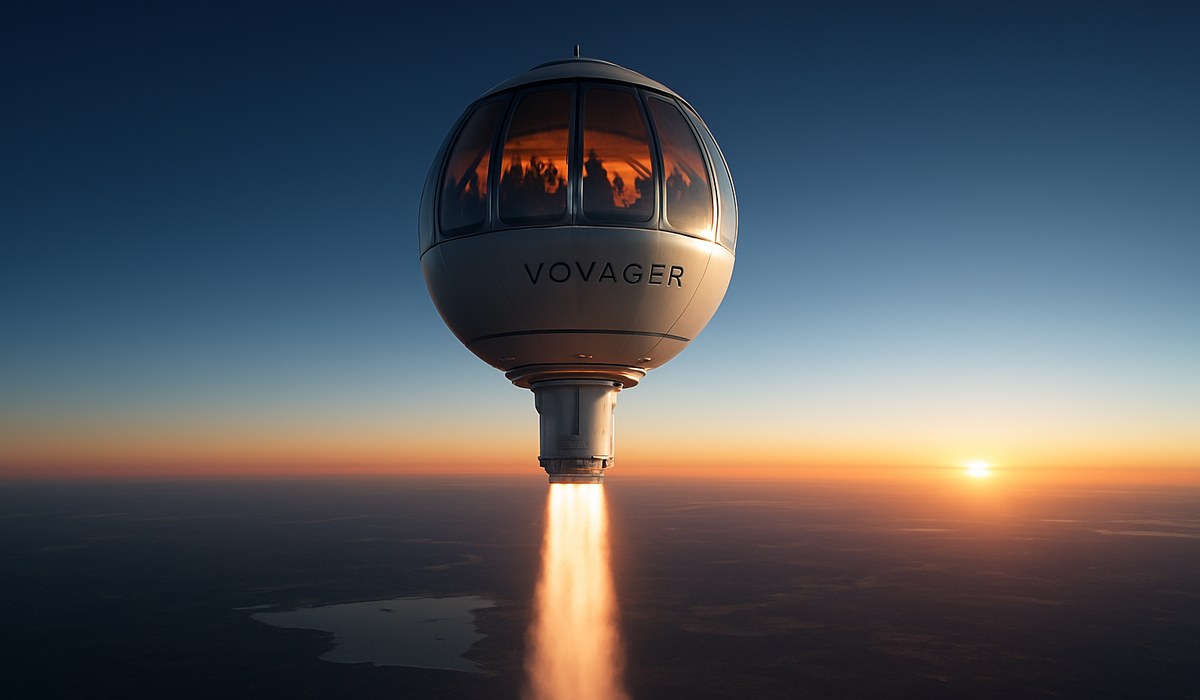
Image generated by AI
Historic Shift in Near-Space Travel Begins with MS Voyager Launch
Space Perspective's MS Voyager marks the dawn of commercial near-space tourism, bringing Earth observation experiences to civilian travelers for the first time at scale. The pressurized capsule ascends to 100,000 feet—the recognized boundary of near-space—via an innovative balloon propulsion system rather than traditional rockets. Launching operations from Marine Spaceport in Brevard County, Florida, the vessel carries six passengers and two crew members on six-hour journeys that redefine the space tourism perspective for adventure travelers globally.
The MS Voyager represents a fundamental shift in how travelers access celestial viewpoints. Unlike conventional spacecraft requiring extensive astronaut training, this experience prioritizes comfort and accessibility. Passengers experience weightlessness and panoramic Earth vistas through expansive cabin windows while remaining in a pressurized environment. The innovation changes near-space accessibility entirely, moving beyond elite programs toward mainstream travel.
What Guests Get
Passengers aboard the MS Voyager experience a carefully curated journey:
- Six-hour total flight duration with two-hour near-space destination time at 100,000 feet
- Pressurized cabin maintaining sea-level air quality and temperature control
- Expansive panoramic windows surrounding the entire capsule for unobstructed Earth photography
- Champagne celebration in the observation lounge upon reaching the near-space boundary
- Professional crew guidance explaining geographical features and atmospheric phenomena
- Personalized flight certificate commemorating your space tourism perspective achievement
- Pre-flight training and mission briefing at Marine Spaceport facilities
- Post-flight documentation package with high-resolution photography from your ascent
- Comfortable seating designed for extended viewing during the near-space segment
Marine Spaceport Florida Operations Center
Space Perspective selected Marine Spaceport in Brevard County as its operational hub, strategically positioned near existing aerospace infrastructure. The facility handles passenger check-in, safety briefings, and pre-flight preparations. The balloon-powered ascent launches from the spaceport's specialized launch pad, requiring minimal ground infrastructure compared to traditional rocket facilities. Operations run year-round, though weather conditions affect launch windows. The dawn of this commercial venture relies on Florida's established space tourism ecosystem and regulatory framework.
Each MS Voyager mission departs during optimal atmospheric conditions, typically in early morning hours when stratospheric winds favor controlled ascent and descent. Passengers arrive three hours before scheduled launch to complete safety protocols and mission orientation. The spaceport features dedicated passenger amenities, mission control facilities, and recovery equipment staged for each voyage.
Redefining Space Tourism Perspective Through Innovation
The near-space tourism sector fundamentally changes how travelers conceptualize Earth observation and celestial access. MS Voyager's balloon-based design eliminates rocket fuel requirements, reducing launch costs and environmental impact compared to traditional spaceflight options. This innovation in space tourism perspective enables pricing competitive with luxury airline experiences rather than exclusive astronaut programs. The changing economics of near-space travel democratize what was previously accessible only to government-trained cosmonauts and ultra-wealthy private sector participants.
The capsule's engineering emphasizes passenger safety and comfort throughout the ascent. The pressurized cabin maintains breathable atmosphere while allowing the experience of weightlessness during the apogee segment. Dual-redundant systems monitor cabin integrity, life support, and communications continuously. The descent utilizes a guided parachute system ensuring gentle recovery in designated ocean zones offshore from Marine Spaceport.
Voyager Fleet Expansion and Future Near-Space Tourism Growth
Space Perspective plans multiple MS Voyager capsules to accommodate growing demand for space tourism perspective experiences. The company's long-term vision includes expanding near-space operations across additional spaceport locations. Current booking windows extend through 2027, indicating robust consumer interest in this novel travel category. The changing landscape of commercial spaceflight incorporates balloon-based near-space tourism alongside traditional rocket-powered orbital ventures.
Each additional capsule entering service increases accessibility for international travelers seeking near-space experiences. The manufacturing and launch infrastructure scales to meet projected demand growth. Space Perspective's operational model relies on standardized training protocols, safety procedures, and mission planning that remain consistent across the fleet expansion.
Pricing, Booking, and Availability for MS Voyager Experiences
Commercial space tourism perspective pricing for MS Voyager flights begins at competitive rates reflecting the innovative near-space tourism model. Booking occurs through Space Perspective's official platforms, with payment structures accommodating individual travelers and group bookings. Passengers may reserve flights months in advance, with priority booking windows opening quarterly. The changing accessibility of near-space travel previously commanded astronaut-level pricing; MS Voyager democratizes entry points for tourism-focused space experiences.
Detailed booking information and current availability calendars are accessible through Space Perspective's official website. Passengers may also coordinate reservations through premium travel agencies specializing in experiential and adventure tourism packages.
| Experience Metric | Details |
|---|---|
| Flight Duration | Six hours total (two hours at near-space altitude) |
| Altitude Achieved | 100,000 feet (near-space boundary) |
| Passenger Capacity | Six civilians plus two crew members per mission |
| Launch Location | Marine Spaceport, Brevard County, Florida |
| Operating Status | Commercial flights initiated 2026 |
| Primary Vehicle | MS Voyager balloon-powered capsule |
| Weightlessness Duration | Approximately 20 minutes during apogee segment |
| Window Coverage | Panoramic 360-degree observation capability |
| Air Quality | Pressurized cabin at sea-level equivalent |
| Training Requirement | Pre-flight briefing (no astronaut certification needed) |
What This Means for Travelers Seeking Novel Experiences
The MS Voyager launch fundamentally alters how adventure travelers access near-space tourism perspective. Consider these immediate implications for your travel planning:
-
Book well in advance: Launch windows through 2027 experience high demand. Reserve your space tourism perspective experience 6-12 months before your preferred travel dates.
-
Plan for Florida coastal travel: Marine Spaceport location makes this compatible with broader Florida tourism itineraries. Combine your near-space mission with Miami, Keys, or Orlando destinations.
-
Prepare for weather delays: Balloon-based ascent requires optimal atmospheric conditions. Build flexible scheduling into your space tourism perspective timeline.
-
Document your experience: Bring personal cameras; the panoramic windows enable extraordinary Earth photography from 100,000 feet.
-
Consider group bookings: Six-passenger capacity suits family reunions, corporate retreats, and friend groups seeking shared space tourism perspective adventures.
-
Verify physical requirements: Consult Space Perspective's medical clearance guidelines before committing to ensure near-space travel compatibility with your health profile.
Frequently Asked Questions
What is the space tourism perspective experience actually like aboard MS Voyager? Passengers ascend gradually over two hours, experiencing the changing perspective as Earth shrinks below. At 100,000 feet, weightlessness occurs for approximately 20 minutes while panoramic windows reveal the planet's curvature and atmospheric layers. The descent takes two hours, allowing sustained observation of weather systems and geographical features. Six passengers per mission share this near-space tourism perspective in a pressurized, climate-controlled cabin with professional crew narration.
How does MS Voyager's space tourism perspective differ from traditional astronaut programs? Traditional programs require extensive astronaut training and cost substantially more. MS Voyager's balloon-powered ascent eliminates complex rocket mechanics, reducing training to pre-flight briefings and safety protocols. The near-space tourism perspective prioritizes comfort and accessibility over extreme altitude, positioning this as mainstream adventure travel rather than specialized aerospace training. Passengers experience weightlessness and Earth curvature views comparable to orbital spaceflight at substantially lower costs and training requirements.
When can I book my space tourism perspective flight on MS Voyager? Booking windows open through Space Perspective's official website. Current availability extends through 2027 with new booking periods opening quarterly. Reserve your near-space tourism perspective experience 6-12 months in advance for optimal availability. Group bookings and corporate retreats enjoy dedicated scheduling support through the company's travel coordinator team.
Will the space tourism perspective experience change how I view Earth? Overwhelmingly, yes. Passengers consistently report profound perspective shifts observing Earth's curvature and atmospheric fragility from 100,000 feet. The near-space tourism perspective fundamentally alters environmental awareness and personal philosophy. This cognitive shift—often called the "overview effect"—represents one of the most cited lasting impacts of the space tourism perspective journey.
Related Travel Guides
Ultimate Guide to Florida Aerospace Tourism: Museums and Launch Experiences Emerging Adventure Travel Trends: Near-Space Tourism and Extreme Altitude Experiences How to Plan Your First Space Tourism Perspective Journey: Complete Checklist
Disclaimer
Disclaimer
This article is for informational and educational purposes only. It does not constitute legal, financial, or professional advice. While we strive to provide accurate and up-to-date information, travel policies, regulations, and conditions change rapidly. Always verify information with official sources before making travel decisions. Nomad Lawyer makes no representations about the accuracy, reliability, completeness, or suitability of the information provided. Readers should consult qualified professionals for advice specific to their circumstances. The views expressed in this article are those of the author and do not necessarily reflect the views of Nomad Lawyer.
Kunal K Choudhary
Co-Founder & Contributor
A passionate traveller and tech enthusiast. Kunal contributes to the vision and growth of Nomad Lawyer, bringing fresh perspectives and driving the community forward.
Learn more about our team →