
Aviation Updates: Massive Airspace Congestion Forces Southwest Flight SWA2115 into Sudden Wichita Diversion to Escape Oklahoma City Travel Chaos
As incredibly severe terminal gridlock completely suffocates Oklahoma City airspace, Southwest Airlines Flight SWA2115 executes a sudden mid-air diversion to Wichita to escape paralyzing travel chaos.

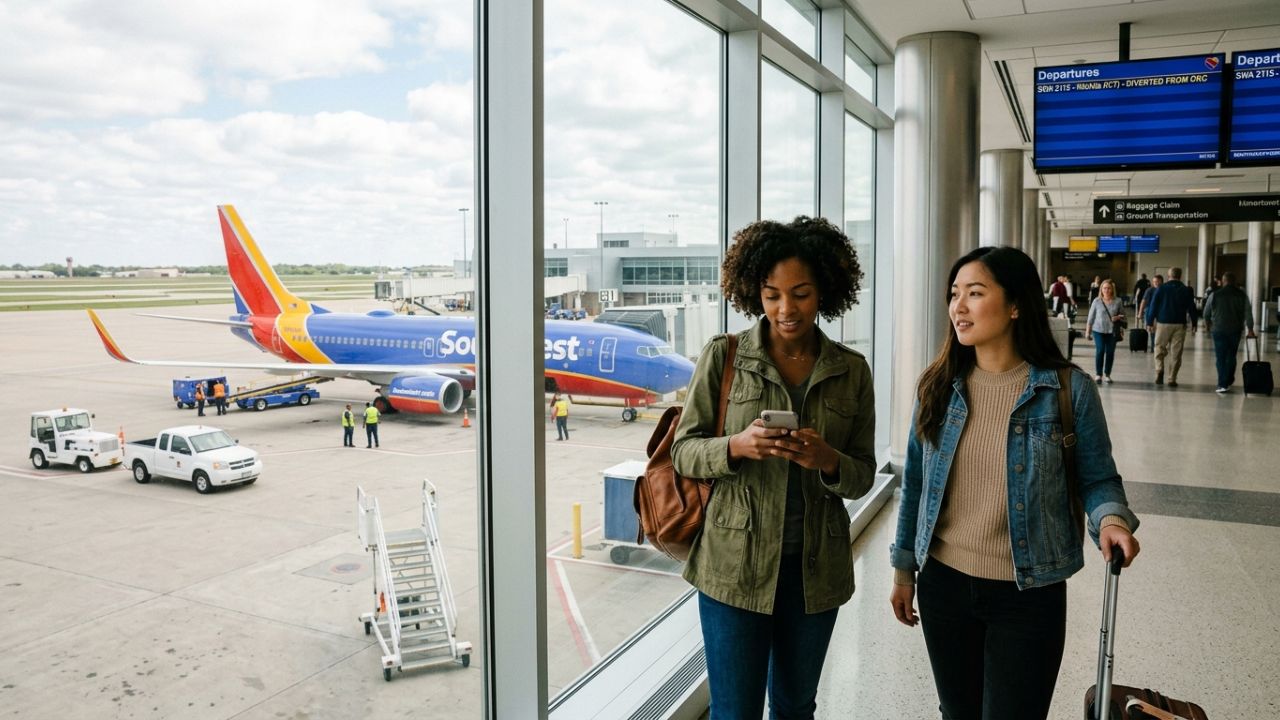
Image generated by AI
Aviation Updates: Massive Airspace Congestion Forces Southwest Flight SWA2115 into Sudden Wichita Diversion to Escape Oklahoma City Travel Chaos
As incredibly severe terminal gridlock and massive regional air traffic control restrictions completely suffocate the primary aviation gateways of the Midwest, exhausted passengers aboard Southwest Airlines Flight SWA2115 are plunged into terrifying travel chaos following a sudden mid-air diversion that forcibly aborted their trajectory toward Oklahoma City, violently stranding them at Wichita Dwight D. Eisenhower National Airport.
While incredibly exhausted domestic passengers desperately navigate an incredibly brutal peak travel season defined by rolling flight cancellations and severe, localized airport disruptions, a massive, highly strategic shift in active flight management is actively stabilizing the absolute highest levels of the American commercial aviation network. According to the absolute latest breaking airline news and verified operational safety metrics, Southwest Airlines Flight SWA2115 was aggressively forced to execute an immediate, unscheduled diversion. Desperate to ensure that a sudden, unverified mid-flight operational alert did not completely destroy the safety parameters of an aircraft entering the heavily congested Oklahoma City airspace corridor, the flight crew rapidly altered their trajectory. At the time of reporting, real-time aviation analysts confirmed that the Boeing 737-800, originally operating a routine domestic service from Las Vegas (Harry Reid International Airport) to Oklahoma City (Will Rogers World Airport), executed a massive descent sequence under strict air traffic control supervision, successfully landing at Wichita to bypass the terrifying unpredictability of a potential emergency inside a paralyzed regional hub.
This highly critical capacity deployment explicitly exposes the domestic aviation network not just as a vital transit feed, but as a heavily congested, deeply fragile capacity zone prone to sudden, catastrophic failure during peak transcontinental traffic waves. By violently overwhelming ground handling crews and massive regional aircraft rotation schedules at hubs like Oklahoma City, airborne technical alerts directly drive massive travel chaos. Because traditional massive transit nodes frequently suffer from severe tarmac congestion leading to massive, unannounced communication breakdowns, this sudden diversion to Wichita serves as an absolute survival tactic. It completely bypasses the terrifying logistical nightmares of executing a precautionary landing inside an already gridlocked sector, representing a highly structural safety intervention that prevents cascading delays. This forces major carriers into a brutal, high-stakes battle of immediate schedule adjustment, explicitly demonstrating how rapidly a single cockpit warning can completely alter a cross-country routing.
Aviation Updates: The Strategic Diversion of Flight SWA2115
This massive, highly structural shift in regional network stability perfectly illustrates the intense, incredibly fragile nature of modern domestic mobility.
According to highly detailed, official aviation updates, the sudden diversion was explicitly triggered during the cruise phase over the central United States airspace. The flight crew of Southwest Airlines Flight SWA2115 detected a precautionary operational alert generated by the advanced avionics of the Boeing 737-800 (registration N8313F). While the aircraft remained perfectly stable and fully controllable throughout the entire descent, strict airline safety protocols violently required an immediate assessment before continuing toward the destination airport. As a direct result, the crew coordinated heavily with Midwest sector air traffic control to completely abort the Oklahoma City approach, redirecting the high-capacity narrow-body jet directly to Wichita Dwight D. Eisenhower National Airport. The descent was managed smoothly without any reports of cabin evacuation or formal emergency declaration, proving the action was a highly aggressive, preemptive maneuver designed to insulate the passengers from the massive airport disruptions that occur when a crippled aircraft shuts down a runway at a primary regional hub.
Section-Wise Breakdown: Navigating the Midwest Airspace Collapse
The sudden, massive evolution of these critical transit failures actively impacts several incredibly distinct, highly sensitive operational dynamics spanning multiple massive aviation sectors.
The Oklahoma City Gridlock Threat
At the absolute core of this massive operational pivot is the severe congestion strangling Oklahoma City Will Rogers World Airport. While it serves as a critical regional destination, the airport frequently experiences massive peak-period sequencing delays and high traffic volume, especially during evening arrival windows. For the crew of Flight SWA2115, attempting to land an aircraft requiring immediate technical inspection into this massive, high-density traffic flow represented an unacceptable risk. Diverting away from Oklahoma City completely ensures faster ground access and violently reduces congestion-related risks, guaranteeing that a minor technical alert does not trigger massive, systemic flight cancellations across the entire Southwest Airlines network.
The Wichita Safety Bypass
To successfully execute this massive operational bypass, Wichita Dwight D. Eisenhower National Airport was strategically selected due to its highly optimized position within the central U.S. aviation corridor. Crucially, Wichita possesses the massive runway capacity, 24-hour emergency response services, and highly efficient ground handling infrastructure necessary to absorb sudden, high-capacity unscheduled landings. Its proximity to the original flight path allowed Flight SWA2115 to divert without massive, fuel-burning deviations, cementing Wichita as a vital relief valve against escalating travel chaos in the Midwest.
The Boeing 737-800 Technical Matrix
The ultimate execution of this massive transit shift heavily relies on the extreme sensitivity of modern aircraft hardware. The Boeing 737-800 is one of the most widely used aircraft in the U.S. domestic aviation system and is equipped with continuous monitoring systems tracking engine performance, hydraulics, and flight control stability in real time. Because these highly advanced sensors trigger precautionary alerts for even the most minor deviations—such as engine sensor fluctuations or cabin pressurization irregularities—crews are legally forced to prioritize immediate diversion. This extreme sensitivity, while drastically improving safety, guarantees a massive increase in unscheduled landings, violently exposing passengers to sudden, highly disruptive operational delays across long overland segments.
Flight Details and Verified Diversion Impact Matrix
To fully understand the exact structural parameters of this massive performance collapse and how airlines are desperately attempting to navigate complex airspace constraints, the following matrix explicitly details the capacity metrics directly recorded by industry trackers.
Confirmed Southwest Airlines SWA2115 Diversion Matrix
| Operational Metric | Confirmed Diversion Data |
|---|---|
| Flight Number | Southwest Airlines SWA2115 |
| Aircraft Type | Boeing 737-800 (Reg: N8313F) |
| Original Routing | Las Vegas (LAS) to Oklahoma City (OKC) |
| Diversion Location | Wichita Dwight D. Eisenhower National Airport |
| Triggering Event | Mid-Flight Precautionary Operational Alert |
| Status | Controlled Safe Landing (No Emergency Declaration) |
Data explicitly reflects the massive, highly structural operational maneuver currently allowing Southwest Airlines to bypass severe airspace congestion during technical alerts.
Passenger Impact: The Financial and Emotional Toll
For the highly demanding passengers actively engaged in this massive domestic mobility crisis, traditional, highly anticipated domestic travel is currently viewed as a high-stakes battle against infrastructure limits.
The immediate consequence of this massive tactical shift is measured in the profound emotional shock experienced by incredibly exhausted passengers suddenly stranded in Wichita. Travelers originally anticipating a seamless arrival into Oklahoma City were violently thrust into airport disruptions, instantly missing highly critical ground connections and hotel reservations. The resulting travel chaos completely destroys meticulously planned itineraries and highly expensive family vacations. While the diversion guaranteed their physical safety, these passengers are now forced to battle massive customer service queues, secure unexpected overnight accommodations, and frantically attempt to rebook their onward travel to Oklahoma within a heavily saturated, highly fragile domestic flight matrix.
Industry Analysis: The Economics of Tactical Network Relief
Aviation structural analysts strictly point out that this massive, multi-national operational shift perfectly illustrates the extreme, highly vital importance of heavily optimized, resilient alternate airport networks.
Economic data explicitly indicates that massive carrier networks are absolutely desperate to secure rapid schedule recoveries. The diversion of Flight SWA2115 proves that modern aviation fundamentally prioritizes early intervention over schedule continuity. As modern aircraft diagnostic systems become significantly more sensitive, the industry is experiencing a massive increase in precautionary diversions. To prevent total network collapse and massive flight cancellations at primary hubs, airlines must aggressively utilize reliable diversion options like Wichita. This predictive safety management ensures smoother long-term outcomes but violently passes the immediate logistical burden directly onto the stranded passenger.
Conclusion: A Highly Fragile Navigational Future
The massively evolving airspace dynamics directly defining the integration of predictive safety systems into the Southwest Airlines network violently reflect a much broader, highly critical structural transformation currently dominating how commercial aviation is physically managed in 2026.
Rather than violently forcing massive domestic traffic into deeply congested, highly restricted legacy terminals while experiencing technical alerts, airlines are actively pulling aircraft out of the sky. As carriers aggressively utilize precautionary diversions to bypass Oklahoma City congestion, travelers actively navigating the incredibly busy sector must absolutely remain highly vigilant. To actively survive potential travel chaos this season, passengers must aggressively monitor all breaking aviation updates, instantly utilize airline applications for rapid rebooking upon unexpected landings, and perfectly understand that escaping modern airport disruptions fundamentally requires extreme logistical flexibility and an absolute readiness to be stranded hundreds of miles from your intended destination.
Key Takeaways
- Massive Mid-Air Diversion: Southwest Airlines Flight SWA2115 was aggressively diverted from its LAS-OKC route due to a mid-flight precautionary alert.
- The Safe Harbor: The Boeing 737-800 safely touched down at Wichita Dwight D. Eisenhower National Airport without declaring a formal emergency.
- Bypassing OKC Gridlock: The decision to divert to Wichita successfully prevented the aircraft from causing massive cascading travel chaos at the heavily congested Oklahoma City hub.
- Highly Sensitive Hardware: Modern Boeing systems are triggering an increasing number of precautionary diversions across the US aviation network.
- Passenger Survival Strategy: Travelers are aggressively urged to strictly utilize mobile apps for instant rebooking the moment an unscheduled landing occurs to survive the resulting airport disruptions.
Related Travel Guides
Massive UAE Visa Bombshell: Strict New 30-Day Escape Window Announced
Travel Chaos Cripples Spain as Iberia and Ryanair Suffer 1,079 Delays
Disclaimer
This article is for informational and educational purposes only. It does not constitute legal, financial, or professional advice. While we strive to provide accurate and up-to-date information, travel policies, regulations, and conditions change rapidly. Always verify information with official sources before making travel decisions. Nomad Lawyer makes no representations about the accuracy, reliability, completeness, or suitability of the information provided. Readers should consult qualified professionals for advice specific to their circumstances. The views expressed in this article are those of the author and do not necessarily reflect the views of Nomad Lawyer.
Preeti Gunjan
Contributor & Community Manager
A passionate traveller and community builder. Preeti helps grow the Nomad Lawyer community, fostering engagement and bringing the reader experience to life.
Learn more about our team →