
Alaska Airlines Struggles With Severe Capacity Underutilization on 10 Key Routes Despite Record Passenger Numbers
Breaking airline news and aviation industry updates for 2026.

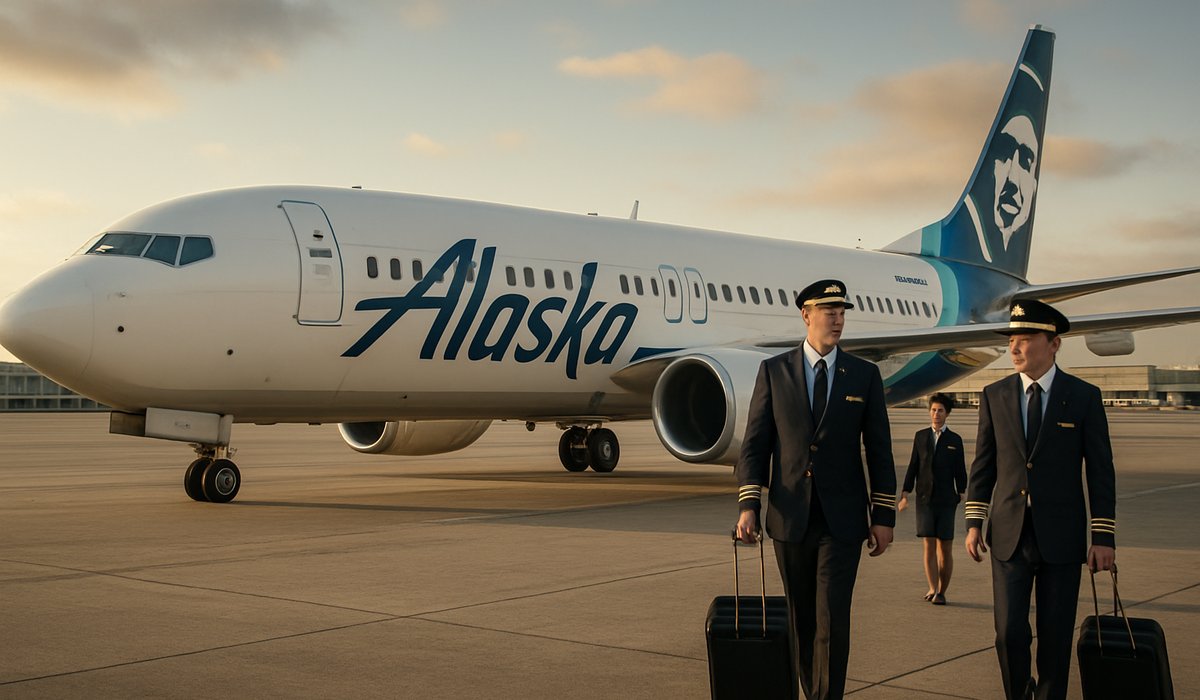
Image generated by AI
Alaska Airlines Struggles With Severe Capacity Underutilization on 10 Key Routes Despite Record Passenger Numbers
Carrier's weakest-performing corridors operating at less than 39% capacity as airline grapples with route optimization challenges in 2025
Record Ridership Masks Deeper Operational Challenges
Alaska Airlines concluded 2025 with its strongest passenger numbers on record, welcoming 47.1 million travelers across its network—marginally surpassing the previous benchmark set in 2019 by just over 10,000 passengers. The Seattle-based carrier also achieved a historic milestone in international travel, transporting 3.4 million overseas passengers, yet these headline-grabbing figures obscure a troubling reality unfolding across a critical subset of its route portfolio.
New data from the U.S. Department of Transportation reveals that Alaska Airlines is contending with severe capacity utilization problems on ten of its most underperforming corridors, where aircraft are operating at roughly 39 percent capacity or lower. This disparity between overall passenger growth and route-level performance highlights the complex dynamics facing mid-sized carriers as they navigate post-pandemic demand patterns, fuel cost volatility, and shifting consumer travel preferences.
The Capacity Conundrum
The disconnect between Alaska Airlines' record-breaking aggregate statistics and its struggling regional routes underscores a fundamental challenge in aviation network planning. Airlines traditionally operate with the expectation that not every route will achieve optimal load factors—industry benchmarks typically target 80-85 percent capacity utilization for profitability. However, operating consistently below 40 percent represents a significant financial hemorrhage, particularly given elevated jet fuel prices and persistent labor cost pressures facing the sector.
These underperforming routes likely represent either seasonal demand anomalies, competitive pressure from rival carriers, or strategic positioning efforts as Alaska Airlines navigates its expanded network footprint. For travelers, such inefficiencies can translate into higher per-ticket costs, reduced flight frequency, or potential service discontinuations.
Broader Industry Implications
Alaska Airlines' experience reflects sector-wide challenges as the aviation industry grapples with demand volatility, environmental pressures to reduce emissions through consolidation, and evolving business models that prioritize yield management over pure capacity deployment. The carrier's ability to optimize these problematic routes will prove critical not only to its financial performance but also to its strategic positioning within an increasingly competitive marketplace.
Industry observers will be watching closely to determine whether Alaska Airlines pursues targeted route exits, increased codesharing arrangements, or capacity adjustments to address these persistent underutilization issues in the coming months.
FAQ: Airline Route Capacity and Operational Performance
Why do airlines operate routes with such low capacity utilization? Airlines often maintain underperforming routes for strategic network coverage, loyalty program benefits, or connecting traffic that generates revenue indirectly, even when direct load factors appear weak.
How do airline baggage fees and ancillary charges relate to low-capacity routes? When routes operate below profitability thresholds, carriers increasingly rely on baggage charges, seat selection fees, and other ancillaries to offset operational losses and maintain service.
What impact does jet fuel pricing have on struggling routes? High fuel costs disproportionately damage marginal routes; when oil prices spike, airlines prioritize high-demand corridors and often cut capacity or eliminate service on weaker routes first.
Is Alaska Airlines likely to discontinue these underperforming routes? While possible, carriers typically explore alternatives first—reducing frequency, downsizing aircraft, or increasing codeshare partnerships before completely exiting routes.
How do load factors affect airline profitability? Load factor directly determines per-seat revenue; routes operating at 39% capacity require significantly higher ticket prices to achieve profitability, making them vulnerable to competitive pressure and demand fluctuations.
Related Travel Guides
- Alaska Airlines Launches Spectacular 41,000-Square-Foot Flagship Seattle Lounge with 700 Seats and Panoramic Runway Views to Prevent Flight Cancellations and Travel Chaos Risks Across Portland, San Diego, and Honolulu: New Airline News and Aviation Updates
- Liat Air Launches Historic Nonstop Route Between Guadeloupe and Montego Bay Jamaica Expanding Regional Caribbean Tourism Connectivity
- Singapore Airlines, Emirates, Delta, Air France-KLM, and Lufthansa Transform Global Networks as Premium Business Class Revenue Surpasses Economy to Counter Flight Cancellations, Airport Disruptions, and Travel Chaos: Breaking Airline News and Aviation Updates
Disclaimer
This article is for informational and educational purposes only. It does not constitute legal, financial, or professional advice. While we strive to provide accurate and up-to-date information, travel policies, regulations, and conditions change rapidly. Always verify information with official sources before making travel decisions. Nomad Lawyer makes no representations about the accuracy, reliability, completeness, or suitability of the information provided. Readers should consult qualified professionals for advice specific to their circumstances. The views expressed in this article are those of the author and do not necessarily reflect the views of Nomad Lawyer.
Kunal K Choudhary
Co-Founder & Contributor
A passionate traveller and tech enthusiast. Kunal contributes to the vision and growth of Nomad Lawyer, bringing fresh perspectives and driving the community forward.
Learn more about our team →