
Southern Railway Unlocks New Era Of Sustainable Travel After Achieving 100% Network Electrification
Southern Railway Unlocks New Era Of Sustainable Travel After Achieving 100% Network Electrification

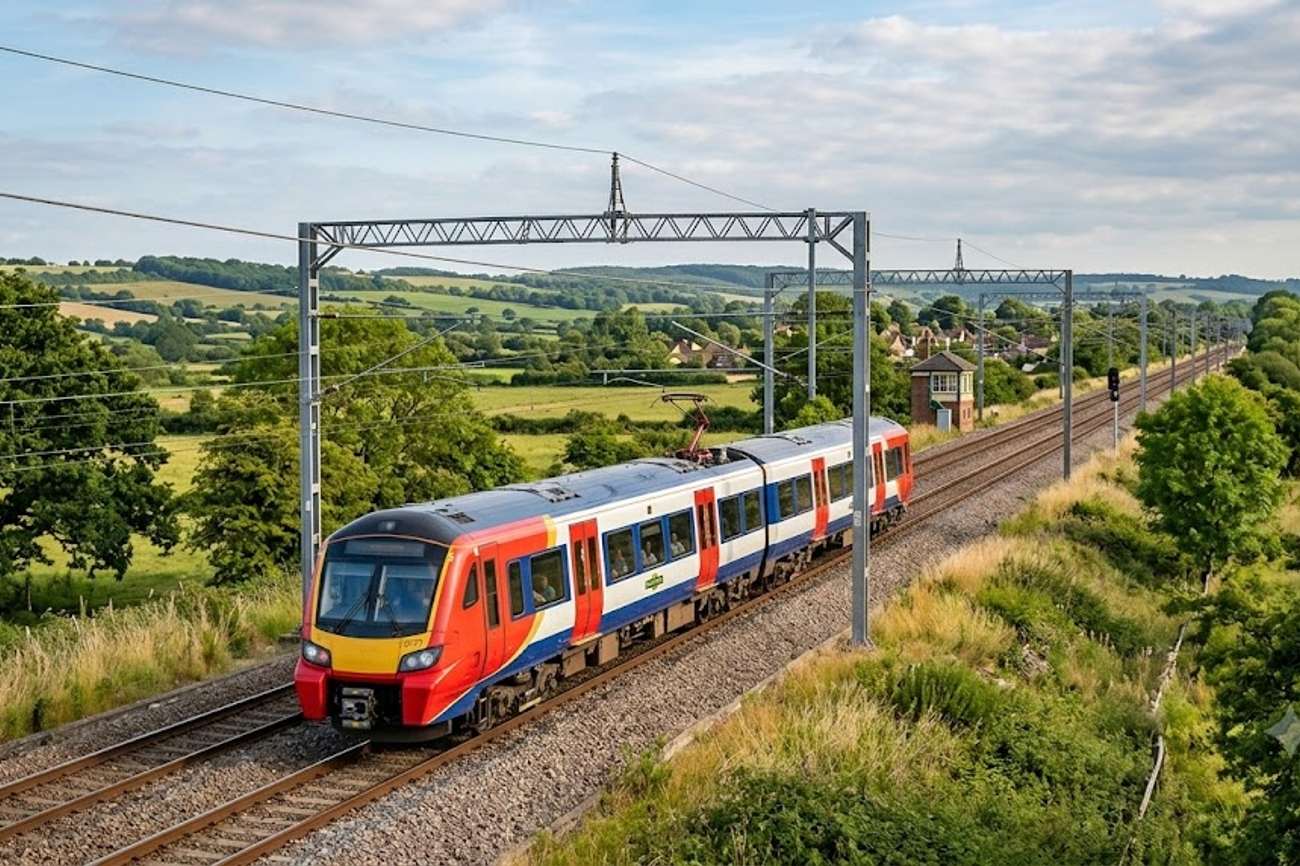
Image generated by AI
[Chennai, September 13, 2026] — Southern Railway has achieved 100% electrification of its entire 5,068-kilometre Broad Gauge (BG) network, officially ending its operational dependence on diesel traction. The milestone was reached following the completion of the final 71-kilometre stretch connecting Pattukkottai and Karaikkudi in Tamil Nadu, marking the end of a modernization project that spanned nearly a century.
The transition to a fully electric system allows the railway zone to operate all passenger and freight services using electric locomotives across its entire jurisdictional footprint. This infrastructure shift eliminates the need for "traction changes"—the time-consuming process of swapping an electric engine for a diesel one when a train enters a non-electrified zone. The move aligns with broader national goals overseen by the Ministry of Railways to decarbonize the transport sector and increase the velocity of goods and passenger movement.
The Final Link in Tamil Nadu
The catalyst for this announcement was the successful commissioning of the Pattukkottai–Karaikkudi section. While the majority of the Southern Railway network had been converted over recent years, this final 71-kilometre segment remained a diesel-reliant gap. By closing this loop, the railway has unified its traction system, ensuring that no Broad Gauge route within the zone requires fossil-fuel-powered locomotives for primary haulage.
This achievement is the culmination of a process that began in 1931, when electric traction was first introduced in the Madras region. For 95 years, the network expanded incrementally, but the completion of the Tamil Nadu stretch represents the final step in a total systemic overhaul. The project was designed to replace aging diesel fleets with high-efficiency electric motors that offer superior acceleration, higher top speeds, and lower long-term maintenance costs.
Who Is Affected
The electrification impacts every passenger, logistics provider, and operator utilizing the Southern Railway zone. The benefits are distributed across several key sectors:
- Tamil Nadu Commuters: Passengers traveling between Pattukkottai and Karaikkudi will see an immediate shift to electric services, resulting in quieter rides and reduced local emissions.
- Long-Distance Travelers: Passengers on routes crossing the Southern Railway zone will experience fewer delays, as trains no longer need to stop at junction points to switch locomotives.
- Freight Operators: Cargo services moving through the 5,068-km network will benefit from more consistent transit times and increased hauling capacity provided by electric locomotives.
- Environmental Regulators: The removal of diesel engines across the Broad Gauge network significantly reduces the carbon footprint of the region's rail transport, supporting India's National Rail Plan for sustainable growth.
What This Means for Travelers
For the average traveler booking a ticket via the IRCTC portal, the impact of 100% electrification is primarily operational rather than transactional. However, the real-world changes are significant:
Faster Transit Times The most immediate benefit is the removal of "traction change" stops. Previously, when a train transitioned from an electrified section to a diesel section, it had to stop for a locomotive swap. These stops often added 15 to 30 minutes to a journey. Now, trains can maintain a consistent speed from origin to destination.
Improved Reliability Electric locomotives are generally more reliable and require less frequent maintenance than diesel engines. For passengers, this means a lower probability of mechanical breakdowns and "engine failures" that lead to unplanned delays on the tracks.
Enhanced On-Board Comfort Electric trains produce significantly less noise and vibration than diesel-powered trains. Passengers will notice a smoother ride, particularly in the carriages closest to the locomotive, as the heavy thrum of a diesel engine is replaced by the quieter hum of electric traction.
Cleaner Air at Stations The elimination of diesel idling at platforms and junctions will lead to a noticeable improvement in air quality at smaller stations, particularly in the newly electrified Pattukkottai and Karaikkudi areas.
The Future of Southern Rail Infrastructure
With the Broad Gauge network now fully electrified, Southern Railway is positioned to integrate more advanced rolling stock. The infrastructure now supports the potential introduction of higher-speed trains and more energy-efficient locomotives that can regenerate power during braking.
The move also simplifies the logistics of locomotive management. The railway no longer needs to maintain separate fleets of diesel and electric engines for the same routes, nor does it need to station diesel locomotives at specific "change-over" points. This allows for a more flexible deployment of assets, meaning trains can be rerouted more easily during maintenance or emergencies without worrying about whether the track supports the engine type.
Furthermore, this milestone serves as a blueprint for other railway zones in India. By proving that even the most remote sections—like the final 71-km stretch in Tamil Nadu—can be integrated into a green grid, Southern Railway has accelerated the timeline for a completely carbon-neutral national rail network. Future expansions will likely focus on upgrading the power grids to handle increased loads as more high-frequency services are added to the electrified lines.
FAQ: Southern Railway Electrification 2026
Will ticket prices change because of electrification? No. Electrification is an infrastructure upgrade aimed at operational efficiency and sustainability; it does not trigger a change in the standard fare structure set by the railway board.
Do I need to book a specific "electric train" to get these benefits? No. The electrification happens at the track and locomotive level. Any train scheduled on these routes will now automatically utilize electric traction, providing a smoother and faster journey.
Which specific area saw the final upgrade? The final 71-kilometre section between Pattukkottai and Karaikkudi in Tamil Nadu was the last piece of the 5,068-km Broad Gauge network to be electrified.
How does this affect freight and cargo shipping? Freight services will move faster and more reliably. The removal of locomotive swaps reduces the time goods spend sitting in yards, improving the overall supply chain efficiency across Southern India.
A century of progress culminates in a silent, spark-driven future for the South.
#SouthernRailway #IndianRailways #TamilNaduRail #PattukkottaiKaraikkudi #RailElectrification2026 #GreenTransportIndia
Related Travel Guides
- Mizoram Rail Link Restored: Train Operations Resume on Jamira-Bairabi Section After Landslip Repairs
- Uzbekistan Travel Revolution Begins As First China To Iran Block Train Opens Historic Eurasian Rail Gateway
- Thailand Strengthens Travel Network As Bangkok Airport Rail Link Gets Temporary Extension To 2027
Disclaimer
This article is for informational and educational purposes only. It does not constitute legal, financial, or professional advice. While we strive to provide accurate and up-to-date information, travel policies, regulations, and conditions change rapidly. Always verify information with official sources before making travel decisions. Nomad Lawyer makes no representations about the accuracy, reliability, completeness, or suitability of the information provided. Readers should consult qualified professionals for advice specific to their circumstances. The views expressed in this article are those of the author and do not necessarily reflect the views of Nomad Lawyer.
Preeti Gunjan
Contributor & Community Manager
A passionate traveller and community builder. Preeti helps grow the Nomad Lawyer community, fostering engagement and bringing the reader experience to life.
Learn more about our team →