
South Korea Transforms Travel as Seoul and Busan Lead AI-Powered Smart Tourism Innovation
South Korea Transforms Travel as Seoul and Busan Lead AI-Powered Smart Tourism Innovation

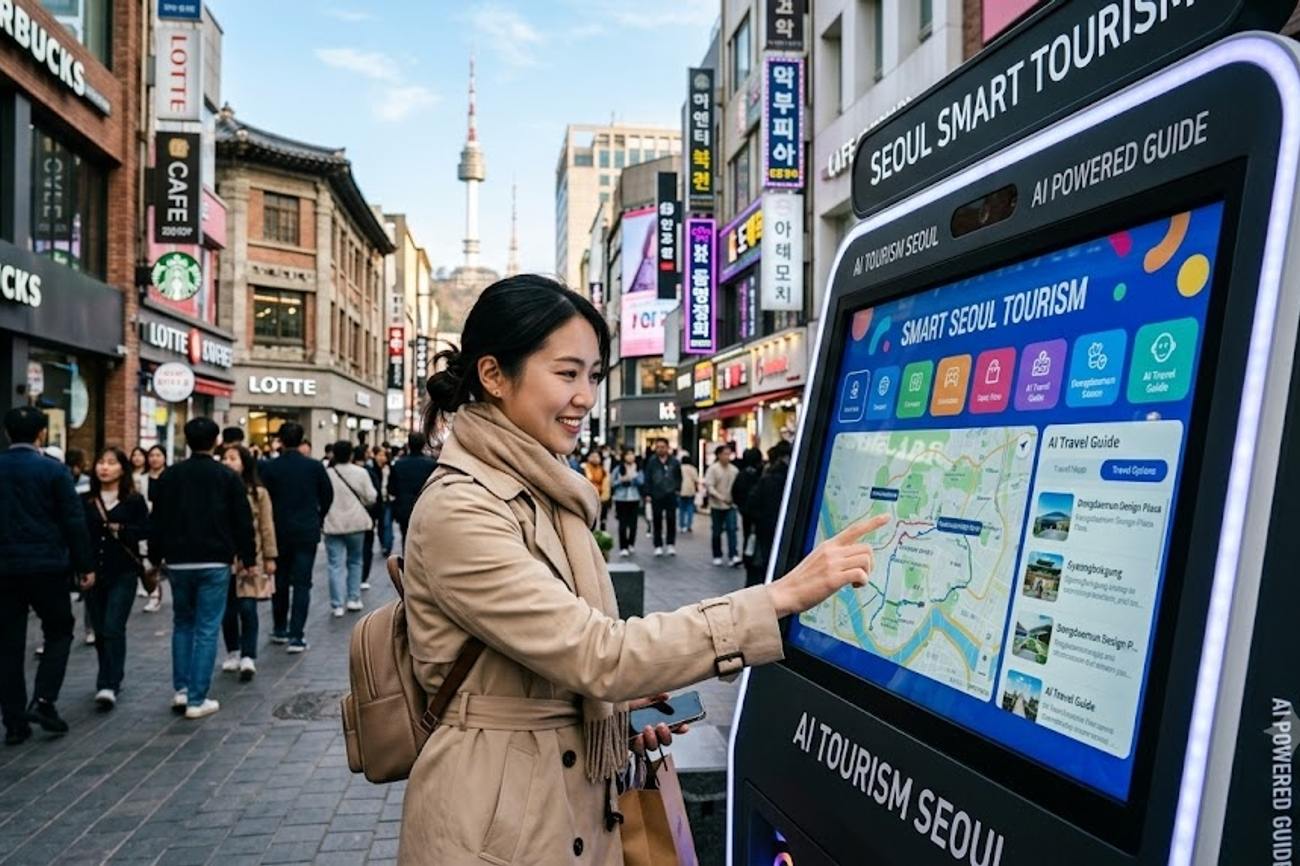
Image generated by AI
[Seoul, October 2023] — South Korea is transitioning its national travel infrastructure from basic digital services to AI-driven "intelligent travel ecosystems" designed to eliminate friction for international visitors. The initiative moves beyond simple apps, integrating artificial intelligence, big data, and smart mobility into a unified urban fabric that treats the destination as a technology platform rather than a physical location.
The strategy, spearheaded by the Korea Tourism Organization, focuses on the seamless integration of Information and Communication Technology (ICT) across every touchpoint of the visitor journey. By synchronizing data between transport hubs, hospitality providers, and municipal services, South Korea aims to provide hyper-personalized itineraries and real-time navigation that adapt to the individual preferences of the traveler.
The Catalyst for Intelligent Ecosystems
The shift is triggered by a systemic move to replace fragmented tourism tools with an interconnected visitor infrastructure. Previously, "smart tourism" referred to the availability of digital guides or online booking portals. The new "intelligent ecosystem" model utilizes location-based services and AI to automate the travel experience.
This transition is driven by the need to reduce "travel friction"—the cumulative stress of navigating foreign language barriers, complex transit systems, and disjointed booking platforms. By utilizing open data systems, the government is allowing AI to synthesize information from multiple sectors, providing a single, cohesive digital layer over the physical city.
Markets and Hubs Under Transformation
The rollout is currently concentrated in two primary urban laboratories, each testing different applications of the smart tourism framework.
Seoul: The AI Urban Laboratory The Seoul Metropolitan Government is leveraging its existing smart city foundation to turn the capital into a digital tourism platform. The focus here is on high-density urban navigation and personalized service delivery.
| Seoul Tech Pillar | Direct Impact on Visitor |
|---|---|
| AI & Big Data Infrastructure | Automated, personalized itinerary generation based on user behavior |
| Digital Public Services | Streamlined access to municipal permits, bookings, and city info |
| Connected Mobility | Integrated transit synchronization across all attraction zones |
| Multilingual Digital Support | Real-time AI translation reducing linguistic barriers |
Busan: The Smart Coastal Hub While Seoul focuses on the urban core, the Busan Metropolitan Government is applying these technologies to coastal and cruise tourism. The goal is to extend the average length of stay by making regional exploration as effortless as city center navigation.
| Busan Tech Pillar | Direct Impact on Visitor |
|---|---|
| AI Personalization | Tailored suggestions for coastal and cultural attractions |
| Smart Mobility | Enhanced transit solutions for sprawling coastal districts |
| Digital Platforms | Centralized "one-stop" portals for all regional travel needs |
| Data-Driven Management | Optimized crowd control and destination planning |
What This Means for Travelers
For the passenger or tourist booking a trip to South Korea, this shift translates into a move away from manual planning. Instead of managing five different apps for maps, translation, ride-sharing, and attraction tickets, travelers will interact with integrated systems that anticipate their needs.
Plain-Language Impact Assessment:
- Planning: AI will suggest destinations based on your specific profile and real-time data (e.g., weather, crowd levels) rather than static "top 10" lists.
- Navigation: Movement between airports, hotels, and sites will be synchronized via smart mobility systems, reducing wait times and routing errors.
- Communication: Language barriers are being mitigated through the Visit Korea Committee’s Smart Tourist Information System, which provides AI-powered multilingual support at critical transit nodes.
- Payments: The integration of digital platforms suggests a move toward unified, frictionless payment systems across various service providers.
The Future of Global Destination Competition
South Korea's model signals a shift in how global destinations will compete for tourism spend. The industry is moving toward a period where the quality of the "invisible technology network" is as important as the physical landmarks.
Future infrastructure will likely see a total convergence of data between Incheon International Airport, hotel chains, and local transport authorities. This shared data environment allows the destination to react in real-time to visitor behavior, shifting resources or sending notifications to travelers to optimize their experience.
For travel agencies and tour operators, this creates a new operational requirement: the ability to integrate their offerings into these government-backed AI ecosystems. Packages will no longer be static PDFs but dynamic, tech-enhanced experiences that update in real-time based on the smart city's data feed.
FAQ: South Korea Smart Tourism 2023
Do I need a specific app to use these AI services? The goal is a unified ecosystem. While specific platforms exist, the system is designed to integrate into the digital tools travelers already use, utilizing multilingual digital kiosks and integrated platforms provided by the Visit Korea Committee.
How does this improve transport for international visitors? Smart mobility systems synchronize real-time data across different modes of transport. This means more accurate arrival times and AI-optimized routing that helps visitors navigate complex transit networks in Seoul and Busan without manual searching.
Will this replace traditional tour guides? No, but it changes their role. AI handles the logistical friction—translation, navigation, and scheduling—allowing human guides to focus on deep cultural storytelling and personalized hospitality rather than basic directions.
Is my data safe within these "intelligent ecosystems"? The systems rely on big data and open data frameworks. While specific privacy policies vary, the infrastructure is managed by the Seoul and Busan Metropolitan Governments under South Korea's national data protection standards.
The era of the static destination is over; the era of the travel platform has begun.
#SouthKoreaTourism #SeoulSmartCity #BusanTourism #VisitKorea #AI Travel #SmartMobility2023
Related Travel Guides
Disclaimer
This article is for informational and educational purposes only. It does not constitute legal, financial, or professional advice. While we strive to provide accurate and up-to-date information, travel policies, regulations, and conditions change rapidly. Always verify information with official sources before making travel decisions. Nomad Lawyer makes no representations about the accuracy, reliability, completeness, or suitability of the information provided. Readers should consult qualified professionals for advice specific to their circumstances. The views expressed in this article are those of the author and do not necessarily reflect the views of Nomad Lawyer.
Raushan Kumar
Founder & Lead Developer
Full-stack developer with 11+ years of experience and a passionate traveller. Raushan built Nomad Lawyer from the ground up with a vision to create the best travel and law experience on the web.
Learn more about our team →