
South Korea Expands China Air Routes: Low-Cost Carriers Open Direct Regional Gateways for 2027
South Korea awards 25 international routes across 10 domestic airlines, introducing low-cost carriers to China from Incheon, Busan, Daegu, and regional gateways by summer 2027.

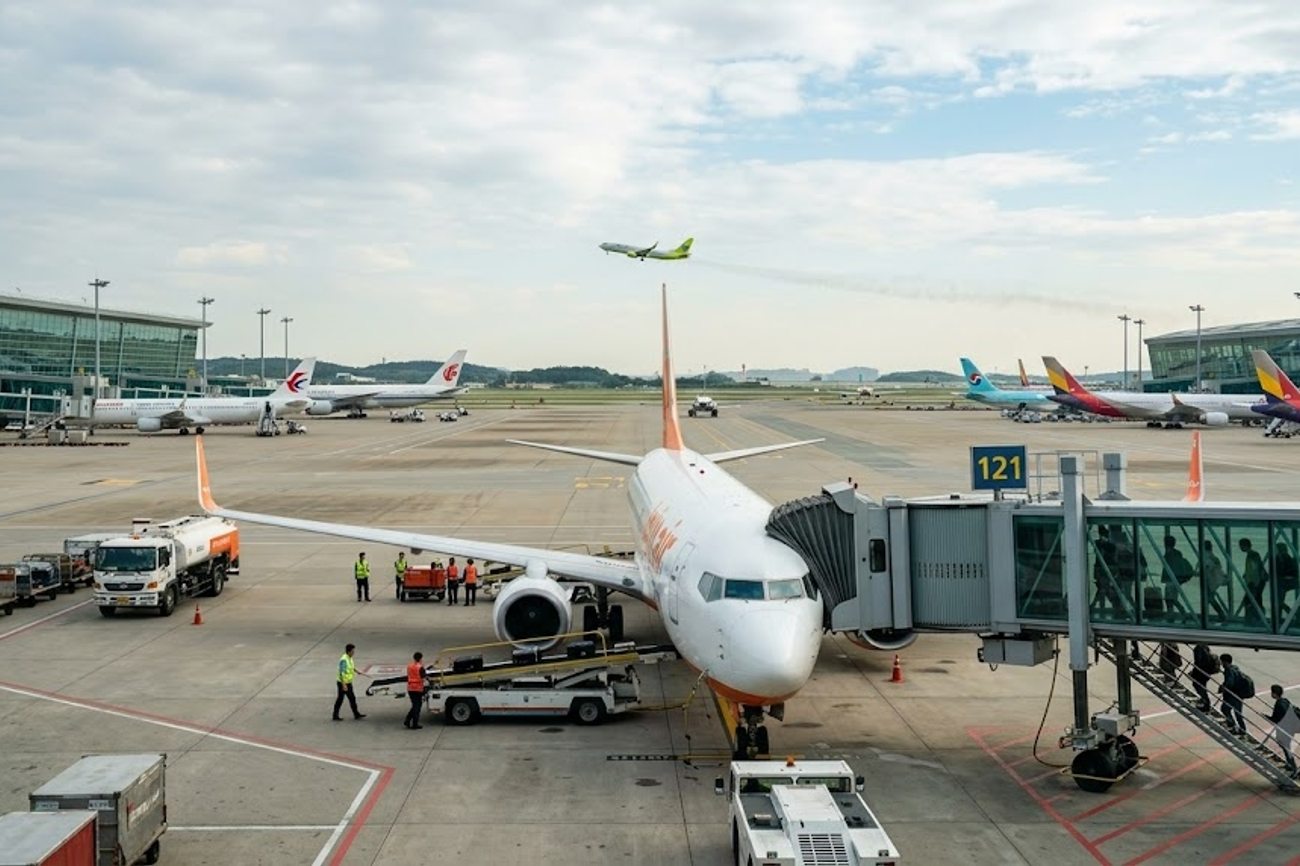
Image generated by AI
For decades, travelers departing southern and central South Korea had to endure a four-hour overland transfer or costly domestic positioning flight to Seoul just to cross the Yellow Sea. That historic bottleneck is finally dissolving as South Korea’s Ministry of Land, Infrastructure and Transport grants traffic rights for 25 international routes across 10 domestic airlines, clearing low-cost carriers to establish direct corridors into China by summer 2027. Instead of funneling all cross-border passenger traffic through the capital's crowded departure gates, the government's decisive allocation redistributes international aviation power directly into provincial communities from Busan to the eastern shores of Yangyang.
The Regional Aviation Shift: Budget Carriers Break the Seoul-Beijing Monopoly
The bilateral route allocation marks a structural transformation in how travelers navigate between South Korea and mainland China. Historically, flight paths between the two economic partners were the exclusive domain of full-service legacy flag carriers commanding high premium fares. The newly awarded traffic rights shatter that status quo by introducing aggressive budget operators into premier international city pairs while establishing completely new regional launchpads.
Under the allocation finalized by the Ministry of Land, Infrastructure and Transport, major trunk routes from Incheon International Airport will experience immediate low-cost competition. Eastar Jet and Jeju Air have secured rights to fly the flagship Incheon–Beijing corridor, bringing budget pricing to a route historically dominated by traditional network airlines. Jin Air has gained direct access to Incheon–Guangzhou, unlocking southern China's industrial and cultural capital for cost-conscious travelers, while Trinity Air joins the Incheon–Dalian sector to expand coastal links.
The true breakthrough, however, lies across Korea's provincial airports. Rather than forcing residents of Gyeongsang, Chungcheong, and Jeolla provinces to journey north to Incheon, the government has allocated key point-to-point Chinese destinations across five regional gateways:
- Busan (Gimhae International Airport): Air Busan secures traffic rights to Chengdu and Harbin, while Jin Air will operate direct services to Hangzhou.
- Daegu: Eastar Jet captures the Daegu–Beijing route, accompanied by Trinity Air operating between Daegu and Xiamen.
- Cheongju: Aero K introduces a direct link connecting the central region to Dalian.
- Muan: The southwestern gateway in South Jeolla gains direct connections to Beijing, Yanji, and the dramatic karsts of Zhangjiajie.
- Yangyang: Gangwon province's coastal airfield receives rights to operate nonstop flights to Shanghai and Hangzhou.
While the distribution of traffic rights formalizes official governmental permission, commercial operations will not take off overnight. Each of the 10 designated airlines must now negotiate take-off and landing slots with airport authorities, finalize operational ground-handling agreements, and secure formal civil aviation approvals. The Ministry of Land, Infrastructure and Transport projects that scheduled passenger services will commence operations during the summer 2027 timetable, giving international visitors and regional residents an unprecedented array of direct, affordable flight options.
What Makes Regional Korean Gateways Different
Stepping through a regional Korean airport offers a completely different rhythm than traversing the sprawling halls of Incheon. Having lived in and traveled extensively across South Korea's southern and coastal provinces, the ease of boarding a short-haul international flight from an airfield like Busan's Gimhae or central Daegu feels like a revelation.
Busan's Gimhae International Airport sits along the Nakdong River delta, just a short light rail hop from the heart of South Korea's maritime capital. Unlike Incheon, where travelers must budget three hours to clear security lines and automated shuttle trains, Gimhae operates with compact efficiency. You can enjoy a steaming morning bowl of dwaeji gukbap (rich pork broth soup seasoned with salted shrimp and spicy paste) at a neighborhood diner in Sasang, wheel your carry-on bag onto the Gimhae Light Rail, and clear passport control within thirty minutes. Air Busan's upcoming flights from Gimhae to Chengdu will link Korea's primary seaside port directly with Sichuan's tea house culture and giant panda sanctuaries, eliminating an entire day of wasted domestic transit.
Daegu International Airport presents an even more intimate travel experience. Positioned in the center of the Yeongnam basin and surrounded by the peaks of Palgongsan mountain, Daegu's terminal allows passengers to walk from curbside taxi ranks to gate areas in under fifteen minutes. Eastar Jet's new Daegu–Beijing flights and Trinity Air's Daegu–Xiamen services transform this industrial and textile hub into an accessible springboard for historic excursions. Daegu also sits just thirty minutes by local train from Gyeongju, the ancient royal capital of the Silla Kingdom celebrated by the UNESCO World Heritage Centre.
Further north, Cheongju serves as the quiet gateway to the Chungcheong heartland. Aero K, headquartered directly at Cheongju Airport, has earned a devoted local following for its genderless staff uniforms, straightforward fares, and friendly neighborhood hospitality. Its upcoming route to Dalian provides an effortless passage across the Yellow Sea. Meanwhile, Muan in the southwest and Yangyang in the northeast provide direct connections for travelers seeking the wild coastlines of Gangwon's surf beaches or the rich agricultural food culture of South Jeolla.
Visitor Insider Tips
Navigating South Korea's expanding budget aviation network requires insider know-how that generic travel brochures rarely cover:
- Booking Windows for Summer 2027: Do not expect newly allocated routes to appear on ticket aggregators immediately. Korean low-cost carriers typically launch ticket sales three to six months prior to the start of a seasonal schedule once airport slots are locked. Monitor the promotional newsletters of Jeju Air, Eastar Jet, and Air Busan, which often release steep inaugural discount fares during their initial route rollout campaigns.
- Transit Hacks to Regional Terminals: Reaching provincial airports is remarkably straightforward if you know the local transit grid. For Busan Gimhae, take Busan Metro Line 2 to Sasang Station and transfer directly to the Busan-Gimhae Light Rail Transit. For Daegu Airport, skip expensive airport limousines and catch local city bus 101 or express bus 1 directly from Dongdaegu KTX Station, which costs less than $1.50 and takes twenty minutes.
- Domestic Navigation and Payment Essentials: Western mapping tools like Google Maps do not provide walking directions or reliable transit navigation in South Korea due to national security map-data regulations. Always download Naver Map or KakaoMap before your trip. For ground payments, purchase a rechargeable T-money transit card at any local convenience store (CU, GS25, or 7-Eleven). If planning onward travel to China from these regional hubs, link your international credit card to Alipay or WeChat Pay before departure, as cash and foreign physical cards are rarely accepted by merchants across Chinese cities.
- Baggage Nuances on Korean Budget Airlines: Unlike full-service carriers, Korean low-cost carriers strictly enforce carry-on weight limits, typically capped at 10 kilograms per passenger. If you plan to stock up on regional gifts—such as Korean red ginseng, skincare products, or regional ceramics—purchase checked luggage allowances in advance online, where fees are up to 50% cheaper than paying at the airport check-in counter.
- Neighborhood Bases Before Departure: If you have an early morning flight from Busan Gimhae, stay in Seomyeon or Sasang rather than distant Haeundae Beach to avoid highway traffic. In Daegu, stay near Dongdaegu Station, which offers countless 24-hour diners serving local makchang (grilled beef intestines) and convenient early bus connections to the terminal.
Cultural and Environmental Context
The decentralization of South Korea's air network carries profound cultural and economic implications for the entire peninsula. For decades, the South Korean economy has grappled with extreme centralization around the Seoul Capital Area, which houses half the country's population. By granting traffic rights for 25 international routes to provincial airports, the government is deliberately revitalizing regional economies, supporting municipal employment, and encouraging international visitors to discover heritage sites beyond the capital.
According to cultural initiatives promoted by the Korea Tourism Organization, direct flight corridors into secondary hubs encourage balanced tourism dispersal. Travelers arriving in Busan, Daegu, or Muan inject revenue directly into family-run guesthouses, historic markets, and regional transit systems, preserving traditional artisan trades that struggle to compete against Seoul's commercial retail conglomerates.
From an environmental perspective, establishing point-to-point regional air routes reduces reliance on dual-leg domestic transit itineraries. Previously, travelers from southern provinces were forced to book domestic feeder flights or spend hours in automobiles traveling to Incheon, multiplying their individual carbon footprints. Operating direct, modern narrowbody aircraft such as the Airbus A321neo and Boeing 737-8 on short-haul international flights significantly trims cumulative transit emissions. When paired with high-speed regional rail networks connecting neighboring towns to these secondary airports, South Korea's evolving travel network creates a more sustainable, balanced framework for cross-border exploration.
FAQ: Visiting South Korea and China 2027
When do the new South Korea to China budget routes begin operations?
Airlines are scheduled to launch commercial flights starting in summer 2027. Carriers must first finalize airport slot approvals, operational procedures, and official flight timetables before releasing tickets to the public.
Which budget airlines received rights to fly these routes?
South Korean carriers awarded route rights include Jeju Air, Eastar Jet, Jin Air, Air Busan, Aero K, and Trinity Air, competing on major city pairs alongside regional departures.
Which regional Korean airports will feature direct China flights?
In addition to Seoul Incheon, direct international services will operate from Busan (Gimhae), Daegu, Cheongju, Muan, and Yangyang, providing direct regional connectivity without transferring through Seoul.
Do travelers need a visa when flying between South Korea and China?
Entry and visa rules depend entirely on your nationality and destination regulations. Travelers must verify current visa and transit entry policies for both South Korea and China before booking international flights.
By bypassing the capital and stepping directly onto regional tarmacs, travelers can experience East Asia through the genuine rhythms of its coastal towns and provincial heartlands.
Related Travel Guides
- Eastar Jet Expands In-Flight Meals and Onboard Shopping With New Korean Flavours for International Travellers
- Japan Airlines and Korean Air Expand Strategic Alliance Ahead of December 2026 Asiana Merger
- China Constructs World's Largest Ocean Airport in Dalian: Marine Aviation and Asia-Pacific Coastal Hubs Guide
Disclaimer
This article is for informational and educational purposes only. It does not constitute legal, financial, or professional advice. While we strive to provide accurate and up-to-date information, travel policies, regulations, and conditions change rapidly. Always verify information with official sources before making travel decisions. Nomad Lawyer makes no representations about the accuracy, reliability, completeness, or suitability of the information provided. Readers should consult qualified professionals for advice specific to their circumstances. The views expressed in this article are those of the author and do not necessarily reflect the views of Nomad Lawyer.
Preeti Gunjan
Contributor & Community Manager
A passionate traveller and community builder. Preeti helps grow the Nomad Lawyer community, fostering engagement and bringing the reader experience to life.
Learn more about our team →