
Buenos Aires Leads South American City-Break Affordability as Santiago and Bogotá Compete for Summer Holiday Travel Budgets in 2026
Buenos Aires offers exceptional value with daily costs from US$25 to US$55, while Santiago pivots toward Brazilian travelers and Bogotá leads regional growth at 9.03% CAGR.

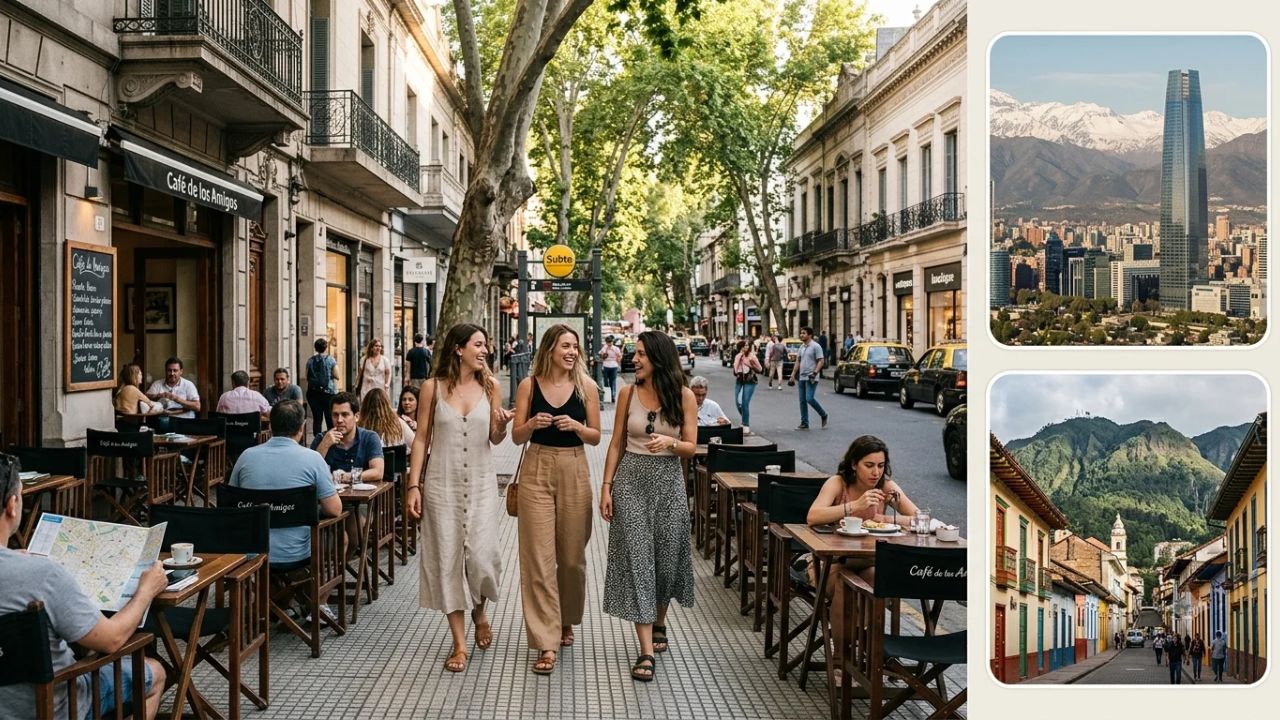
Image generated by AI
Buenos Aires has emerged as South America's most affordable urban getaway for the 2026/2027 summer season with daily backpacker budgets ranging from US$25 to US$55, while Santiago manages a 19.5% decline in regional arrivals and Bogotá accelerates regional expansion under Colombia's 9.03% projected tourism growth rate. According to industry intelligence from the World Travel & Tourism Council (WTTC) forecasting a $117 billion market valuation across South America, international travelers are recalibrating holiday spending across three distinct economic tiers anchored by currency dynamics and low-cost aviation networks.
The economic divide across South American capitals reflects contrasting fiscal policies, currency realignments, and shifting traveler demographics. While the WTTC projects regional travel and tourism GDP to expand by 4.1% through the end of 2026, foreign visitors experience vastly different purchasing power on the ground. Favorable exchange rates in Argentina provide unprecedented purchasing value for international tourists, whereas Chile contends with a 57.5% drop in Argentine cross-border shoppers, and Colombia positions Bogotá as a stable, mid-priced cultural hub supported by national sustainable tourism frameworks.
Macroeconomic Reality: Regional GDP Expansion and Currency Divides
The Latin American travel market is projected to surpass a collective valuation of USD 117 Billion in 2026. However, inbound visitor revenue is distributed unevenly due to structural macroeconomic conditions:
In Argentina, economic stabilization measures carried out through 2024 and 2025 have prioritized tourism as a vital channel for foreign currency generation. The Secretariat of Tourism, Environment, and Sports (Turismo, Ambiente y Deportes) confirmed record-setting domestic and international travel during recent national holiday periods, with hotel occupancy rates peaking at 90% in key leisure districts. For overseas travelers utilizing international payment cards operating on preferential tourist exchange mechanisms, Buenos Aires delivers luxury experiences at a fraction of standard North American or European rates.
Across the Andes, Chile presents an inverse trajectory. Data from the Chilean National Tourism Service (SERNATUR) and the Tourism Statistics Information System (SIET) recorded 344,937 foreign tourist arrivals in August 2026, representing a 19.5% year-on-year contraction and a 19.1% year-to-date decline. This downturn was driven almost exclusively by a 57.5% collapse in Argentine arrivals, whose domestic purchasing power has been curtailed by currency shifts. To compensate, Brazil has officially overtaken Argentina as Chile's primary international feeder market, while arrivals from long-haul markets (Europe, North America, and Asia) expanded by a combined 12.3%. Undersecretary of Tourism María Paz Lagos expects Chile to close 2026 with 5.0 to 5.2 million total international visitors.
In Colombia, the Ministry of Commerce, Industry, and Tourism (MINCIT) is advancing its Política de Turismo 2022–2026, focusing on infrastructure modernizations and regional connectivity. Industry forecasts project Colombia to record the highest Compound Annual Growth Rate (CAGR) in South America at 9.03% through 2031, positioning Bogotá as a balanced, inflation-resilient urban destination.
Comparative Travel Cost Analysis: Buenos Aires, Santiago, and Bogotá
Analyzing verified consumer expenditure tiers illustrates how currency valuations and local pricing policies impact everyday travel budgets across the three capitals:
1. Buenos Aires: The Premier Value Proposition
Operating across three distinct budgetary tiers, Buenos Aires offers significant value for international travelers:
- Budget / Backpacker (US$25 to US$55 per day): Covers hostel dormitory beds (US$9 to US$18 per night), unlimited urban transit using the reloadable SUBE card (under US$3 per day), and affordable local dining featuring empanadas, choripán, or lunchtime menú del día specials (US$8 to US$18).
- Mid-Range (US$54 to US$160 per day): Provides private boutique hotel rooms in Palermo or Recoleta, traditional dinners at historic parrillas with premium local Malbec wine, and guided architectural and tango cultural tours.
- Luxury (US$180 to US$300+ per day): Secures 5-star heritage hotels, chauffeur-driven private airport transfers, and multi-course fine-dining tasting menus that would command three to four times the price in London or New York.
2. Santiago: Stabilized Pricing with Western Baselines
Santiago operates on a stronger, relatively stable currency baseline, resulting in substantially higher expenditure requirements:
- Accommodation: Mid-range hotel rooms generally start between US$80 and US$120 per night, reflecting stable commercial hotel demand in financial districts like Las Condes and Providencia.
- Dining: Standard sit-down meals in mid-tier restaurants typically range between US$25 and US$35 per person, aligning with Western European averages.
- Market Dynamic: While local hospitality operators have experienced reduced cross-border regional demand, hotel rates have not dropped significantly, as luxury ski resorts and business travel maintain firm price floors.
3. Bogotá: The Balanced Emerging Middle Ground
Bogotá bridges the gap between Argentine currency fluctuations and Chilean premium baselines:
- Cost Predictability: Avoids rapid currency volatility while offering accommodation rates 20% to 30% below Santiago.
- Air Connectivity Advantage: As the primary hub for Avianca and regional low-cost carriers, El Dorado International Airport delivers competitive point-to-point airfares connecting North America and Europe.
City-Break Cost Breakdown and Performance Benchmarks 2026
The table below contrasts verified travel costs, accommodation ranges, and macroeconomic indicators defining urban breaks across the three capitals:
| Expense Category / Indicator | Buenos Aires (Argentina) | Santiago (Chile) | Bogotá (Colombia) | Travel Budget Implication |
|---|---|---|---|---|
| Budget / Backpacker Tier | US$25 – US$55 / day | US$50 – US$80 / day | US$35 – US$60 / day | Buenos Aires offers lowest entry cost for budget travelers |
| Mid-Range Travel Tier | US$54 – US$160 / day | US$130 – US$220 / day | US$85 – US$150 / day | Bogotá provides stable middle ground; Santiago costs skew higher |
| Luxury Travel Tier | US$180 – US$300+ / day | US$320 – US$550+ / day | US$220 – US$400+ / day | High-end dining and 5-star lodging deliver highest yield in BA |
| Mid-Range Hotel (Per Night) | US$40 – US$85 | US$80 – US$120 | US$55 – US$90 | Santiago lodging commands Western European price parity |
| Mid-Range Restaurant Meal | US$12 – US$22 per person | US$25 – US$35 per person | US$15 – US$25 per person | Argentine steakhouse dining remains highly cost-effective |
| Inbound Tourism Trajectory | Historic holiday records | -19.5% YoY (Aug 2026) | Regional leader (+9.03% CAGR to 2031) | Shift from regional budget travelers to long-haul spenders |
| Key Source Market Shift | Strong long-haul influx | Brazil replaces Argentina as #1 | North America & Europe driving growth | Changing visitor mix alters hotel occupancy profiles |
Traveler Logistics Guide: Airport Gateways, Urban Transit Cards, and Currency Rules
Navigating urban transport and financial transactions across Buenos Aires, Santiago, and Bogotá requires specific local knowledge:
- Buenos Aires Transit and Airport Logistics:
- Airport Connections: International flights arrive at Ezeiza International Airport (EZE), located 32 kilometers southwest of downtown, while domestic flights utilize Aeroparque Jorge Newbery (AEP) along the city waterfront. Official Manuel Tienda León shuttle buses or authorized airport remises provide safe transit into the city center (approx. 45 to 60 minutes).
- Public Transport: The reloadable SUBE smart card is mandatory for riding the Subte (subway) and city buses (colectivos). SUBE cards can be purchased and loaded at Subte station booths.
- Currency & Payments: Overseas visitors should pay with foreign credit or debit cards, which automatically apply the MEP (Mercado Electrónico de Pagos) tourist exchange rate, providing near-blue-market value without carrying large amounts of cash.
- Santiago Transit and Airport Logistics:
- Airport Connections: Arturo Merino Benítez International Airport (SCL) operates the modern Nuevo Pudahuel Terminal 2 for international flights. Centropuerto and Turbus express airport buses operate every 10 to 15 minutes connecting the terminal to Pajaritos and Los Héroes Metro stations.
- Public Transport: The Bip! card is required for all travel on the Santiago Metro network and Red Metropolitana de Movilidad buses. Contactless payment via mobile QR code is also supported across major subway stations.
- Payment Standards: Credit cards are ubiquitous; contactless terminals accept Visa and Mastercard across restaurants, taxis, and shops without foreign exchange markups.
- Bogotá Transit and Airport Logistics:
- Airport Connections: El Dorado International Airport (BOG) is located 12 kilometers west of the historic La Candelaria district. Authorized taxi queues operate directly outside Terminal 1 exits, utilizing pre-printed rate vouchers, while rideshare applications like Cabify and Uber offer tracked transfers.
- Public Transport: The TransMilenio bus rapid transit (BRT) system operates dedicated highway lanes across the city, accessed via the Tullave smart card. Avoid using TransMilenio during peak rush hours (07:00–09:00 and 17:00–19:30) due to extreme crowding.
- Altitude Adaptation: Bogotá sits at 2,640 meters (8,660 feet) above sea level. Visitors should stay hydrated and schedule light activities during their first 24 hours to adjust comfortably to the altitude.
Industry Implications: Low-Cost Aviation and Tourism Workforce Formalization
The regional city-break dynamic is transforming Latin American aviation networks. Network carriers (LATAM, Avianca, and Aerolíneas Argentinas) alongside ultra-low-cost airlines (JetSMART and SKY Airline) are deploying high-density aircraft on trans-Andean city-pair routes connecting Buenos Aires, Santiago, and Bogotá. The modernization of airport border clearance—including automated biometric eGates at EZE, SCL, and BOG—has reduced international arrival processing times, facilitating shorter 3-to-4-day weekend escapes.
Concurrently, national tourism boards are balancing visitor volumes with local economic sustainability. In Colombia, the formalization of tourism micro-enterprises under the 2022–2026 master plan ensures small tour operators, culinary artisans, and regional guides capture direct revenue. In Chile, promotional resources are heavily oriented toward Brazilian winter sports tourists to insulate ski resorts from Argentine currency fluctuations. In Argentina, municipal authorities in Buenos Aires continue evaluating housing policies to balance short-term rental availability with neighborhood residential stability in Palermo and San Telmo.
Strategic Outlook for 2027 and Beyond
Heading toward 2027, South American city-break destinations will continue competing along specialized value propositions:
- Buenos Aires will retain its standing as the hemisphere's premier value capital, though any stabilization of the Argentine peso will gradually narrow the current affordability advantage.
- Santiago will focus on high-yield leisure, business travel, and mountain ecotourism, leveraging its first-class infrastructure, modern metro system, and safety standards to justify premium pricing.
- Bogotá is on track to expand its role as South America's most dynamic aviation crossroads, combining competitive mid-range hospitality pricing with rapid cultural tourism growth.
FAQ: South American City-Break Travel Costs 2026
Which South American capital is the cheapest for international tourists in 2026?
Buenos Aires is currently the most affordable major capital, offering daily backpacker budgets from US$25 to US$55 and mid-range comfort between US$54 and US$160 per day due to favorable tourist exchange rates.
Why did foreign tourist arrivals drop by 19.5% in Chile?
Chile's arrival drop in August 2026 was driven primarily by a 57.5% decline in Argentine visitors facing reduced purchasing power, although Brazilian arrivals and long-haul visitors from Europe and North America grew by 12.3%.
What is the expected tourism growth rate for Colombia?
Industry forecasts project Colombia to record the highest Compound Annual Growth Rate (CAGR) in South America at 9.03% leading into 2031, supported by MINCIT's Política de Turismo 2022–2026.
What transit cards are required in Buenos Aires, Santiago, and Bogotá?
Travelers require the SUBE card for subways and buses in Buenos Aires, the Bip! card for the Metro and buses in Santiago, and the Tullave card for TransMilenio BRT services in Bogotá.
Related Travel Guides
Chile and Argentina Expand Cross-Border Rail and Alpine Tourism Infrastructure in 2026
The 10 Best Urban Walks and Historic Neighborhoods in Buenos Aires, According to Reddit
Disclaimer
This article is for informational and educational purposes only. It does not constitute legal, financial, or professional advice. While we strive to provide accurate and up-to-date information, travel policies, regulations, and conditions change rapidly. Always verify information with official sources before making travel decisions. Nomad Lawyer makes no representations about the accuracy, reliability, completeness, or suitability of the information provided. Readers should consult qualified professionals for advice specific to their circumstances. The views expressed in this article are those of the author and do not necessarily reflect the views of Nomad Lawyer.
Raushan Kumar
Founder & Lead Developer
Full-stack developer with 11+ years of experience and a passionate traveller. Raushan built Nomad Lawyer from the ground up with a vision to create the best travel and law experience on the web.
Learn more about our team →