
Colombia Targets High-Value Tourism: Medellín and Cartagena Enforce SIRE Registrations and 180-Day Stay Limits
Colombia commits over 228 billion pesos in tourism development while Migración Colombia clamps down on short-term rentals and enforces strict 180-day annual stay limits.

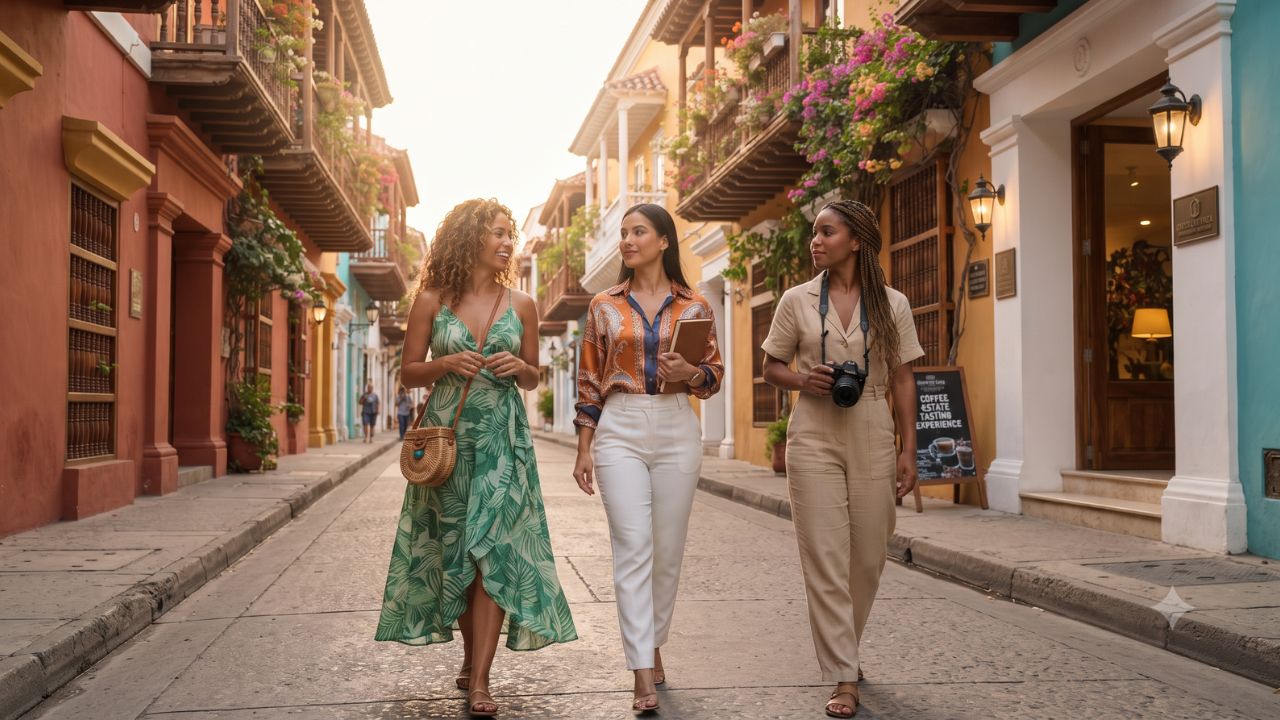
Mobilizing more than 228 billion Colombian pesos in national tourism development capital alongside strict administrative enforcement of the statutory 180-day foreign stay limit marks Colombia's strategic pivot toward high-value visitor management. As municipal authorities in Medellín and Cartagena crack down on unregulated short-term holiday rentals, national immigration agency Migración Colombia has intensified operational audits across hospitality corridors, clarifying that while online rumors regarding hard national tourist quotas or outright border-crossing bans are unfounded, sovereign enforcement of foreign visitor registrations has fundamentally tightened.
The coordinated policy initiative by the Ministry of Commerce, Industry and Tourism (MinCIT) seeks to disperse economic gains beyond saturated urban nightspots and colonial beach enclaves. By pairing rigorous digital compliance through the Foreigner Registration Information System (Sistema de Información para el Registro de Extranjeros, or SIRE) with targeted grants for rural coffee fincas and biodiversity reserves, Colombia is restructuring its visitor economy. The objective is to curtail overtourism and gentrification pressures in urban hotspots while cultivating premium ecological, cultural, and agricultural tourism across the country’s 32 departments.
Dissecting the Regulatory Framework: Stay Durations and SIRE Compliance
International travel into Colombia has long operated under a standard visa-waiver architecture for eligible nationalities, providing an initial entry stamp of up to 90 days. Foreigners may request a single 90-day extension, subject to the absolute statutory ceiling established by the Colombian Ministry of Foreign Affairs: a maximum authorized presence of 180 days within any rolling 365-day calendar period.
The crucial legal clarification addresses the practice of executing rapid international border runs to reset authorized days. Departing Colombian territory to neighboring states like Panama or Ecuador does not reset an individual's calendar balance. Border control officials exercise sovereign discretion under immigration statutes to verify accommodation bookings, return flight tickets, and historical length of stay, denying re-admission to non-residents who have exhausted their 180-day allowance.
Simultaneously, regulatory agencies have zeroed in on hospitality compliance. In November 2025, Migración Colombia launched sweep inspections across Medellín's primary entertainment and lodging sectors, including El Poblado, Provenza, and Parque Lleras. Field inspectors audited traditional hotels, boutique hostels, apart-hotels, and residential properties listed on digital platforms like Airbnb to verify compliance with SIRE mandates, which require lodging operators to report the passport details and check-in dates of foreign guests within strict legal reporting windows.
Public Capital Deployments: Royalties and MSME Modernization
To rebalance the national tourism economy away from low-cost mass tourism, the Colombian government rolled out major funding packages across early 2026:
| Public Program & Administrative Entity | Allocated Capital (COP) | Target Scope & Economic Focus | Strategic Policy Objective |
|---|---|---|---|
| National General Royalties Call (MinCIT) | Over 103 Billion COP | Municipalities across 2025–2026 plan | Regional infrastructure, competitiveness, and destination diversification |
| Fontur & iNNpulsa MSME Program | 125 Billion COP | ~1,300 tourism businesses in 32 departments | Operational productivity, eco-sustainability, and service standards |
| Biocultural Tourism Initiative (MinCultura) | 240 Million COP (6x 40M grants) | Community heritage projects | Preserving regional biodiversity and indigenous cultural knowledge |
| Migración Colombia SIRE Audits | Regulatory Inspections | El Poblado, Provenza, Parque Lleras | Enforcing guest data logging across short-term rentals and hotels |
| Statutory Foreign Stay Ceiling | 180 Days per 365-Day Window | Global visa-waiver arrivals | Curbing unauthorized perpetual residency via perpetual border runs |
The January 2026 allocation of over 103 billion pesos through the General Royalties System targets regional infrastructure, empowering rural municipalities to build visitor facilities, upgrade rural trailheads, and modernize local waste and water networks. Following in March 2026, MinCIT collaborated with tourism promotion fund Fontur and business development agency iNNpulsa Colombia to launch a 125-billion-peso package assisting roughly 1,300 micro, small, and medium-sized tourism enterprises (MSMEs).
These programs provide technical assistance, digital inventory tools, and environmental management certifications to local tour operators, family-run lodges, and transport providers across all 32 departments, raising baseline operational standards to attract higher-spending international travelers.
Spatial Redistribution: The Coffee Cultural Landscape and Ecological Circuits
A core tenet of the high-value strategy promoted through ProColombia is redirecting traveler itineraries into the UNESCO-recognized Coffee Cultural Landscape (Eje Cafetero). Encompassing historic fincas across Caldas, Quindío, and Risaralda, this agricultural corridor offers agritourism experiences, specialty coffee tasting, and historic hacienda stays that distribute tourist expenditures directly to agricultural communities.
Simultaneously, the administration is capitalizing on Colombia’s status as one of the world's most biodiverse nations by investing in specialty ecological niches:
- Ornithological Tourism: Developing guided birdwatching trails and remote field stations across the Andean and Chocó bio-regions.
- Biocultural Preservation: Supported by the Ministry of Cultures’ February 2026 grants—allocating six awards of 40 million pesos each—indigenous and Afro-Colombian communities are developing community-led conservation tours.
- Protected Area Buffer Zones: Fostering regulated eco-lodges adjacent to National Natural Parks, subject to strict environmental zoning and carrying-capacity caps.
By developing specialized, small-footprint travel products, the country creates alternative itineraries that alleviate pressure on urban centers while delivering higher daily expenditure yields per visitor.
Expert Analysis: Urban Friction, Gentrification, and Traveler Compliance
For international travelers and long-term remote workers, the direct consequence of Colombia's policy recalibration is stricter administrative scrutiny at ports of entry and lodging check-ins. In urban hubs like Medellín, explosive growth in short-term rental conversions has triggered steep residential rent inflation, neighborhood displacement, and friction between local communities and transient foreign populations.
The aggressive deployment of SIRE inspections signals that municipal and national authorities are closing the informal loopholes that allowed unregulated vacation rentals to proliferate. Property managers and Airbnb hosts who fail to register foreign guests face severe financial penalties, resulting in hosts demanding verified passport scans and flight details prior to confirmation.
Furthermore, travelers attempting to utilize Colombia as a low-cost, indefinite digital nomad haven face heightened border friction. While Colombia offers dedicated digital nomad visas for remote corporate employees, tourists operating on standard tourist entry stamps cannot circumvent statutory stay caps through superficial border hops. For travelers planning extended itineraries, navigating Colombia requires respecting sovereign immigration timelines, booking through compliant accommodation providers, and embracing decentralized regional circuits that deliver authentic cultural value.
Key Takeaways
- Substantial State Investment: Colombia deployed over 228 billion pesos in early 2026, including 103 billion pesos from royalties and 125 billion pesos for 1,300 MSMEs across 32 departments.
- Strict Stay Caps: Foreign visitors entering visa-free remain restricted to a maximum of 90 days initially, extendable to a non-negotiable ceiling of 180 days per 365-day rolling window.
- SIRE System Audits: Migración Colombia actively audits lodging establishments and short-term Airbnb properties in Medellín's El Poblado, Provenza, and Parque Lleras to enforce foreign guest logging.
- Border Run Fallacy: Leaving the country does not automatically reset a tourist's stay allowance; immigration officers hold discretionary legal authority to deny re-entry once stay caps are reached.
- Regional Dispersal: State investment prioritizes the UNESCO Coffee Cultural Landscape, community biocultural projects, and specialized birdwatching ecotourism over saturated urban centers.
FAQ: Colombia Tourism and Visitor Regulations 2026
What is the maximum duration a tourist can stay in Colombia without a visa?
Eligible foreign tourists receive up to 90 days upon arrival, which can be extended once for an additional 90 days, capped at an absolute maximum of 180 days within a 365-day period.
Can travelers reset their 180-day limit by leaving Colombia briefly?
No. Exiting and re-entering the country does not reset the 180-day annual ceiling; immigration officials verify cumulative presence and will deny entry if limits are exhausted.
What is the SIRE registration requirement in Colombia?
SIRE is Migración Colombia's digital registry system requiring all hotels, hostels, and short-term Airbnb hosts to formally register the passport and check-in details of all foreign guests.
Did Colombia introduce a national quota or cap on total foreign tourists?
No. Rumors of national annual tourist caps or blanket border crossing bans are false; regulations focus on enforcing existing stay limits and lodging compliance.
Managing the expansion of tourism requires balancing warm international hospitality with rigorous immigration oversight and environmental preservation.
Related Travel Guides
Disclaimer
This article is for informational and educational purposes only. It does not constitute legal, financial, or professional advice. While we strive to provide accurate and up-to-date information, travel policies, regulations, and conditions change rapidly. Always verify information with official sources before making travel decisions. Nomad Lawyer makes no representations about the accuracy, reliability, completeness, or suitability of the information provided. Readers should consult qualified professionals for advice specific to their circumstances. The views expressed in this article are those of the author and do not necessarily reflect the views of Nomad Lawyer.
Kunal K Choudhary
Co-Founder & Contributor
A passionate traveller and tech enthusiast. Kunal contributes to the vision and growth of Nomad Lawyer, bringing fresh perspectives and driving the community forward.
Learn more about our team →