
Budapest Challenges Vienna, Prague, and Lisbon for Winter Hotel Value: Comparing Accommodation Taxes and City Break Costs for 2027
Budapest's 22% rental price surge challenges winter hotel value against Vienna, Prague, and Lisbon. Compare 2027 city-break costs, taxes, and transit passes.

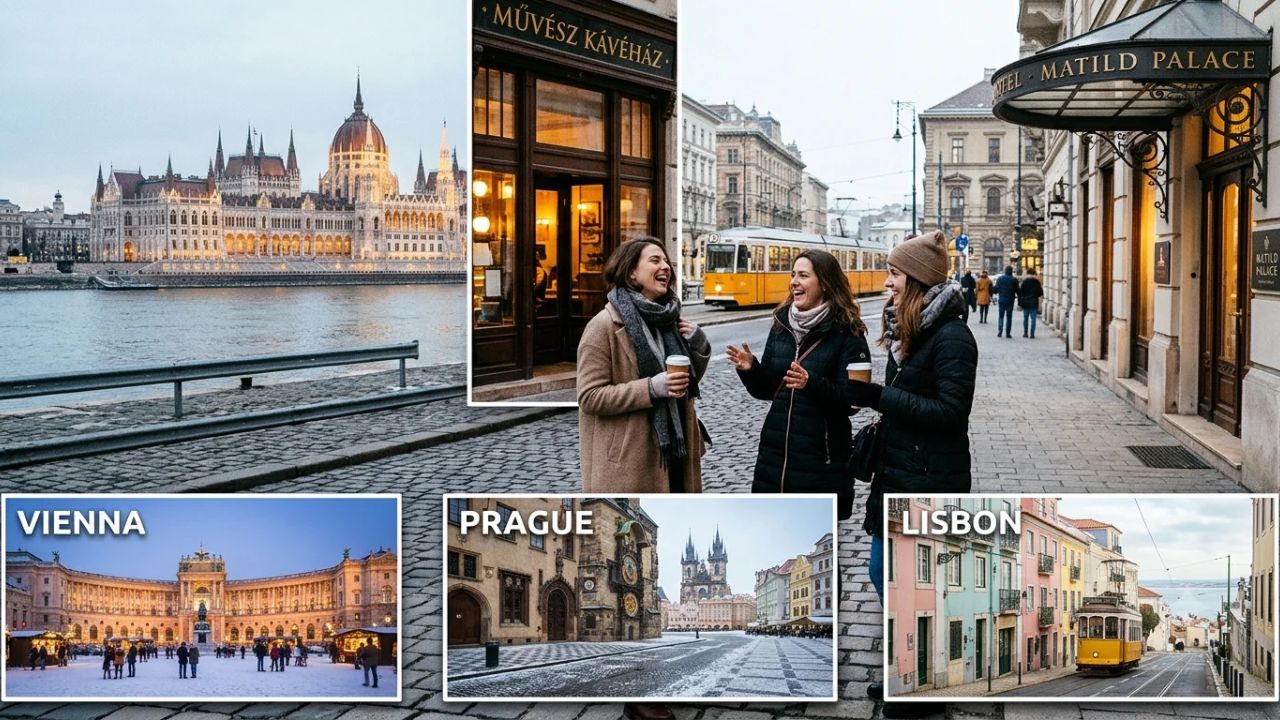
Image generated by AI
A 22% surge in Budapest's short-term rental rates has ignited a major European city-break rivalry, prompting travelers planning winter 2027 holidays to reassess accommodation value across Budapest, Vienna, Prague, and Lisbon. While headline rates fluctuate alongside tighter holiday apartment supplies, total stay costs are increasingly dictated by mandatory municipal tourist taxes, breakfast supplements, and local public transit integration.
According to market intelligence from AirDNA, Budapest recorded the second-fastest annual average daily rate (ADR) expansion across Europe in September 2026, trailing only Madrid. This dramatic 22% price increase occurred alongside a 16.2% decline in active short-term rental listings. By comparison, Vienna experienced a modest 1.9% ADR rise (with a 4.7% supply dip), Lisbon posted a 2.3% rate increase (with a 2.9% supply decline), and Prague recorded a 6.5% rate uptick.
However, rapid percentage growth in rental listings does not automatically mean Budapest has surpassed Vienna or Lisbon in absolute hotel expenditure. For travelers planning three-night getaways in January and February 2027, determining true holiday value requires auditing identical dates, hotel room classes, mandatory municipal bed taxes, and ground transit fares.
Market Dynamics: Comparing Rental Inflation and Hotel Supply Across Four Capitals
The operational dynamics of Europe's urban lodging market demonstrate sharp divergences between short-term apartment rentals and traditional hotel inventories.
[September 2026 YoY Rental Performance - AirDNA Data]
├── Budapest: ADR +22.0%  |  Available Supply -16.2%
├── Prague:   ADR +6.5%   |  Supply Steady
├── Lisbon:   ADR +2.3%   |  Available Supply -2.9%
└── Vienna:   ADR +1.9%   |  Available Supply -4.7%
| European Capital | September 2026 ADR Growth (YoY) | Rental Supply Variation (YoY) | Market Position & Baseline Cost Context |
|---|---|---|---|
| Budapest | +22.0% | −16.2% | Rapid price adjustment from a lower historical base; tight apartment supply |
| Prague | +6.5% | Moderate contraction | Balanced mid-tier pricing; steady regional and long-haul leisure demand |
| Lisbon | +2.3% | −2.9% | Stable rate growth from an already elevated baseline; strict municipal controls |
| Vienna | +1.9% | −4.7% | Subdued percentage growth; high absolute luxury pricing and cultural events |
The Base-Rate Paradox
A destination experiencing 22% rate growth from a baseline of €80 per night remains substantially more affordable than a luxury gateway where rates rise by only 1.9% from a €220 baseline. While Budapest's apartment rental market is contracting in supply—partly due to stricter local licensing and municipal tax enforcement—its traditional hotel sector continues to provide highly competitive room tariffs relative to Western European destinations.
The Total Cost Equation: Why Headline Room Rates Deceive Travelers
When booking a winter city break, the advertised room rate on third-party aggregators represents only a fraction of final checkout expenditure. To establish accurate comparisons, travel planners must utilize the unified total stay formula:
$$\text{Total Stay Cost} = \text{Base Room Rate} + \text{Mandatory Municipal Taxes} + \text{Compulsory Breakfast / Fees} + \text{Local Ground Transit}$$
1. Municipal Accommodation Taxes: Vienna and Lisbon Lead in Surcharges
Local municipal authorities have adjusted tourist bed levies, directly widening the gap between advertised rates and checkout invoices:
- Vienna Local Tax (Ortstaxe): Vienna raised its accommodation tax from 3.2% to 5.0% on July 1, 2026, calculated on the net accommodation charge (excluding VAT and breakfast). This 5.0% rate remains locked for stays between January and June 2027, before escalating to 8.0% on July 1, 2027. On a €600 three-night stay, the 5% tax adds €30 to checkout costs.
- Lisbon Municipal Tourist Tax (Taxa Municipal de Dormida): Lisbon charges a flat fee of €4.00 per guest, per night, capped at a maximum of seven consecutive nights. For two adults enjoying a three-night weekend escape (6 guest-nights), the fee adds a mandatory €24.00 surcharge.
- Prague Local Stay Fee (Poplatek z pobytu): Prague levies an accommodation tax capped at 50 CZK (~€2.00) per person, per night, totaling roughly €12.00 for two adults over three nights.
- Budapest City Tourism Tax (IFA - Idegenforgalmi Adó): Budapest applies a statutory 4.0% municipal tax on the net lodging rate, which is frequently billed separately upon arrival rather than embedded in prepaid online rates.
Public Transit Passes: Integrating Ground Mobility into the Winter Budget
Winter travelers spend less time walking outdoors between attractions, increasing their reliance on municipal metro and tram networks. Choosing an accommodation situated farther from the historical center to save on nightly room tariffs often results in higher daily public transport expenditures:
| Capital City | Official 24-Hour Transit Ticket | Transit Network Scope & Operational Considerations |
|---|---|---|
| Budapest | HUF 2,750 (~€6.90) | Valid across BKK metro, trams, and trolleybuses; excludes 100E Airport Express |
| Vienna | €10.20 | Unlimited access to Wiener Linien U-Bahn, S-Bahn, and trams in the core zone |
| Prague | CZK 140 (App) / CZK 150 (Paper) | Full 24-hour network validity across DPP metro, trams, and city buses (~€5.60) |
| Lisbon | €7.25 (Metro/Carris) / €11.40 (+CP Rail) | Standard ticket covers Carris trams/buses and Metro; CP extension covers Sintra/Cascais |
In Prague, purchasing digital passes via the official PID Lítačka mobile app yields an immediate saving over paper tickets. In Lisbon, travelers planning day excursions to Sintra or Cascais must opt for the €11.40 multimodal pass rather than the basic €7.25 urban ticket. In Budapest, the standard 24-hour travelcard covers urban tram line 2 along the Danube, but airport transit on bus line 100E requires a dedicated single ticket costing HUF 2,200 (~€5.50).
Macro Context: European Tourism Volume and Overnight Lodging Patterns
The competition between Central and Southern European city breaks unfolds against robust continental demand. Official Eurostat releases document that European Union tourist accommodations recorded 3.08 billion overnight stays in 2025, marking a 2.0% annual increase:
- Hotels and Similar Establishments: Represented 1.9 billion overnight stays, securing a dominant 63% market share.
- Holiday Dwellings and Short-Stay Rentals: Accounted for 743 million overnight stays, reflecting steady consumer interest in self-catering units despite tightening municipal regulations.
This high baseline occupancy demonstrates that while apartment rental supply contracts in cities like Budapest and Lisbon, hotels maintain substantial pricing power, making advance reservations essential for off-peak winter travel.
The 100-Point Value Index: Scoring the Four Winter Capital Contenders
To establish which destination delivers the highest return on traveler expenditure, the comparative evaluation models performance across five weighted pillars:
[100-Point City-Break Evaluation Matrix]
├── Total Accommodation & Tax Outlay: 40 Points
├── Room Quality, Comfort & Modern Standards: 25 Points
├── Historical Core Location & Transit Accessibility: 15 Points
├── Inclusions (Complimentary Breakfast & Thermal Amenities): 10 Points
└── Booking Terms & Free Cancellation Flexibility: 10 Points
1. Budapest: The High-Yield Cultural Value Champion (Score: 88/100)
- Strengths: Despite AirDNA's reported 22% rental rate spike, three- and four-star central hotels in Pest (Districts V, VI, and VII) remain the lowest in absolute cost among the four cities. Abundant historic thermal bath complexes (Széchenyi, Gellért) provide low-cost winter leisure, while dining expenses remain highly favorable for travelers holding foreign reserve currencies.
- Weaknesses: Strict municipal licensing has reduced budget holiday apartment availability; winter weather can be gray and cold.
2. Prague: The Balanced Historic Favorite (Score: 85/100)
- Strengths: Compact pedestrian layout centered around Old Town and Malá Strana minimizes public transit needs. Digital transport tickets (CZK 140) and low accommodation bed taxes (€2/night) prevent bill inflation. Competitive four-star hotel pricing during midweek January dates.
- Weaknesses: Popular central thoroughfares experience heavy crowding even during winter off-peak weeks; dining near Old Town Square carries elevated tourist markups.
3. Lisbon: The Maritime Shoulder-Season Escapist (Score: 82/100)
- Strengths: Mild Atlantic winter climate with temperatures frequently reaching 15°C to 17°C, eliminating winter heating discomfort. Slower rental price growth (+2.3%) reflects market stabilization. Direct €1.80 metro connection from Humberto Delgado Airport (LIS) into the city center.
- Weaknesses: Flat municipal overnight taxes (€4/person/night) add noticeable expenses for families; central boutique properties in Chiado and Baixa command high baseline rates year-round.
4. Vienna: The Premium Cultural Powerhouse (Score: 78/100)
- Strengths: Unmatched museum infrastructure, imperial palaces, and pristine public transport reliability. Subdued rental ADR inflation (+1.9%) signals price discipline.
- Weaknesses: Highest absolute room rates among the four contenders; municipal bed tax increase to 5.0% (and 8.0% in mid-2027) expands checkout charges; 24-hour transit passes (€10.20) carry the highest regional tariffs.
Traveler Logistics Guide: Navigating Winter City Breaks in 2027
Travelers targeting European city breaks in January or February 2027 should follow these verified operational strategies:
- Audit Checkout Tax Lines: When reserving rooms through online travel agencies, verify whether municipal taxes are included in the checkout price or marked as "Payable at property." In Vienna, confirm that the 5% tax is calculated exclusively on the net room rate excluding breakfast. In Lisbon, ensure you budget €4 cash or card per guest per night.
- Target Midweek Stays (Monday–Thursday): Across all four capitals, hotel rates drop by 25% to 40% between Monday and Thursday compared to weekend dates. Midweek visits also reduce queues at premier attractions like Budapest's Parliament, Prague Castle, the Kunsthistorisches Museum in Vienna, and Lisbon's Jerónimos Monastery.
- Airport Transit Selection:
- Budapest (BUD): Bypass expensive private shuttles by boarding the 100E Airport Express directly to Deák Ferenc tér (HUF 2,200), or take public bus 200E to Kőbánya-Kispest to connect with Metro Line M3.
- Vienna (VIE): Avoid the premium City Airport Train (CAT - €14.90) in favor of the suburban S-Bahn line S7, which reaches central Wien Mitte in 25 minutes for just €4.40 (or €2.20 with an active Vienna core-zone travelcard).
- Prague (PRG): Take the newly electrified trolleybus route 59 from airport terminals directly to Nádraží Veleslavín metro station (Line A), completing the journey in 30 minutes on a standard 90-minute CZK 40 transit ticket.
- Lisbon (LIS): Take the Metro Red Line directly from the terminal to Alameda or Saldanha for a standard single fare of €1.80, reaching central downtown within 25 minutes.
Strategic Outlook: The Evolution of European Winter Leisure Value
The competition among Budapest, Vienna, Prague, and Lisbon illustrates that modern city-break value is multidimensional. Rather than tracking isolated percentage shifts in short-term rental listings, discerning travelers look at all-inclusive itinerary costs.
While Budapest's rental rates have surged under tightening supply, its conventional hotel sector still provides exceptional value for visitors seeking historic grandeur at accessible rates. By calculating municipal bed taxes, choosing flexible cancellation policies, and leveraging efficient public transit systems, international travelers can secure premium winter escapes across Europe without paying peak-season tariffs.
FAQ: European Winter Hotel Value 2027
Why did Budapest's short-term rental prices surge by 22%?
Budapest recorded a 22% annual rise in rental average daily rates primarily driven by a 16.2% contraction in available rental listings, stricter municipal licensing regulations, and high seasonal leisure demand.
How much is Vienna's accommodation tax for winter 2027?
Vienna's local accommodation tax is 5.0% of the room charge (excluding VAT and breakfast) for stays through June 30, 2027. It will increase to 8.0% starting July 1, 2027.
What is the municipal tourist tax in Lisbon?
Lisbon levies an overnight tourist tax of €4.00 per guest, per night, applied to a maximum of seven consecutive nights.
Which city offers the cheapest 24-hour public transport pass?
Prague offers the cheapest 24-hour pass at CZK 140 (€5.60) via the PID Lítačka mobile app, followed by Budapest at HUF 2,750 (€6.90) and Lisbon at €7.25.
Related Travel Guides
South American City-Break Travel Costs: Buenos Aires Sets the Pace for Santiago and Bogotá in 2026
The 10 Best Affordable European Winter City Breaks, According to Reddit
Disclaimer
This article is for informational and educational purposes only. It does not constitute legal, financial, or professional advice. While we strive to provide accurate and up-to-date information, travel policies, regulations, and conditions change rapidly. Always verify information with official sources before making travel decisions. Nomad Lawyer makes no representations about the accuracy, reliability, completeness, or suitability of the information provided. Readers should consult qualified professionals for advice specific to their circumstances. The views expressed in this article are those of the author and do not necessarily reflect the views of Nomad Lawyer.
Preeti Gunjan
Contributor & Community Manager
A passionate traveller and community builder. Preeti helps grow the Nomad Lawyer community, fostering engagement and bringing the reader experience to life.
Learn more about our team →