
American Travelers Pivot to African Thanksgiving Escapes: Why Essaouira, Kigali, and Johannesburg Outshine Overcrowded Marrakech in 2026
American holidaymakers are trading overtouristed Marrakech for Essaouira, Kigali, and Johannesburg this Thanksgiving, seeking climate comfort, fair pricing, and resilient infrastructure.

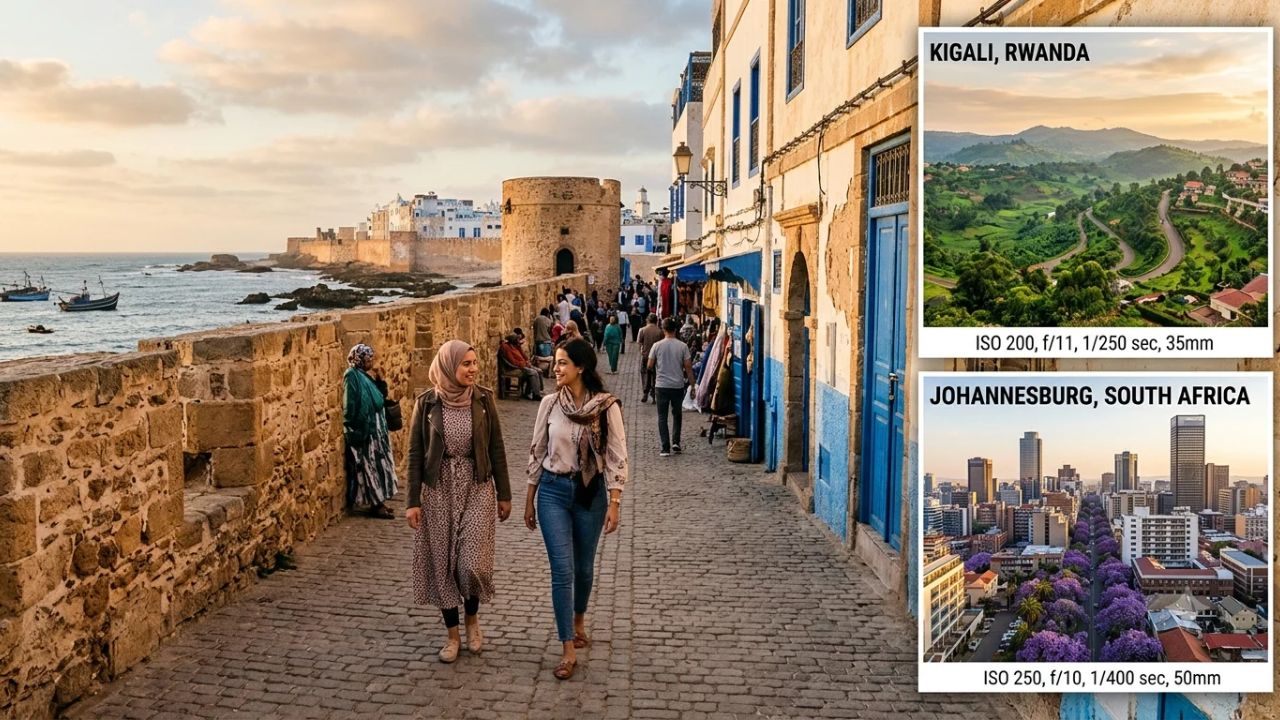
Image generated by AI
Transatlantic holiday migration patterns are transforming as American travelers bypass overtouristed Marrakech for resilient African destinations including Essaouira, Kigali, and Johannesburg during the 2026 Thanksgiving travel bridge. While severe medina congestion, seasonal thermal deficits in unheated riads, and regulatory audits under Moroccan Law 80-14 challenge Marrakech, alternative continental hubs deliver stable aviation capacity, superior climate comfort, and high-value cultural immersion.
Historically confined to short-haul Caribbean breaks or domestic family reunions, North American travelers are increasingly utilizing late-November holiday leave to execute intensive 7-to-10-day intercontinental itineraries across Africa. However, algorithmic image promotion on social media platforms has concentrated vast tourist inflows into Marrakech, creating localized infrastructure saturation and speculative holiday price gouging. In response, discerning voyagers are redirecting holiday capital toward sustainable regional destinations that offer authentic living heritage, transparent pricing, and robust urban governance.
Transatlantic Aviation Dynamics: Airline Yield Management and Hub Divergence
The structural shift toward long-haul autumn travel has prompted international carriers to deploy sophisticated dynamic revenue management systems across transatlantic corridors. Commercial airlines increasingly treat late November as a premium pricing window, bridging the traditional demand trough between early-autumn business travel and the Christmas rush.
To maximize passenger yields on compressed holiday schedules, network carriers have introduced seasonal non-stop widebody routes—such as direct flights connecting Newark Liberty International Airport (EWR) to Marrakech Menara Airport (RAK). While these direct point-to-point services eliminate transfer times, they concentrate severe fare inflation onto holiday travelers, with economy and business-class tariffs surging dramatically over baseline shoulder-season rates.
Conversely, diversified continental gateway hubs absorb holiday traffic through multi-carrier network competition:
- O.R. Tambo International Airport (JNB) in Johannesburg: Functions as a high-capacity global mega-hub served by major United States, European, and Gulf carriers, maintaining seat inventory that dampens sudden price spikes.
- Kigali International Airport (KGL): Operates within a controlled, high-value framework anchored by national carrier RwandAir, delivering seamless transfers from European transit gateways without point-to-point holiday surcharges.
- Essaouira-Mogador Airport (ESU): Complements Marrakech by receiving regional European flights and direct highway shuttles from RAK, bypassing medina arrival bottlenecks while preserving accessible shoulder-season fares.
The Marrakech Medina Bottleneck: Thermal Deficits, Acoustic Echo, and Regulatory Overhauls
The concentration of North American autumn tourists in Marrakech exposes critical carrying capacity deficits within its historic core. While digital platforms showcase idealized sun-lit courtyards and intricate zellige tilework, the physical reality of the UNESCO-listed walled medina during peak holiday weeks reveals acute operational strains:
1. Spatial Saturation and Commercial Fatigue
Narrow historical thoroughfares engineered centuries ago for pedestrians and pack animals are overwhelmed by pedestrian crowds, cargo handcarts, and motorbikes. In primary gathering zones like Jemaa el-Fnaa and the central souks, genuine artisanal culture has frequently been supplanted by aggressive vendor solicitation, opaque pricing, and unmetered transport rates, creating continuous commercial friction for visitors.
2. Architectural Thermal and Acoustic Deficits in Riads
Hundreds of traditional domestic family residences (riads) converted into commercial boutique guest houses face severe late-autumn comfort challenges:
- Thermal Realities: Because historic riads feature open central atriums designed for Saharan summer passive cooling, ambient warmth is lost rapidly into the night air during late-November desert temperature drops. Most preserved masonry properties lack central ducted heating, insulated window joinery, or modern thermal barriers, forcing guests paying luxury tariffs to rely on inadequate portable electric heaters.
- Acoustic Vulnerabilities: Heavy masonry, load-bearing lime mortar, and hard tile surfaces surrounding echo-prone vertical lightwells amplify internal and external sounds. In the absence of sound dampening, footsteps on upper galleries, interior plumbing, and the pre-dawn call to prayer (adhan) reverberate directly through guest suites.
- Mobility Constraints: Historical preservation codes prohibit the retrofitting of passenger elevators, requiring visitors to negotiate steep, narrow stairs and haul luggage on foot through unlit stone alleyways barred to vehicles.
3. Regulatory Enforcement Under Moroccan Law 80-14
To eliminate substandard boutique conversions and speculative holiday pricing ahead of the FIFA World Cup 2030, the Moroccan Ministry of Tourism has enacted strict operational decrees under Law 80-14 (Loi 80-14). The legislation replaces lifetime commercial lodging licenses with mandatory operational renewals every 5 to 7 years, introduces unannounced mystery audits by sworn inspectors to verify structural safety and thermal management, and imposes mandatory municipal registration on unclassified holiday apartments and informal short-term rentals.
Three Resilient African Alternatives for Thanksgiving
Travelers seeking genuine rejuvenation, equitable pricing, and structural comfort are dispersing toward three well-governed continental alternatives:
1. Essaouira: Atlantic Maritime Climate and Rational Urban Design
Located on Morocco's Atlantic coast west of Marrakech, Essaouira provides an ideal coastal counterweight to interior medina congestion. Built on an 18th-century rational grid plan designed by French military engineer Théodore Cornut for Sultan Mohammed ben Abdallah, its medina features wide, straight arterial avenues that facilitate ocean breezes and prevent pedestrian bottlenecks. The Atlantic Ocean moderates diurnal temperatures, ensuring mild, comfortable late-November days. Accommodations in converted traditional townhouses (dars) maintain stable shoulder-season rates, while municipal associations actively protect living cultural capital, including the Gnaoua musical community, thuya woodworking guilds, and local fishing cooperatives.
2. Kigali: Master-Planned Cleanliness and High-Value Eco-Tourism
Rwanda's capital offers an exceptional Pan-African urban experience centered on progressive governance, public safety, and environmental stewardship under the Rwanda Development Board (RDB). Governed by the strict Kigali Master Plan, the city eliminates street harassment and traffic chaos, reinforced by a nationwide ban on non-biodegradable polythene bags and the monthly community service tradition (Umuganda). Late November falls during the lush green season, featuring pleasant temperatures, visits to the Kigali Genocide Memorial, specialty coffee cooperatives, and upscale international business hotels. For wildlife enthusiasts, regulated permits for tracking endangered mountain gorillas in Volcanoes National Park directly fund local communities through the statutory Tourism Revenue Sharing Scheme.
3. Johannesburg: Contemporary African Arts and Purchasing Power Parity
South Africa's economic powerhouse has evolved into a premier epicenter for contemporary African design, gastronomy, and fine arts. The onset of the southern hemisphere summer across the Highveld plateau brings warm, sunny days and blooming purple jacaranda trees in late November. Travelers holding foreign currencies benefit from exceptional purchasing power parity within the South African Rand (ZAR) environment, accessing world-class boutique hotels in Rosebank and Sandton alongside multi-course fine dining at accessible rates. Creative hubs like the Keyes Art Mile, Braamfontein, and Constitution Hill offer deep cultural immersion, with malaria-free big-game reserves (such as Pilanesberg National Park and the Waterberg) located just a short overland drive away.
Pan-African Thanksgiving Destination Comparison Matrix
The table below contrasts operational infrastructure, climatic parameters, and tourism governance across the four continental destinations:
| Analytical Dimension | Marrakech, Morocco | Essaouira, Morocco | Kigali, Rwanda | Johannesburg, South Africa |
|---|---|---|---|---|
| Primary Aviation Gateway | Marrakech Menara (RAK) | Essaouira-Mogador (ESU) / RAK transfer | Kigali International (KGL) | O.R. Tambo International (JNB) |
| Aviation Capacity Stability | Peak holiday pricing; widebody bottlenecks | Stable regional schedules & road links | Controlled capacity via European hubs | High multi-carrier network competition |
| Late-November Climate | Desert margin; sharp evening drops | Temperate maritime; mild coastal breezes | Short rainy green season; mild weather | Early summer warmth; blooming jacarandas |
| Boutique Lodging Tariffs | Inflated peak holiday markups | Regulated shoulder-season rates | Managed eco-luxury tariffs | High foreign exchange purchasing power |
| Architectural Comfort | Unheated historic riads; acoustic echo | Converted dars with natural ventilation | Purpose-built modern eco-lodges | Modern luxury hotels with climate control |
| Commercial Street Friction | High solicitation in central souks | Low-to-moderate pressure in artisan quarters | Negligible friction; civic enforcement | Organized commercial & gallery precincts |
| Municipal Cleanliness | Strained by medina solid waste volume | Regular municipal coastal cleaning | Pristine conditions; plastic ban & Umuganda | Maintained commercial districts |
| Overtourism Pressure | Severe saturation and gridlock | Balanced regional dispersion equilibrium | Controlled high-value, low-density model | Distributed metropolitan capacity |
Traveler Logistics Guide: Flight Bookings, Airport Transfers, and On-Ground Navigation
To execute a seamless Thanksgiving itinerary across Africa, travelers should implement these verified transit and lodging recommendations:
- Aviation Routing to Avoid Peak Holiday Tariffs: Rather than booking non-stop point-to-point flights into saturated leisure airports (such as EWR–RAK), consider routing via established continental gateway alliances. Connecting through Paris (CDG), Amsterdam (AMS), Doha (DOH), or Addis Ababa (ADD) on multi-carrier itineraries often avoids localized holiday price gouging while providing superior baggage-transfer reliability.
- Overland Transit from Marrakech to Essaouira: Travelers arriving at Marrakech Menara Airport who wish to bypass medina congestion can transfer directly to Essaouira via the modern R207 dual-carriageway highway. Premium Supratours or CTM executive coaches depart multiple times daily from Marrakech railway station, completing the 175-kilometer journey in approximately 2.5 to 3 hours for roughly 100 to 120 Moroccan Dirhams ($10–$12 USD). Private licensed airport transfers provide door-to-door transit into Essaouira's Bab Sbaa entrance.
- Kigali Transit Logistics: International arrivals at Kigali International Airport (KGL) clear immigration efficiently, with 30-day tourist visas available on arrival or online for $50 USD. Licensed airport taxis operate on fixed municipal zones. To explore the city, utilize registered ride-hailing applications (such as Move by Volkswagen) or hire private licensed chauffeurs arranged through accredited hotels.
- Johannesburg Gautrain and Airport Transfers: Upon landing at O.R. Tambo International Airport (JNB), avoid road highway congestion on the R24/M1 by utilizing the Gautrain rapid rail network directly from the terminal concourse. The Gautrain reaches Sandton Central in 15 minutes and Rosebank in 20 minutes, offering clean, secure, and punctual transit directly adjacent to premier gallery precincts and boutique accommodations.
- Moroccan Lodging Verification under Law 80-14: When booking traditional accommodations in Morocco during late autumn, verify that the property holds an active operational license under Loi 80-14. Request written confirmation of operational heating systems—specifically reverse-cycle split climate units or underfloor radiant heating—to prevent cold nights in cavernous stone quarters.
Strategic Outlook: The Decoupling of Travel Reality from Algorithmic Hype
The divergence between Marrakech's carrying capacity crisis and the sustainable success of Essaouira, Kigali, and Johannesburg provides a vital lesson for international holiday planning. Digital content algorithms frequently amplify idealized aesthetic imagery while obscuring essential parameters of municipal crowding, building insulation, and local commercial pressure.
By grounding travel decisions in verified infrastructure realities rather than viral trends, transatlantic travelers can reclaim genuine holiday relaxation. Selecting well-governed destinations that enforce transparent hospitality standards, protect living cultural heritage, and distribute economic benefits directly to local communities ensures resilient, comfortable, and memorable travel experiences.
FAQ: African Thanksgiving Travel and Destination Alternatives
Why is Marrakech facing overtourism issues during Thanksgiving?
Marrakech experiences extreme visitor concentration driven by viral social media promotion, leading to spatial gridlock in its historic pedestrian medina, aggressive street solicitation, inflated holiday prices, and thermal discomfort in unheated traditional riads.
How does Moroccan Law 80-14 affect tourists?
Moroccan Law 80-14 (Loi 80-14) establishes mandatory 5-to-7-year operational license renewals and unannounced mystery audits for all lodging establishments, cracking down on unclassified holiday apartments and unheated guest houses to guarantee hygiene, safety, and transparent quality standards.
What makes Essaouira a better late-autumn option than Marrakech?
Essaouira features a temperate maritime climate that avoids desert temperature drops, an 18th-century rational grid layout that prevents medina crowding, stable shoulder-season accommodation rates, and protected artisanal traditions.
Why is Kigali considered a premier eco-tourism destination?
Kigali combines immaculate urban cleanliness supported by a national plastic bag ban and monthly Umuganda community cleanups with progressive conservation governance that channels gorilla trekking revenues directly into local community infrastructure.
Related Travel Guides
Kenya and Rwanda Lead Africa's 2026 Shift Toward Borderless Travel via Digital Immigration
The 10 Best Coastal Escapes and Cultural Hideaways in Morocco, According to Reddit
Disclaimer
This article is for informational and educational purposes only. It does not constitute legal, financial, or professional advice. While we strive to provide accurate and up-to-date information, travel policies, regulations, and conditions change rapidly. Always verify information with official sources before making travel decisions. Nomad Lawyer makes no representations about the accuracy, reliability, completeness, or suitability of the information provided. Readers should consult qualified professionals for advice specific to their circumstances. The views expressed in this article are those of the author and do not necessarily reflect the views of Nomad Lawyer.
Preeti Gunjan
Contributor & Community Manager
A passionate traveller and community builder. Preeti helps grow the Nomad Lawyer community, fostering engagement and bringing the reader experience to life.
Learn more about our team →