
South Africa Pairs Up With India To Build A Powerful Tourism Future Through Aviation, Digital Technology And Economic Growth
South Africa Pairs Up With India To Build A Powerful Tourism Future Through Aviation, Digital Technology And Economic Growth

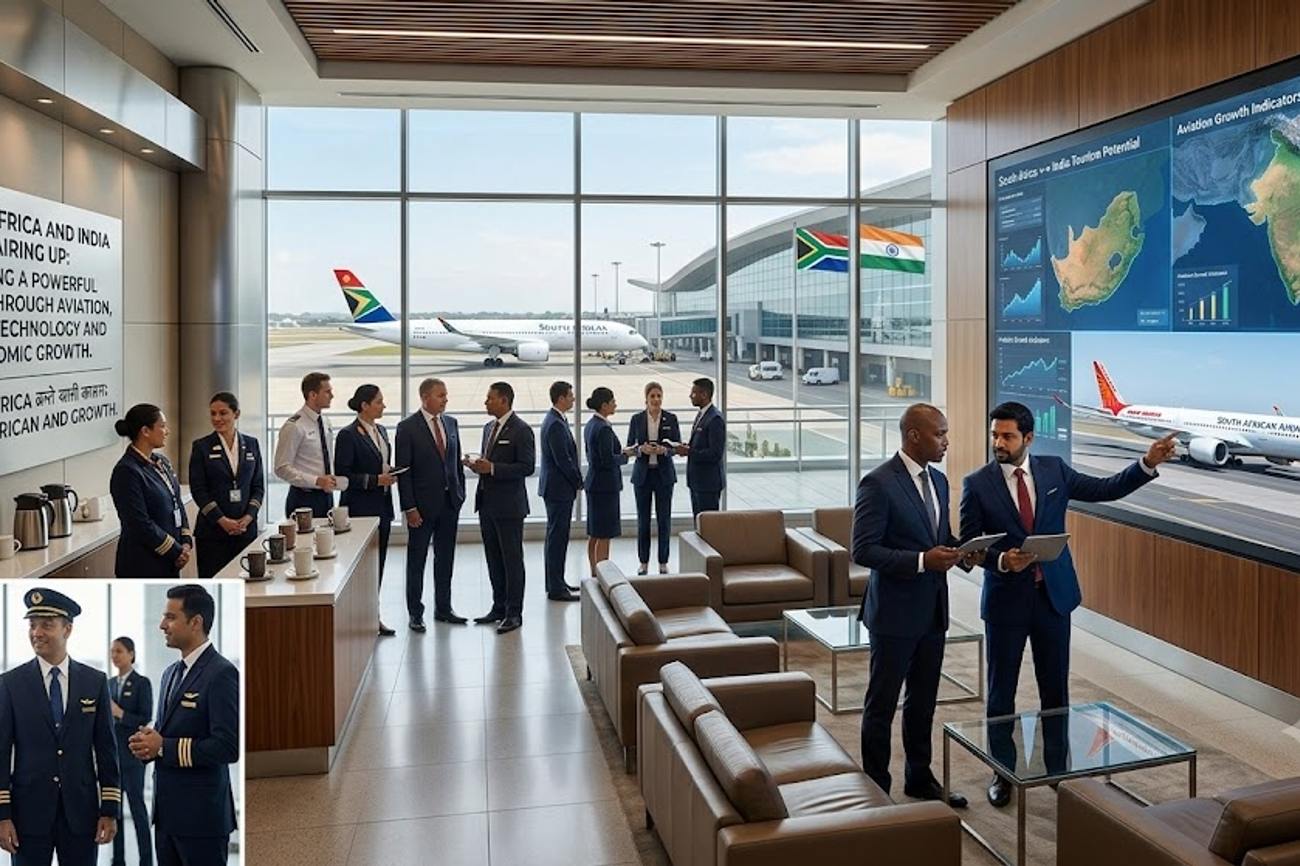
Image generated by AI
[New Delhi, September 14, 2026] — India and South Africa are launching a comprehensive strategic partnership to accelerate growth in aviation, digital infrastructure, and trade following high-level bilateral talks at the BRICS Summit. The agreement signals a shift toward deeper economic integration between the two Global South powers, focusing on removing barriers to travel and investment to catalyze a surge in tourism and corporate exchange.
The negotiations, conducted in New Delhi, establish a framework for cooperation that extends beyond traditional diplomacy. By aligning their interests in critical minerals, food security, and technological innovation, both nations aim to build a more resilient economic corridor. Central to this strategy is the belief that strengthened commercial ties will naturally drive a requirement for increased flight frequencies and modernized travel infrastructure between the two regions.
The BRICS Summit Catalyst
The immediate trigger for this expanded cooperation was the most recent BRICS Summit held in New Delhi. During these sessions, leadership from India and South Africa identified a mutual need to evolve their strategic relations into practical, project-based outcomes. The discussions focused on leveraging India's manufacturing and technological prowess alongside South Africa's vast natural resources and position as a primary gateway to the African continent.
The partnership is designed to create a symbiotic loop: increased investment in infrastructure and digital services will lower the friction for business travel, which in turn will stimulate the leisure tourism sector. Both governments are now pushing for a transition from diplomatic dialogue to the implementation of tangible projects that support industrial growth and employment.
Market and Route Impact
While specific flight numbers were not disclosed, the agreement targets several key sectors and passenger demographics. The focus is on increasing the volume of movement between major urban hubs to support the following groups:
- Corporate Travelers: Executives and investors focusing on critical minerals, green energy, and manufacturing.
- Tech Specialists: Professionals collaborating on artificial intelligence and digital public infrastructure.
- Leisure Tourists: Indian travelers seeking South African wildlife and luxury experiences, and South Africans visiting India for spiritual and cultural heritage.
- Academic Exchanges: Students and researchers utilizing new bilateral educational frameworks.
The cooperation is expected to place pressure on current aviation capacity, necessitating a review of existing route frequencies and potentially encouraging new entrants or expanded schedules from carriers operating between the two nations.
What This Means for Travelers
For the average passenger, this diplomatic alignment will likely manifest as a gradual improvement in the ease of traveling between India and South Africa. The emphasis on "digital public infrastructure" suggests a move toward more seamless travel experiences.
Passenger Impact Assessment:
- Simplified Bookings: The push for digital technology cooperation is expected to result in more integrated online booking systems and streamlined digital payment gateways, reducing the friction of cross-border transactions.
- Increased Flight Options: As business demand rises due to new trade agreements, airlines are likely to increase seat capacity and flight frequencies, potentially leading to more competitive pricing on long-haul routes.
- Modernized Infrastructure: Investments in "smart destination management" mean that travelers can expect more tech-driven services at airports and within tourist hubs, including better real-time information and digital concierge services.
- Easier Entry: While visa policies were not explicitly detailed, the overarching goal of "people-to-people exchanges" typically precedes discussions on easing visa requirements or implementing e-visa expansions.
The Digital and Green Transition
A primary pillar of the agreement is the integration of India's digital expertise into South Africa's tourism and economic ecosystem. By adopting advanced digital services and online platforms, South Africa aims to modernize its traveler services to meet the expectations of the modern global nomad. This includes the implementation of smart city technologies and improved digital connectivity at transport hubs.
Simultaneously, the two nations are partnering on the extraction and processing of critical minerals. These materials are essential for the production of electric vehicles (EVs) and renewable energy hardware. For the travel industry, this means a long-term shift toward sustainable aviation and ground transport. The development of green industries is expected to fund the modernization of airports and the introduction of electric mobility solutions within tourist corridors, aligning with global mandates from the International Civil Aviation Organization (ICAO).
Furthermore, the collaboration on food security and large-scale infrastructure projects—utilizing India's experience in massive urban development—will likely result in upgraded ports and logistics networks. These improvements will reduce the cost of operating tourism businesses and improve the overall accessibility of remote destinations.
Future Timeline and Implementation
The partnership is now moving into the implementation phase. Travelers and industry stakeholders should monitor official announcements from the Department of Tourism South Africa and the Ministry of Tourism, Government of India for specific updates on travel incentives or new route launches.
The immediate next steps involve the creation of joint working groups to identify specific "practical projects." These groups will be tasked with mapping out the necessary aviation capacity to meet the projected increase in business and leisure traffic. The integration of digital payment systems is expected to be one of the first visible changes for consumers, as both nations seek to synchronize their financial technology frameworks.
FAQ: India-South Africa Travel 2026
Will there be more flights between India and South Africa? Yes. The agreement specifically links economic growth to the need for improved airline connectivity. While no specific airlines were named, the increase in business and tourism demand is expected to drive higher flight frequencies.
How will digital technology change my trip? Expect smoother digital experiences, including more efficient online booking, integrated digital payment systems, and "smart" destination management tools that make navigating airports and cities easier.
Are visa requirements changing? The current agreement focuses on strategic and economic cooperation. While "people-to-people exchanges" are a priority, specific changes to visa policies have not yet been announced.
What is the focus of the "Green Partnership"? The nations are cooperating on critical minerals to build electric vehicles and renewable energy systems. This will eventually lead to more sustainable transport options and greener infrastructure at major travel hubs.
A new era of Global South connectivity is taking flight.
#IndiaSouthAfrica2026 #BRICSSummit #AviationGrowth #DigitalTourism #CriticalMinerals #GlobalSouthTrade
Related Travel Guides
Disclaimer
This article is for informational and educational purposes only. It does not constitute legal, financial, or professional advice. While we strive to provide accurate and up-to-date information, travel policies, regulations, and conditions change rapidly. Always verify information with official sources before making travel decisions. Nomad Lawyer makes no representations about the accuracy, reliability, completeness, or suitability of the information provided. Readers should consult qualified professionals for advice specific to their circumstances. The views expressed in this article are those of the author and do not necessarily reflect the views of Nomad Lawyer.
Raushan Kumar
Founder & Lead Developer
Full-stack developer with 11+ years of experience and a passionate traveller. Raushan built Nomad Lawyer from the ground up with a vision to create the best travel and law experience on the web.
Learn more about our team →