
SkyWest Flight SKW4921 Bombardier CRJ7 Diverts from Aspen to Grand Junction August 2026
SkyWest Flight SKW4921, a Bombardier CRJ7 traveling from Chicago to Aspen, was forced to divert to Grand Junction Regional Airport on August 5, 2026, highlighting the volatility of mountain aviation.

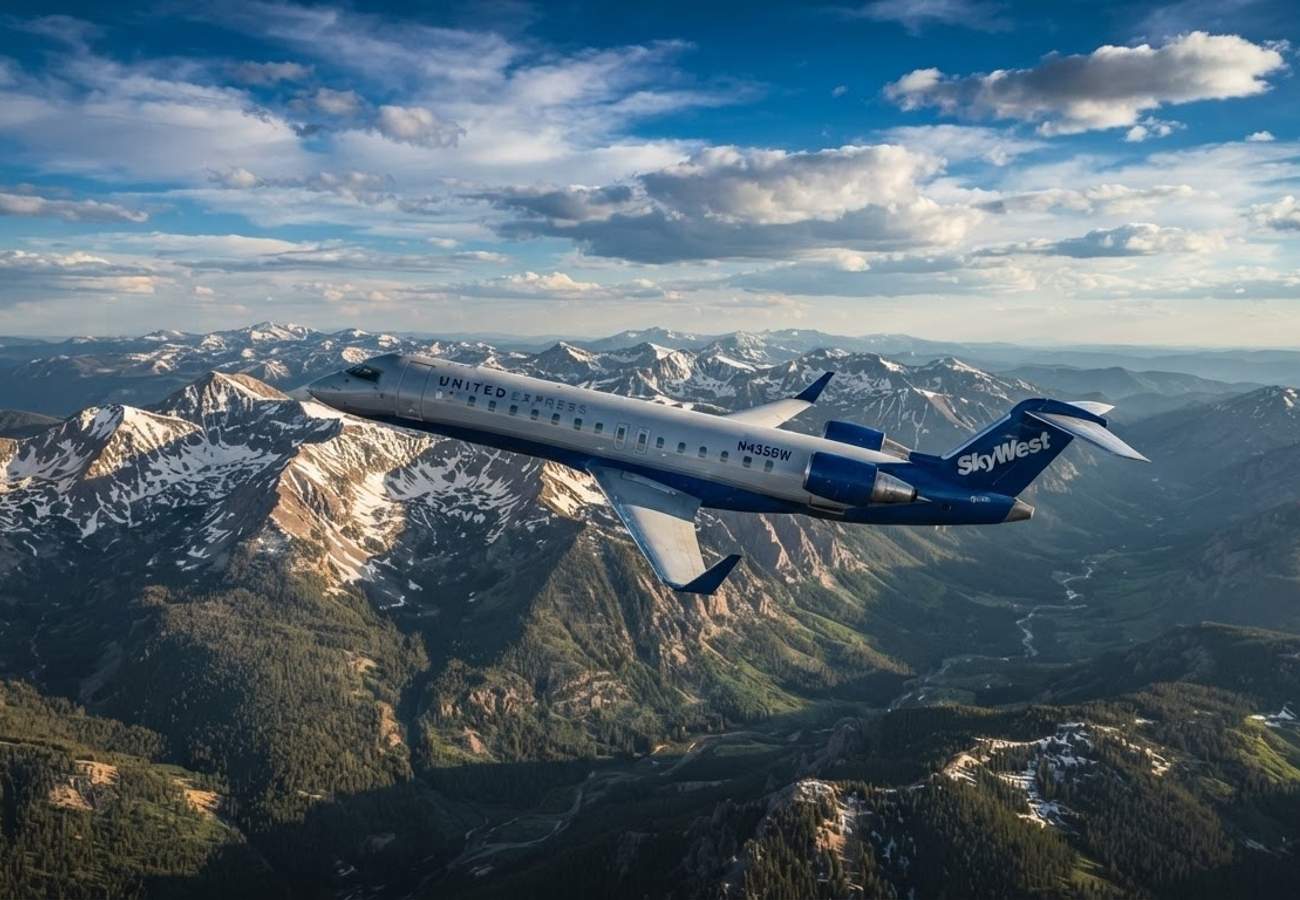
Image generated by AI
A Bombardier CRJ7 flight from Chicago to Aspen arrived 1 hour and 35 minutes behind schedule on August 5, 2026, after an unexpected diversion to Grand Junction Regional Airport.
The incident involving SkyWest Flight SKW4921 underscores the operational fragility of high-altitude destinations and the critical role of alternative landing sites in the American West.
The Operational Shift: From Aspen to Grand Junction
On Wednesday, August 5, 2026, SkyWest Flight SKW4921 (also identified as OO4921) departed Chicago O’Hare International Airport (ORD) from Gate H1A at approximately 12:07 PM CDT. The aircraft, a Bombardier CRJ7 registered as N708SK, was bound for Aspen/Pitkin County Airport (ASE).
While the scheduled arrival in Aspen was 1:24 PM MDT, the flight was redirected mid-journey. The aircraft ultimately touched down at Grand Junction Regional Airport (GJT) at 2:29 PM MDT. This diversion resulted in a total delay of 1 hour and 35 minutes relative to the original itinerary.
While the airline did not immediately release a specific cause for the route change, diversions into the Rocky Mountain region are frequently triggered by rapid weather shifts, air traffic restrictions, or technical precautionary measures.
Mountain Aviation: The Experience of High-Altitude Travel
For the traveler, the real impact of a diversion from Aspen to Grand Junction is the sudden transition from a seamless flight to a complex ground logistics puzzle. Aspen/Pitkin County Airport is one of the most challenging commercial airports in the U.S. due to its short runway and surrounding mountainous terrain.
When a flight is diverted to Grand Junction, passengers are moved from a destination center directly into the heart of the mountains to a regional hub located significantly further away. This necessitates immediate coordination of ground transportation—often involving private shuttles or rental cars—to bridge the gap between Grand Junction and Aspen.
The use of the Bombardier CRJ7 on this route is strategic. These regional jets are engineered to handle the shorter runways and specific performance requirements of mountain airports, yet even these specialized aircraft are subject to the strict safety margins required by Federal Aviation Administration (FAA) guidelines and regional conservation bodies.
Visitor Insider Tips for Colorado Mountain Travel
Navigating the "Aspen Gap" during a diversion requires a specific set of local strategies. If you find yourself diverted to Grand Junction:
- Ground Transport Strategy: Do not rely solely on airport taxis. Pre-arrange or quickly book a mountain shuttle service; the drive from Grand Junction to Aspen is scenic but long, and availability during peak August windows is limited.
- The "Mountain Window": To avoid the common diversion patterns seen in August, aim for flights arriving before 11:00 AM MDT. Afternoon thunderstorms are a frequent cause of diverted flights into ASE.
- Local Dining in GJT: If stranded for a few hours, avoid the terminal food. Head into downtown Grand Junction for locally sourced Colorado produce and craft breweries, which offer a more authentic regional experience than the airport lounge.
- Cultural Etiquette: When utilizing local shuttles during a mass diversion, remember that these drivers are the lifeline of the region. Patience with local operators during "diversion chaos" is highly valued in mountain communities.
Long-Term Tourism Outlook
This diversion highlights the ongoing tension between the growing demand for luxury mountain tourism and the physical limitations of regional infrastructure. As more travelers seek out Aspen, the reliance on "relief airports" like Grand Junction becomes more pronounced.
The long-term trend suggests a shift toward more robust contingency planning for high-end travelers. We expect to see an increase in integrated "flight-to-shuttle" insurance and a greater emphasis on sustainable ground transport options to reduce the carbon footprint of diverted passenger movements in sensitive alpine ecosystems.
Safety remains the non-negotiable priority in the volatile skies of the American West.
Related Travel Guides
Disclaimer
This article is for informational and educational purposes only. It does not constitute legal, financial, or professional advice. While we strive to provide accurate and up-to-date information, travel policies, regulations, and conditions change rapidly. Always verify information with official sources before making travel decisions. Nomad Lawyer makes no representations about the accuracy, reliability, completeness, or suitability of the information provided. Readers should consult qualified professionals for advice specific to their circumstances. The views expressed in this article are those of the author and do not necessarily reflect the views of Nomad Lawyer.
Kunal K Choudhary
Co-Founder & Contributor
A passionate traveller and tech enthusiast. Kunal contributes to the vision and growth of Nomad Lawyer, bringing fresh perspectives and driving the community forward.
Learn more about our team →