
Bypassing Travel Chaos: United Airlines Flight UAL1536 Executes Mid-Air Turnback to Washington Dulles, Stranding Raleigh-Durham Passengers: Airline News
United Airlines Flight UAL1536 was forced to abort its Raleigh-Durham route and execute a mid-air turnback to Washington Dulles, triggering severe travel chaos.

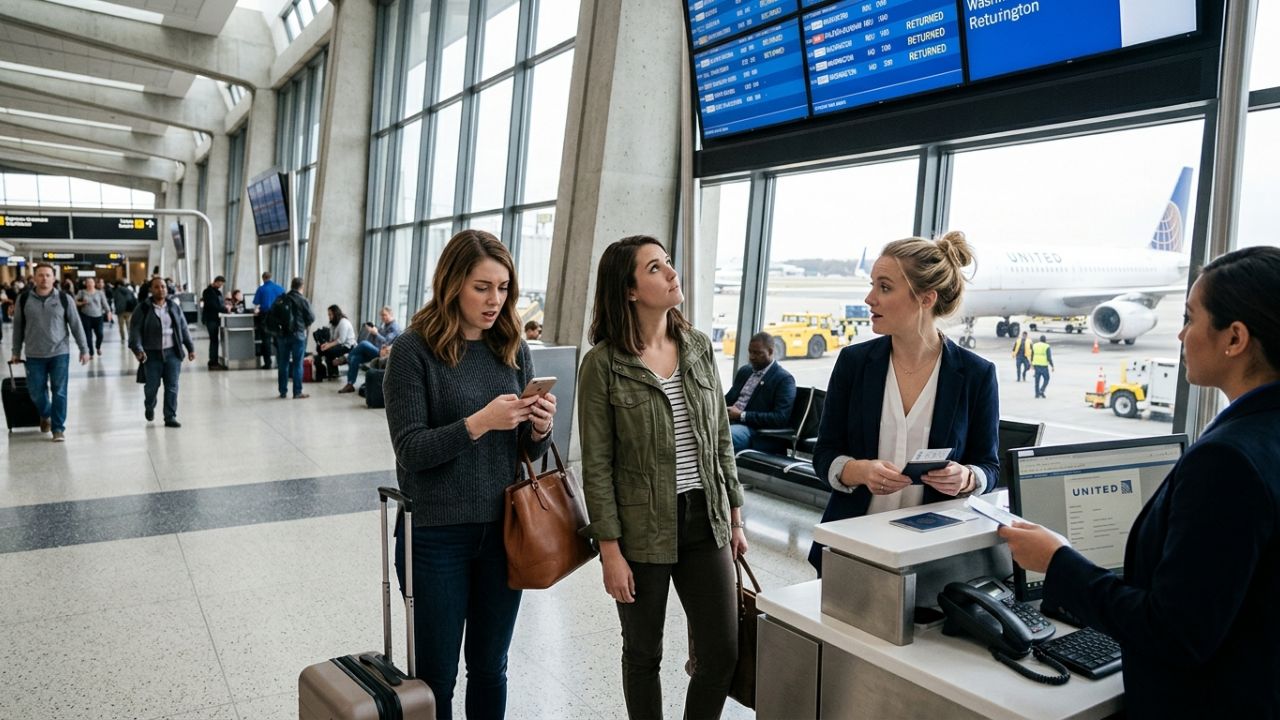
Image generated by AI
In a stark reminder of the fragile nature of modern domestic aviation routing, a routine passenger flight was abruptly forced into a mid-air turnback, triggering localized travel chaos for Raleigh-Durham-bound passengers. Reported on June 20, 2026, as travelers frantically monitor the latest airline news to avoid rolling flight cancellations across the United States, United Airlines Flight UAL1536 suffered an unexpected route deviation. Departing from Washington Dulles International Airport on June 19, the Airbus A319-131 was originally destined for the vital East Coast tech corridor via Raleigh-Durham International Airport. However, instead of completing its short-haul scheduled route, the aircraft was forced to execute a sudden turnback, returning to its exact point of departure. As the key details behind why this flight suddenly abandoned its planned destination raise intense interest among aviation observers and stranded passengers alike, the sudden rerouting highlights the operational sensitivity of major legacy carriers, cementing this event as today's most crucial headline in breaking aviation updates.
By introducing direct passenger coordination and dynamic scheduling backups, the regional aviation hubs target growing passenger demand across vital commerce sectors. The choice to coordinate flight departures in phases helps to manage gate capacity, supporting the country's broader regional transportation network.
Context: The Anatomy of a Mid-Air Turnback
For the highly interconnected North American aviation grid, the sudden return of Flight UAL1536 exposes the terrifying reality of operational vulnerability: even routine short-haul flights can succumb to immediate airspace or technical pressures.
Flight records indicate that the Airbus A319-131 left Washington Dulles entirely on schedule on the morning of June 19, 2026. The narrowbody jet initially appeared to be operating a standard, routine domestic service before circumstances demanded a radical adjustment. The turnback immediately attracted intense attention because the Washington-to-Raleigh-Durham route is a highly established, ultra-efficient domestic connection. When a scheduled service abruptly returns to its origin rather than completing a short hop, it instantly destroys the itineraries of onward passengers, creating a cascading wave of localized airport disruptions. However, while turnbacks trigger extreme anxiety for travelers facing missed connections, airline dispatchers and air traffic controllers view a "return-to-origin" protocol as a highly controlled safety mechanism. By continuously evaluating technical indications and airport congestion, flight crews are empowered to forcefully abandon their scheduled destination if safety or operational requirements dictate that returning to a major maintenance base is necessary.
To view live flight schedules, verify the active departure status of your specific United Airlines itinerary, or to track potential route restorations prior to heading to the airport, travelers must consult official aviation directories. For direct updates regarding how this specific turnback might impact your current flight cancellations out of Washington Dulles or Raleigh-Durham, travelers should aggressively utilize the official digital portals of their respective airlines. To explore live flight tracking and monitor the exact severity of the cascading bottlenecks paralyzing the broader US airspace, passengers can consult the official FlightAware tracking service.
Section-Wise Breakdown: Rerouting the Airbus A319
Washington Dulles International: The Routine Departure
The flight originated at Washington Dulles International Airport (IAD) without incident. The Airbus A319-131, officially registered as N817UA, successfully cleared the highly restricted Capitol airspace and initiated its southward transit toward North Carolina. Because Washington Dulles serves as a major origination point for government, tech, and corporate travel, passengers rely heavily on reaching regional gateways like Raleigh-Durham (the heart of the Research Triangle) precisely on time to secure their business itineraries.
The Mid-Air Decision: Aborting the Raleigh-Durham Route
During transit, the flight crew and United Airlines operations center executed the decision to abort the Raleigh-Durham landing. Commercial aircraft return to their departure airport for numerous reasons, including severe weather developments along the route, technical mechanical indicators that require specialized engineering review, or intense air traffic management restrictions at the destination. If an aircraft develops a minor technical fault, continuing to a smaller outstation like RDU could potentially ground the aircraft without proper maintenance support, whereas returning to a mega-hub ensures immediate repair.
Returning to Origin: The Tactical Landing
The aircraft completed a journey of approximately one hour and five minutes before safely touching down back at Washington Dulles. IAD is an ideal tactical base; it offers extensive maintenance capabilities, airline support infrastructure, and the operational resources necessary to instantly inspect the Airbus A319-131. Returning to Washington allowed the airline to manage the situation using familiar facilities and available engineering teams, mitigating the risk of a prolonged grounding away from base.
Technical Roster: Official Flight Turnback Matrix
To ensure absolute factual accuracy regarding the exact airframe, route data, and operational timeline defining this specific incident, the following matrix details the strictly verified flight data:
Official Flight Specifications (United Airlines UAL1536)
| Operational Metric | Verified Flight Data |
|---|---|
| Operating Carrier | United Airlines |
| Flight Number | UAL1536 |
| Aircraft Type | Airbus A319-131 |
| Aircraft Registration | N817UA |
| Date of Operation | 19 June 2026 |
| Scheduled Origin | Washington Dulles International Airport (IAD) |
| Scheduled Destination | Raleigh-Durham International Airport (RDU) |
| Actual Landing (Turnback) | Washington Dulles International Airport (IAD) |
| Estimated Flight Duration | Approximately 1 hour and 5 minutes |
Data accurately reflects the verified flight path and turnback metrics tracking the unexpected return of Flight UAL1536 on June 19, 2026.
Passenger Impact: Stranded Back at Square One
For the passengers aboard the Airbus jet, the sudden landing back at Washington Dulles instantly triggered severe logistical exhaustion and destroyed carefully planned itineraries.
When a flight returns to its exact point of departure unexpectedly, passengers immediately suffer radically revised arrival times, missed onward ground connections, and immense anxiety regarding their next steps. United Airlines customer service teams, dispatch centers, and airport staff were immediately forced to activate procedures to support the affected travelers, coordinating resources to minimize the resulting travel chaos. Passengers were suddenly stranded right back where they started, forcing a brutal scramble for alternative ground transport or rebooking onto subsequent southbound flights, drastically increasing pressure on standby capacity.
Industry Analysis: The Precautionary Mandate
Aviation analysts monitoring the turnback of Flight UAL1536 note that this incident perfectly illustrates the profound complexity of managing modern airline operations.
"United Airlines Flight UAL1536’s return to Washington instead of continuing to Raleigh-Durham demonstrates how swiftly operational considerations can influence flight planning," stated Anup Kumar Keshan, Founder and Editor-in-Chief of Travel And Tour World. "While the key detail behind the return is drawing attention across the United States, such decisions reflect aviation’s unwavering commitment to safety, operational diligence, passenger confidence, and responsible risk management." Analysts emphasize that returning to a massive maintenance base like Dulles is an incredibly proactive decision. It prevents an aircraft from becoming stranded at a smaller destination without the necessary spare parts or engineering teams, officially prioritizing safety and fleet integrity over short-term timetable performance.
Actionable Advice for Surviving Mid-Air Turnbacks
If you are a passenger aboard a flight that is suddenly forced to return to its departure airport, you must execute this strategic survival checklist immediately upon landing:
- Exploit the Airline App Immediately: Do not wait to deplane and join the massive physical line at the United Airlines customer service desk back at Dulles. Use your cellular data the second the aircraft touches down to check the United app and attempt to secure an automatic digital rebooking for your onward connection to RDU.
- Audit Alternative Transit: Because the distance between Washington D.C. and Raleigh is relatively short, if no flights are available until the next day, immediately evaluate alternative ground transport such as Amtrak services out of Union Station, bypassing the aviation gridlock entirely.
- Understand Turnback Compensation: Review United Airlines' policies regarding mechanical or operational turnbacks. If the return was caused by a carrier-controlled technical issue rather than weather, the airline should be legally required to provide alternative routing, and potentially meal or hotel vouchers if you are forced into an overnight delay.
FAQ: United Airlines Flight UAL1536 Turnback
What flight was turned back on June 19, 2026?
United Airlines Flight UAL1536, operating an Airbus A319-131 (Registration N817UA), was suddenly forced to return to its origin.
Where was the flight originally heading, and where did it land?
The flight departed from Washington Dulles International Airport bound for Raleigh-Durham (RDU), but executed a mid-air turnback and landed safely back at Dulles (IAD).
How long was the aircraft in the air before returning?
Flight data confirms the Airbus A319 remained airborne for approximately one hour and five minutes before touching down at its departure airport.
The Reality of Mid-Air Turnbacks
The sudden return of United Airlines Flight UAL1536 proves definitively that domestic air travel remains highly susceptible to sudden operational shifts. By effectively abandoning the Raleigh-Durham landing and returning to the safety of the Dulles maintenance base, the flight crew executed a critical safety mechanism that simultaneously stranded passengers and triggered localized travel chaos. Yet, as exhausted travelers frantically attempt to secure rebookings or Amtrak tickets out of D.C., they must accept a critical new reality: reaching a destination is never guaranteed until the aircraft is parked at the final gate. Surviving this era of transit volatility demands extreme psychological adaptability, a complete refusal to panic during unexpected route changes, and the tactical discipline to instantly utilize digital rebooking tools the exact second an aircraft turns back.
Key Takeaways
- Mid-Air Turnback: United Airlines Flight UAL1536 was abruptly forced to return to its exact point of origin.
- The Route: The flight departed Washington Dulles (IAD) and was destined for Raleigh-Durham (RDU).
- The Aircraft: The flight was operated by an Airbus A319-131 (N817UA) and flew for approximately 1 hour and 5 minutes.
- The Safe Return: The aircraft executed a tactical turnback to the massive maintenance base at Dulles.
- Survival Strategy: Passengers are strongly urged to instantly rebook via airline apps upon landing and explore alternative rail transport if stranded in D.C.
Related Travel Guides
Massive Travel Chaos Paralyzes Chicago O'Hare with 1,425 Disruptions
Disclaimer
This article is for informational and educational purposes only. It does not constitute legal, financial, or professional advice. While we strive to provide accurate and up-to-date information, travel policies, regulations, and conditions change rapidly. Always verify information with official sources before making travel decisions. Nomad Lawyer makes no representations about the accuracy, reliability, completeness, or suitability of the information provided. Readers should consult qualified professionals for advice specific to their circumstances. The views expressed in this article are those of the author and do not necessarily reflect the views of Nomad Lawyer.
Kunal K Choudhary
Co-Founder & Contributor
A passionate traveller and tech enthusiast. Kunal contributes to the vision and growth of Nomad Lawyer, bringing fresh perspectives and driving the community forward.
Learn more about our team →