
Sky Alps Rejects Low-Cost Model With Boutique Airline Approach and Unique European Route Expansion
Sky Alps Rejects Low-Cost Model With Boutique Airline Approach and Unique European Route Expansion

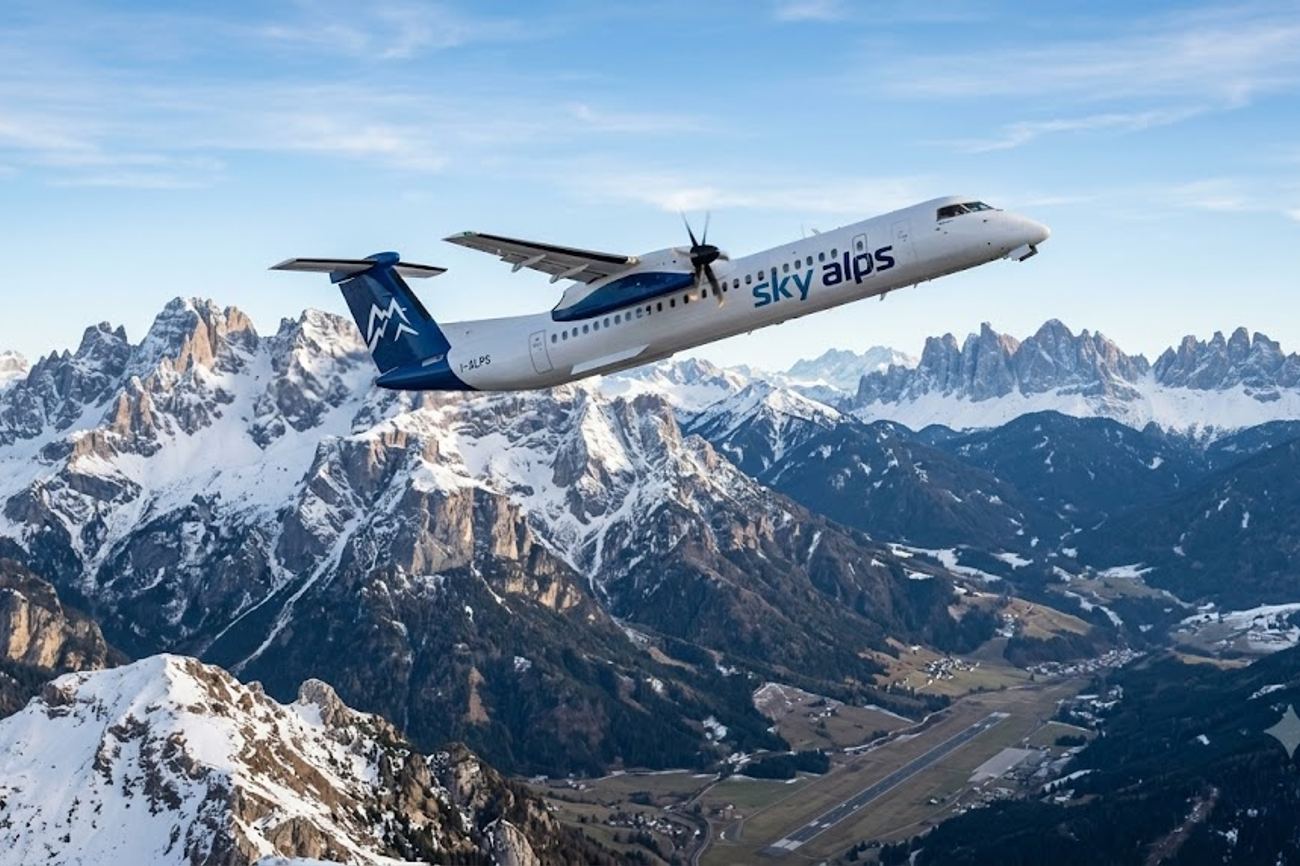
Image generated by AI
Nine operating aircraft and a network of 30 European destinations mark the rapid ascent of Sky Alps, an Italian regional carrier that has explicitly rejected the low-cost carrier (LCC) blueprint in favor of a "boutique" operational model. Since its inception in 2021, the airline has scaled from a two-plane operation to a specialized fleet designed to exploit a specific market failure: the abandonment of regional airports by major carriers who have transitioned to larger, less flexible aircraft. By positioning itself as a high-service alternative to the austerity of budget airlines, Sky Alps is betting that underserved regional connectivity is a more sustainable growth engine than the price-war dynamics of the mass market.
The Bolzano Catalyst and Regional Market Failure
The genesis of Sky Alps was not born from a desire to compete with giants like Ryanair or Lufthansa, but from a logistical void at Bolzano Airport in northern Italy. Founded by three pilots and aviation enthusiasts, the airline was established on the premise that an airport cannot function as a viable economic engine without a dedicated airline network. This realization highlighted a broader trend across the European aviation sector: the "hollowing out" of regional connectivity.
As major airlines optimize for seat-mile costs, they increasingly deploy larger narrow-body aircraft that require higher passenger volumes to remain profitable. This shift has left dozens of regional hubs stranded, unable to attract the minimum load factors required by legacy carriers. Sky Alps entered this gap in 2021, leveraging a fleet of Dash 8-Q400 aircraft. These 76-seat turboprops allow the airline to maintain profitability on routes that would be financially disastrous for a 180-seat Airbus A320. This strategic alignment with the International Air Transport Association (IATA) standards for regional connectivity allows the carrier to act as a surgical tool, inserting capacity exactly where demand exists but volume is too low for the industry titans.
Network Architecture and Fleet Dynamics
The growth trajectory of Sky Alps is defined by a strict avoidance of direct competition. Rather than fighting for dominance at primary hubs, the airline has curated a network of approximately 30 destinations that prioritize tourism and specialized business travel. This "boutique" approach ensures that the airline remains the primary or sole provider on its selected corridors, insulating it from the predatory pricing typical of the LCC sector.
The current fleet composition and target markets illustrate a diversified approach to regional transit:
| Region/Country | Key Destinations | Strategic Focus |
|---|---|---|
| United Kingdom | London Gatwick | High-yield international connectivity |
| Denmark | Copenhagen | Scandinavian regional access |
| Sweden | Gothenburg | Northern European business/leisure |
| Germany | Bonn | Secondary city connectivity |
| Italy | Rome, Bergamo, Sicily | Domestic regional bridging |
| Mediterranean | Croatia, Greece | Seasonal tourism surges |
The operational utility of the Dash 8-Q400 extends beyond scheduled flights. Because the aircraft is optimized for short-haul efficiency and smaller runways, Sky Alps has diversified its revenue streams through high-margin charter operations. This includes transporting professional football teams, corporate incentive groups, and private charters, providing a financial cushion that purely scheduled airlines often lack. With nine aircraft currently in service and two more scheduled to join the fleet in the coming months, the airline is aggressively expanding its capacity to meet this hybrid demand.
Expert Analysis: The Economics of the "Anti-LCC" Model
For travelers booking these routes, the direct consequence of the Sky Alps model is a shift from "commodity travel" to "utility travel." In the LCC model, the airport is merely a transit point; in the boutique model, the flight is a specialized service. By avoiding routes with heavy competition, Sky Alps avoids the "race to the bottom" on pricing, which allows them to maintain a more comfortable cost calculation.
The pricing pressure this creates means that while tickets may be more expensive than a budget flight from a major hub, the total cost of travel—when factoring in ground transport from a primary airport to a remote destination—is often lower. This is particularly evident in the Dolomites region, where the airline effectively functions as a "high-altitude ski lift," transporting winter tourists directly into the heart of the mountains.
Sky Alps is positioning itself as a premium alternative to budget carriers by focusing on high-service standards and strategic connectivity within the European market. The airline operates out of Bergamo Airport, leveraging the hub to connect regional business and leisure travelers to key destinations.
Furthermore, the airline's pursuit of IOSA (IATA Operational Safety Audit) certification is a sophisticated strategic move. This certification is the "golden ticket" for regional carriers; it provides the regulatory legitimacy required to enter into interline and code-sharing agreements with global carriers. For the traveler, this means the potential for a seamless booking experience where a flight from New York via Air France could connect directly to a Sky Alps regional flight into Bolzano on a single ticket. This transforms Sky Alps from a standalone niche player into a critical "last-mile" provider for the global aviation network.
Key Takeaways
- Strategic Fleet Selection: The use of 76-seat Dash 8-Q400 aircraft allows for profitability on low-volume routes that are ignored by larger airlines.
- Non-Competitive Routing: The airline exclusively targets destinations where it faces little to no direct competition, avoiding the price wars of the low-cost model.
- Hybrid Revenue Streams: Beyond scheduled flights to 30 destinations, the carrier leverages its fleet for high-value charters for sports teams and corporate entities.
- Regulatory Scaling: The pursuit of IOSA certification is intended to unlock code-sharing partnerships with major international airlines by 2027.
- Regional Integration: The model focuses on reconnecting regional airports—like Bolzano—to larger hubs, filling a gap left by the industry's shift toward larger aircraft.
FAQ: Sky Alps Regional Travel 2024-2027
What makes Sky Alps different from budget airlines like Ryanair? Sky Alps rejects the low-cost model, focusing instead on "boutique" service, specialized regional routes with limited competition, and a personalized passenger experience rather than the lowest possible ticket price.
Which aircraft does Sky Alps use for its European routes? The airline operates the Dash 8-Q400, a turboprop aircraft with a 76-seat capacity, which is ideal for accessing smaller regional airports that cannot accommodate larger jets.
Can I book a Sky Alps flight as part of a larger international journey? Currently, they operate primarily as a point-to-point carrier, but they are seeking IOSA certification to enable interline and code-sharing agreements with larger global airlines in the near future.
Where is Sky Alps primarily based and where does it fly? Based in Northern Italy (Bolzano), the airline serves approximately 30 destinations, including London Gatwick, Copenhagen, Gothenburg, Bonn, and various Mediterranean spots in Greece and Croatia.
A calculated bet on the underserved, Sky Alps is proving that in an era of aviation giants, there is still significant profit in the periphery.
Related Travel Guides
- Australia High-Speed Rail Is Quietly Changing Intercity Travel Forever As Electric Trains Take Over Long-Haul Trips
- Jamaica Resort Giants Intercept Millions In Global Travel Funds Driven To Empower Families In Ocho Rios And St. Elizabeth
- Camiguin’s Tourism Explosion Begins as Philippine Island Plans for 824,000 Visitors by 2028
Disclaimer
This article is for informational and educational purposes only. It does not constitute legal, financial, or professional advice. While we strive to provide accurate and up-to-date information, travel policies, regulations, and conditions change rapidly. Always verify information with official sources before making travel decisions. Nomad Lawyer makes no representations about the accuracy, reliability, completeness, or suitability of the information provided. Readers should consult qualified professionals for advice specific to their circumstances. The views expressed in this article are those of the author and do not necessarily reflect the views of Nomad Lawyer.
Raushan Kumar
Founder & Lead Developer
Full-stack developer with 11+ years of experience and a passionate traveller. Raushan built Nomad Lawyer from the ground up with a vision to create the best travel and law experience on the web.
Learn more about our team →